Fluoride Information
Fluoride is a poison. Fluoride was poison yesterday. Fluoride is poison today. Fluoride will be poison tomorrow. When in doubt, get it out.
Sunday, November 30, 2025
Video: JFK to 9/11: Everything is a Rich Man's Trick (2014)
166. The Limits Of Behavioral Theory: The Underground History of American Education by John Taylor Gatto from archive.org
The Limits Of Behavioral Theory
The multibillion dollar school-materials industry is stuffed with curriculum psychologized through application of behaviorist theory in its design and operation. What these kits are about is introducing various forms of external reinforcement into learning, based on the hypothesis the student is a stimulus-response machine. This surrender to questionable science fails its own test of rationality in the following ways.
First and foremost, the materials don't work dependably. Behavior can be affected, but fallout is often negative and daunting. The insubstantial metaphysics of Behaviorism leads it to radically simplify reality; the content of this psychology is then always being undermined by experience.
Even some presumed core truths, e.g., "simple to complex, we learn to walk before we can run" (I've humanized the barbaric jargon of the field), are only half-truths whose application in a classroom provoke trouble. In suburban schools a slow chaos of boredom ensues from every behavioral program; in ghetto schools the boredom turns to violence. Even in better neighborhoods, the result of psychological manipulation is indifference, cynicism, and overall loss of respect for the pedagogical enterprise. Behavioral theory demands endless recorded observations and assessments in the face of mountainous evidence that interruptions and delays caused by such assessments create formidable obstacles to learning — and for many derail the possibility entirely.
Chapter 18: The Ruling Elite: Brown Brothers, Slave Traders and Money Laundering
Brown Brothers, Slave Traders and Money Laundering
The slave-trading Brown family was one of the first to open the New England market to the very lucrative opium trade. First, they traded slaves, became bankers and then, through industrial piracy, ultimately went into the textile industry. Their nefarious success and profits motivated others to embark into the slave and opium trade including some of the following families: Whitney, Cabot, Lodge, Cushing, Perkins, Taft, Roosevelt, Bacon, Appleton and others, which formed the criminal foundation of New England wealth.[658]
Merchants exported pork, beef, cheese, board, shingles, barrel staves and other items to England in return
for coffee, salt, rice, flour, milled fabrics, pewter and stoneware, silk, guns and gunpowder and, especially from the Caribbean, sugar, molasses and rum. James Brown (1698-1739) was a seafaring entrepreneur residing in Providence, Rhode Island, originally founded on the principles of religious liberty and political democracy. Brown took his first of many trips to the sugar-producing island of Martinique in 1727, a French plantation colony, where he acquired molasses for his two stills. He converted the molasses into high-quality rum to sell in his retail store, along with other wares. Brown, a slave owner, also ran a slaughterhouse, very detestable facilities that generally fouled the air and polluted their surroundings. He also loaned money and charged usury. By 1750, Rhode Island, with the severest of slave laws, had become a slave-based economy very similar to the Southern plantation colonies.[659]
Rhode Island rum was a favorite on the African coast as early as 1725. In April and May of 1736, James Brown overhauled one of his ships, the Mary, in preparation for his brother’s first arduous transatlantic trip to Africa’s coast to buy slaves to re-sell to plantation owners in the Caribbean. Obadiah Brown left in May and arrived on the Guinea Coast sometime in August 1736. The slave trade created the massive fortunes of Newport, Rhode Island, home of twenty-two rum distilleries by 1769.[660] From 1709 to 1807, Rhode Island merchants subsidized hundreds of voyages to Africa’s coast and returned with an estimated 106,544slaves.[661] JamesandObadiahBrownweresomeofthefirstslaversinProvidence.[662]
Jews, always a part of the merchant class in every society, participated in the
Hammond Weekly Digest
|
Concerns About Medical Errors Grow in More States
- by Rishma Parpia
- Published
- Environment
Recent reports from Oregon, Alabama, Louisiana, and Maryland indicate ongoing challenges in patient safety and communication when it comes to medical errors that harm patients. The findings show that many patients are not informed when medical errors occur, and some hospitals continue to struggle with safety practices that could prevent medical errors.
Most Patients Harmed in Oregon Were Not Informed After Medical Errors
In Oregon, a 2025 report from the Oregon Patient Safety Commission found that nearly 30 percent of adults said they or someone close to them experienced a medical error, such as receiving the wrong medication or suffering a surgical complication. However, only about one-third of these patients were notified of the mistake and received an apology, while more than half said they were never informed at all.1
Only about 21 percent of hospitals received the highest safety grade from an industry watchdog in spring 2025. This represents a decline from 2020 and places the state in the bottom third nationally for hospital safety.2
Most of the reported errors occurred in hospitals (52 percent), while others took place in primary or specialty clinics (31 percent), urgent care centers (7 percent), and nursing homes (6 percent). While more than 90 percent of surveyed physicians agreed that medical errors should be disclosed to patients, the report noted that far fewer actually reported having these conversations. The commission recommended wider use of communication-and-resolution programs to support transparency.3
Louisiana Hospital Receives Low Safety Grade
The NY Times Acknowledges That Autism is Not Primarily Genetic
- by Toby Rogers | Guest Writer
- Published
- Opinion
For the last several decades, the official autism narrative was that ‘autism is genetic, a GIFT, and anyone who says otherwise is a NUTTER who must be banned from polite society.’ The mainstream media pounded this message into the public consciousness every chance they got, and this narrative was enforced through censorship and blacklisting of anyone who proposed other theories of the case.
Then this past weekend, a curious thing happened. On Saturday (October 18, 2025), The New York Times published “A Furious Debate Over Autism’s Causes Leaves Parents Grasping for Answers.”
The story follows two families dealing with autism, interspersed with quotes from various mainstream autism “experts.” It conforms to the standard paint-by-numbers script—‘autism a mystery; it couldn’t possibly be caused by vaccines, Tylenol, or food dyes; Robert Kennedy Jr. is terrible;’ etc. And then, out of nowhere, the NY Times reporters (Gina Kolata and Azeen Ghorayshi) demolished the official genetic narrative:
But genetic mutations still only explain about 30 percent of cases, typically those with the most severe forms of the disorder.
So, not 100%, not half, not even a third of autism cases are genetic. That’s a MASSIVE paradigm shift. Next:
Dr. Audrey Brumback, a pediatric neurologist at the University of Texas at Austin, said she offers genetic testing to most of the patients she diagnoses with autism even though, as she cautions the parents, a relevant genetic mutation will be found in only one out of four cases.
One out of four is 25%, so they’re already backing away from the 30% claim. And THEN:
A landmark publication in 2007 showed that children with autism were much more likely to have so-called de novo mutations, spontaneous mutations that were not present in their mother’s or father’s genome.
Oh, so these children are NOT inheriting these genes from their parents (heritability is always what’s been implied by the multibillion-dollar search for the mythical ‘genes for autism’). Instead, these are de novo genetic mutations that are only found in the child with autism.
Do you know what else causes de novo genetic mutations? TOXICANTS.
That narrows the possibilities down considerably. Autism is not genetic—that’s not me talking now, that’s the NY Times. The most likely toxic exposures are from vaccines, SSRIs, Tylenol, pesticides/herbicides/fungicides, fire retardants, chemicals in plastics, EMF/RFR, and pollutants in our air, water, soil, and food—all the toxicants that I reviewed in my 2019 doctoral thesis.
So I figured out and published the definitive systematic review of the autism causation literature six years ago. My reward was to be hunted, censored, and economically blacklisted. The Washington Post, Guardian, BMJ, Springer/Nature, USA Today, Reuters, AP, Vice, and Politico have all published hit pieces on me. They never engage with my actual work, they never present contrary data, and all are engaged in racketeering on behalf of the pharmaceutical industry. I stood my ground and fought back by telling the truth and citing the relevant data. Now the paper of record has abandoned the genetic narrative, which opens the door for a thorough examination of the role of toxicants in autism causation.
We are winning this debate. The official narrative is crumbling before our eyes.
US Regime Change Interventionism Is Reliably Disastrous, And Other Notes
Listen to a reading of this article (reading by Tim Foley):
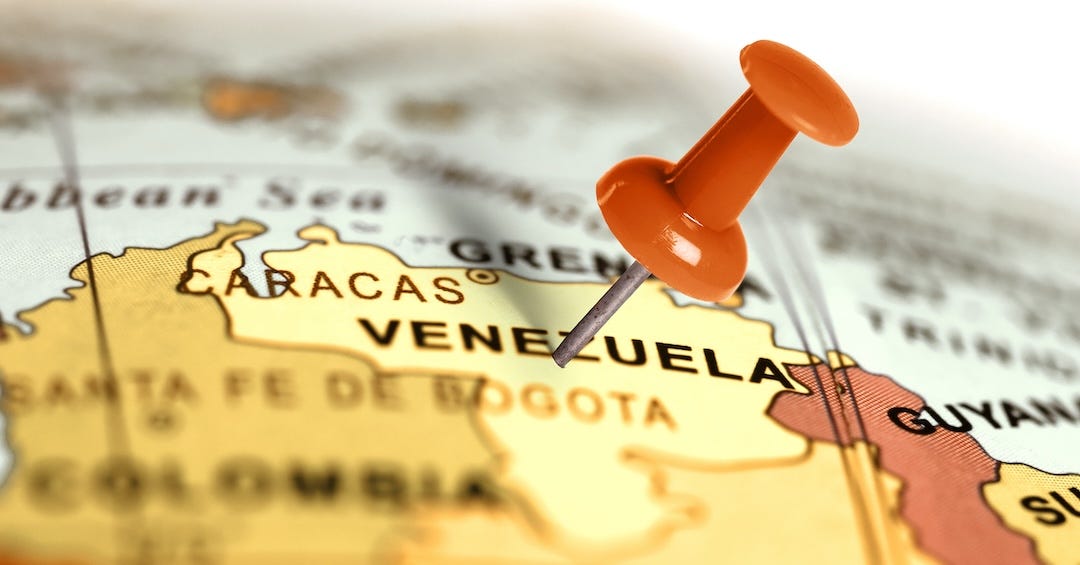
Trump has bizarrely announced that the airspace over Venezuela is “closed”, posting the following on Truth Social on Saturday:
“To all Airlines, Pilots, Drug Dealers, and Human Traffickers, please consider THE AIRSPACE ABOVE AND SURROUNDING VENEZUELA TO BE CLOSED IN ITS ENTIRETY.”
It isn’t even clear what precisely the president means by this. Are they about to start shooting down Venezuelan aircraft like they’ve been blowing up boats? Are they preparing for a ground invasion? Whatever it is, things are looking ugly.
Washington is banging the war drums trying to justify regime change interventionism in Venezuela under the ridiculous claim that it’s about fighting drug trafficking just as Trump announces that he will pardon former president of Honduras Juan Orlando Hernández, who the US convicted of drug trafficking charges just last year.
Drugs come into the United States from numerous nations in Latin America, and it sure is an awfully interesting coincidence that the one they’re focused on regime changing to stop the drug flow just so happens to be the socialist country with the largest proven oil reserves on the entire planet.
Chapter 5 APPOINTMENT AT CYPRUS: Rulers of Evil by F. Tupper Saussy in HTML Web Format
Rulers of Evil by F. Tupper Saussy in HTML Web Format
Chapter 5 APPOINTMENT AT CYPRUS
HIS NAME WAS Iñigo de Loyola. He was born in 1491 to a rich
family, youngest of eight boys, one of thirteen children. His older brother had
sailed to the New World with Christopher Columbus.
Iñigo served as a page in the court of King Ferdinand and Queen Isabella of
Spain. He became friends with Ferdinand’s Belgian grandson, Charles Habsburg,
whose other grandfather was Holy Roman Emperor Maximilian. (The Holy Roman
Emperor was a kind of secular pope who presided
over the Christian kingdoms of the western world.) Charles was
propelled to great authority before his twenty-first birthday by the deaths of
his two grandfathers within a space of two years. From Ferdinand, Charles
inherited Spain. From Maximilian, he inherited the Holy Roman Empire. Charles
Habsburg was King Charles I of Spain, Emperor Charles V of Rome. He was the
most powerful secular figure in Europe. And he was Iñigo’s friend.
In 1518, Iñigo was part of a legation negotiating for Charles with Spain’s
traditional rival, France, at the court of the Duke of Najera in Valladolid.
While the summit was in session, Catherina, the Emperor’s sister, was presented
to the Najera court. Iñigo fell in love with her. He was twenty-seven and she
was eleven. (The Emperor was eighteen.) The match, however, was not to be.
On Monday, May 20, 1521, while commanding a garrison at the Duke’s fortress in
Pamplona, Iñigo was struck by a French cannonball. His right leg was shattered,
and with it – since a well- shaped leg was among a courtier’s most prized
assets – the prospects for a romantic life with Catherina, or any other woman.
An honor guard of French soldiers bore the wounded champion on a stretcher to
his family’s castle in the Spanish Pyrenees. Surgeons butchered his leg and
reset the bones. He lost appetite and was told he might die. He made confession
and was given last rites. But a few days after the feast of Sts. Peter and
Paul, he was pronounced out of death’s immediate grasp. He credited this
recovery to his devotion to St. Peter.
Iñigo remained bedridden for nearly a year. Under the concerned if distant eye
of the youthful Emperor, he spent his time “searching for substitutes for the
shattered ideals, ambitions, and values that had been so central to his sense
of himself.”2 He gazed obsessively at a small icon of Saint
Catherine, a gift from Queen Isabella to his sister-in-law. The icon sparked
dreams of Catherina, which only throttled his heart with desolation. He turned
to books, Ludolph of Saxony’s Life of Christ and Voragine’s Lives of the Saints
– the only two volumes in the family library despite the fact that a Spanish
Bible had been available for forty years.
Republicanism Richard Dagger
Political Science Faculty Publications
2011
Republicanism Richard Dagger
University of Richmond, rdagger@richmond.edu
University of Richmond UR Scholarship Repository
Political Science
Follow this and additional works at: http://scholarship.richmond.edu/polisci-faculty-publications Part of the American Politics Commons, Ethics and Political Philosophy Commons, and the
Political Theory Commons
Recommended Citation
Dagger, Richard. "Republicanism." In The Oxford Handbook of The History of Political Philosophy, edited by George Klosko, 701-11. New York: Oxford University Press, 2011.
This Book Chapter is brought to you for free and open access by the Political Science at UR Scholarship Repository. It has been accepted for inclusion in Political Science Faculty Publications by an authorized administrator of UR Scholarship Repository. For more information, please contact scholarshiprepository@richmond.edu.
CHAPTER 43
REPUBLICANISM
RICHARD DAGGER
REPUBLICANISM is an ancient tradition of political thought that has enjoyed a remark- able revival in recent years. As with liberalism, conservatism, and other enduring political traditions, there is considerable disagreement as to exactly what republicanism is and who counts as a republican, whether in the ancient world or contemporary times. Scholars agree, however, that republicanism rests on the conviction that government is not the domain of some ruler or small set of rulers, but is instead a public matter-the res publica-to be directed by self-governing citizens.
This conviction historically has led republicans to be suspicious of or downright hostile to monarchy, to the point where opposition to monarchy is often taken to define republicanism. Hence the eminent historian of political thought Quentin Skin- ner refers to 'a republican (in the strict sense of being an opponent of monarchy) ... ' (Skinner 2008: 84). Dictionaries frequently add to this negative definition the positive feature that republicans advocate government by elected representatives. Both points are correct insofar as republicans have generally opposed monarchy and favored representative government, but there is also reason to be cautious here-and reason to look more closely at the definition of republicanism before turning to its history.
DEFINING REPUBLICANISM
··················································································································
Caution is necessary because important thinkers commonly linked to the republican tradition, such as Aristotle and Cicero, were neither unequivocally opposed to monarchy nor clearly committed to representative government. As they saw it, a form of government is good if it will promote the public good. The problem with monarchy is not that it cannot do this; in some circumstances, Aristotle says, monarchy is the form of government most likely to promote the public good. The problem is that monarchs are all too likely, when unchecked by others, to become tyrants. That is why Cicero and other
702 RICHARD DAGGER
classical republicans came to favor the mixed constitution (or mixed government) as a way of preserving the rule of law. A mixed constitution blends the rule of one with the rule of the few and of the many, so that the monarchical element will be limited rather than absolute, with the monarch under the law rather than above it. In this limited, constitutional sense of' monarchy', republicans need not be opposed to monarchical governments. If, however, one means by 'monarchy' rule by one person who holds complete, unchecked authority, then a republican will necessarily be opposed to monarchy.
The connection between republicanism and representative government is similarly complicated. As the historical accounts of the development of political representation indicate, the terms 'republic' and 'republican' antedate the idea of government by elected representatives. Mixed constitutions require that the few and the many have a voice, but not that the members of either group elect those who speak for them. The rule of law cannot be effective where no one makes laws, or discerns them in nature or custom, but the legislator or legislators need not be elected. If the circumstances allow, in fact, republicans may even embrace a form of direct democracy in which the people as a whole are free to assemble, debate, and cast their votes for or against proposed laws. To be sure, modern and contemporary republicans are typically advocates of representative government, but that is because they do not think that circumstances are
favorable to the exercise of direct democracy-not, at least, when the public business must be conducted on a scale as large as that of the modern state.