Imagine waking up one morning to find that the value of your savings
has plummeted overnight, stores are struggling to stock essentials, and
economic news is filled with words like “recession” and “crisis.” It’s a
scenario that many of us prefer not to think about, but the reality is
that financial collapses have happened before and can happen again.
Key Takeaways:
A financial collapse occurs when a country’s economic system fails, leading to widespread financial instability.
The world’s wealthiest individuals often take extensive measures to
prepare for potential financial collapses, leveraging their resources to
build robust safety nets.
Understanding your current financial situation is the first step towards preparing for a potential financial collapse.
Creating a sustainable lifestyle is an essential step in building
financial resilience and preparing for potential economic disruptions.
Developing practical skills is essential for increasing your self-sufficiency and resilience in the face of financial collapse.
This article will guide you through practical steps to build
financial resilience, helping you to safeguard your wealth, maintain
your standard of living, and confidently navigate through potential
economic turmoil. By taking proactive measures now, you can face the
future with peace of mind, no matter what comes your way.
All Americans Will Lose Their Home, Income And Power By March 17, 2025
A financial collapse occurs when a country’s economic system fails,
leading to widespread financial instability. This can happen for various
reasons, such as severe market crashes, banking system failures, or
governmental financial mismanagement.
When a financial collapse happens, it typically results in a
significant loss of wealth, increased unemployment rates, and a dramatic
decline in the standard of living for the affected population.
Businesses may shut down, and the availability of essential goods and
services can be severely disrupted.
Historically, financial collapses have had devastating effects on
societies. Examples include the Great Depression of the 1930s and
the 2008 global financial crisis. In such events, the value of currency
may plummet, and access to credit can become extremely limited, further
exacerbating the economic downturn.- See video!
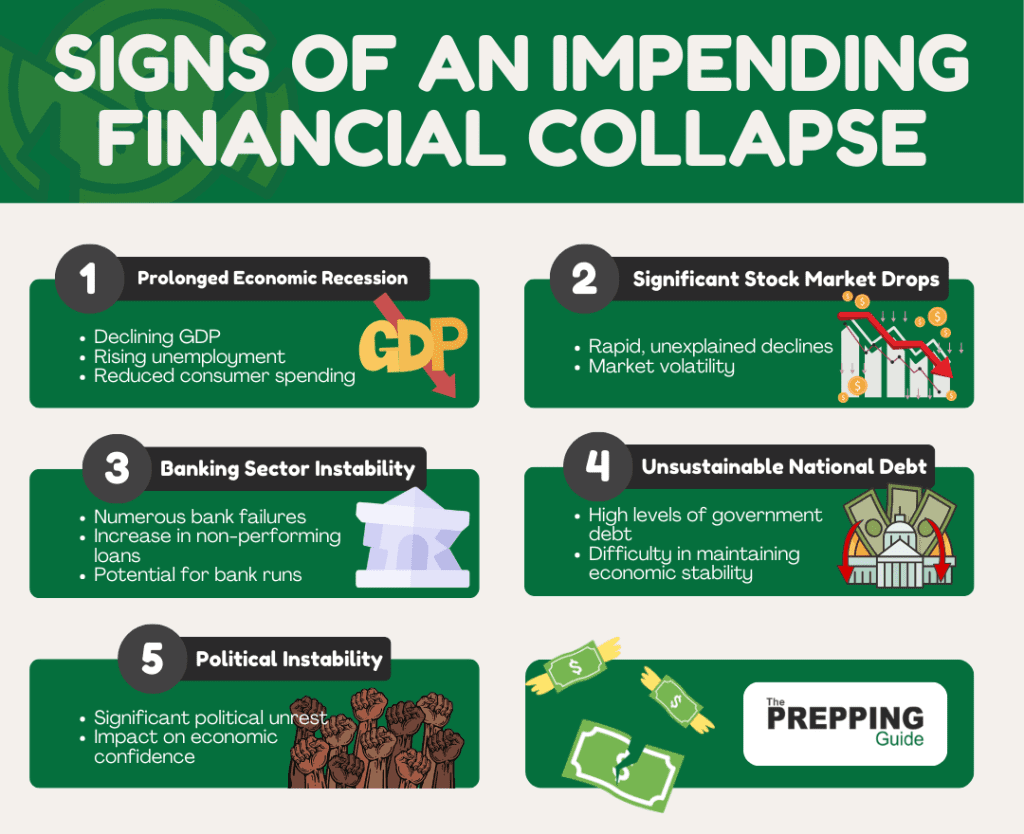
Signs of an Impending Financial Collapse- See video!
Recognizing the signs of an impending financial collapse can help you
take proactive steps to safeguard your finances. One major indicator is
a prolonged economic recession, characterized by declining GDP, rising
unemployment, and reduced consumer spending. When these factors persist,
they signal underlying issues within the economy that could lead to a
collapse. Significant drops in stock markets, especially if they happen
rapidly and without clear reasons, often precede financial crises.
Another critical sign is instability in the banking sector, such as
numerous bank failures or a sharp increase in non-performing loans. If
banks begin to struggle, it can lead to a loss of confidence among
consumers and investors, resulting in bank runs and tighter credit.
Additionally, unsustainable levels of national debt and significant
political instability can also foreshadow a financial collapse, as
governments may struggle to maintain economic stability under such
conditions.
What are the World’s Richest Preppers Doing?
The world’s wealthiest people take serious steps to prepare for
financial collapses, using their resources to create strong safety nets.
They invest in various assets like real estate and precious metals,
which hold value well during economic downturns. They also keep some
wealth in stable currencies and foreign assets to reduce local economic
risks.
Beyond finances, wealthy preppers focus on personal safety and
self-sufficiency. This includes owning remote, secure properties stocked
with supplies for long-term survival. They invest in advanced security
systems, stockpile essential goods, and even build underground bunkers
for extreme situations.
For example, a Wall Street executive mentioned in the New
Yorker keeps a helicopter ready to fly him to his underground bunker,
equipped with a self-sufficient garden, power source, and food and water
supply. Similarly, Tim Chang, managing director at Mayfield Fund, has
bug-out bags for his family and several established bug-out locations in
regional areas.
Assessing Your Current Financial Situation
Gone viral! – Inside the Trump Family: Unraveling the Mystery of Their Unstoppable Energy and Robust Health!
Understanding your current financial situation is the first step
towards preparing for a potential financial collapse. This involves
evaluating your assets and liabilities, reviewing your income and
expenses, and identifying any financial vulnerabilities you may have.
Evaluating Your Assets and Liabilities
Evaluating your assets and liabilities helps you understand your net
worth, which is the total value of what you own minus what you owe.
Start by listing all your assets, including cash, savings accounts,
investments, real estate, and any valuable possessions. Then, list your
liabilities, such as mortgages, credit card debts, student loans, and
other personal loans.
You can use this checklist as a guide:
Reviewing Your Income and Expenses
Reviewing your income and expenses is essential to ensure you are
living within your means and saving adequately for the future. Begin by
tracking all your income sources, including salary, bonuses, freelance
work, and any other earnings. Then, list all your monthly expenses, such
as rent or mortgage payments, utilities, groceries, transportation, and
discretionary spending. This exercise helps identify unnecessary
expenses and areas where you can save more money. Creating a budget
based on this review will help you manage your finances more effectively
and prepare for any financial challenges that may arise.
A DOLLAR VALUE COLLAPSE WILL FORCE THE WORLD IN A DEEP RECESSION or at worst… A DEPRESSION.
Identifying financial vulnerabilities involves looking for weaknesses
in your financial situation that could be problematic in a financial
collapse. This could include high levels of debt, lack of savings, or
reliance on a single income source. Assessing these vulnerabilities
allows you to address them proactively and strengthen your financial
resilience.
For instance, if you discover that you have a high amount of credit
card debt, you can create a plan to pay it down more aggressively. If
your savings are insufficient, you can look for ways to increase your
savings rate.
Building a financial safety net is essential for protecting yourself
against the uncertainties of a financial collapse. This includes
establishing an emergency fund, diversifying your income sources,
reducing debt, and investing in tangible assets.
Establishing an Emergency Fund: A Step-by-Step Checklist
An emergency fund is a crucial component of a financial safety net,
providing a financial cushion in case of unexpected expenses or income
loss. Here’s a practical checklist to help you build and maintain this
crucial safety net:
Step 1: Determine Your Target Fund Size
Assess your monthly expenses by reviewing bills and spending habits.
Calculate the total for necessities like housing, utilities, groceries,
insurance, and healthcare. Aim to save enough to cover three to six
months of these expenses, providing a substantial safety net in case of
sudden income loss or unforeseen expenses.
Step 2: Set Up a Dedicated Savings Account
Opt for a high-yield savings account that combines ease of access
with a competitive interest rate, maximizing the growth of your funds
while keeping them liquid. Ensure the account is separate from your
checking to avoid dipping into these funds for everyday expenses.
Step 3: Create a Monthly Savings Plan
What is the Most Powerful Force on the Planet?
Analyze your budget to determine how much money you can realistically
set aside each month. Factor in your regular income and expenses, and
identify potential areas for cost-cutting that could increase your
savings rate. Even modest, consistent contributions can grow
significantly over time due to compound interest.
Step 4: Automate Your Savings
Automating your savings is a strategic way to ensure you consistently
contribute to your emergency fund without needing to remember each
month. Set up an automatic transfer from your main banking account to
your emergency fund immediately after you receive your paycheck. This
“pay yourself first” approach helps to prioritize saving over spending.
Step 5: Prioritize Contributions
Reevaluate your discretionary spending, such as dining out,
entertainment, and other non-essentials. Prioritizing your emergency
fund over these expenditures can accelerate its growth. Treat your
contributions to this fund as non-negotiable, similar to paying a bill.
Regularly review your emergency fund and financial situation every
few months or whenever you experience a significant financial change
(like a raise or new job). If your living costs or financial
responsibilities increase, adjust your savings goal to ensure your fund
remains adequate to cover the increased expenses.
Diversifying Income Sources
Diversifying your income sources can provide additional financial
stability and reduce the risk of relying on a single income stream.
Consider taking on freelance work, starting a side business, or
investing in passive income opportunities such as rental properties or
dividend-paying stocks. These additional income streams can help
supplement your primary income and provide financial support if you lose
your job or face reduced work hours.
Reducing Debt and Avoiding New Debt
Reducing debt is critical for financial resilience, as high levels of
debt can become unmanageable during a financial collapse. Focus on
paying down high-interest debt first, such as credit card balances, to
reduce the amount of interest you pay over time. Consider consolidating
loans or negotiating with creditors to lower interest rates or payment
amounts. Avoid taking on new debt unless absolutely necessary. Living
within your means and using credit responsibly can help you stay out of
financial trouble.
Investing in tangible assets, such as real estate, precious metals,
or commodities, can provide a hedge against financial instability. These
assets often retain value better than paper investments like stocks or
bonds during economic downturns. Real estate, for example, can provide
rental income and potential appreciation over time. Precious metals like
gold and silver are also considered safe-haven assets that can protect
your wealth during financial crises.
Creating a Sustainable Lifestyle
Creating a sustainable lifestyle is an essential step in building
financial resilience and preparing for potential economic disruptions. A
sustainable lifestyle involves making choices that reduce your reliance
on external systems and increase your self-sufficiency. This can
include growing your own food, using renewable energy sources, and
reducing waste.
Living sustainably also means being mindful of your consumption
habits and focusing on quality over quantity. This can involve
purchasing durable goods that last longer, repairing items instead of
replacing them, and minimizing unnecessary purchases.
Preparing for short-term disruptions involves having a plan in place
for immediate emergencies that can impact your daily life. To be
physically prepared, start by assembling an emergency kit with
non-perishable food, bottled water (one gallon per person per day for
three days), essential medications, and a first aid kit. Additionally,
include a flashlight, multi-tool, blankets, hygiene products, and a
manual can opener. Store this kit in an easily accessible location.
Next, create a family emergency plan by designating safe meeting
spots and compiling a list of emergency contacts. Ensure everyone knows
how to reach these contacts. Finally, regularly check and update your
supplies to ensure they are not expired and are in good condition.
Ensuring Financial Preparedness
1. Set Up a Small Emergency Fund
Savings Goal: Aim to accumulate at least one month’s
worth of essential expenses (rent/mortgage, utilities, groceries,
transportation) in a separate, easily accessible savings account.
Monthly Contributions: Determine a fixed amount to
save each month. Even small contributions can add up over time. Treat
this savings as a priority, similar to paying a bill.
2. Maintain Quick Access to Cash
Cash on Hand: Keep a small amount of cash (enough
for a few days of expenses) at home in a secure place, like a safe, to
use in case electronic payment systems are down.
Bank Accounts: Ensure you have access to online
banking and mobile apps to manage your accounts. Consider accounts with
features that allow for quick withdrawals and transfers.
3. Review and Adjust Financial Plans
Expense Management: Regularly review your budget to
identify and cut non-essential expenses. Focus on necessities and
consider how you can reduce spending temporarily during a disruption.
Debt Management: Have a plan for managing debt
payments if your income is reduced. Contact creditors to discuss
potential deferment or reduction options during emergencies.
4. Stay Informed and Adaptable
“Crime of the Century”: What Big Pharma Isn’t Telling You About Its Benefits Against Major Diseases
Current Events: Stay updated on potential threats or
disruptions in your area by following local news and weather reports.
Sign up for emergency alerts from local authorities.
Flexible Plans: Be prepared to adjust your plans
based on evolving circumstances. Regularly review and revise your
emergency and financial plans to address new risks and opportunities.
Protecting Your Finances
To protect your finances, diversify your assets by moving savings to
stable currencies like the US Dollar or Swiss Franc, and invest in
government or high-quality corporate bonds for predictable returns.
Invest in precious metals like gold and silver to hedge against
inflation and economic instability. These metals maintain value during
financial crises and can balance risks in your investment portfolio.
Explore cryptocurrencies such as Bitcoin and Ethereum for potential
high returns, but start small and increase exposure gradually after
thorough research. Don’t forget to keep some cash on hand for
emergencies when electronic payment systems fail. Aim to cover at least a
week’s worth of expenses.
Stay informed and adaptable by monitoring economic indicators like
unemployment and inflation rates, stock market performance, and consumer
confidence. Use reliable sources to track these indicators and adjust
your financial strategies proactively.
Following trusted financial experts can provide valuable insights and
guidance during uncertain times. Experts such as economists, financial
analysts, and experienced investors offer analyses and recommendations
based on current market conditions. By listening to their advice, you
can make more informed decisions about managing your finances.
Here are some top financial experts to consider:
Christine Lagarde: President of the European
Central Bank and former Managing Director of the IMF, known for her deep
insights into global economics.
Andrew Ross Sorkin: A financial columnist for The
New York Times and co-anchor of CNBC’s “Squawk Box,” offering detailed
analyses of market trends.
Kevin O’Leary: Investor and “Shark Tank” personality, providing insights into entrepreneurship and investment strategies.
Gretchen Morgenson: Senior financial reporter at NBC News, known for her investigative journalism on financial conflicts of interest.
Stephanie Flanders: Head of Economics and Politics at Bloomberg, offering expert commentary on economic policies and market dynamics.
Scott Trench: CEO of BiggerPockets, providing comprehensive resources and advice for real estate investors.
Larysa Melnychuk: Founder of FP&A Trends, sharing best practices and corporate financial advice.
Paul Barnhurst: Known as “The FP&A Guy,” he provides daily insights and practical resources for finance professionals on LinkedIn.
Updating Your Plan Regularly
Updating your financial plan regularly is crucial for maintaining
resilience in a changing economic environment. Review your plan at least
annually or whenever significant changes occur in your financial
situation or the broader economy. Assess your savings, investments, and
emergency fund to ensure they align with your current needs and goals.
Make adjustments as necessary, such as reallocating investments,
increasing your emergency fund, or cutting unnecessary expenses.
Stay Ready for Anything
In a world of economic uncertainties, being prepared is more
important than ever. By assessing your financial situation, building a
safety net, creating a sustainable lifestyle, developing practical
skills, and staying informed, you can enhance your financial resilience.
Remember, preparation is key to navigating financial collapse with
confidence and security.
FAQs
What should I do if I lose my job during a financial collapse?
If you lose your job during a financial collapse, prioritize cutting
unnecessary expenses and use your emergency fund to cover essential
costs. Look for temporary work or freelance opportunities to generate
income and consider reaching out to your network for job leads. Updating
your resume and enhancing your skills can also improve your chances of
finding new employment.
How can I protect my retirement savings during a financial crisis?
To protect your retirement savings, diversify your investments across
different asset classes such as stocks, bonds, real estate, and
precious metals. Avoid making panic-driven decisions and focus on
long-term goals. Consulting a financial advisor can provide personalized
strategies to safeguard your retirement funds during turbulent times.
What are the best ways to secure my home and family?
Securing your home and family involves both physical and financial
preparedness. Ensure you have a safe and secure living environment by
reinforcing doors and windows, installing security systems, and having
emergency supplies on hand. Financially, maintain an emergency fund and
keep some cash at home for immediate needs. Stay informed about local
conditions and have a communication plan in place with your family.
How do I start preparing if I have limited financial resources?
If you have limited financial resources, start by creating a budget
to manage your expenses and prioritize saving a small emergency fund.
Focus on acquiring essential skills such as basic first aid and
gardening, which can provide significant benefits with minimal costs.
Utilize free resources like community classes, online tutorials, and
public libraries to gain knowledge and skills for preparation.
MUST WATCH!!!
At the end of this article I want to tell you that: 90% of People Won’t Survive 6 Months Without Power!
And also, I will leave you with one of the most controversial videos related to the upcoming outage and what to do about it!




No comments:
Post a Comment