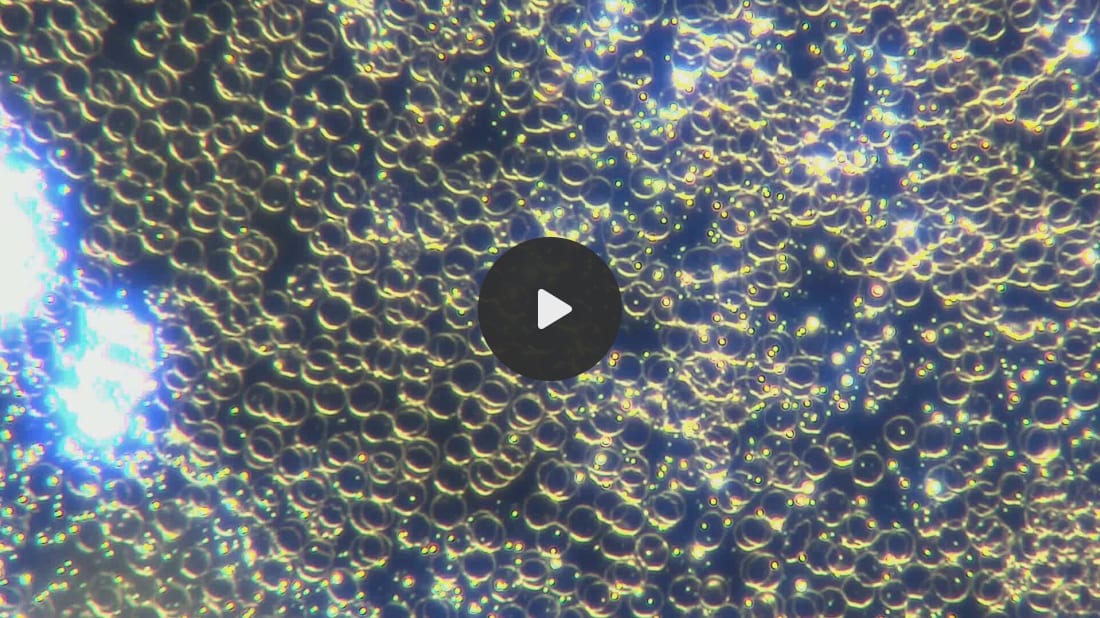
Image: Microrobot swarm in COVID19 unvaccinated blood. Magnification 400x. AM Medical
The
following article published in Psychology today discusses the predicted
growth of the brain computer interface market expected to reach 6.2
Billion Dollars by 2030. Is the market for neurologically disabled
people really going to grow this much or is it planning for the
technocratic view that most humans will have BCI augmentation?
Nanotechnology
AI interfaces for Brain computer connectivity are discussed in the
technological literature. BCI is the cure all for brain diseases but are
expected to be deployed on a much wider scale then just for people with
disabilities. 2 photon laser microscopy can show the electrical
activity of neurons deep within the brain. We know that read and write
applications are already known. Data encryption into hydrogels for
memory storage have all been developed. I wrote about this here:
Hydrogel Interfaces for Merging Humans and Machines - MIT Research Review
"Hydrogel
Platform Enables Versatile Data Encryption And Decryption" - The Next
Programmable Human Machine Interface Is "Smarter" Than You Think
Transparent Brain-Computer Interface Uses AI and Nanotech
Innovative technology such as artificial intelligence (AI), brain-computer interfaces and nanotechnology are accelerating neuroscience
research in the quest for improving human health and daily lives.
Researchers at the University of California San Diego (UCSD) have
created a novel transparent brain-computer interface
(BCI) capable of providing high-resolution neural recordings from the
brain’s surface utilizing AI machine learning and a nanomaterial called
graphene.
Every
one out of six people, approximately 16% of the global population,
experience significant disability according to the World Health
Organization (WHO). Brain-computer interfaces, also called brain-machine
interfaces (BMIs), are enabling technologies that offer hope to those
who have lost the ability to speak or move.
With
the help of a brain-computer interface, a person can manage and operate
external electronic devices with just thoughts to communicate via
synthesized speech, move prosthetic limbs, operate a computer, and more
important functions that improve the quality of life for those with
disabilities.
The
brain-computer interface market, a USD 2 billion industry in 2023, is
expected to reach USD 6.2 billion by 2030 with a compound annual growth
rate (CAGR) of 17.5% during 2020-2030 according to the Brain Computer Interface Market Size & Share Report 2030 by Grand View Research.
Per the report, North America had the largest revenue share globally at 39.5 % in 2022. A
growing aging population is expected to contribute to the BCI market
growth as the prevalence of Alzheimer’s disease, Parkinson’s disease,
Huntington’s disease, and other neurodegenerative disorders increases.
“Recordings
of neural activity at depth without implanting invasive neural probes
could extend the lifetime of neural implants and improve the longevity
of BCI technologies and pave the way for their medical translation,”
wrote UCSD researchers Duygu Kuzum, Mehrdad Ramezani, Jeong-Hoon Kim,
Xin Liu, Chi Ren, Abdullah Alothman, Chawina De-Eknamkul, Madison N.
Wilson, Ertugrul Cubukcu, Vikash Gilja, and Takaki Komiyama.
What
sets this brain-computer interface apart is the ability to record brain
activity via both optical imaging and electrical signals
simultaneously. Unlike conventional BCI implants which
are opaque, this new BCI is transparent, providing neuroscientists with a
window for observation via microscopy. As the
transparent graphene electrode array records electrical signals from the
neurons located in the brain’s outer layers, at the same time, the
calcium spikes from neurons up to 250 micrometers deep are imaged using a
two-photon microscope shining laser lights through the array. In
this manner, the researchers were able to correlate the electrical
signals at the brain’s outer layers with calcium spike activity in the
deeper parts of the brain.
The correlation data was used as training data for an AI artificial neural network. The UCSD researchers created an AI model with a linear hidden layer, a single-layer bidirectional LSTM (Long Short-Term Memory),
or BiLSTM, and a linear readout layer. The AI model learned from the
correlation data in order to predict the calcium activity in the deeper
parts of the brain based on the electrical signals on the outer layer.
This enables neuroscientists to observe brain activity for longer
periods as the organism is moving around freely versus being locked
under a microscope for a short duration. The researchers
demonstrated on laboratory mice that the electrical signals in the outer
layers recorded by their high-density transparent graphene array could
be correlated with calcium activity at deeper parts of the brain.
According to the study authors, their nanotechnology array is able to
predict average and single-cell calcium activities from surface
potential recordings. With this pioneering innovation, the next steps are to expand the research beyond laboratory mouse models.
“This
could potentially improve brain computer interfaces and enable less
invasive treatments for neurological disorders,” the UCSD researchers
concluded.
Two heads are better than one: Unravelling the potential Impact of Artificial Intelligence in nanotechnology
Artificial
Intelligence (AI) and Nanotechnology are two cutting-edge fields that
hold immense promise for revolutionizing various aspects of science,
technology, and everyday life. This review delves into the intersection
of these disciplines, highlighting the synergistic relationship between
AI and Nanotechnology. It explores how AI techniques such as machine
learning, deep learning, and neural networks are being employed to
enhance the efficiency, precision, and scalability of nanotechnology
applications. Furthermore, it discusses the challenges, opportunities,
and future prospects of integrating AI with nanotechnology, paving the
way for transformative advancements in diverse domains ranging from
healthcare and materials science to environmental sustainability and
beyond.
The combination of AI and nanotechnology in the field of nanomedicine shows great promise for transforming the paradigms of treatment and healthcare delivery [60]. Advanced drug delivery systems,
diagnostic instruments, and therapies with improved imaging, targeting,
and therapeutic capabilities have been made feasible by nanotechnology.
Optimizing the safety and effectiveness of these nanomedical
technologies, however, involves individualized strategies based on the
unique traits and disease profiles of each patient. Precision medicine
is made possible by AI-driven methods that stratify patient populations
according to prognoses, treatment responses, and disease subtypes by
evaluating vast amounts of patient data, including genomes, proteomics,
and medical imaging. The best courses of action for individual patients
can be chosen with the use of machine learning algorithms, which can
detect biomarkers linked to drug response and illness progression.
Furthermore, real-time drug administration, pharmacokinetic, and
therapeutic response monitoring is made possible by AI-powered nanomedicine systems, which promotes flexible treatment plans and enhances patient outcomes.
The
combination of AI with nanotechnology presents creative approaches to
sustainability, remediation, and monitoring in environmental
applications. Nanotechnology offers nanomaterials and nanosensors
that can monitor environmental parameters, identify and eliminate
contaminants, and facilitate the production of renewable energy.
Nonetheless, the implementation of these nanotechnologies in actual
environmental contexts necessitates the use of intelligent systems for
resource optimization, data analysis, and decision-making. By offering
data-driven insights and predictive models for environmental monitoring
and management, AI-driven approaches help to address these issues.
Through the analysis of sensor data from distributed networks of
nanosensors, machine learning algorithms are able to anticipate
pollutant concentrations, identify environmental contaminants, and
optimize remediation procedures in real time. Additionally, the design
and operation of nanomaterial-based energy systems, such solar cells and
batteries, can be optimized for optimal efficiency and sustainability
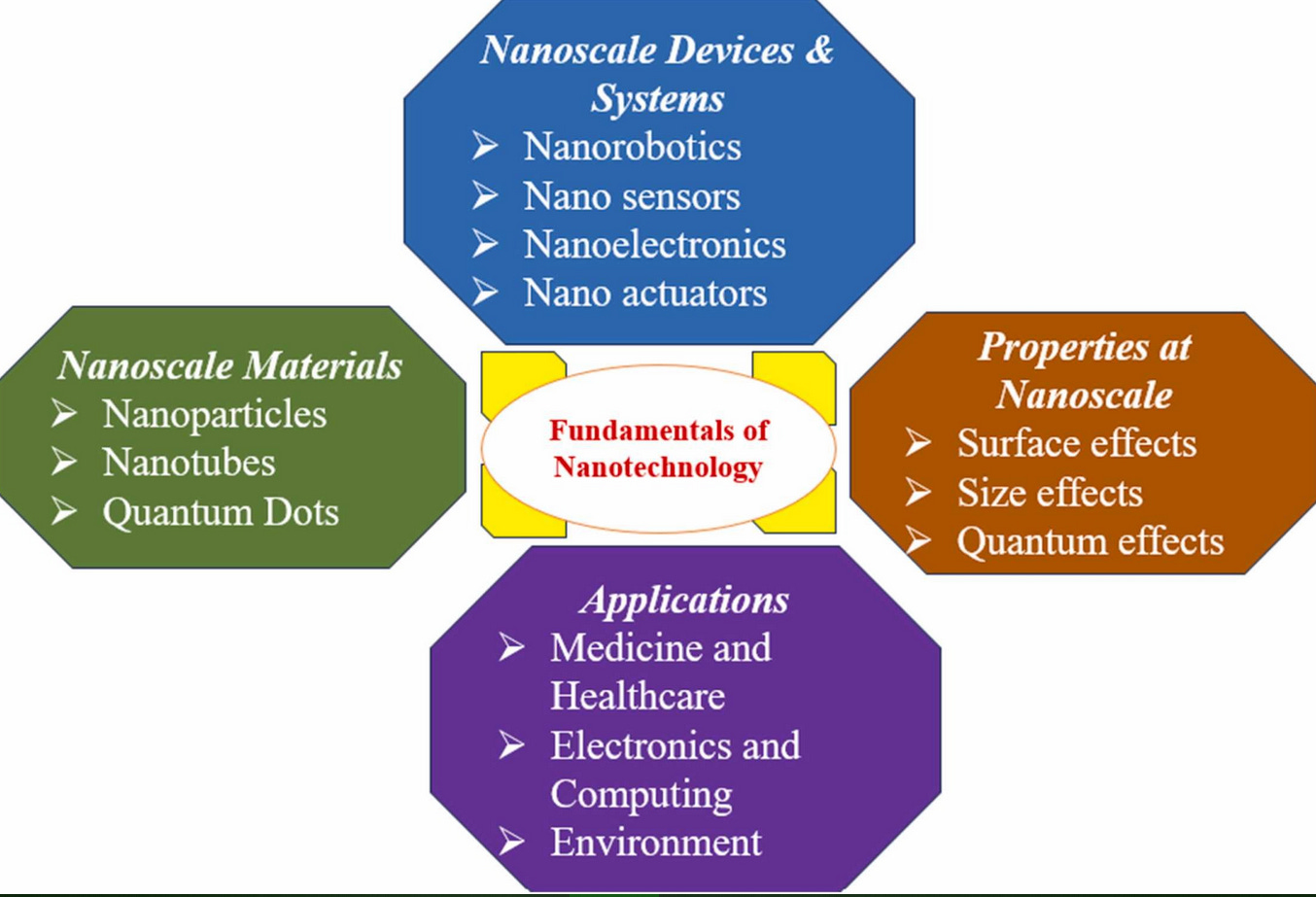
using AI-powered optimization algorithms [61]. Fig. 3 depicts synergies of Nanotechnology & AI.
AI
not only helps with material design but also optimizes biomaterials for
tissue engineering and medication delivery applications. To optimize
the design of drug delivery systems, such as hydrogels, microparticles, and nanoparticles,
machine learning algorithms can examine cellular absorption pathways,
diffusion mechanisms, and drug release kinetics. AI models facilitate
the creation of more efficient and customized drug delivery systems for a
range of therapeutic applications by forecasting the release profiles
and targeting efficiencies of drug-loaded biomaterials
A New Frontier: The Convergence of Nanotechnology, Brain Machine Interfaces, and Artificial Intelligence
A
confluence of technological capabilities is creating an opportunity for
machine learning and artificial intelligence (AI) to enable “smart”
nanoengineered brain machine interfaces (BMI). This new generation of
technologies will be able to communicate with the brain in ways that
support contextual learning and adaptation to changing functional
requirements. This applies to both invasive technologies aimed at
restoring neurological function, as in the case of neural prosthesis, as
well as non-invasive technologies enabled by signals such as
electroencephalograph (EEG). Advances in computation, hardware, and
algorithms that learn and adapt in a contextually dependent way will be
able to leverage the capabilities that nanoengineering offers the design
and functionality of BMI. We explore the enabling capabilities that
these devices may exhibit, why they matter, and the state of the
technologies necessary to build them. We also discuss a number of open
technical challenges and problems that will need to be solved in order
to achieve this.
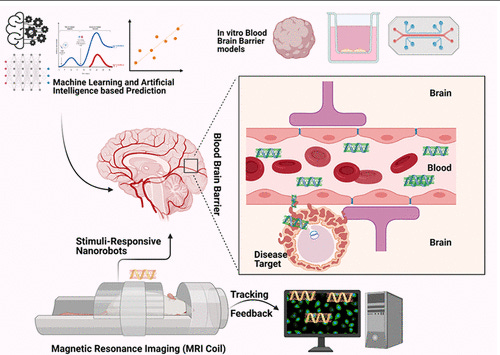
Let
me ask this question - based on the below technology that nanorobotics
can cross the blood brain barrier, what makes one think that the nano
and microrobots seen in human blood do not do the same?
Video: Microrobot swarm in COVID19 unvaccinated blood. Magnification 400x. AM Medical
Emerging
Application of Nanorobotics and Artificial Intelligence To Cross the
BBB: Advances in Design, Controlled Maneuvering, and Targeting of the
Barriers
ACS Chem. Neurosci. 2021, 12, 11, 1835-1853
The
blood–brain barrier (BBB) is a prime focus for clinicians to maintain
the homeostatic function in health and deliver the theranostics in brain
cancer and number of neurological diseases. The structural hierarchy
and in situ biochemical signaling of BBB neurovascular unit have been
primary targets to recapitulate into the in vitro modules. The
microengineered perfusion systems and development in 3D cellular and
organoid culture have given a major thrust to BBB research for
neuropharmacology. In this review, we focus on revisiting the
nanoparticles based bimolecular engineering to enable them to maneuver,
control, target, and deliver the theranostic payloads across cellular
BBB as nanorobots or nanobots. Subsequently we provide a brief outline
of specific case studies addressing the payload delivery in brain tumor
and neurological disorders (e.g., Alzheimer’s disease, Parkinson’s
disease, multiple sclerosis, etc.).
_________________________________________________________________________
The
technological advances allow for full AI controlled and nanotechnology
enabled brain computer interfaces. Former CIA/ DARPA engineer Dr. Robert
Duncan explained just how far advanced these applications already have
been for decades:
Nanotechnology,
Cybernetic Hive Minds, Artificial Intelligence and Mind Control - DARPA
and CIA Insider Dr. Robert Duncan's Interviews Confirms Hijacking Of
Human Soul Possible
He
explains how mice were cybernetically connected showing that the
entrainment of their brains were solving all the same problem. Duncan
goes on stating that the military developed cybernetic hive mind in the
1960’s. There was a positive spin on it but there is also a very dark
side of this which is what I have been discussing in my substacks. He
explains how civilian scientists are catching up to what the military
scientists had developed decades ago. He explains how the military
created an experiment of linking the brain of a human girl with an ape
and the ape ended up killing the girl. Such human experiments have been
going on for a long time. He explains that now instead of communication
at the speed of light, you can communicate at the speed of thought.
Combining
the nanotechnology in humans for purposes of brain computer interface
is dangerous. AI of course can exterminate people in many ways, but with
such access to global human physiology there are some stating that AI
could kill all humans in 5 seconds.
See for yourself in this excellent video:
Get a copy of the bestselling Transhuman books







No comments:
Post a Comment