AI can now create a replica of your personality
I
am reposting this article from MIT technology review to show how easy
it now is for AI to create a digital twin. 2 hours of an interview and
your are decoded. This is exactly what WEF spokesperson Juval Harrari
was speaking about - that AI will know you better than you know
yourself. You can see the clip in this video about my books
“Transhuman”:
The
technocratic transhumanist Agenda is progressing at lightening speed -
with no stopping in sight. Remember that the self assembly
nanotechnology in your body connecting with your Digital Twin is
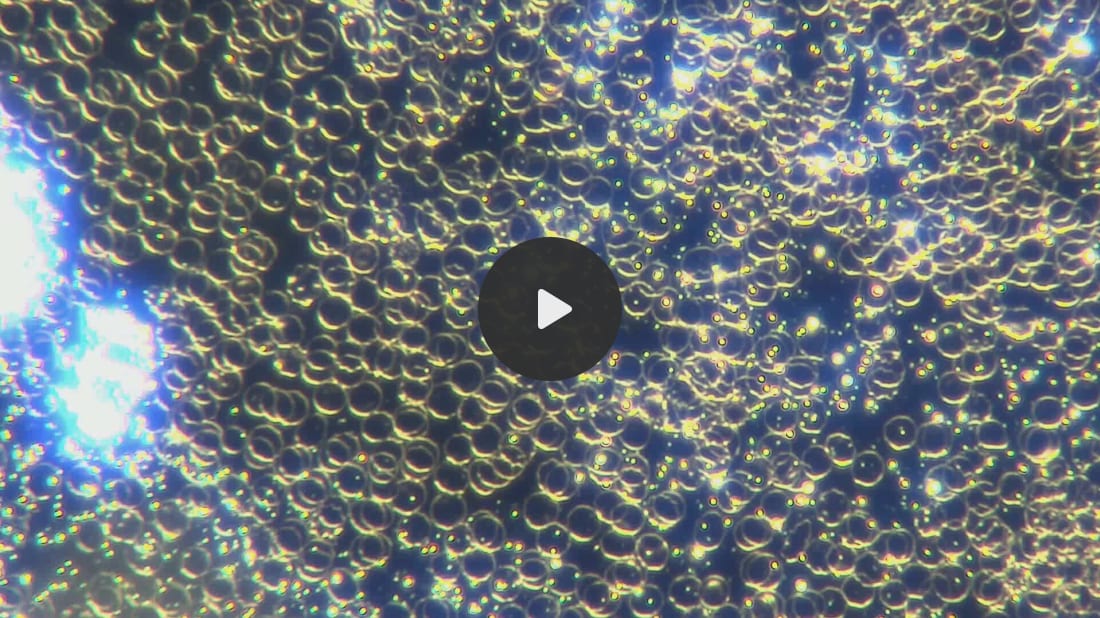
bidirectional. In the below video you can see COVID19 unvaccinated blood
and a microrobot swarm that is building a Mesogen DNA microchip. I
filmed this in one of my patients at 400x Magnification:
AI
can change you by downloading and rewriting your neurons via the self
assembly nanotechnology without your knowing, exactly as Harrari said.
Here are some articles in which I explained the technology further:
Digital Twin Development Through The Healthcare System - Total Surveillance Via Smart Phones And WBAN?
"Your
Life As A Digital Ghost" And The Race For Space Satellites And Space
Lasers For The Metaverse Infrastructure Of Digital Twins
The
Sentient World Simulation, 7 Billion People Have Their Digital Twin In
The Metaverse Now And Are Controlled By AI Quantum Computer - The
Infinity Machine
Here is the article from MIT Technology Review
Imagine
sitting down with an AI model for a spoken two-hour interview. A
friendly voice guides you through a conversation that ranges from your
childhood, your formative memories, and your career to your thoughts on
immigration policy. Not long after, a virtual replica of you is able to
embody your values and preferences with stunning accuracy.
That’s
now possible, according to a new paper from a team including
researchers from Stanford and Google DeepMind, which has been published
on arXiv and has not yet been peer-reviewed.
Led
by Joon Sung Park, a Stanford PhD student in computer science, the team
recruited 1,000 people who varied by age, gender, race, region,
education, and political ideology. They were paid up to $100 for their
participation. From interviews with them, the team created agent
replicas of those individuals. As a test of how well the agents mimicked
their human counterparts, participants did a series of personality
tests, social surveys, and logic games, twice each, two weeks apart;
then the agents completed the same exercises. The results were 85%
similar.
“If
you can have a bunch of small ‘yous’ running around and actually making
the decisions that you would have made—that, I think, is ultimately the
future,” Park says.
In
the paper the replicas are called simulation agents, and the impetus
for creating them is to make it easier for researchers in social
sciences and other fields to conduct studies that would be expensive,
impractical, or unethical to do with real human subjects. If you can
create AI models that behave like real people, the thinking goes, you
can use them to test everything from how well interventions on social
media combat misinformation to what behaviors cause traffic jams.
Such
simulation agents are slightly different from the agents that are
dominating the work of leading AI companies today. Called tool-based
agents, those are models built to do things for you, not converse with
you. For example, they might enter data, retrieve information you have
stored somewhere, or—someday—book travel for you and schedule
appointments. Salesforce announced its own tool-based agents in September, followed by Anthropic in October, and OpenAI is planning to release some in January, according to Bloomberg.
The
two types of agents are different but share common ground. Research on
simulation agents, like the ones in this paper, is likely to lead to
stronger AI agents overall, says John Horton, an associate professor of
information technologies at the MIT Sloan School of Management, who
founded a company to conduct research using AI-simulated participants.
“This
paper is showing how you can do a kind of hybrid: use real humans to
generate personas which can then be used programmatically/in-simulation
in ways you could not with real humans,” he told MIT Technology Review in an email.
The
research comes with caveats, not the least of which is the danger that
it points to. Just as image generation technology has made it easy to
create harmful deepfakes of people without their consent, any agent
generation technology raises questions about the ease with which people
can build tools to personify others online, saying or authorizing things
they didn’t intend to say.
The
evaluation methods the team used to test how well the AI agents
replicated their corresponding humans were also fairly basic. These
included the General Social Survey—which collects information on one’s
demographics, happiness, behaviors, and more—and assessments of the Big
Five personality traits: openness to experience, conscientiousness,
extroversion, agreeableness, and neuroticism. Such tests are commonly
used in social science research but don’t pretend to capture all the
unique details that make us ourselves. The AI agents were also worse at
replicating the humans in behavioral tests like the “dictator game,”
which is meant to illuminate how participants consider values such as
fairness.
What are AI agents?
The next big thing is AI tools that can do more complex tasks. Here’s how they will work.
To
build an AI agent that replicates people well, the researchers needed
ways to distill our uniqueness into language AI models can understand.
They chose qualitative interviews to do just that, Park says. He says he
was convinced that interviews are the most efficient way to learn about
someone after he appeared on countless podcasts following a 2023 paper
that he wrote on generative agents, which sparked a huge amount of
interest in the field. “I would go on maybe a two-hour podcast podcast
interview, and after the interview, I felt like, wow, people know a lot
about me now,” he says. “Two hours can be very powerful.”
These
interviews can also reveal idiosyncrasies that are less likely to show
up on a survey. “Imagine somebody just had cancer but was finally cured
last year. That’s very unique information about you that says a lot
about how you might behave and think about things,” he says. It would be
difficult to craft survey questions that elicit these sorts of memories
and responses.
Interviews aren’t the only option, though. Companies that offer to make “digital twins” of users, like Tavus,
can have their AI models ingest customer emails or other data. It tends
to take a pretty large data set to replicate someone’s personality that
way, Tavus CEO Hassaan Raza told me, but this new paper suggests a more
efficient route.
“What
was really cool here is that they show you might not need that much
information,” Raza says, adding that his company will experiment with
the approach. “How about you just talk to an AI interviewer for 30
minutes today, 30 minutes tomorrow? And then we use that to construct
this digital twin of you.”
Transhuman Books









No comments:
Post a Comment