Potential Health Impact of Microplastics: A Review of Environmental Distribution, Human Exposure, and Toxic Effects
I
am a member of the American Chemical Society. Aside from the
nanotechnology literature, ACS has been consistently publishing
excellent scientific papers on the findings of microplastics in human
tissues. This review article is eye opening, for the overlap of the
microplastics toxicity to also vaccine injury that uses polymer plastics
stealth nanoparticles as well as the geoengineering of polymers that
people inhale and also contaminate our biosphere.
The
bottom line is that these chemicals are toxic for humanity. Why are
they allowed in medications and vaccines? I believe that the acclerated
aging process we have been seeing is caused by the enormous burden of
self replicating nano and microplastic polymers that are in the blood
and penetrate to every organ system. The self assembly nanoparticles are
what create the polymers in the blood, it is not just the microplastic
exposure from environmental sources as I have shown before.
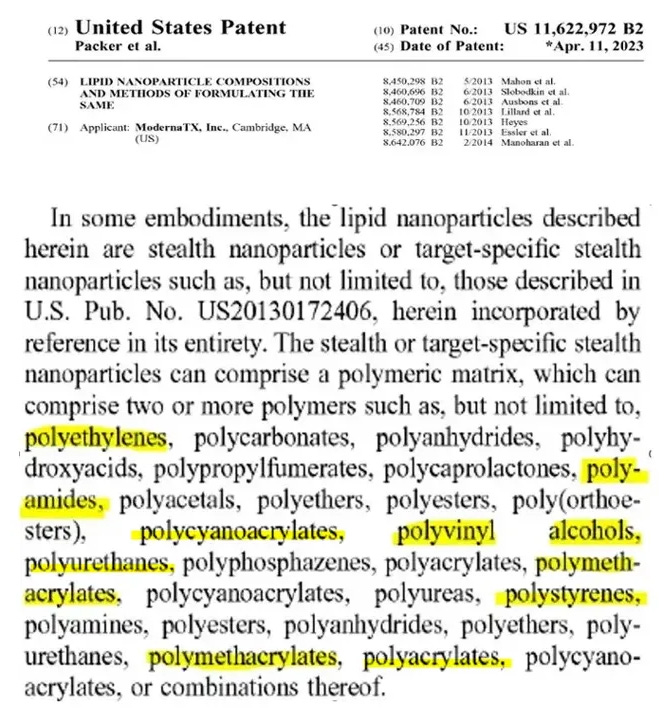
Please
note that all of these plastics are also stealth nanoparticles in the
Moderna patent:
___________________________________________________________________________
A
recent review indicates that microplastics are transported to the whole
body through blood circulation, and the existence of microplastics are
found in 15 human biological components, such as the spleen, liver,
colon, lung, feces, placenta, breastmilk, etc. (58) The organs with high
content are the colon (28.1 particles/g) and liver (4.6 particles/g).
The main types of microplastics detected include PE, PET, PP, PS, PVC,
and PC.
(Polyethylene, Polyelthylene Terephtalate, Polypropylene, Polystyrene, Polyvinyl Chloride, Polycarbonate)
__________________________________________________________________________
Video:
COVID19 unvaccinated blood. Micellar construction site filled with
nanorobots building a mesogen polymer microchip. Magnficiation 2000x.
Please read this interesting and eye opening article:
Microplastics
are ubiquitous in the global environment. As a typical emerging
pollutant, its potential health hazards have been widely concerning. In
this brief paper, we introduce the source, identification, toxicity, and
health hazard of microplastics in the human. The literature review
shows that microplastics are frequently detected in environmental and
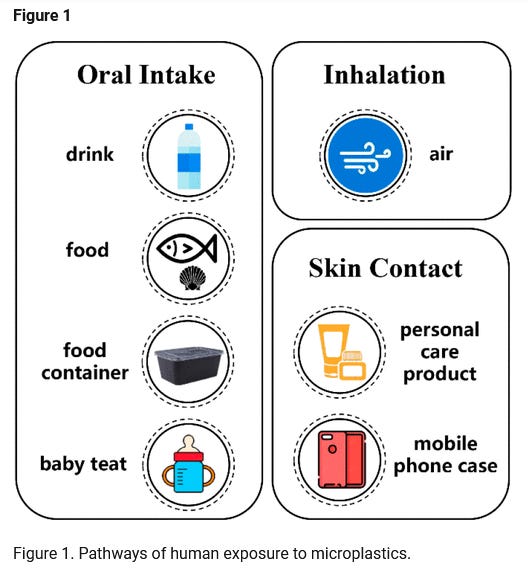
human samples. Humans are potentially exposed to microplastics through
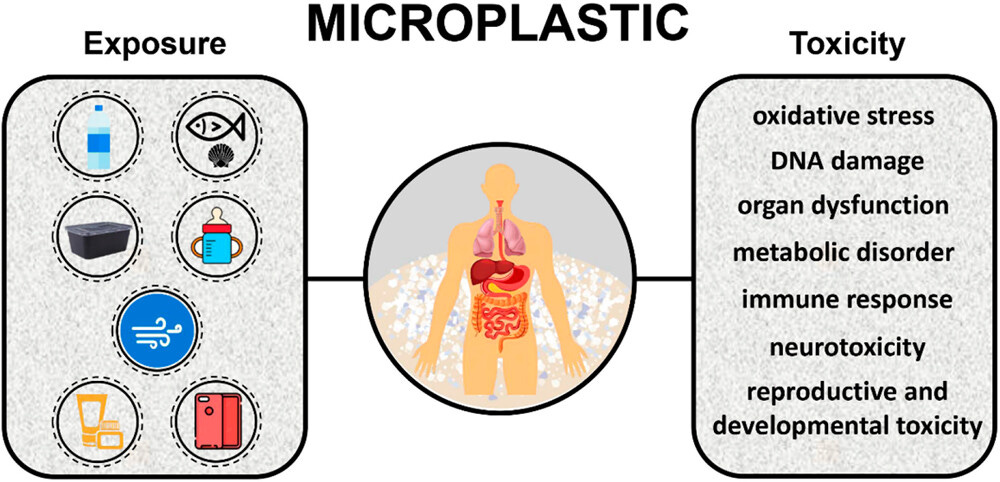
oral intake, inhalation, and skin contact. We summarize the toxic
effects of microplastics in experimental models like cells, organoids,
and animals. These effects consist of oxidative stress,
DNA damage, organ dysfunction, metabolic disorder, immune response,
neurotoxicity, as well as reproductive and developmental toxicity. In
addition, the epidemiological evidence suggests that a variety of
chronic diseases may be related to microplastics exposure. Finally, we
put forward the gaps in toxicity research of microplastics and their
future development directions. This review will be helpful to the
understanding of the exposure risk and potential health hazards of
microplastics.
Microplastics
exist in our daily necessities like drinking water, bottled water,
seafood, salt, sugar, tea bags, milk, and so on. (21−29) Europeans are
exposed to about 11,000 particles/person/year of microplastics due to
shellfish consumption, (30) and according to food consumption, the
intake of plastic particles in human body is 39,000–52,000
particles/person/year. (31) Microplastics may also have been widely
distributed in soil, especially in agricultural systems. (20) They
(especially with negative charge) can get into the water transport
system of plants, and then move to the roots, stems, leaves, and fruits.
(32,33) Once microplastics enter agricultural systems through sewage
sludge, (34) compost, (35) and plastic mulching, (36) they will cause
food pollution, which may increase the risk of human exposure.
Take-out
food containers made of common polymer materials (PP, PS, PE, PET) are
used widely, from which microplastics are found. (37,38) It is estimated
that people who order take-out food 4–7 times weekly may intake 12–203
pieces of microplastics through containers. (38) In addition, research
demonstrates that the surface of silicone rubber baby teats degrades
when they are sterilized by steam, during which microplastic particles
are released into the environment. (39) It is estimated
that the total number of microplastic particles entering the baby’s body
during one year of normal bottle feeding reaches about 0.66 million.
Microplastics
in the air are mainly PE, PS, and PET particles and fibers with size
ranges of 10–8000 μm. (40) The largest source of microplastics (84%) in
the atmosphere comes from the road. (41) It is reported that the median
concentration of microplastic fibers is 5.4 fibers/m3 in the outdoor air and 0.9 fibers/m3 in the indoor air in Paris. (42) The average concentration of microplastics is 1.42 particles/m3
in the outdoor air in Shanghai, and the size range is 23–5000 μm. (43)
It is estimated that annual microplastics consumption ranges from 74,000
and 121,000 particles when both oral intake and inhalation are
considered. (31) Amato-Lourenço et al. detected microplastic particles
smaller than 5.5 μm and microplastic fibers with the size of 8.12–16.8
μm in human lungs, whose main components are PE and PP. (44) The size of
microplastics detected in lung tissue is smaller than that in the
atmosphere. This further confirms that humans can be exposed to
microplastics by inhalation and prompts attention to the potential harm
to the human body.
Microplastics
are usually considered not to pass through the skin barrier, (45) but
they can still increase exposure risk by depositing on the skin. (46)
For example, the use of consumer products containing microplastics (such
as face cream and facial cleanser) will increase the exposure risk of
PE. (47) The protective mobile phone cases (PMPCs) can generate
microplastics during use, which are transferred to human hands. (48)
When children crawl or play, they may come into contact with
microplastics on the ground. During the dermal exposure
of microplastics, some typical plastic additives, including brominated
flame retardants (BFRs), bisphenols (BPs), triclosan (TCS), and
phthalates, may be absorbed. (49)
Microplastics
are found in animals. They pose a great threat to aquatic organisms,
like fish and marine mussels. Microplastic fibers are the most frequent
microplastic type ingested. (50) All fishes in the Haizhou Bay have
microplastics with the highest abundance of 22.21 ± 1.70
items/individual. (26) Mussels in the French Atlantic
coast and the coastal waters of the U.K. both have microplastics.
(27,51) For wild coastal animals, microplastics are found in their
intestine, stomach, liver, and muscle. (52) PET is also detected in the
feces of pets, such as cats (<2300–340,000 ng/g) and dogs
(7700–190,000 ng/g). (53) Microplastics also exist in plants and algae.
Liu et al. carried out a hydroponic experiment, which they confirmed
using confocal laser scanning microscopy that microplastics can transfer
from roots to the aboveground parts of rice seedlings. (54)
Yan et al. reports that microplastics are internalized in the vacuoles
of algal cells. (55) It is noteworthy that the phenomenon of biological
endocytosis of microplastics can be utilized to remove microplastics
from the environment. Manzi et al. summarizes the algal species that
have been used to remove microplastics from the aquatic environment and
highlights the mechanism of microplastics biodegradation. (56)
It
is generally believed that after entering the human body, microplastics
will be excreted out through the gastrointestinal tract and biliary
tract. However, researchers detect the existence of microplastics in
human blood. (57) People begin to reconsider the harm of microplastics
to human health. The intake, distribution, accumulation, and metabolism
of microplastics in the human body are attracting more and more
attention. Understanding the concentration of microplastics in the human
body is an important prerequisite for exploring their potential harmful
effects. A recent review indicates that microplastics
are transported to the whole body through blood circulation, and the
existence of microplastics are found in 15 human biological components,
such as the spleen, liver, colon, lung, feces, placenta, breastmilk,
etc. (58) The organs with high content are the colon (28.1 particles/g)
and liver (4.6 particles/g). The main types of microplastics detected
include PE, PET, PP, PS, PVC, and PC.
Pregnant
women and infants are sensitive people exposed to microplastics. (59)
The concentration of PET in infant feces (5700–82,000 ng/g, median:
36,000 ng/g) is ten times higher than that in adults (2200–16,000 ng/g,
median: 2600 ng/g), (60) indicating that the exposure level of
microplastics in infants may be much higher than adults. Twelve
microplastic fragments, ranging from 5 to 10 μm, are detected in human
placenta by the team of Ragusa for the first time, (61) and then they
first detect PVC and PP microplastics with a size of 2–12 μm in human
breastmilk. (62) Since then, more studies also detect microplastics in
placenta, meconium, and breastmilk. Zhu et al. detects microplastics in
17 placental samples and identifies 11 types of polymers with sizes from
20.34 to 307.29 μm. (63) Liu et al. recruits 18 pairs of mothers and
infants and determines 16 types of microplastics in placenta, meconium,
infant feces, breastmilk, and infant formula samples. (64) More than 74%
of microplastics are 20–50 μm in size. In accordance with the DOHaD
theory, adults experiencing adverse factors in the early stages of
development will increase the probability of obesity, diabetes,
cardiovascular disease, and other chronic diseases in adulthood. (65) The
appearance of microplastics in human placenta further emphasizes that
these nondegradable chemicals have potential intergenerational influence
on the human body and may affect the developing fetus. Therefore, more attention should be paid to the potential impact of early exposure of infants and early development of embryos.
Microplastics
producing toxic effects is a complex process and is affected by many
factors including the physical and chemical properties, exposure time,
additives, etc. Microplastics are not only toxic itself but also
carriers for many pollutants to enter biological tissues and organs. We
aim to systematically sketch their potential toxicity at the
“individual-tissue-cell-subcellular” level, which will help to explore
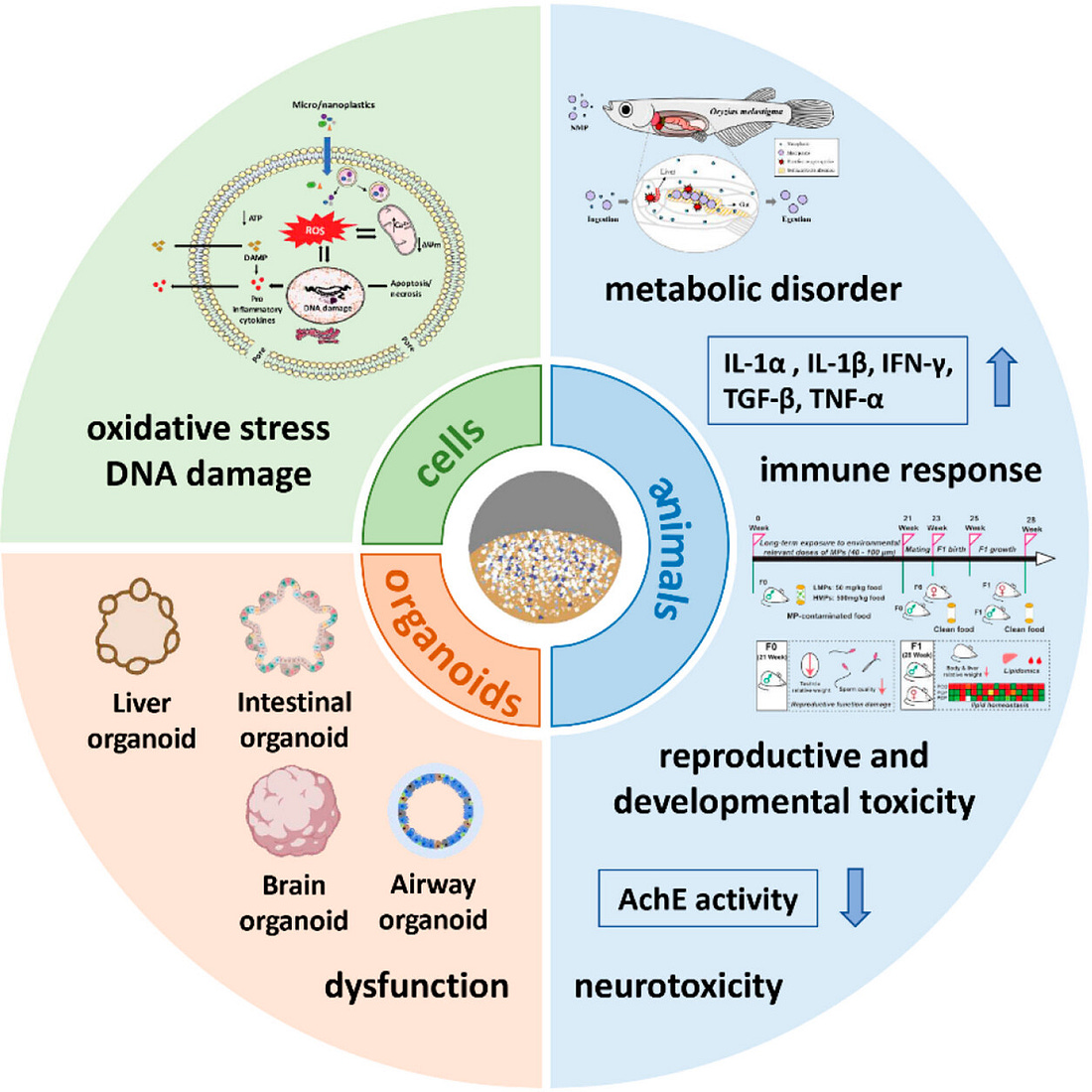
the toxicity mechanism. Due to the lack of direct research from humans,
this section briefly summarizes the major effects of microplastics in
present experimental models, like cells, organoids, and animals (Figure 2).
Previous
animal experiments confirm that microplastics lead to the dysfunction
of the liver and intestine. For instance, Kang et al. finds that
microplastics induce intestinal damage of fish by two different
mechanisms. (83) PS with size of 50 nm exhibits stronger oxidative
stress, while PS with size of 45 μm causes significant imbalance of
intestinal flora. Kim et al. reports that microplastics lead to the
inhibition of digestive enzyme activity in fish through a
microalgae-crustacean-small yellow croaker food chain. (84) Jin et al.
also reports that intestinal barrier and metabolic function are impaired
in PS exposed mice. (85) Tan et al. demonstrates that microplastics
significantly reduce lipid digestion in the simulated human
gastrointestinal system, and PS shows the highest inhibition. (86) The
decrease of lipid digestion is independent of PS size. Lu et al. reveals
that PS exposure causes the local infection and lipid accumulation in
the liver of fish and disrupts the energy metabolism. (87) In addition,
Deng et al. discovers that after exposure to microplastics and
organophosphorus flame retardants (OPFRs), the metabolites of mice
change significantly. (88) And it is noticeable that microplastics
aggravate the toxicity of OPFRs, highlighting the health risks of
microplastic coexposure with other pollutants.
Microplastics
can induce immune response in the body. Yuan et al. reports that PE
exposure activates the intestinal immune network pathway of zebrafish
and produces mucosal immunoglobulin. (89) Li et al. demonstrates that
the secretion of IL-1α is increased in the serum of rats exposed to PE
but decreased in the Th17 and Treg cells among CD4+
cells. (90) Lim et al. observes that inhalation of PS causes the
upregulated expression of the inflammatory protein (TGF-β and TNF-α) in
lung tissue of rats. (91) Liu et al. finds that PS exposure
significantly increases the expression of inflammation factors (TNF-α,
IL-1β, and IFN-γ) in mice, and intestinal immune imbalance will
significantly increase the accumulation of microplastics, producing
further toxic effects. (92)
Microplastics
are also toxic to the neural development. Inhibition of
acetylcholinesterase (AchE) activity is the most reported neurotoxic
effects after the exposure of microplastics. (93) In a study of juvenile
fish, the microplastics inhibit the activity of AchE, increase lipid
oxidation in the brain, and change the activities of energy-related
enzymes, eventually causing neurotoxicity. (94) Prüst et al. also
reports that microplastics cause the abnormal behavior of nematodes,
crustaceans, and fish. (93) Yang et al. discovers that PS (70 nm) can
pass through the epidermis of larvae and enter into the muscle tissue.
(95) It can destroy nerve fibers, decrease the activity of AchE, and
exert great adverse effects on larval movement. Besides, Jin et al.
reveals that after the chronic exposure to PS at environmental pollution
concentrations (100 and 1,000 μg/L), the blood-brain barrier of mice is
damaged, and the learning and memory dysfunctions occur. (96)
The
effect of microplastics on reproduction is reflected in the development
of germ cells and embryo quality. For example, Liu et al. finds that
the PS exposure affects the development of female mouse follicles and
the maturation of oocytes, reducing the quality of oocytes. (97) And Hu
et al. reports that microplastics might cause adverse effects on
pregnancy outcomes through immune disorders. (98) Deng et al. finds that
after long-term exposure to environmentally relevant doses of PS, the
sperm quality significantly decreases, which affects the fertility of
male mice. (99) In addition, Park et al. shows that the number of live
births per dam and the sex ratio and body weight of pups in groups
treated with PE are notably altered. (100) What’s more, they suggest the
IgA level as a biomarker for harmful effects following exposure on
microplastics.
Epidemiological
investigation is a good method to demonstrate the correlation between
microplastics exposure and adverse health outcomes. However, there are
relatively few epidemiological studies related to microplastics. Kremer
et al. reports that due to occupational exposure, workers in polymer
factories in The Netherlands are more likely to suffer from chronic
respiratory diseases. (101) In Canada and the United States, nylon
flocking factory employees are diagnosed with work-related interstitial
lung disease. (102) Yan et al. discovers that the fecal microplastic
concentration in inflammatory bowel disease (IBD) patients is
significantly higher than that in healthy people, and the concentration
is positively correlated with the degree of IBD. (103) Horvatits et al.
finds the existence of microplastics in cirrhotic liver tissues, whose
concentration is higher compared to that of liver samples from healthy
individuals. (104) Wu et al. detects the existence of microplastic in
human aortic dissection thrombus samples and human acute arterial
embolism samples. (105) These results suggest that microplastics may be
associated with the formation of many chronic diseases, which may be
harmful to human health.
Humans
are exposed to microplastics by oral intake, inhalation, and skin
contact. Microplastics have been found in a variety of organisms and
multiple parts of the human body. We emphasize the potential impact of
microplastics on the early exposure of infants and the early development
of embryos. At present, the toxicity research on microplastics show
that the exposure will cause intestinal injury, liver infection, flora
imbalance, lipid accumulation, and then lead to metabolic disorder. In
addition, the microplastic exposure increases the expression of
inflammatory factors, inhibits the activity of acetylcholinesterase,
reduces the quality of germ cells, and affects embryo development. At
last, we speculate that the exposure of microplastics may be related to
the formation of various chronic diseases. Although the
toxicity of microplastics has been widely studied, there are still
several key scientific issues that need to be further explored: (1) The
key technologies for precise identification, multiscale
characterization, and accurate quantitative and dynamic tracing of
microplastics in organisms. At present, the commonly used analytical
means can detect microplastics only at the micron level, and it is
difficult to effectively analyze microplastics with smaller size
(nanoplastics) and greater potential harm, which brings great challenges
to accurately reveal the possible health risks of microplastics. In
addition, there is still a lack of effective dynamic tracing means.
Therefore, how to precisely identify, accurately quantify, and
dynamically trace the microplastics in organisms is the primary problem.
It may be improved by comprehensively utilizing existing imaging and
analysis technologies, such as SEM, CLSM, Raman spectroscopy, and so on.
(2) The biological processes such as absorption, metabolism,
transportation, and accumulation of microplastics, as well as crossing
biological barriers. Although studies have shown that microplastics can
enter the circulatory system and reach other tissues, from the current
research results, one cannot clearly determine the key factors of the
bioprocess of microplastics. Systematic research on the key biological
processes of microplastics needs to be carried out at the
“individual-tissue-cell-subcellular” level. The content includes but is
not limited to the transport process, the distribution in tissues and
organs, the single cell atlas, and the intracellular localization. (3)
The “common” and “specific” characteristics of biological processes of
different microplastics. There are various kinds of microplastics with
different sizes and physical and chemical properties. However, the
current experiments usually use PS and PE as models, and most of them
are commercially synthesized, which means the type of microplastic is
unitary. Therefore, more kinds of microplastics (e.g., actual
environmental samples) need to be used in the exposure experiments, and
their commonness and specificity should be revealed. (4) The “real”
quantitative relationship between the exposure dose and toxic effects of
microplastics, as well as the combined toxic effect of microplastics
and other pollutants. Although scientists have found some toxic effects
about the exposure of microplastics using multiple experimental models,
they usually use high exposure doses. It is necessary to evaluate the
toxic effects of microplastics more realistically from the perspective
of actual environmental concentration and the whole life cycle of
organisms. Because of the large surface energy, microplastics usually
adsorb other pollutants, especially heavy metals and hydrophobic organic
chemicals. The combined toxicity needs further investigation to explore
whether there is synergy between microplastics and adsorbed pollutants
and the toxic mechanism. (5) The key determinants and molecular
mechanisms of toxic effects of microplastics. At present, the research
on the toxicity of microplastics is mostly effect analysis, and the
molecular mechanism is relatively lacking. It is necessary to combine
the multiomics analysis with toxicity effect study, in which the
exposure and effect biomarkers with high sensitivity and specificity may
be screened. (6) The correlation between microplastics and adverse
health outcomes. Almost all the studies on the toxicity of microplastics
use experimental models, and the harm to the human body is still
unclear. Epidemiological and clinical data needs to be collected.
Biomarkers can be used to explore the internal relationship between
microplastic exposure and possible adverse health outcomes. A health
risk assessment model should be established with the help of machine
learning to early warn the exposure risk of microplastics.
Unbelievable
Amounts Of Nano & Microplastics Found In Deceased Human Brains -
Concentrations Rose by 50% between 2016-2024. The Rise Of Human Cyborgs:
Instead Of Superintelligence We Get Dementia?
Study Shows How Microplastics Can Easily Climb The Food Chain
Microplastics
in Human Blood: Polymer Types, Concentrations and Characterization
Using μFTIR Microplastics in Human Blood: Polymer Types, Concentrations
and Characterization Using μFTIR
Microplastics in Human Blood: Polymer Types, Concentrations and Characterization Using μFTIR
New
Study: "Microplastics in the Olfactory Bulb of the Human Brain" Finds
Polypropylene, Nylon, Polyamide Microplastics. We Found This In The
Blood Too, And Call It Self Assembly Nanotechnology
Humans Turning Into Cyborgs: Scientific Article On "Detection of Various Microplastics in Patients Undergoing Cardiac Surgery"
Microplastics - aka Nanotechnological Self Assembly Polymers - Are Everywhere - Poisoning Our Biosphere, Food Supply And Humans
New England Journal Of Medicine Microplastics Article Shows Higher Risk Of Heart Attacks, Stroke And Death







No comments:
Post a Comment