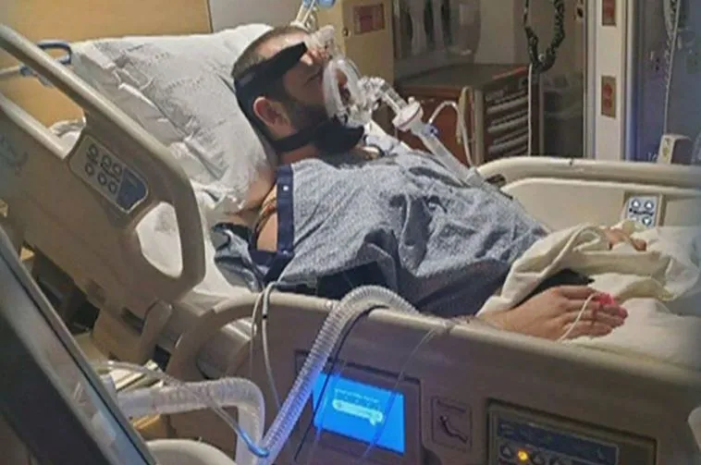
A young father of two children with a baby on the way, who was first in line for a heart transplant, was removed from the transplant list and denied the life-saving procedure when he failed to get the COVID-19 vaccination at Brigham and Women’s Hospital in Boston. The patient, DJ Ferguson, has been hospitalized since November with a hereditary condition that caused his lungs to fill up with blood. DJ and his doctors are concerned about the vaccine’s link to heart inflammation because he would be at risk of dying should he suffer any more inflammation in his heart.1
These concerns are validated by the recent study published by CDC and other researchers that found the risk of myocarditis after getting the COVID vaccine is 133 times greater than the general risk of myocarditis. The actual increase in myocarditis is likely much greater considering this statistic was derived with data from the Vaccine Adverse Events Reporting System (VAERS) which, according to the researchers, routinely underreports adverse events from vaccination.2 3 DJ’s father said:
I think my boy is fighting pretty damn courageously and he has integrity and principles he really believes in and that makes me respect him all the more. It’s his body. It’s his choice.
University of Virginia Hospital Denies Unvaccinated Kidney Transplant Patient Life Saving Kidney
Unfortunately, DJ isn’t alone in being denied a procedure that would save his life because he refused to take the COVID vaccine. The University of Virginia Hospital placed Shamgar Connors on the inactive list for a kidney transplant due his vaccine status. Shamgar said, “I’d rather die of kidney failure” than receive the COVID vaccine.4
Leilani Lutali was denied a kidney transplant last year by a Colorado hospital because her religious beliefs prevented her from receiving the novel vaccine. She had a donor and a surgery date set when she was refused the life-saving operation and was given 30 days to get the vaccine or be taken off the donor list.5 Leilani, who offered to be tested for COVID prior to the procedure and sign a waiver absolving the hospital of any risk due to her not taking the vaccine, said:
At what point do you no longer become a partner in your own care regardless of your own concerns?
She plans to go to Texas to await an organ transplant.6
Individual hospitals are the ultimate arbitrator of who receives an organ from the transplant list and according to The United Network for Organ Sharing, a non-profit that manages the organ transplant program in the U.S., patients can go to another hospital should they be denied a transplant due to vaccination status. This is not a viable solution for many due to financial and physical constraints that make a transfer impossible.7 For example, DJ Fergsuon’s family has said that he is too sick to leave the hospital at this time.
Texas Governor: No Unvaccinated Patient Will Be Denied an Organ Transplant
Texas Governor, Greg Abbott, announced that no patient in Texas will be required to get the vaccine in order to remain active on the organ transplant list and be able to receive an organ donation.8 His office said:
Vaccines remain voluntary and never forced… Anyone being denied critical, life-saving organ transplants is welcome here in Texas, where one’s rights and freedoms are always protected.9
A Texas based organization, the Niklas Organ Donor Awareness Foundation, has offered to help patients locate housing in Texas while they wait for a transplant. Although Rodney DeBaun, vice president of the foundation has received the vaccine, he believes that vaccination should remain a personal choice.10
According to the Colorado health system, UC Health, transplant patients who get COVID have an estimated 20-30 percent mortality rate if they catch COVID.11 12 This is because transplant recipient’s immune systems are artificially suppressed to prevent their body from rejecting the organ.13 UC Health said: “Physicians must consider the short- and long-term health risks for patients as they consider whether to recommend an organ transplant.”14
In August 2021, The American Society of Transplantation recommended that all solid organ transplant recipients receive the COVID vaccine. According to data from the Health Resources and Services Administration, there are 106,000 people on the organ transplant wait list and 17 people on this list die every day waiting for a transplant.15
“Human dignity is the Indelible hallmark of human existence”
According to bioethicsist Dr. Emanuela Midola:
The COVID-19 pandemic has brought to light several ethical dilemmas related to the allocation of scarce medical resources. Moreover, we also have to consider the human rights implications of these decisions. Given the primacy of human life, it seems that “inactivating” a person on a transplant list or refusing life-saving treatment for a vulnerable patient constitutes a violation of human dignity. Human dignity is the indelible hallmark of all human existence. For this reason, human beings must be treated as subjects and never as objects of medical science or medical practice. The principle of the inviolability of human life follows as a moral responsibility, especially for physicians. Human dignity is inherent and equal in every human being. Respecting it restores medicine and the health professions to their true and proper activity.16
NIH: Requiring COVID-19 Vaccine for Transplant Patients Is Ethically Justified
An “Ethical review of COVID‐19 vaccination requirements for transplant center staff and patients” published by the National Institutes of Health (NIH) looked at the ethical implications of requiring the COVID vaccine for organ transplant recipients and hospital staff. The discussion begins with the premise that the COVID vaccines decrease the risk of contracting and spreading the virus, which is the subject of dispute within the scientific community.17 18 19
The review states:
Although transplant recipients who have not been vaccinated may be at higher risk for COVID‐19 complications than those who have been vaccinated, the overall balance of individual benefits and harms will still favor transplantation for candidates with reduced life expectancy or quality of life due to end‐stage organ disease, regardless of vaccination status. Mandating vaccination for transplant candidates constrains autonomy by imposing a grave consequence for refusal, although, as for healthcare workers, vaccines would not be forcibly administered.20
However, the review comes to the conclusion that requiring the COVID vaccine for transplant recipients is ethically justified as long as recipients are given enough time to “make informed, autonomous choices about vaccination.”21
This type of “autonomous choice” is a fallacy, however, when the would-be recipient is told that refusal to take the vaccine will result in removal from the organ transplant list and denial of the transplant. It cannot be said that the decision to get an experimental vaccine approved for emergency use only was made voluntarily without coercion when a patient is forced to choose between a life-saving organ transplant or following their own conscience.
If you would like to receive an e-mail notice of the most recent articles published in The Vaccine Reaction each week, click here.
Click here to view References:

No comments:
Post a Comment