Booster Shot for COVID May Eventually Be Required to Qualify as “Fully Vaccinated”
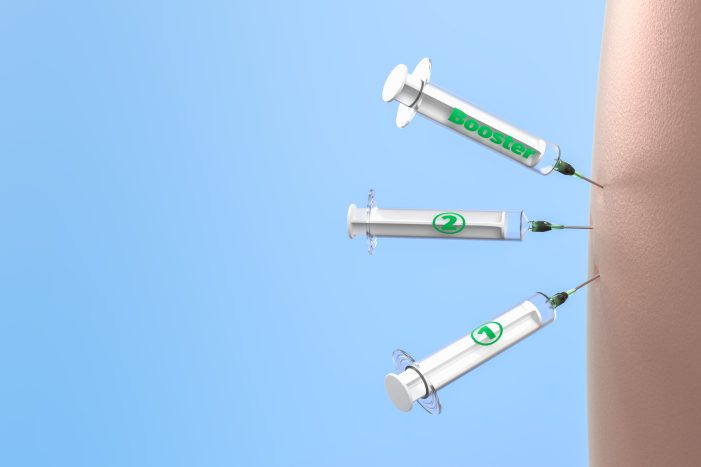
As the COVID-19 booster vaccines are being rolled out for certain groups, the U.S. Centers for Disease Control and Prevention (CDC) said that the agency is considering changing the definition of “fully vaccinated” in the near future.1 “We have not yet changed the definition of ‘fully vaccinated.’ We will continue to look at this. We may need to update our definition of ‘fully vaccinated’ in the future,” said CDC director Rochelle Walensky, MD.2
CDC’s Current Criteria for “Fully Vaccinated” Against SARS-CoV-2
Currently in the United States, people are considered “fully vaccinated” against the SARS-CoV-2 virus either two weeks after their second dose in a two-dose series, such as the Pfizer/BioNTech or
Moderna/NIAID COVID experimental messenger RNA (mRNA) biologics, or two weeks after a single-dose COVID shot, such as Johnson & Johnson/Janssen’s experimental Ad26.COV2.S adenovirus vectored vaccine. The CDC states that if you do not meet these requirements you are not fully vaccinated, regardless of your age.3Criteria For What CDC Considers “Fully Vaccinated” is Expected to Change to Include Booster Shots
In light of the introduction of booster COVID shots, there has been speculation that the definition of “fully vaccinated” will change in the near future.4 “If you’re eligible for a booster, go ahead and get your booster and we will continue to follow,” Dr. Walensky said.5
The CDC Advisory Committee on Immunization Practices (ACIP) recently recommended booster COVID shots in certain populations. For individuals who received a Pfizer/BioNTech or Moderna/NIAID COVID shots, the following groups are eligible for a booster shot at six months or more after their initial series: 65 years and older; age 18+ who live in long-term settings; age 18+ who have underlying medical conditions, and age 18+ who work or live in high-risk settings. For people who got the Johnson & Johnson/Janssen shot, boosters are recommended for those who are 18 years of age and older and who were vaccinated two or more months prior.6
CDC Approves “Mixing and Matching” COVID Booster Shots by Different Manufacturers
There are new booster recommendations for all three COVID shots produced by three different manufacturers currently available for use in the U.S. The CDC’s new recommendations now allow for “mix and match” dosing of COVID booster shots without regard for which manufacturer produced the vaccine. Eligible individuals may choose which vaccine they receive as a booster dose, opting to select the vaccine type they originally received or get a different booster shot produced by a different manufacturer.7
According to the CDC, receiving two different COVID shots produced by different manufacturers does not affect safety or effectiveness. A recent study used to support CDC’s “mix and match” recommendation did not report any adverse reactions in the participants who “mixed and matched” boosters; however, the scientists acknowledged that the data on “mix and match” shots is limited to a very small sample of 458 participants enrolled in the study.8
David Dowdy, MD, an epidemiologist at the Johns Hopkins Bloomberg School of Public Health, said:
We know that, in general, all of these vaccines are extremely safe. So there’s no reason to think that there would be any problem with [mixing and matching].9
Changing the Definition of “Fully Vaccinated” Will Affect Vaccination Mandates
CDC’s indication that a COVID booster shot is likely to change the definition of what qualifies for being considered “fully vaccinated” will affect employees subjected to federal, state and local government and corporate COVID vaccination mandates implemented by employers. The change in the definition of “fully vaccinated” will also affect travelers using public transportation, students attending schools and universities, as well as anyone required to show a “vaccine passport” to enter restaurants, stores and other public venues, all of which require people to prove they are “fully vaccinated.”10
The definition change will require those who are currently considered “fully vaccinated” to receive additional doses of the COVID shot.11
One of the concerns regarding the push for requiring COVID booster shots is that there does not appear to be any limit to how many booster COVID shots will be required in the future. Jason Schwartz, PhD, a vaccine-policy expert at the Yale School of Public Health said:
I do think that the endgame in a year or two will likely be a vaccination program that regularly updates the vaccine and is administered on a set schedule for everyone.12
If you would like to receive an e-mail notice of the most recent articles published in The Vaccine Reaction each week, click here.
Click here to view References:

No comments:
Post a Comment