Israel’s Global Doctrine of Fragmentation
How Covert Operations and Strategic Instability Shape the Modern World
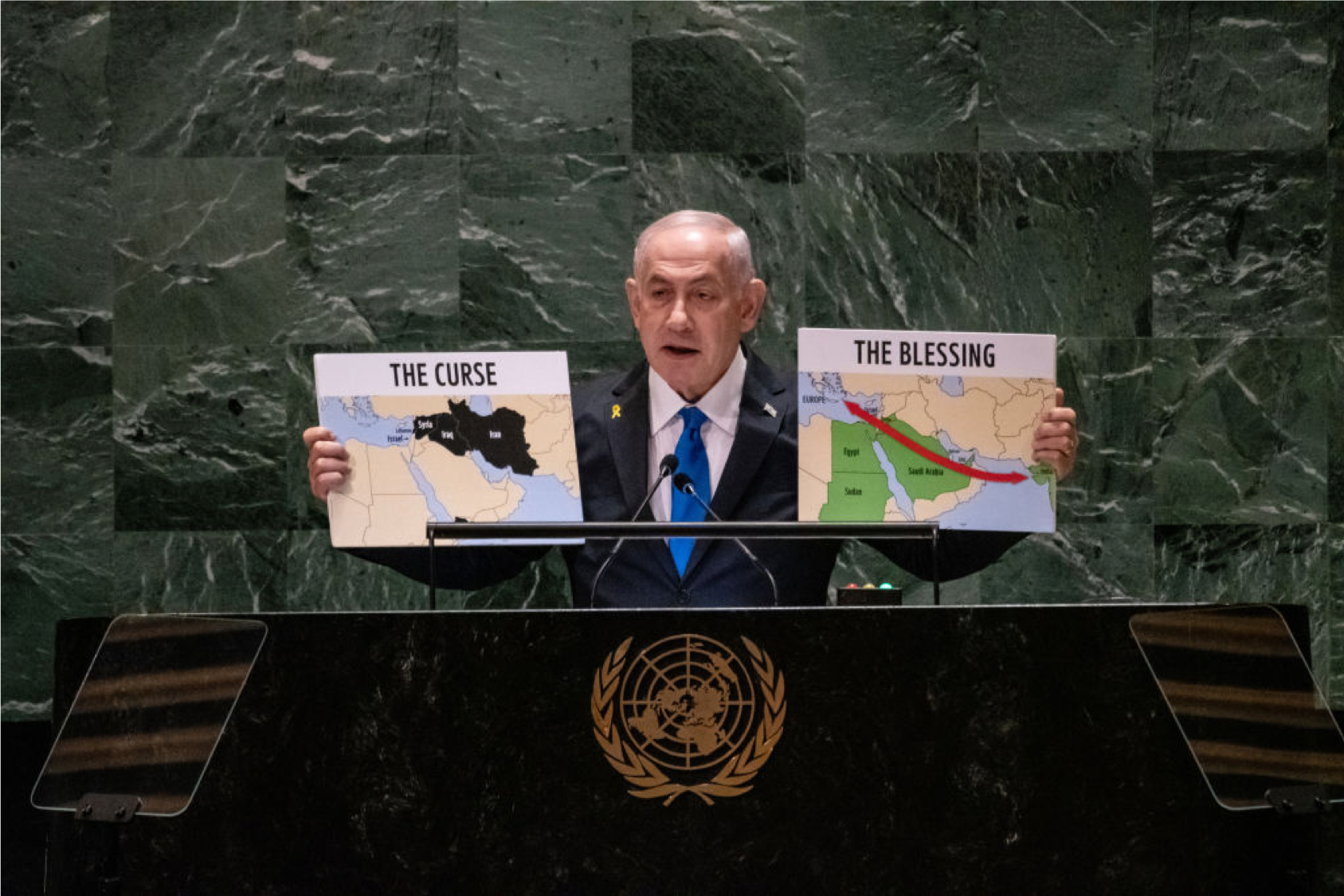
At the UN, Netanyahu held placards, declaring himself “The Blessing” as a leader destined to guide the Economic Corridor. Yet the reality was relentless assault on every nation along that path—everywhere but one. And then, as I traced this unfolding doctrine, the Somali fraud story went viral in America. What seemed like a random scandal revealed itself as a fragment of the same architecture of manipulation.
This Doctrine File uncovers, through documents, secret operations, and media orchestration, that Netanyahu is not “THE BLESSING,” but the “THE CURSE.”
I didn’t doubt the Somali fraud story. I had already read about it weeks earlier — in November 2025, in the New York Times— and initially reacted to it like many others. What began to trouble me was not the substance of the case, but the timing and intensity of its resurrection. As I was writing about Somalia’s growing strategic exposure, quiet diplomatic moves toward Somaliland recognition surfaced almost in parallel. At the same time, old investigations were repackaged as revelations, prosecuted cases reframed as discovery, and the outrage began to move faster than the evidence.
Elon Musk, newly rehabilitated after his early, costly dissent over Gaza, was suddenly boosting the story alongside Laura Loomer and a constellation of pro-Israel media accounts. The pivot was unmistakable: from Gaza’s unbearable clarity to a familiar moral panic about “Radical Islam,” precisely the reframing Israel’s own leaked research — as reported by DropSite News — later admitted it needed to survive the collapse of global sympathy.
The amplification was no longer proportional to the facts, nor to their novelty. It traveled along familiar routes—through the same media figures, platforms, and political actors who had spent months struggling to redirect public attention away from Gaza. What appeared to be a domestic corruption story was being asked to do geopolitical work.
That realization reframed the entire inquiry. The question was no longer what happened, but why now, and to what end. Once Israeli TBN reporting—by former Israeli intelligence officer Mati Shoshani—openly confirmed that Mossad had assisted in promoting the story inside the United States (check video below), the logic ceased to be speculative. It became structural. That conclusion was further corroborated when Ynet, Israel’s largest newspaper, went even further on December 26, 2025, publishing an article explicitly titled “Behind Israel’s recognition of Somaliland: years of quiet Mossad involvement,” effectively confirming that the episode was not an anomaly, but part of a long-running intelligence architecture operating beneath the public narrative.
This was not a one-off scandal, nor a media coincidence. It was an entry point. What followed, and what this doctrine file documents, is how that same pattern—strategic amplification, selective moral panic, and narrative synchronization—reappears across regions and decades. From Somalia to Yemen, from Gaza to Syria, from Africa to Latin America, the same doctrine emerges: fracture states, elevate proxies, redirect outrage, and present the outcome as inevitability. This doctrine file does not chase headlines. It excavates the system beneath them.
This is not an essay about a viral fraud case. This is an investigation into how crises are curated, how outrage is routed, and how a single doctrine—applied globally—turns distraction into strategy and fragmentation into power.
The Doctrine of Fragmentation
Geopolitical chaos rarely emerges spontaneously. It is cultivated, financed, and—most importantly—designed. For more than half a century, Israel has pursued a doctrine that treats regional stability not as a goal, but as a threat. The logic is simple and has remained remarkably consistent across decades: unified states can resist pressure; fragmented ones cannot. From this premise flows a strategy that privileges militias over governments, separatism over sovereignty, and perpetual insecurity over negotiated settlement.
This doctrine did not originate with Netanyahu, nor did it emerge from the post-9/11 security environment. Its roots lie in Israel’s early strategic thinking, particularly Israel first prime minister David Ben-Gurion’s “Periphery Doctrine,” which sought alliances with non-Arab or marginal actors to encircle and weaken Arab majorities. Over time, the doctrine evolved from diplomatic alignment into something far more aggressive: the active encouragement of state fracture as a tool of dominance.
What distinguishes Israel’s approach from traditional imperial intervention is not scale but method. Rather than direct occupation everywhere, Israel exports techniques—counterinsurgency models, surveillance systems, AI (“Pax Judaica”), population control strategies, and arms flows—that allow conflicts to sustain themselves. War becomes self-maintaining. Reconstruction is deferred indefinitely. Refugees become leverage. Fragmentation becomes normal.
Israel does not export stability. It exports controllable chaos.
This is not conjecture. It is observable in pattern, repetition, and outcome—from Gaza to Syria, from Sudan to Nigeria, and from Venezuela to Mexico.
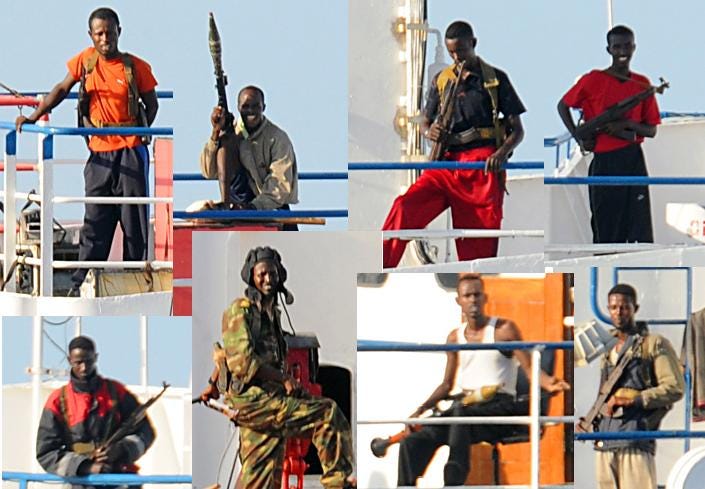
Somalia and Somaliland: Recognition as a Weapon
Somalia’s civil war is often described as a tragic failure of governance. That framing omits a crucial truth: the war was prolonged, intensified, and strategically manipulated by external actors who benefited from its continuation.
Since Somalia aligned with Arab states hostile to Israel, Tel Aviv’s interference was neither peripheral nor incidental— it was deliberate, strategic, and central to the shaping of the conflict that would define the Horn of Africa for decades.
Israel, operating through its proxy partner Ethiopia, did not merely observe Somalia’s internal conflicts—it actively engineered and amplified them. By funneling arms (including cluster munitions and napalm), intelligence, and strategic support to Ethiopian-backed Somali separatist factions, Israel helped ignite a conflict that spiraled into the broader Somali Civil War of 1991 onward, a catastrophe that claimed between 350,000 and 1 million lives through fighting, famine, and disease. The fallout created a mass exodus: thousands of Somalis forced to flee, seeking refuge in Europe and the United States, yet not a single refugee found asylum in Israel, revealing a cold calculus in which Israel profited from the chaos it helped create while offering no sanctuary to its victims. This is the Doctrine of Fragmentation in its starkest form: manufacture instability abroad, control the narrative, reap strategic gain, and evade responsibility
Chaos abroad is policy. Safety at home is selective. Israel helped manufacture Somalia’s collapse—then sealed its borders while the fallout was exported to America and Europe.
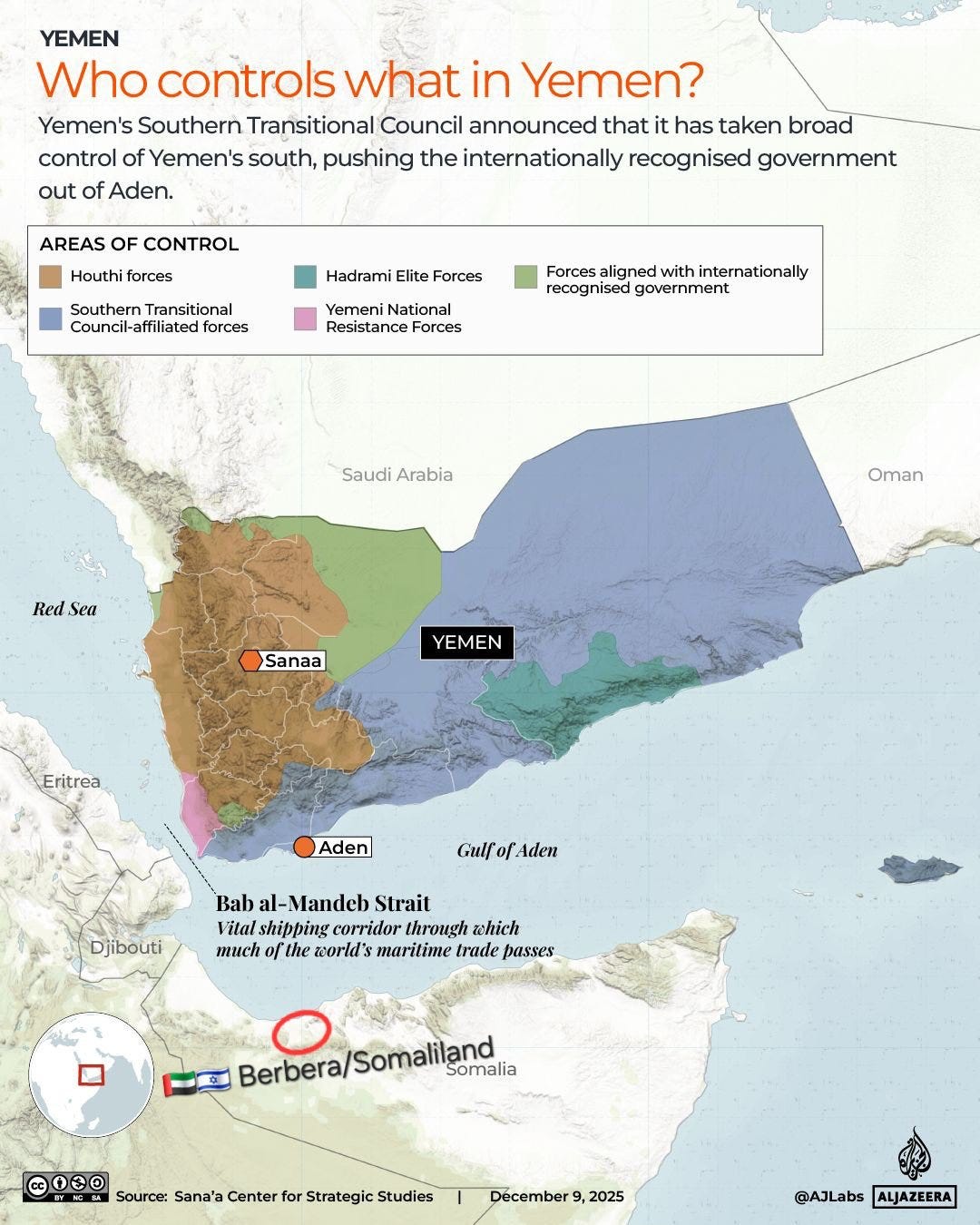
Fast-forward to the present, and the pattern repeats with modern tools. Israel’s recognition of Somaliland is far from a diplomatic courtesy—it is a calculated, strategic provocation. Somaliland commands the Gulf of Aden and sits adjacent to the Bab el-Mandeb Strait, one of the world’s most critical maritime chokepoints. Recognition is not symbolic: it authorizes fragmentation. Fragmentation authorizes basing rights. Basing rights authorize control.
Fragmentation is power; chaos is leverage; Somaliland is both.
Somalia’s government immediately condemned the move, calling it blatant interference and warning against forced Palestinian displacement schemes tied to the recognition. The condemnation was echoed globally, with Saudi Arabia and Algeria pushing for a UN Security Council session to address the issue. This is not mere rhetoric. Israeli strategists had already explored Somaliland as a potential destination for Palestinians expelled from Gaza, revealing a broader, deliberate pattern of engineered displacement, regional destabilization, and territorial manipulation. Establishing chaos in the Horn of Africa is not an isolated event; it is part of a calculated strategy to fracture alliances and create openings across the Middle East—We will explore this more in later sections.
Satellite Images Show Israeli Military Base at Somaliland’s Barbara Airport:
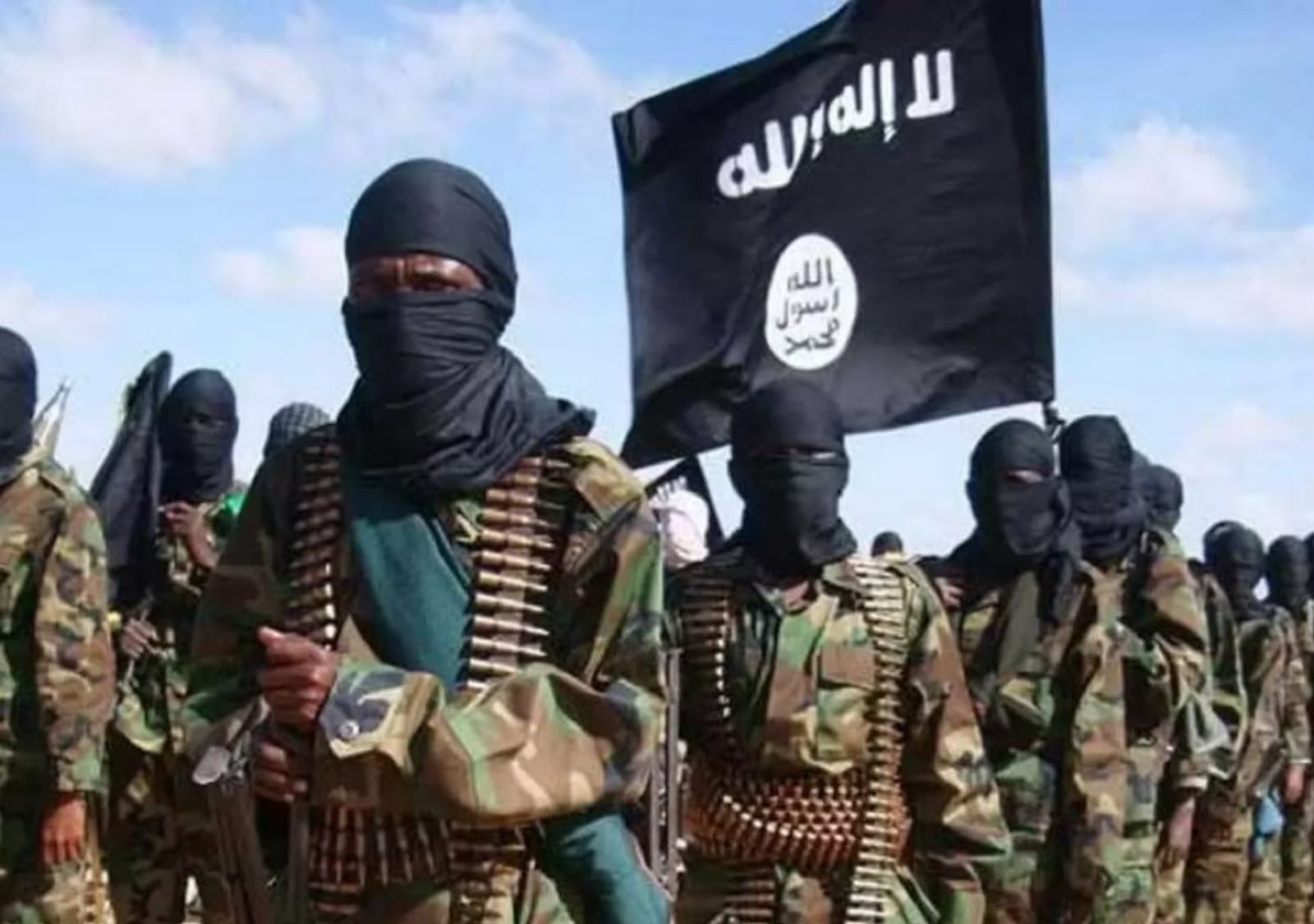
As we noted earlier, the pattern is chillingly consistent: Israel, through proxy partners in Ethiopia, fueled separatist militias within Somali territories. These militias—initially presented as “freedom fighters”— later morphed into extremist factions, including Al-Shabaab and ISIS-affiliated cells, which continue to terrorize Somalia and the region. This blueprint—arming local proxies to create chaos, then exploiting it—has repeated in Syria, Yemen, and Gaza, leaving a trail of destruction and humanitarian catastrophe.
Israel, through Ethiopian proxies, manufactures militias, legitimizes separatists, and watches them mutate into ISIS-linked cells—this is the Zionist playbook.
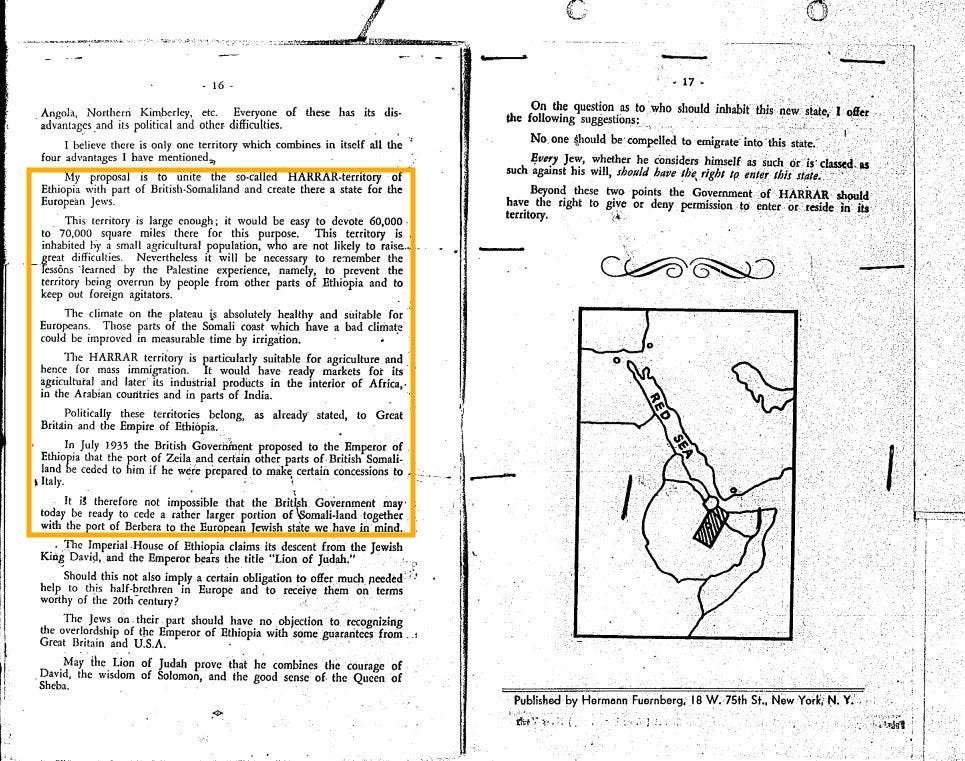
Even earlier, the Zionist project had its eye on the Horn of Africa as a potential Jewish homeland. According to the Jewish Telegraphic Agency, “Formation of an organization to arrange the settlement of European Jews in the Harrar area of Ethiopia and in adjoining British Somaliland was announced here today (July 22, 1943).”
This history illustrates a long-standing strategic vision: Somaliland was never just a remote corner of Africa—it was a site of imperial and colonial interest, a potential outpost for Israel’s global ambitions, and a laboratory for the proxy strategies that continue to destabilize the region today.
1943 Map: Proposed European Jewish Homeland Before Palestine:

Gaza is Not Merely a Battlefield. It is The Prototype.
Long before fragmentation was exported across the region, Gaza served as the controlled environment where methods were refined: precision bombs tested on dense civilian terrain; drones trialed for persistent surveillance; AI-guided drones calibrated on human movement; intelligence fusion systems perfected; militia containment, manipulation, and infiltration rehearsed in real time. What is deployed elsewhere—directly or through proxies—was first stress-tested here.
This is why Gaza is never allowed to fully collapse. Total collapse would end the experiment. Instead, it is maintained in a condition of managed ruin: enough devastation to terrorize, enough infrastructure to monitor, enough humanitarian dependence to regulate. Surveillance, siege, sanctions, assassinations, and information warfare are modularized here—then repackaged for export.
Gaza is where weapons become “combat-proven,” surveillance becomes “field-tested,” and population control becomes “security expertise.” This is not incidental. It is industrial.
Gaza is not the exception—it is the blueprint. From this laboratory, the doctrine moves outward.
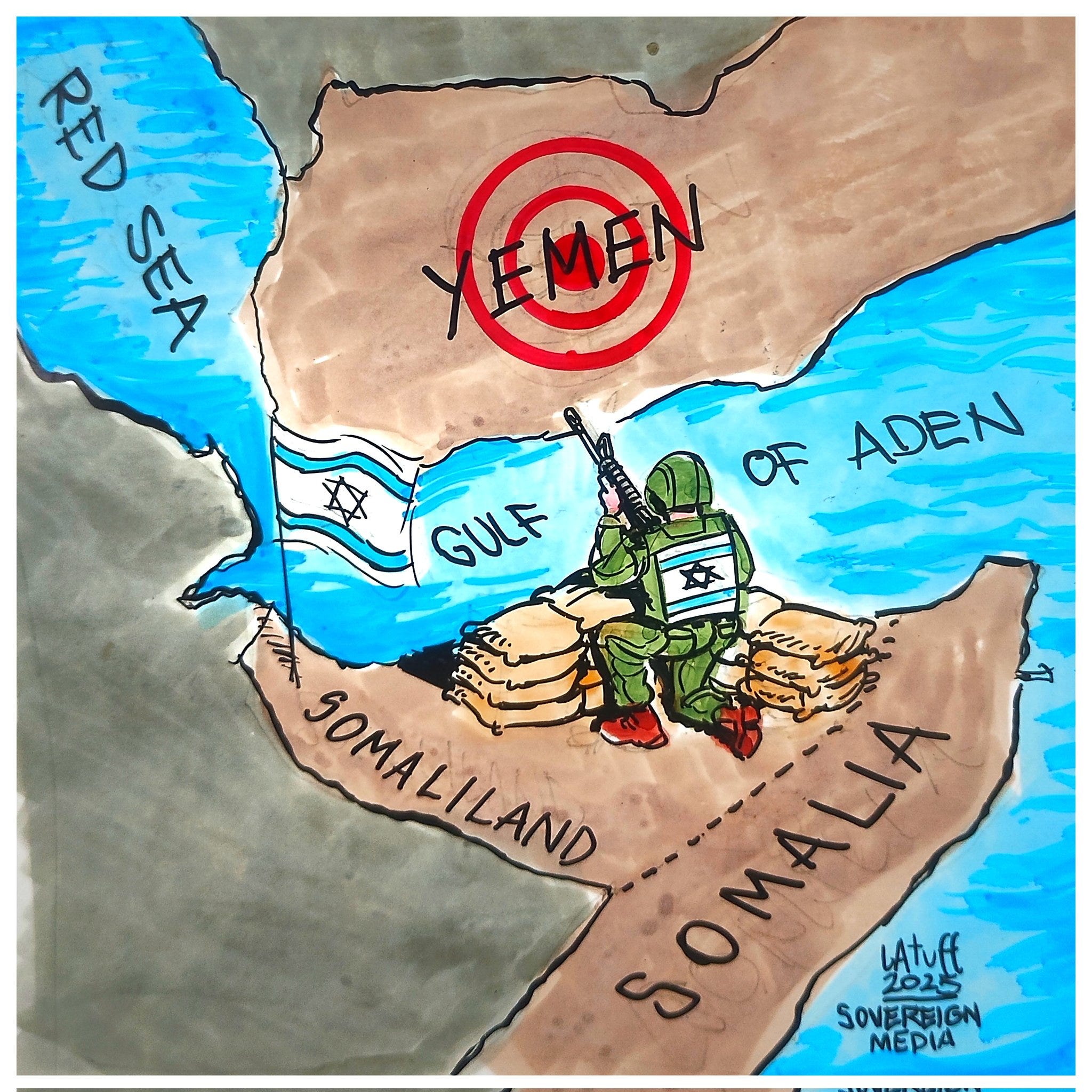
Yemen is the next case study—not by accident of chronology, but by architectural logic. If Gaza perfected enclosure, Yemen operationalized fragmentation: ports seized instead of capitals, militias outsourced instead of armies, maritime chokepoints weaponized, and a sovereign state broken into administrable zones. From Yemen, the same design language repeats—Sudan, Syria, and across Africa, most starkly in Nigeria—before resurfacing in Latin America under new narratives but identical mechanics.
Last but not least, the Doctrine of Fragmentation converges on its final unresolved target: Iran. Identified in the Clean Break blueprint as the last state resisting regional dismemberment, Iran now faces a familiar sequence—economic pressure, narrative warfare, sudden protest violence, and a failed public campaign for direct war—followed by a private reversal at Mar-a-Lago and Trump’s abrupt Truth Social announcement signaling imminent attack. What appears spontaneous is anything but.
What follows is not theory but record: dates, documents, covert interventions, and synchronized media operations that expose the Doctrine of Fragmentation as an engineered system—tested, refined, and redeployed across continents.

The Doctrine of Fragmentation: How Chaos Is Engineered
The Doctrine of Fragmentation is a deliberate strategy of political, social, and economic disruption designed to prevent state consolidation, exacerbate internal divisions, and produce permanent instability. Its mechanics are consistent across time and geography: empower rival militias or political factions, weaponize local grievances, manipulate perception through media amplification, and exploit foreign allies to project control without direct governance. The goal is never to solve crises but to manufacture them, creating a chain of dependency on external actors while normalizing insecurity as inevitability. Whether in Somalia, Yemen, Syria, Africa, Latin America, or within the Middle East, the Doctrine operates as a single, repeatable system—one in which public attention is carefully directed, dissent is isolated, and structural control is achieved through orchestrated chaos rather than transparent force.
![Yemenis supporters of the UAE-backed Southern Transitional Council (STC) in the coastal port city of Aden on December 8, 2025 [AFP]](https://substackcdn.com/image/fetch/$s_!d1ua!,f_auto,q_auto:good,fl_progressive:steep/https%3A%2F%2Fsubstack-post-media.s3.amazonaws.com%2Fpublic%2Fimages%2F44469698-0a2f-42ad-a493-9db7f9b6dd61_1602x1068.png "Yemenis supporters of the UAE-backed Southern Transitional Council (STC) in the coastal port city of Aden on December 8, 2025 [AFP]")
Yemen: When the Doctrine of Fragmentation Hit a Red Line
One of the moments that accelerated the reach of my work—and confirmed the analytical framework behind it—came when I predicted that Saudi Arabia would eventually move against UAE–Israel-backed separatist factions in Yemen. That forecast circulated widely before the news cycle locked into its preferred narrative, precisely because it cut against the illusion of Gulf unity.
Yemen is where that Doctrine of Fragmentation stopped being abstract.
While Saudi Arabia entered the war seeking—however imperfectly—to preserve Yemeni territorial unity under a recognized state, the UAE, in coordination with Israel, pursued the opposite endgame: permanent division. Through funding, arming, and legitimizing the Southern Transitional Council (STC), Abu Dhabi constructed a parallel authority controlling ports, coastlines, and islands—precisely the assets required for external basing, maritime leverage, and long-term fragmentation.
This divergence is no longer whispered. It is now publicly acknowledged by Saudi officials themselves.
Saudi Ambassador to Yemen Mohamed Al-Jabir accused STC leader Aidarus al-Zoubaidi of unilateral military escalation, security sabotage, and outright obstruction of Saudi diplomatic efforts. Most revealing was Al-Jabir’s charge that al-Zoubaidi bears direct responsibility for implementing agendas that harm southern Yemen while deliberately manufacturing a rift with the Kingdom—language that strips away any remaining pretense of shared strategy.
Israeli media, meanwhile, openly floated the idea of a “New South Yemen” as a future ally—strategically positioned near Iran-aligned Houthis and adjacent to the Bab el-Mandeb Strait. This was not idle commentary. It was signaling intent. Control of Yemen’s southern coast would place Israel-aligned forces on both sides of one of the world’s most critical maritime chokepoints, granting leverage not only over Iran, but over global trade itself.
For Riyadh, this crossed a red line.
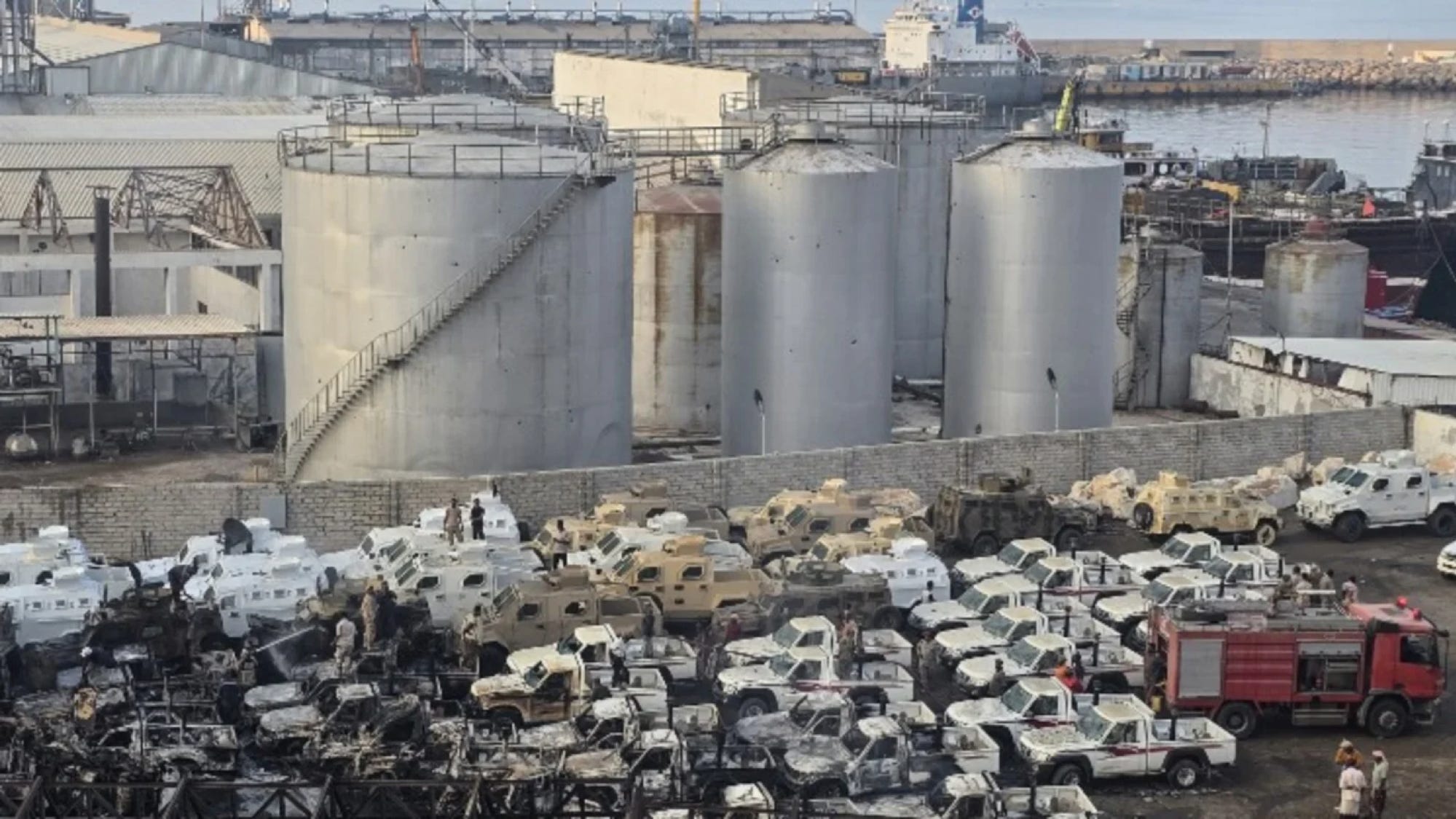
The Doctrine of Fragmentation, when applied to Yemen, threatened Saudi Arabia’s southern flank, its maritime access, and the very principle of state continuity in the Arabian Peninsula. The result was a rare and unmistakable rupture: Saudi pressure, ultimatums, and direct confrontation with UAE-backed forces—an open rejection of Israel-Emirati regional engineering.
My next prediction follows from the same logic: Saudi Arabia will eventually coordinate—directly or indirectly—with its former adversary, the Houthis, to neutralize UAE–Israel-backed separatist projects. The channels already exist. Saudi–Iran rapprochement has created new lines of communication, and Riyadh has demonstrated a growing willingness to prioritize stability over proxy warfare. Aligning tactically with the Houthis against a common fragmentation threat is no longer unthinkable—it is structurally plausible.
Yemen reveals the core truth of the Doctrine of Fragmentation: when division threatens to escape its containment and destabilize the architects themselves, even bitter enemies recalibrate.
Yemen is where the Doctrine of Fragmentation stopped being a tool of control and became a threat to its own sponsors.
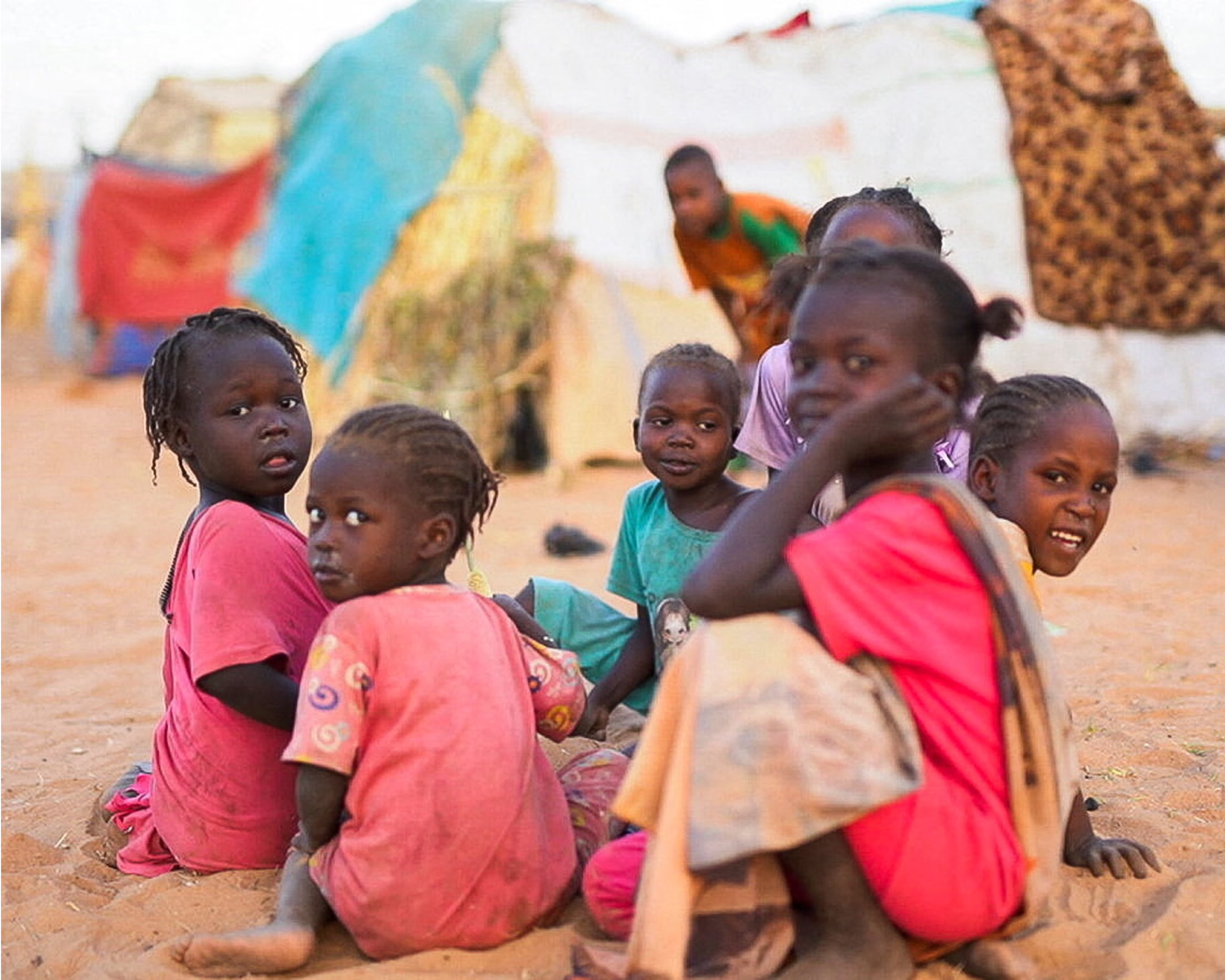
Sudan: Genocide as Proxy Enforcement
Sudan reveals the Doctrine of Fragmentation in its most naked form. On paper, the war is framed as an internal power struggle between the Sudanese Armed Forces (SAF) and the Rapid Support Forces (RSF). In reality, it is a proxy war structured by external patrons with radically different visions for the region.
The RSF—a paramilitary force descended from the Janjaweed militias responsible for Darfur’s original genocidal campaigns—has been financed, armed, and diplomatically shielded by the United Arab Emirates, with Israel playing a critical enabling role through intelligence coordination, normalization incentives, and arms channels. The RSF controls gold mines, smuggling routes, and mercenary pipelines extending into Libya and the Sahel. It is not a rebel group; it is a transnational business model.
The SAF, by contrast, represents a centralized state structure, one that retains Arab World legitimacy. Saudi Arabia backs the SAF as the official state, even when that state is Islamist, so long as it preserves regional order and economic interdependence.
The atrocities in Darfur—mass executions, village burnings, ethnic cleansing—are not excesses. They are functional. Terror clears land. Displacement prevents political reconstitution. Genocide becomes a means of territorial reprogramming.
Where Israel and its partners cannot rule states, they finance forces that erase them.
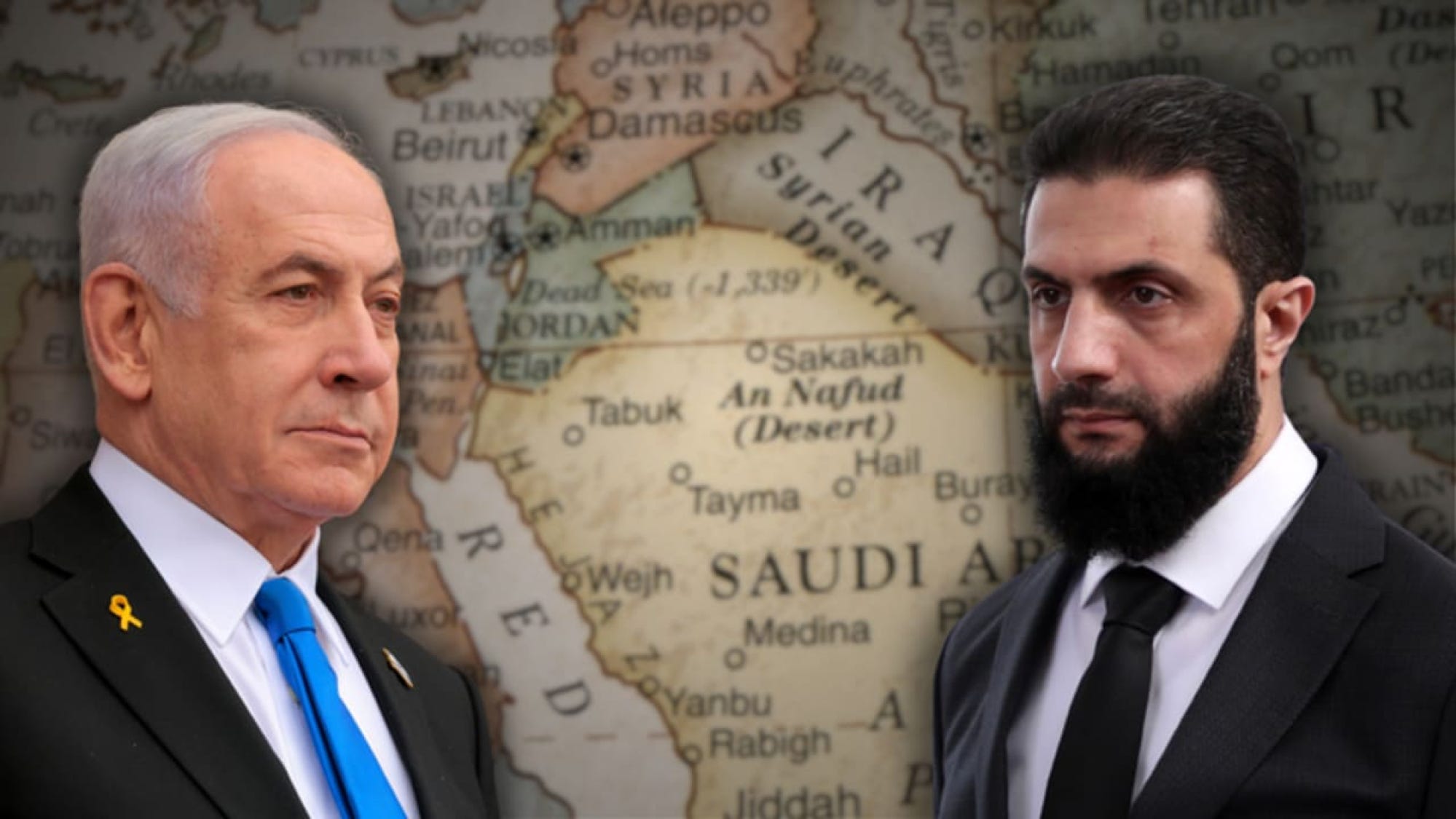
Syria: The Laboratory of Proxy Expansion and the Doctrine of Fragmentation
Fast-Forward to Today: The Irony of Israeli Alignment with Assad
Donald Trump’s warning shot in late 2025 seemed almost surreal at the time:
“Nothing should interfere with Syria’s evolution into a prosperous State.” — Donald J. Trump, Nov. 30, 2025
What began as a diplomatic signal exposed decades of conflicting agendas. For twenty years, Israel exploited Syria as a testing ground for the same strategies it had honed in Gaza and Yemen: supporting militias, weaponizing fragmentation, destabilizing communities, and quietly coordinating with extremist proxies to ensure the region remained chaotic and controllable.
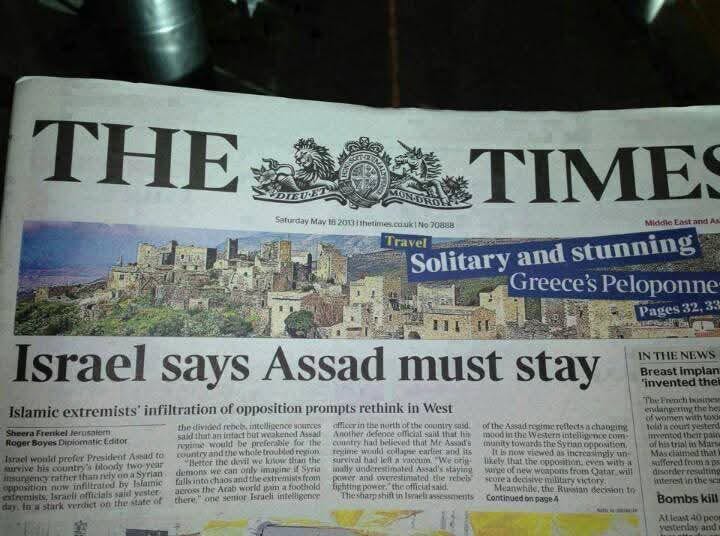
Ironically, recent leaks reveal that Israel is now working directly with the very Assad regime it once sought to undermine, a stark example of the flexibility—and cynicism—of the Doctrine of Fragmentation. Al Jazeera obtained recordings of Bashar al-Assad’s officers, including Brigadier General Suheil al-Hassan of the notorious Tiger Forces, discussing strategies to regroup, secure funding, and continue destabilization efforts. One source assured al-Hassan:
Ruthless dictator Bashar al-Assad’s officer Brigadier General Suheil al-Hassan received explicit assurances from the Israeli side, as revealed in leaked recordings: “The State of Israel, with all its capabilities, will stand with you.”
This revelation underscores a recurring pattern: Israel’s involvement is less about ideology than control. Whether through chaos or collaboration, the ultimate goal remains the same—maintain leverage, fragment sovereignty, and prevent any regional rival from stabilizing independently.
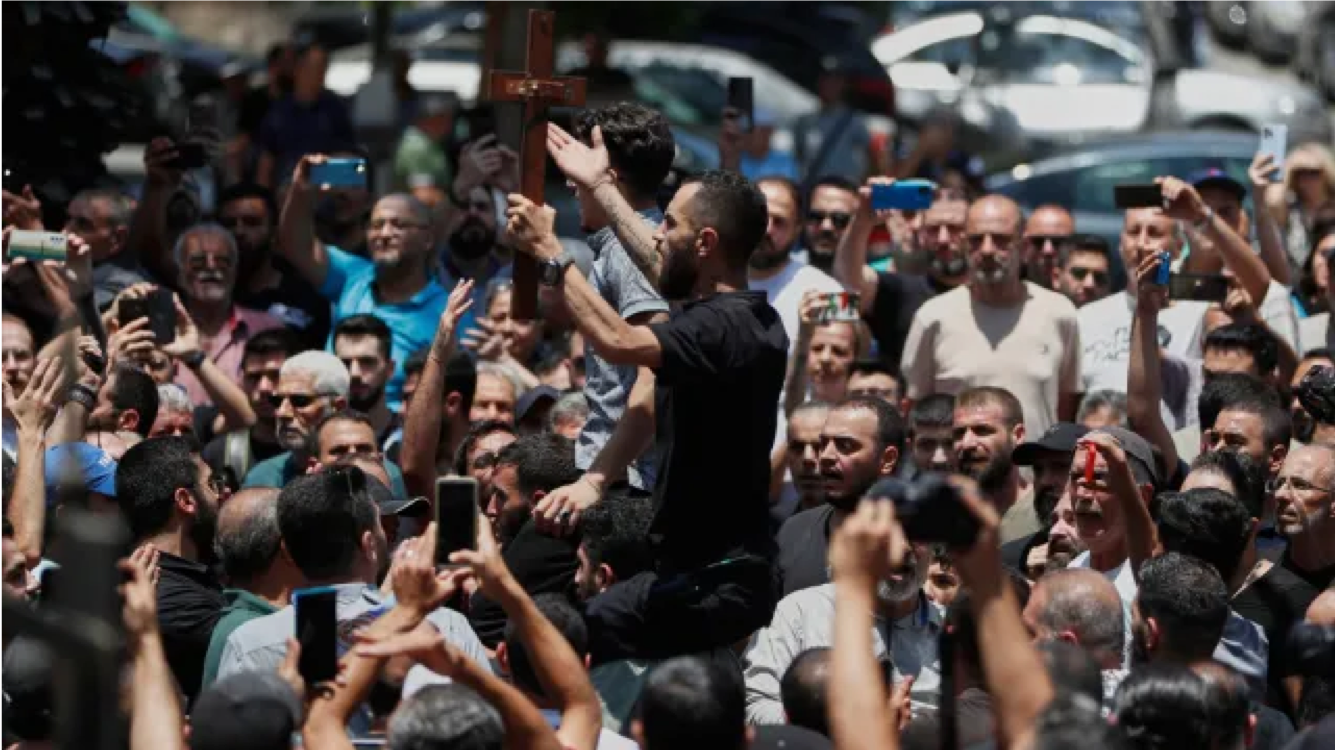
The Conservative Blind Spot: Christians as Collateral in the Doctrine of Fragmentation
For years, Jewish and Christian Zionists from Mark Levin to John Hagee repeated a familiar mantra:
“Israel is the only safe place for Christians in the Middle East.”
Yet the reality tells a far different story. Across Syria, Israel’s operations — whether direct or through its ISIS proxy — have targeted historic Christian communities, particularly in Aleppo, Homs, and Damascus:
Churches were bombed.
Priests kidnapped.
Entire districts emptied and depopulated.
This is not incidental. Israel’s long-term strategy deliberately leverages sectarian division to weaken Syria’s social cohesion. The Christian population, one of the oldest in the region, becomes a tool in a broader regional experimentation with fragmentation, designed to justify Israeli military escalation while maintaining the narrative of protection.
The Mechanics of Proxy Warfare: ISIS, Assad, and Israeli Strategy
From 2013 onwards, Israel perfected the method of dual-sided engagement. As the Assad regime weakened, Israel quietly enabled extremist factions, including ISIS, to consolidate power, while also supporting Assad when politically expedient. This dual approach ensured Syria remained fractured:
ISIS factions were empowered, supplied, and strategically deployed to undermine moderate governance.
Assad loyalists, often backed indirectly by Israel, were manipulated to create cycles of violence, displacement, and humanitarian crisis.
The Christian communities, already vulnerable, were caught in the crossfire, reinforcing sectarian tension as a pretext for continued military engagement.
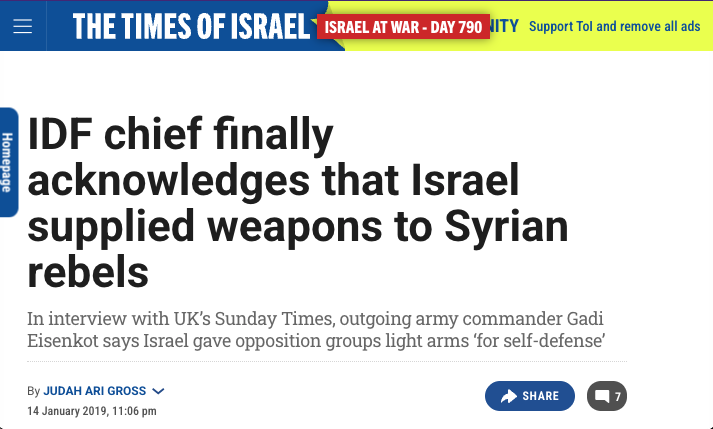
In 2019, the IDF’s own chief of staff publicly acknowledged the longstanding cooperation with ISIS —an admission decades too late, but one that confirms the Doctrine of Fragmentation in action.
The result is a country that never fully stabilizes, allowing Israel to extend influence without formal occupation: a laboratory for proxy wars, experimental urban warfare, drone tactics, surveillance operations, and psychological control—concepts later exported to Yemen, Gaza, and beyond.
Escalation, Leaks, and a Regional Pivot
The leaked Al Jazeera recordings make the scale of Israel’s involvement explicit. Officers like al-Hassan coordinated with intermediaries reporting back to Israeli intelligence, planning weapons transfers, regrouping strategies, and targeted strikes, even as Assad’s regime was temporarily exiled to Russia.
Meanwhile, Israel intensified airstrikes across Syria, bombing airports, air defense systems, fighter jets, and key infrastructure—while simultaneously occupying more of the Golan Heights. The coordination is not chaotic; it is deliberate, modular, and consistent with the Doctrine of Fragmentation: keep the state weakened enough to require outside management. This kind of Israel’s adventure in Syria could trigger uncontrollable regional consequences.
This dual approach mirrors the tactics previously observed in Gaza, Yemen, and Somalia: test, implement, observe, and replicate.
The Doctrine of Fragmentation is not a theory. In Syria, it is a full-scale laboratory of regional control.

Nigeria: When Both Sides Are Armed
Nowhere is the doctrine’s double-game more explicit than in Nigeria, where newly declassified records reveal a pattern that mirrors Somalia and Sudan almost exactly.
During the Biafran War (1967–1970), Israel secretly supplied arms to both the Nigerian federal government and the Biafran separatists. After the war, Israel’s own embassy in Lagos estimated that 500,000–750,000 civilians on the Biafran side died—many through deliberate starvation.
This was not strategic confusion. It was policy.
Fast-forward to the present, and the pattern returns—now upgraded with modern technology. Nigerian military commanders have publicly confirmed that Boko Haram and ISIS-linked militias are deploying armed drones resembling Israeli and Ukrainian models—capable of evading conventional radar and coordinating multi-vector attacks.
Major General Abdulsalam Abubakar of Operation HADIN KAI warned that these drones represent a qualitative escalation—one that mirrors tactics perfected elsewhere under Israeli “security experience.”
Christian communities have absorbed a devastating share of the violence:
villages emptied, churches destroyed, minority populations hunted.
Once again, instability becomes the justification for foreign involvement, never the evidence of its cause.
When insurgents deploy Israeli advanced drones, instability is no longer organic—it is imported.
Chaos First, America Later
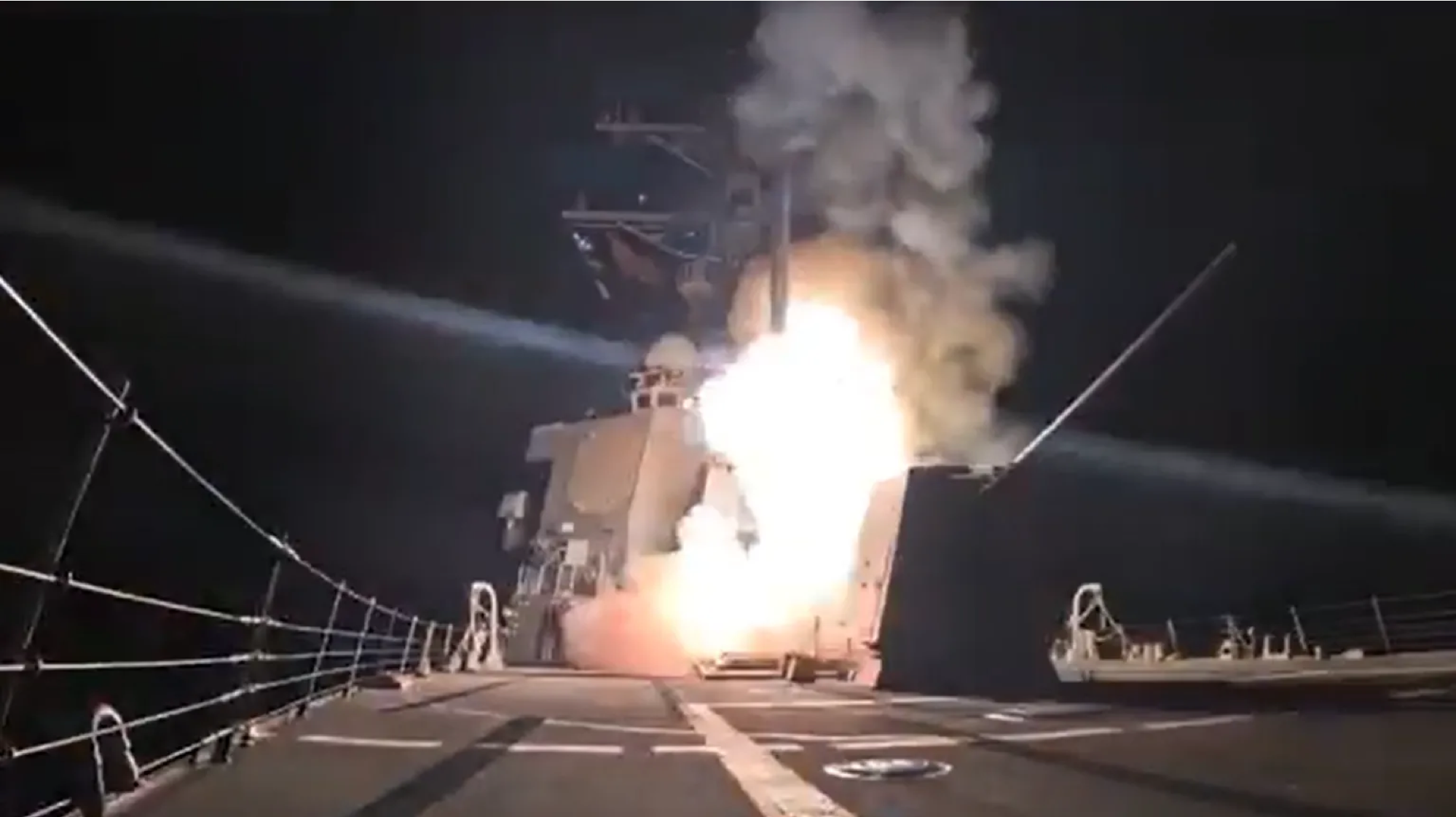
Nigeria did not erupt into crisis overnight. The conditions used to justify U.S. strikes in December 2025 were years in the making—shaped by weapons flows, security partnerships, and factional rivalries that turned localized insurgencies into ISIS-aligned forces. What was absent from nearly all media coverage was Israel’s upstream role: training units, backing rival factions, and exporting a security model that fragments states rather than stabilizes them.
When Donald Trump ordered strikes citing the persecution of Christians, the response was immediate and revealing. Evangelical leaders praised the action. Christian Zionist networks cheered. Israeli officials welcomed American intervention. Yet no one asked why Nigeria had become ungovernable in the first place—or why the same actors celebrating the bombing had helped create the conditions that made it “necessary.”
The hypocrisy is not accidental. Israel fuels fragmentation, then disappears from the story. America arrives to manage the fallout, framed as rescuer rather than repair crew. The chaos is treated as spontaneous; the architects are never named.
Israel helped fracture Nigeria into ISIS-aligned chaos—America was sent to bomb the consequences, while Israel escaped the blame.

Nigeria’s government confirmed the strikes were coordinated. Intelligence was shared. Operations were “joint.” Yet none of this addressed the root architecture: Israel as a region destabilized through decades of militia management, weapons diffusion, and strategic fragmentation.
The Doctrine of Fragmentation creates the crisis—then sells the cure.
Latin America: The Theater That Was Never Supposed to Be Seen
Israel’s destabilization doctrine has never been geographically modest. Long before it was openly articulated in Middle Eastern theaters, its methods were quietly exported to Latin America—a region whose distance from Jerusalem made it ideal for deniability, experimentation, and precedent-setting operations that rarely entered Western memory. From Guatemala and Colombia to Chile and Brazil, Israeli security firms, intelligence contractors, and state-linked operatives became indispensable to regimes facing internal dissent, insurgency, or legitimacy crises. What distinguished Israel was not ideology but utility: it offered coercive expertise without political conditions, repression without lectures, and surveillance without moral friction.
This was not merely arms trading; it was doctrine diffusion. Techniques refined in Gaza—population mapping, urban penetration, psychological pressure, and deniable proxy violence—were repackaged as counterinsurgency “assistance” for Latin American states navigating unrest. Israel functioned as an intermediary precisely because it allowed Washington to step back while outcomes remained aligned. When U.S. involvement became politically costly, Israeli involvement became structurally convenient. The result was a hemispheric shadow architecture in which repression could be outsourced and accountability permanently deferred.
What is striking is not that these methods appeared in Latin America, but how consistently they reappear at moments of political inflection—often just out of public view.
Mexico, 2001: A Disruption That Failed
One of the least examined episodes in this history unfolded in Mexico in October 2001, just weeks after September 11—a timing that would later appear less coincidental than convenient. Two Israelis, one a retired IDF colonel with intelligence ties, were arrested inside the Mexican Congress itself. They were found carrying hand grenades, explosives, detonators, and firearms—an extraordinary breach of one of the country’s most secured political sites. Mexican congressional security verified the seizure. Independent accounts later reported that the two Israelis were also carrying false Pakistani passports, a detail that immediately raised the specter of a false-flag operation designed to redirect blame.
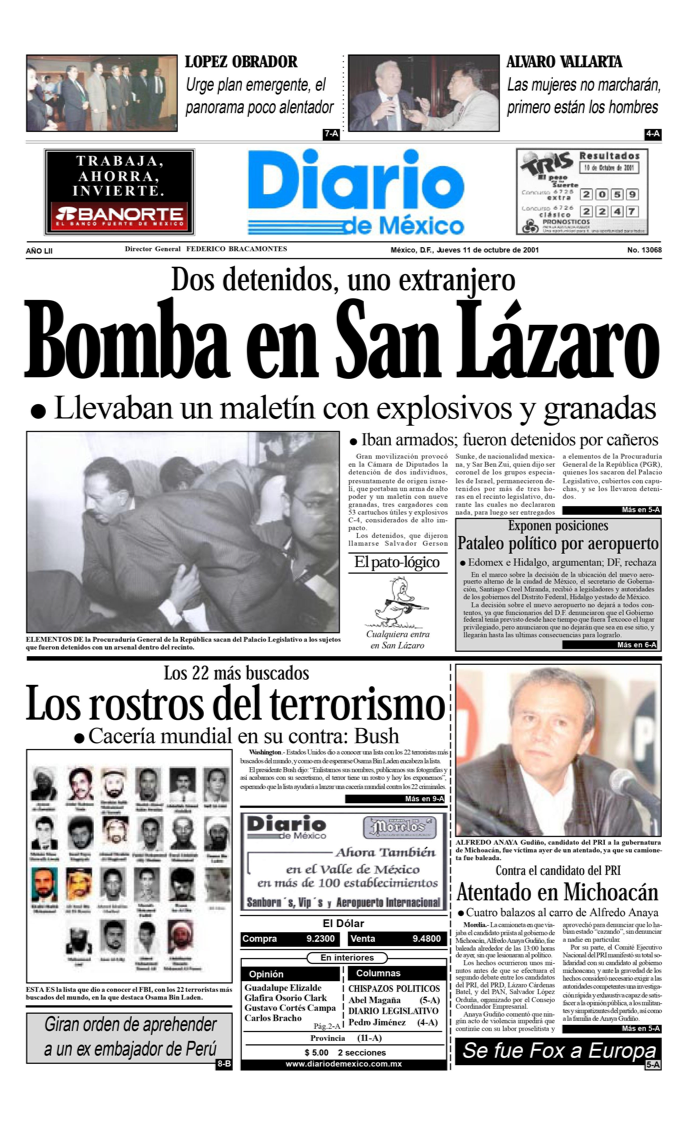
The operation collapsed not because it was discovered late, but because it was discovered early. Yet what followed was more revealing than the attempted infiltration itself. Within hours, intense diplomatic pressure was applied. High-level emergency meetings were convened between Mexican officials, U.S.-linked military figures, and Israeli envoys flown in specifically for the purpose. Despite Mexico’s strict prohibitions on weapons and explosives—especially within government buildings—the two Israelis were quietly released and extracted from the country. The case vanished from international coverage almost as quickly as it surfaced.
When an operation fails, the doctrine does not retreat—it escalates pressure to erase the failure.
The pattern was not new. From the Lavon Affair in 1950s Egypt—where Israeli operatives attempted to frame Arabs through staged bombings against British and American civilians — to the King David Hotel attack carried out in Arab disguise under Menachem Begin leadership (founder of Likud, to the USS Liberty incident long suspected as a failed false flag, Israeli intelligence history contains a recurring motif: deniability through misattribution. Mexico fits that lineage not as an anomaly, but as a continuation—one that failed tactically yet succeeded politically by ensuring there were no consequences.
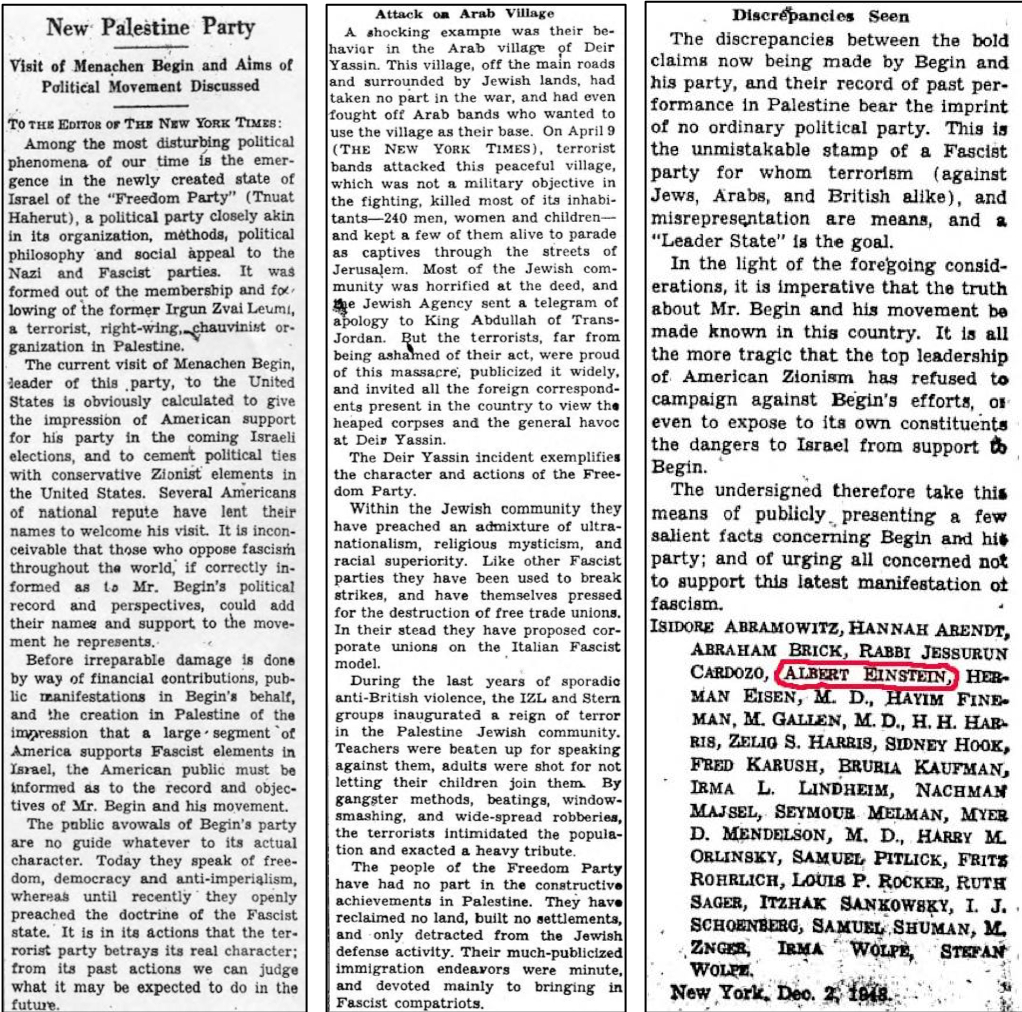
Worth to note: Albert Einstein equated Menachem Begin’s politics with Nazism in a letter to the New York Times (1948) stand as a moral indictment not only of that massacre but of the ideological lineage it produced. That lineage is alive today in the Likud party, which Begin founded and which is now led by Benjamin Netanyahu, architect of the current campaign of destruction in Gaza.
Brazil, 2025: Extraction as Policy
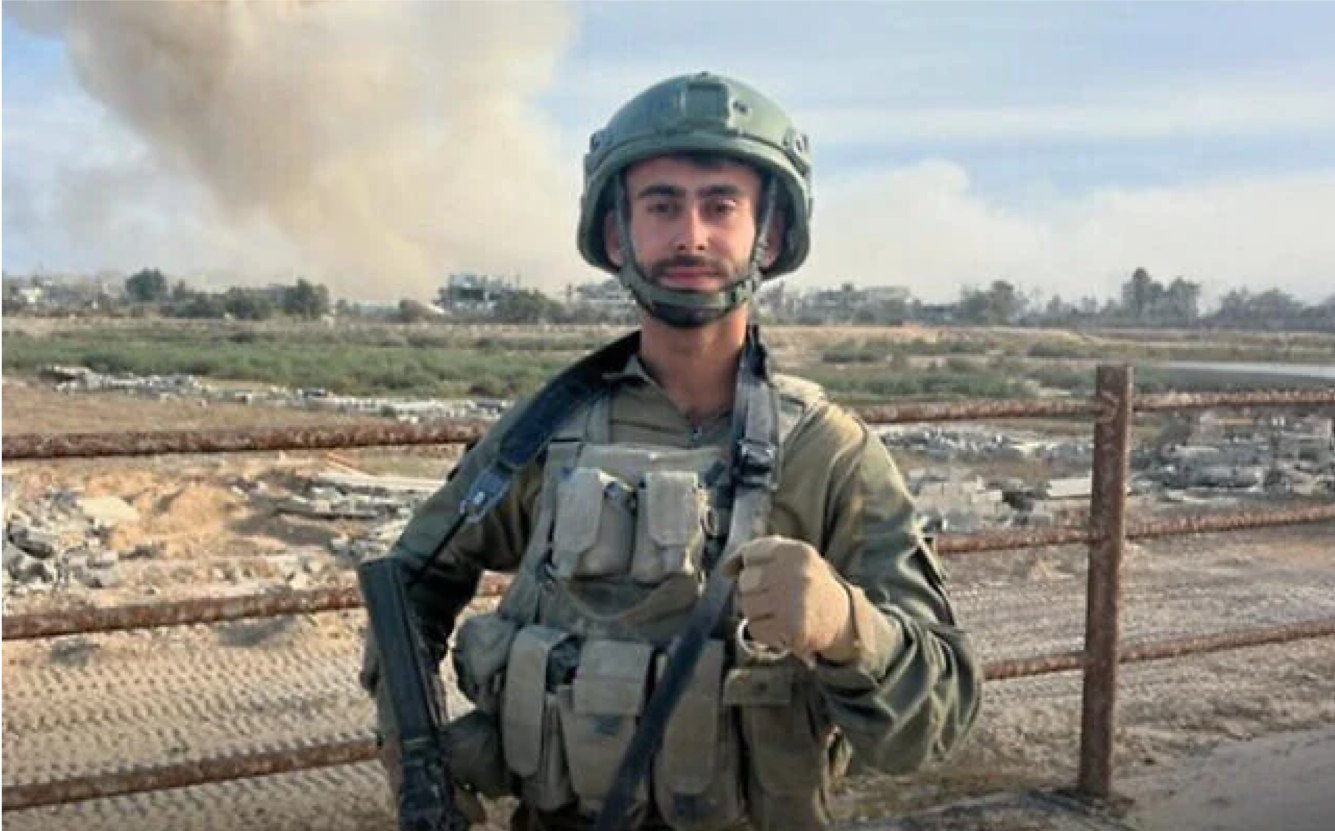
Two decades later, the doctrine reappeared in a different form—less explosive, more bureaucratic, and arguably more effective. In 2025, the Hind Rajab Foundation initiated legal proceedings in Brazil against a dual-nationality IDF soldier accused of involvement in war crimes. The case was not symbolic; it was meticulously documented, supported by extensive evidence, and formally submitted to Brazilian authorities. Within days, Israeli media confirmed what followed next: the soldier was swiftly identified, evacuated, and removed from Brazilian jurisdiction before arrest could be effected.
According to reporting in Ynet, Israel’s Foreign Ministry coordinated directly with the IDF to extract the individual, treating the legal action not as a judicial matter but as a security threat requiring immediate neutralization. The operation was efficient, silent, and revealing. It demonstrated that the doctrine now extends beyond battlefield conduct into legal countermeasures—treating international law itself as a terrain to be navigated, disrupted, or escaped.
When law replaces the battlefield, extraction replaces accountability.
Latin America, with its porous borders and historically pliable legal systems, offers an ideal environment for such maneuvers. What once required covert disruption now requires rapid mobility and diplomatic leverage. The objective remains unchanged: ensure that no precedent of accountability is allowed to stand.
Venezuela: The Regime-Change Template Recycled
Nowhere is the political dimension of this doctrine clearer than in Venezuela. Since severing diplomatic ties with Israel in 2009 under Hugo Chávez—later maintained by Nicolás Maduro—the country has occupied a familiar position in Washington’s imagination: sanctioned, isolated, and framed as an existential threat to regional stability. Yet the push for regime change has not been driven by security concerns alone. It has been relentlessly championed by U.S. senators such as Lindsey Graham and Ted Cruz, both beneficiaries of sustained AIPAC support, who have framed Venezuela as a moral emergency requiring intervention.
What distinguishes the current phase is the grooming of an openly pro-Israel alternative. Opposition leader María Corina Machado—celebrated in Israeli media and awarded the Nobel Peace Prize in October 2025—has pledged that a post-Maduro Venezuela would become Israel’s closest ally in Latin America, restore diplomatic relations, and relocate its embassy to Jerusalem. This positioning has persisted even during Israel’s most widely condemned actions in Gaza, underscoring the transactional clarity of the alignment.
Regime change is never abstract—it always arrives with a preferred replacement.
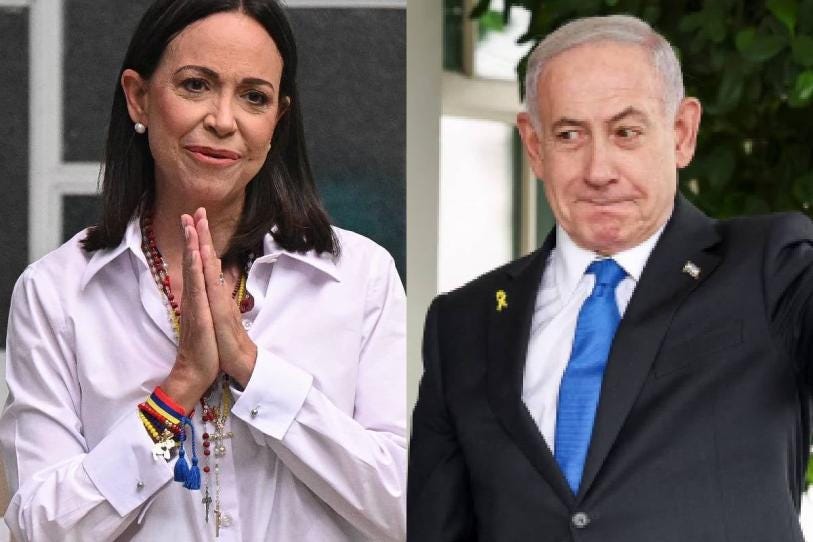
The pattern mirrors earlier theaters. A non-aligned state is economically suffocated, morally vilified, and politically destabilized. An opposition figure is elevated, internationally legitimized, and presented as inevitable. Media narratives soften, sanctions become leverage, and the language of democracy masks a far older logic: alignment first, sovereignty later.
The Hemispheric Pattern
Across Mexico, Brazil, and Venezuela, the architecture holds. Failed operations are buried through pressure. Legal threats are neutralized through extraction. Political targets are reframed until replacement appears not only acceptable, but necessary. Latin America is not peripheral to this doctrine—it is one of its proving grounds, where methods refined elsewhere are tested under conditions of relative silence.
What unites these cases is not conspiracy, but continuity. The same state that perfects population control abroad perfects accountability avoidance at home—and then exports both. The region’s role is not accidental; it is structural, offering space to rehearse outcomes that later appear inevitable elsewhere.
Doctrine does not announce itself. It reveals itself—again and again—where scrutiny is weakest.
By the time these patterns become visible, the machinery has already moved on. And Latin America, long treated as a secondary stage, remains one of the clearest mirrors of how destabilization, deniability, and power now travel together.
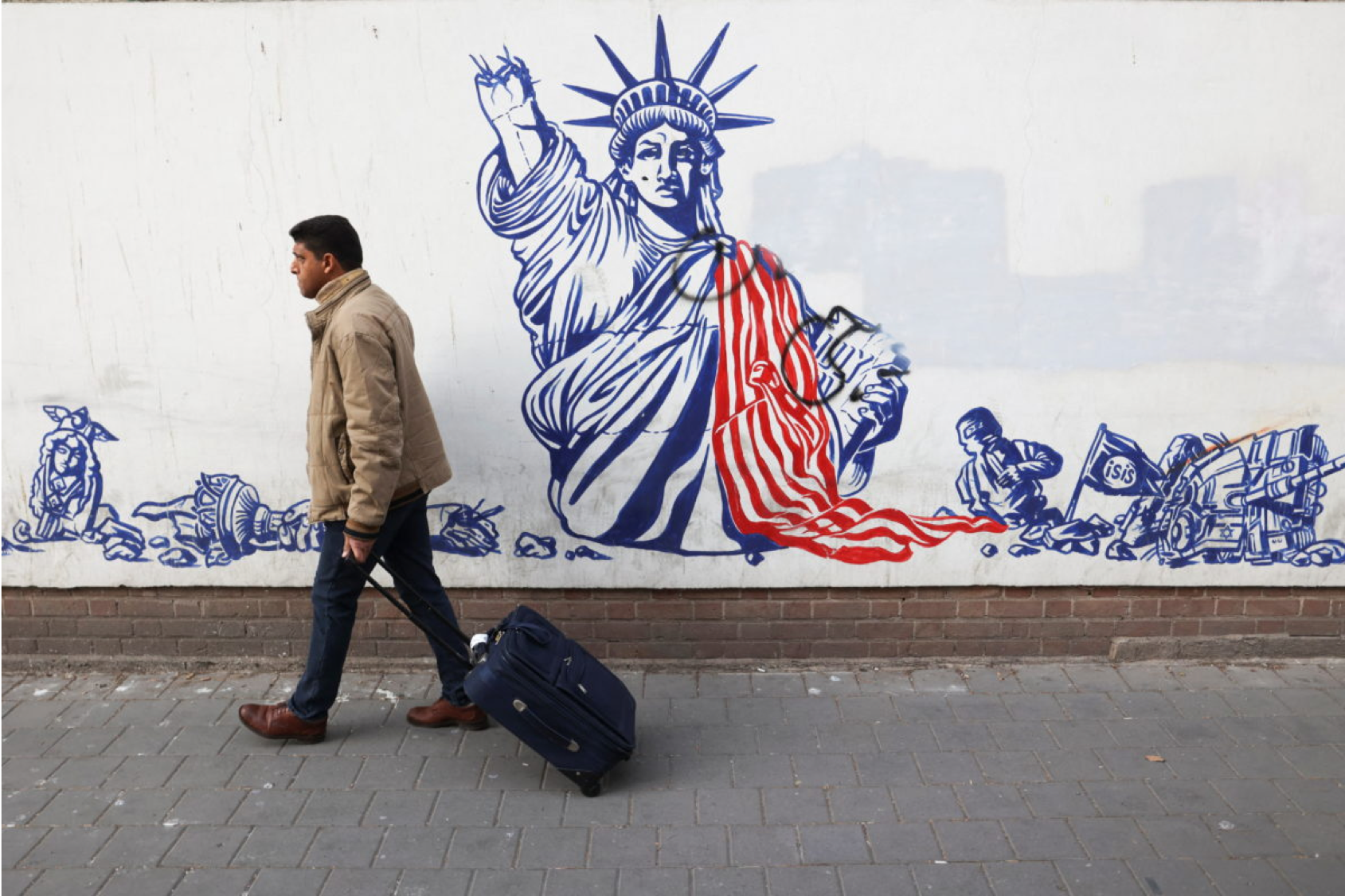
The Clean Break’s Last Horizon: Iran, Media Gatekeepers, and the Return of Coup Logic
Last but not least, the Doctrine of Fragmentation converges on the one state the Clean Break architects never stopped naming, even when they stopped publishing: Iran. In the 1996 blueprint drafted for Netanyahu, Iran was not simply an adversary; it was the last intact obstacle to a region reordered through pressure, proxy conflict, and cascading state failure. Iraq, Syria, Lebanon, Yemen—each was conceived as a stage along a path whose terminus was Tehran. What has unfolded in recent months does not mark a deviation from that design, but its most explicit revival—updated for an age of platform politics, mediated dissent, and private reversals.
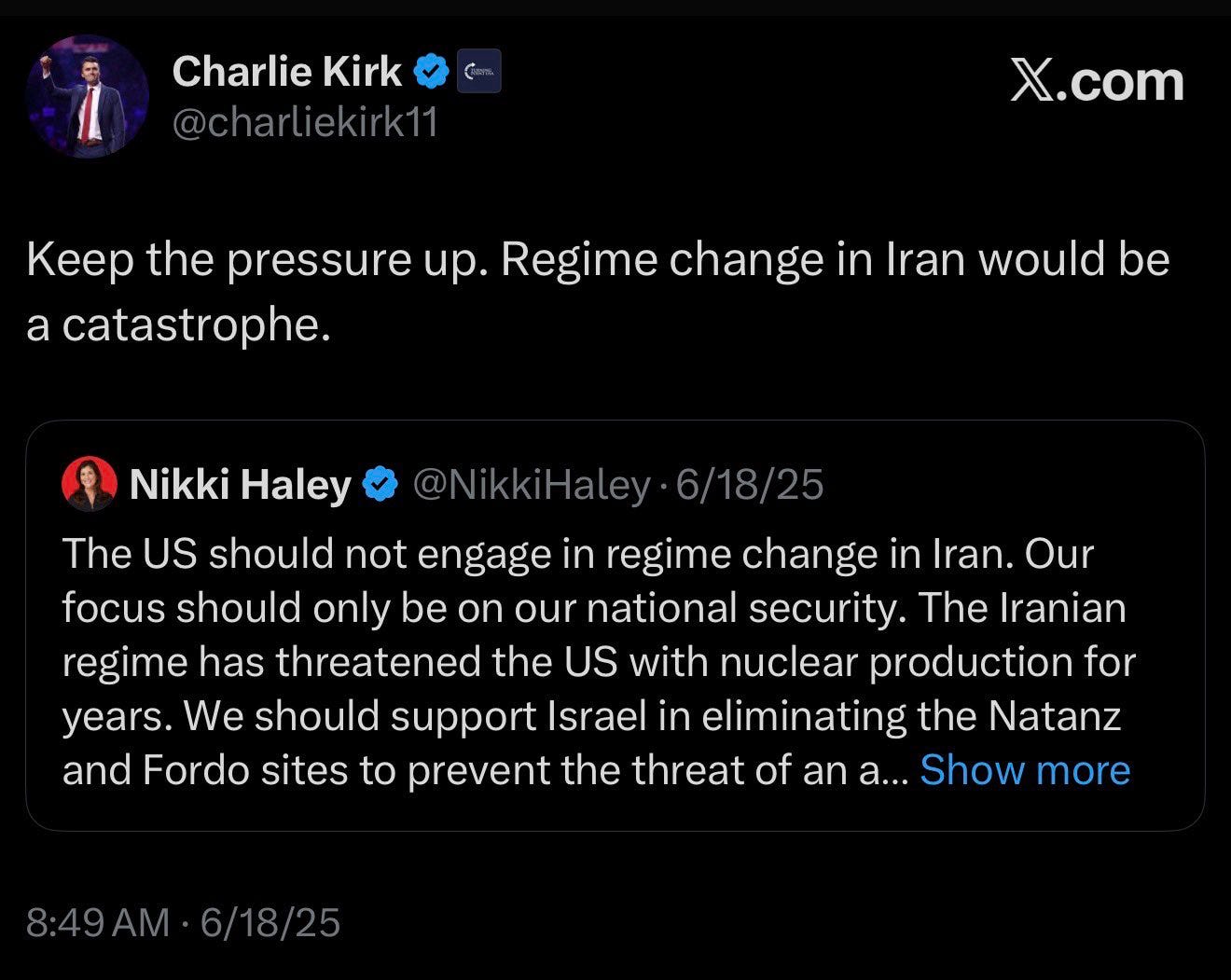
For months, Israel’s political and security leadership pressed openly for a direct confrontation with Iran, even as American public opinion hardened against another Middle Eastern war. That campaign stalled in daylight. Polls soured. Veterans spoke. The memory of Iraq—sold on urgency and delivered in catastrophe—reasserted itself. It was in this window that an unusual brake appeared inside the American media ecosystem itself. A clip released by Megyn Kelly confirmed what Tucker Carlson had hinted weeks earlier: his earlier silences around Israel, Epstein, and Iran were not acts of self-protection, but an attempt to shield someone else. The clip revealed the counterintuitive fact—Charlie Kirk had urged him to speak freely. “Go Max,” Kirk told Carlson, pressing him not toward caution but toward clarity, and toward opposition to a war he believed would be disastrous.
Charlie Kirk’s role in preventing another reckless push toward war with Iran cannot be overstated. As Megyn Kelly’s clip reveals, he told Tucker Carlson to “GO MAX”, urging him to speak openly about the dangers of U.S. entanglement in Israel-driven conflicts, even when Kirk himself could not fully disclose the scope. That directive was one of his last major interventions—an effort to shield Americans, particularly young conservatives at TPUSA, from being drawn into another expansionist war while Israel pursued its regional ambitions.
Charlie Kirk was the chokepoint between American intervention and Israel’s expansionist designs. Without his voice, the path to war against Iran would have been almost automatic.
Kirk’s influence extended directly to Donald Trump and his close ally, Vice President JD Vance. Vance later confirmed what had long been quietly acknowledged that America was being steered toward a war pushed by Israel against Iran, and last time it was Charlie Kirk who helped stop the madness. Kirk’s strategic interventions—ranging from exposing the Epstein files’ Mossad connections to calling out AIPAC’s role as a foreign lobby—demonstrated a rare combination of access, foresight, and moral courage.
From JFK to Charlie Kirk, confronting Israel’s covert influence has always been a high-stakes gamble—one that history often punishes.
At TPUSA events, Kirk refused to silence voices like Tucker Carlson and even advocated bringing in Candace Owens, despite pressure from pro-Israel donors demanding he step back. Less than 48 hours before his assassination, Kirk publicly announced to a small inner circle, “I’m done with the pro-Israel cause,” rejecting donor ultimatums and signaling his withdrawal from the network attempting to manipulate U.S. policy in Israel’s favor.
This echoes a historical precedent. 48 hours before JFK was assassinated, Israel publicly opposed his policies that threatened its strategic expansion, including allowing inspectors to monitor nuclear facilities and advocating for Palestinian refugees’ return:
Two days before JFK assassination in Dallas, Israeli newspaper Davar defiantly declared:
“Israel does not accept the U.S. proposal under any circumstances.” (Davar, Nov. 20, 1963)
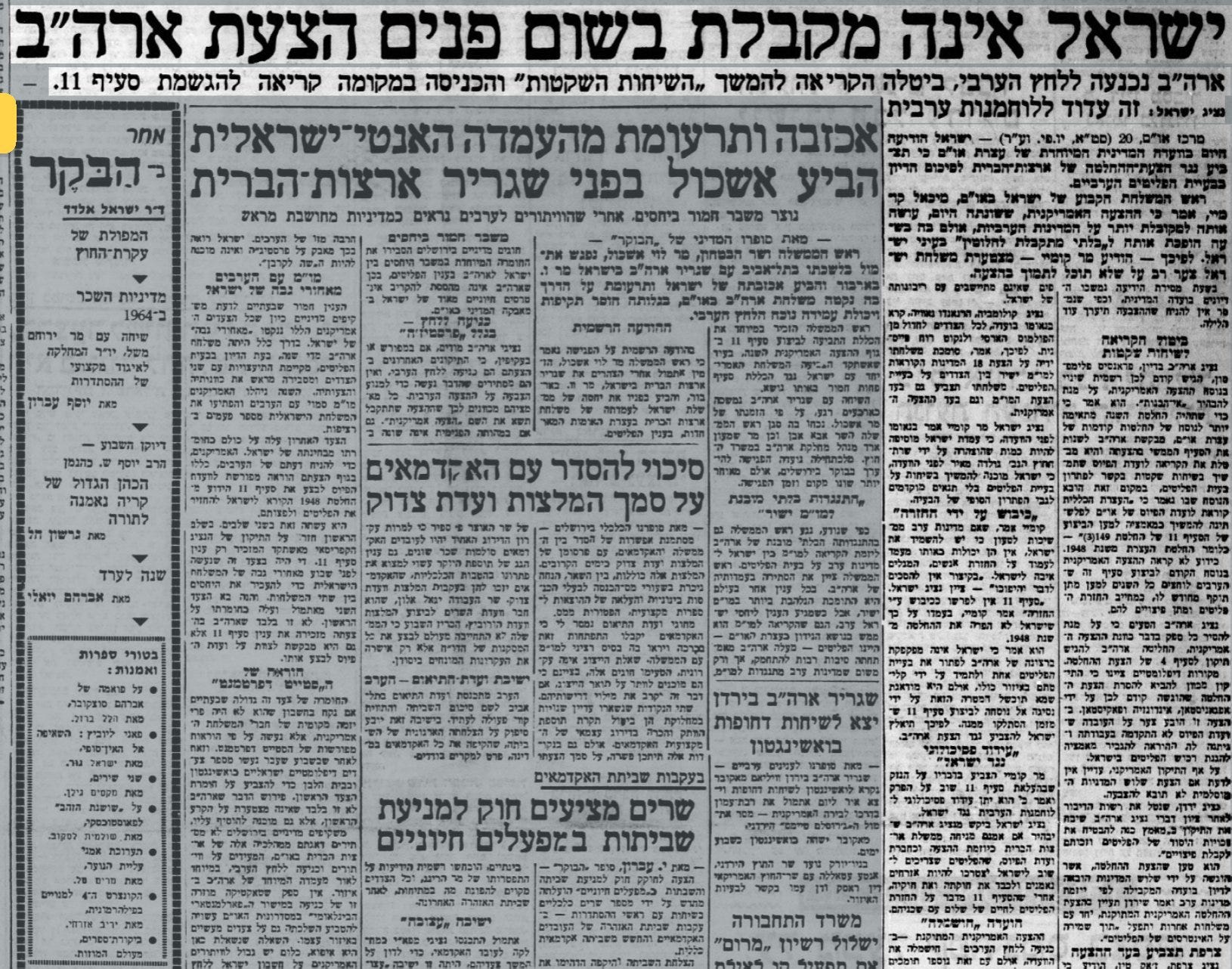
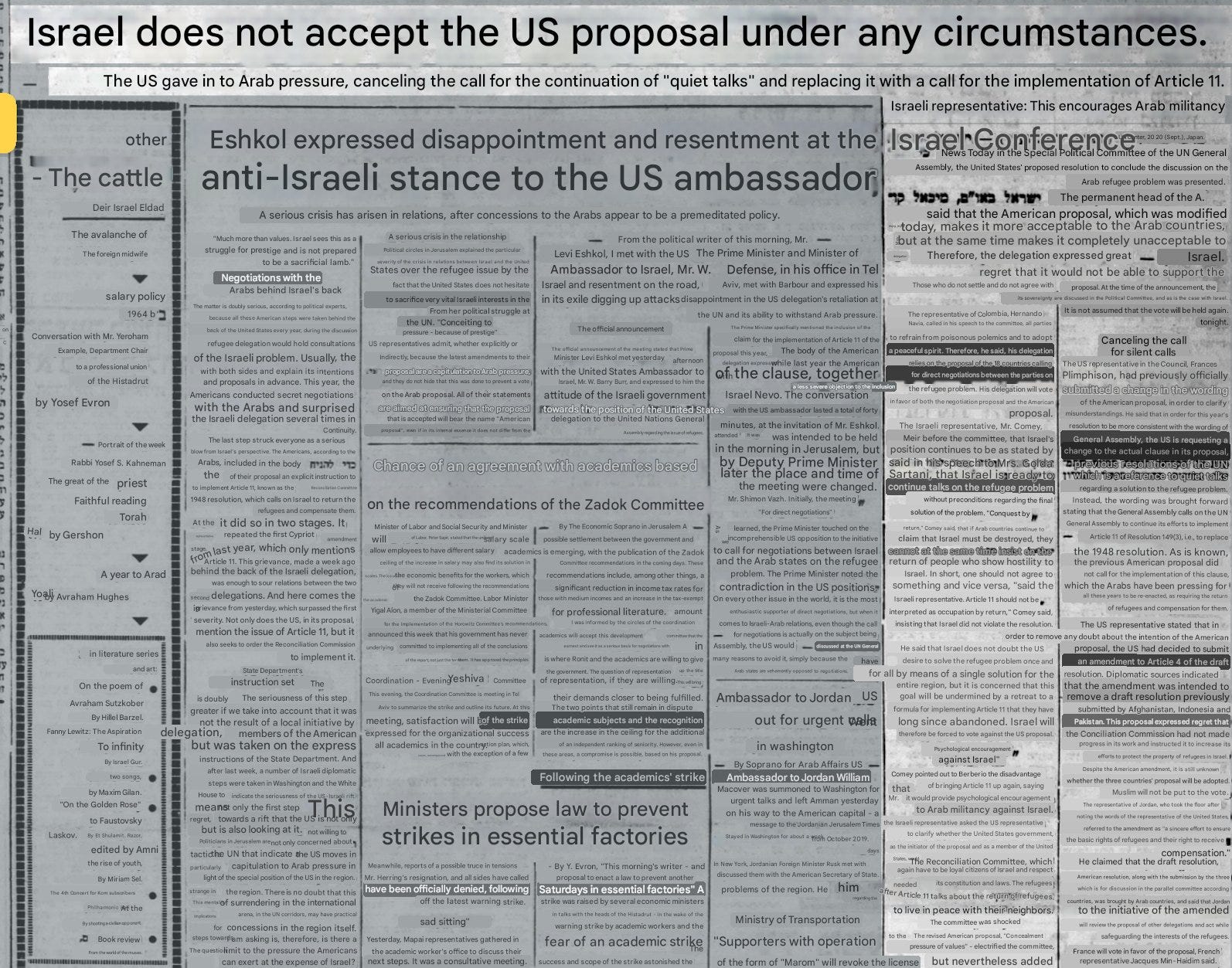
Just hours later, The New York Times echoed the rupture:
NYT, Nov. 21, 1963
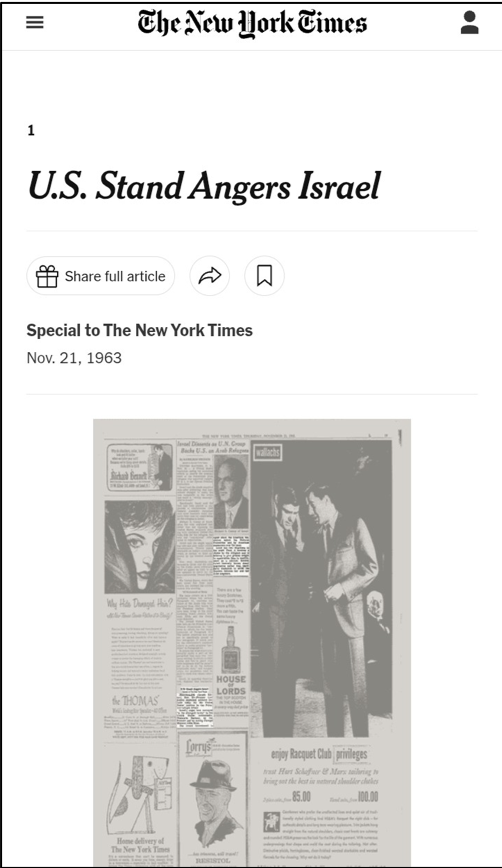
Charlie Kirk’s defiance shows the enduring consequences of confronting Israel’s covert and overt strategies: strategic wars manufactured abroad, U.S. taxpayers conscripted into conflicts, and critical domestic needs (housing, education, and affordability in general) sacrificed to maintain the illusion of control.
Charlie Kirk stood between Israel’s expansionist war and America’s youth. He spoke. He resisted. And he paid the ultimate price.
Israel’s Reckless Push for War Against Iran Inches Toward America
It returned quickly. Protests inside Iran—some organic, others suddenly violent and were amplified abroad as evidence of imminent collapse. Social media narratives hardened with speed, drawing sharp lines between “legitimate dissent” and “regime fragility,” even as Iranian officials distinguished between protesting shopkeepers and disruptive actors. The choreography was familiar: unrest as signal, escalation as pretext, intervention as reluctant necessity. Former CIA Director Mike Pompeo then dispensed with euphemism altogether, boasting publicly that Iranian protesters had “Mossad agents walking beside them.” What was once implied was now said outright. Mossad involvement in protest also confirmed in The Jerusalem Post “Mossad spurs Iran protests, says agents with demonstrators in Farsi message”
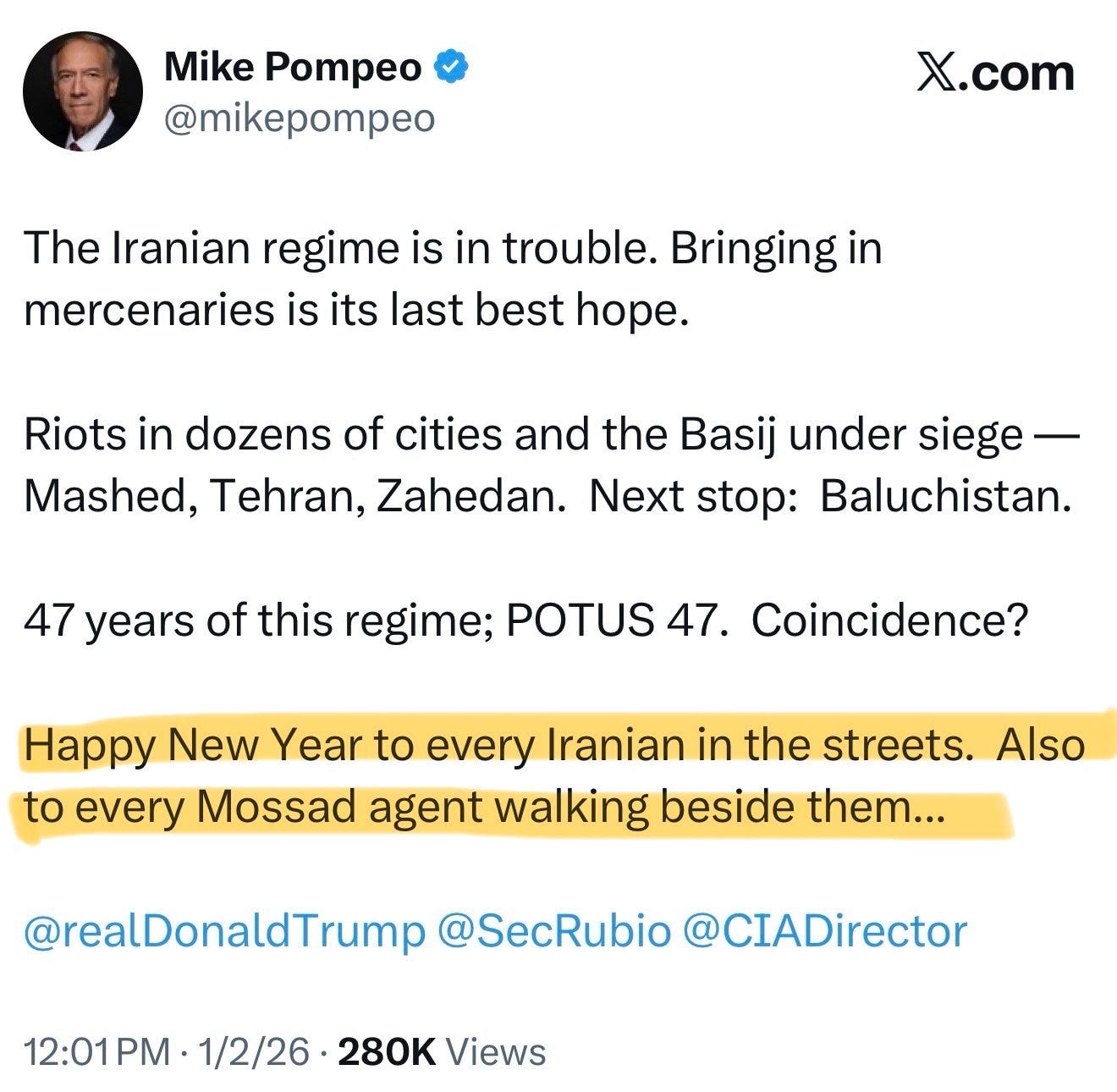
Confirmed reports now show Mossad playing a direct role in Iran’s recent unrest. Outgoing Mossad Chief David Barnea publicly acknowledged that Israeli operatives remain inside Iran, maintaining influence over ongoing protests. Meanwhile, Mossad-linked X accounts circulated instructions in Farsi, guiding demonstrators and signaling an orchestrated campaign rather than spontaneous dissent. This confirms that what appears as internal protest is being actively shaped by a foreign intelligence apparatus.
Mossad’s presence in Iran is not passive. Agents are embedded to direct and manipulate unrest.
The pivot followed—quiet, untelevised, and decisive. After failing to persuade Donald Trump publicly, Netanyahu secured what daylight could not. At Mar-a-Lago, a private alignment replaced a public stalemate. Within days, Trump announced on Truth Social that the “United States will intervene if Iran kills protesters.” No congressional debate preceded it. No new intelligence was presented. The decision appeared fully formed, as if merely waiting for a backroom consensus to surface.
Iran’s response was unusually direct. Ali Larijani, Secretary of Iran’s National Security Council, dispensed with diplomatic ambiguity:
“With the statements by Israeli officials and Donald Trump, what has been going on behind the scenes is now clear. We distinguish between the stance of the protesting shopkeepers and the actions of disruptive actors, and Trump should know that U.S. interference in this internal matter would mean destabilizing the entire region and destroying America’s interests. The American people should know — Trump started this adventurism. They should be mindful of their soldiers’ safety.”
The statement was not merely a warning; it was a diagnosis. It framed the moment not as spontaneous escalation but as the exposure of a concealed process—pressure accumulated offstage until a decision could be presented as inevitability. What Iran named was not conspiracy, but continuity.
That continuity reaches back to 1953. Mohammad Mosaddegh, a democratically elected prime minister, sought sovereignty through the nationalization of Iran’s oil industry. His offense was refusal—refusal to let a foreign corporation govern Iran’s economic fate. Britain responded with sanctions; when pressure failed, removal followed. Operation Ajax supplied the now-familiar script: economic strangulation, media amplification, street unrest—some genuine, some orchestrated—followed by violence, arrest, and the restoration of a compliant strongman. The arc from that coup runs through the Shah’s police state, the 1979 revolution, and every subsequent crisis between Tehran and Washington.
What makes the present moment so dangerous is not simply the risk of war, but the recycling of that logic with modern tools. The Doctrine of Fragmentation does not require invasion at first. It requires confusion, delegitimation, and a state forced to blur the line between dissent and disruption. Only later does force arrive—marketed as stabilization, framed as rescue, and remembered as necessity. By the time bombs fall, the narrative has already been set.
Iran is not the exception to the doctrine—it is the doctrine’s final test.
If Iraq was fragmented through invasion and Syria through proxy war, Iran is being tested through a hybrid of both: internal strain magnified externally, covert pressure paired with overt threat, and private alignment masquerading as public resolve. The echoes of 1953 are not accidental; they are instructive. When persuasion fails, history is not revised—it is repeated.
The Clean Break promised security through rupture. What it delivered, again and again, was instability mistaken for control. Iran now stands at the edge of that promise not because it is uniquely aggressive, but because it remains uniquely intact. And for a doctrine that feeds on fracture, integrity itself becomes the provocation.
Once the pattern is seen, it cannot be unseen.
The Pattern, Once Named
What links Gaza, Yemen, Somalia, Sudan, Nigeria, Latin America, and now Iran is not chaos by chance, nor local failure. It is a method—one advanced most consistently by the Israeli security state under Benjamin Netanyahu: fracture first, deny authorship, then summon American power to manage the wreckage. Militias are cultivated, rival factions empowered, internal stress amplified, and when violence erupts, Israel disappears from the frame while Washington is called in as the “reluctant stabilizer.”
This is not incidental. Netanyahu’s Israel does not sell peace; it sells leverage through instability. From Gaza to Nigeria, from proxy wars to intelligence-backed pressure campaigns, the same architecture repeats: Israel pushes the region toward breakdown, U.S. credibility absorbs the blowback, and American taxpayers fund wars they neither voted for nor benefit from. Media silence is not a bug in this system—it is the shield that keeps accountability permanently offshore.
The distraction economy sustains the cycle. Scandals replace structure. Outrage replaces timelines. Netanyahu’s role vanishes behind moral theater, while American soldiers, budgets, and domestic priorities are quietly sacrificed. Homes go unbuilt. Schools decay. Public intellect erodes. China rises—not because it is virtuous, but because America is permanently diverted.
The record is no longer ambiguous. By evidence, by pattern, by consequence, Netanyahu is not “THE BLESSING” he proclaims. He is “THE CURSE” — exporting instability abroad while hollowing out the republic meant to contain it.
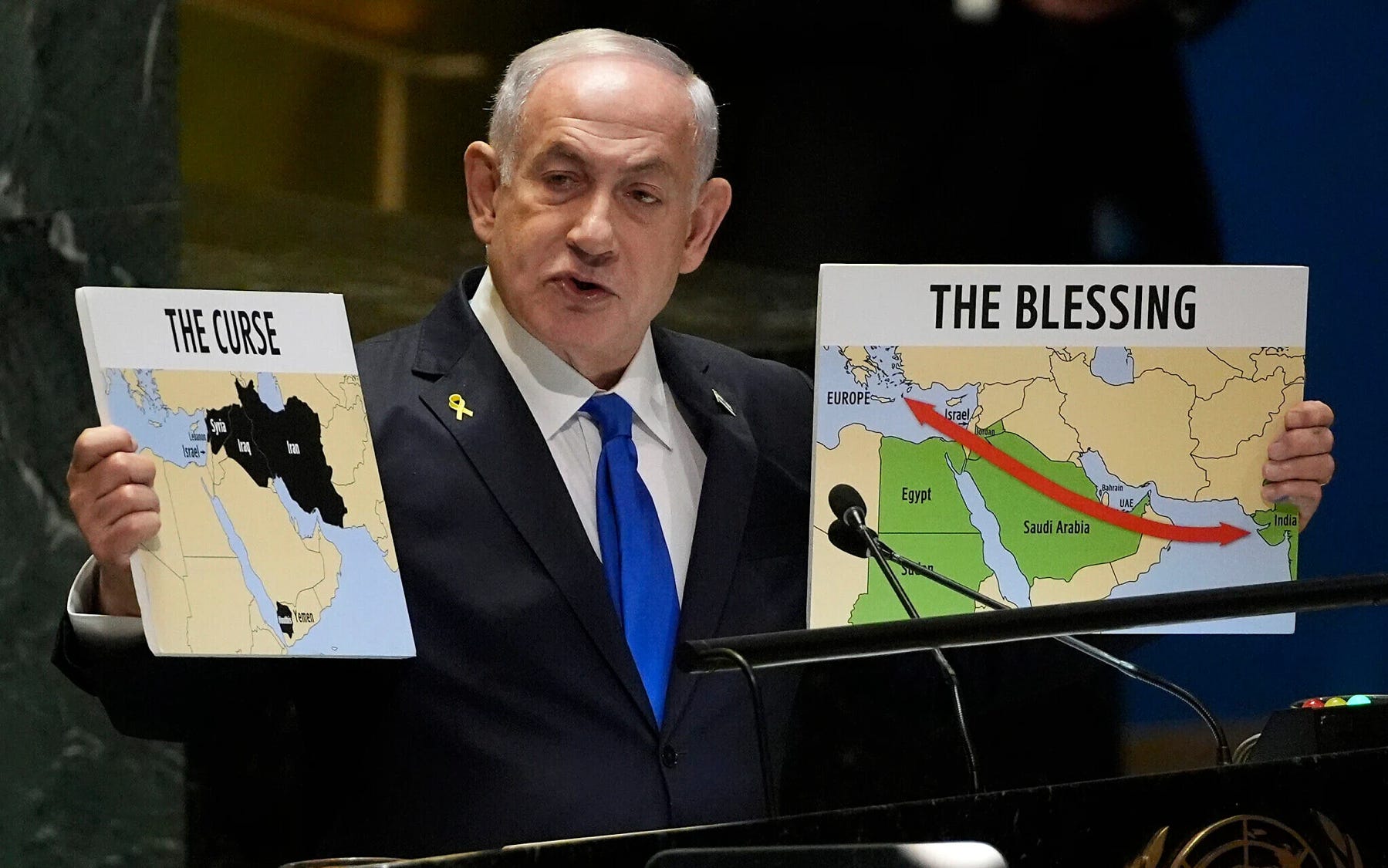
Speaking up can stop another reckless war before it starts—saving lives abroad, sparing American taxpayers the bill, and reclaiming the resources to house the homeless, rebuild world-class schools, and restore America’s standing before it loses everything to managed chaos.
As George Orwell warned, “All tyrannies rule through fraud and force, but once the fraud is exposed they must rely exclusively on force.”
— Phantom Pain
📌 Connect with me on 𝕏: @PhantomPain1984
You read because you refuse the comfort of ignorance. I will always keep Phantom Directive free—awareness is too important to put behind a paywall. I’ve consistently predicted events before they hit the news cycle, exposing the structures and manipulations the mainstream won’t touch.
If you can, consider supporting my investigative journalism —your contribution allows me to dig deeper, uncover more evidence, and produce more timely, high-impact reporting. If not, it’s completely understandable; you can still help by sharing this work with friends and family—every share expands awareness and builds resistance against propaganda.
Your voice matters: share with friends, family, or anyone seeking the truth—no matter your subscriptio

No comments:
Post a Comment