Pfizer and Moderna COVID-19 Shots Can Trigger Alopecia Areata in Patients with Autoimmune Conditions
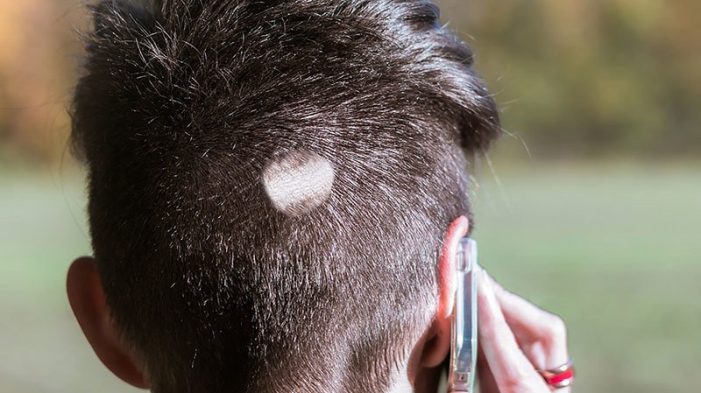
Following the granting by the U.S. Food and Drug Administration (FDA) of Emergency Use Authorization (EUA) status for Pfizer/BioNTech’s BNT162b2 and Moderna/NIAID’s mRNA-1273 messenger RNA (mRNA) COVID-19 biologics in December 2020, there have been increasing reports of alopecia areata following vaccination with these products.1
Alopecia areata is an autoimmune disorder characterized by hair loss due to an inflammatory response targeting the hair follicle. Although hair loss can occur in any part of the body, patients with alopecia areata mostly lose their hair on their head and face, falling out in small round patches.2
More Than 900 Cases of Alopecia Areata Cases Reported in VAERS
According to a multiple-case study published in the Journal of the American Academy of Dermatology Case Reports earlier this year, the Vaccine Adverse Event Reporting System (VAERS) database
contained a total of 915 reported cases of alopecia, 67 of alopecia areata, one of alopecia totalis and eight of alopecia universalis associated with BNT162b2 (or “Comirnaty”) or mRNA-1273 (“Spikevax”) at the time the case studies were conducted.3Alopecia areata results in hair loss that occurs in round/oval patches, alopecia totalis results in hair loss over the entire scalp, and alopecia universalis results in total hair loss on the scalp, face and entire body.4
Case Studies Reveal Patients With Autoimmune Diseases Have Higher Risk of Alopecia After COVID Shots
Case studies in Journal of the American Academy of Dermatology Case Reports show that, although cause and effect cannot be clearly identified in any of the cases, patients with personal or family histories of alopecia areata and other autoimmune disorders, particularly thyroid dysfunction, may be at higher risk of hair loss after received COVID shots.5
It was found that patients with family histories of autoimmune disorders may be genetically predisposed to alopecia areata, and immune dysregulation in patients with coexisting autoimmune disorders may worsen disease progression.6
In another case study published in the journal Clinical and Experimental Vaccine Research, the report states:
To date, there is no conclusive evidence to prove a causal relationship, but the concept that no drug is completely harmless can also be applied to vaccines, which certainly play an important role in improving human health, but could be implicated as potential triggers for autoimmune diseases. For both the morbilliform reaction and cases of alopecia areata, an immune-mediated etiology can be hypothesized, suggesting a more robust immune response that could trigger these manifestations in genetically predisposed patients.”7
Scientific Literature Shows Occurrence of Alopecia Areata Following Childhood Routine Vaccinations
The scientific literature has several reports of alopecia areata developing after the administration of routine childhood vaccines due to a hypersensitive reaction in genetically predisposed individuals.8
A 1997 study published in the Journal of the American Medical Association (JAMA) reported 60 cases of alopecia areata after various routine childhood vaccinations.9> A 2011 study published in Medicina Clínica reported a case of alopecia areata following tetanus toxoid vaccination.10 A 2016 study published in Pediatric Dermatology reported two episodes of AA with subsequent regrowth in a child following the third dose of the Japanese encephalitis vaccine at the age of 27 months, and after the third dose of influenza vaccine at the age of 36 months.11
If you would like to receive an e-mail notice of the most recent articles published in The Vaccine Reaction each week, click here.
Click here to view References:

No comments:
Post a Comment