The Remarkable Historiography of David Irving

 RSS
RSS

I’m very pleased to announce that our selection of HTML Books now contains works by renowned World War II historian David Irving, including his magisterial Hitler’s War, named by famed military historian Sir John Keegan as one of the most crucial volumes for properly understanding that conflict.

With
many millions of his books in print, including a string of best-sellers
translated into numerous languages, it’s quite possible that the
eighty-year-old Irving today ranks as the most
internationally-successful British historian of the last one hundred
years. Although I myself have merely read a couple of his shorter
works, I found these absolutely outstanding, with Irving regularly
deploying his remarkable command of the primary source documentary
evidence to totally demolish my naive History 101 understanding of major
historical events. It would hardly surprise me if the huge corpus of
his writings eventually constitutes a central pillar upon which future
historians seek to comprehend the catastrophically bloody middle years
of our hugely destructive twentieth century even after most of our other
chroniclers of that era are long forgotten.
Carefully
reading a thousand-page reconstruction of the German side of the Second
World War is obviously a daunting undertaking, and his remaining
thirty-odd books would probably add at least another 10,000 pages to
that Herculean task. But fortunately, Irving is also a riveting
speaker, and several of his extended lectures of recent decades are
conveniently available on YouTube, as given below. These effectively
present many of his most remarkable revelations concerning the wartime
policies of both Winston Churchill and Adolf Hitler, as well as
sometimes recounting the challenging personal situation he himself
faced. Watching these lectures may consume several hours, but that is
still a trivial investment compared to the many weeks it would take to
digest the underlying books themselves.
When confronted with astonishing claims that completely overturn an established historical narrative, considerable skepticism is warranted, and my own lack of specialized expertise in World War II history left me especially cautious. The documents Irving unearths seemingly portray a Winston Churchill so radically different from that of my naive understanding as to be almost unrecognizable, and this naturally raised the question of whether I could credit the accuracy of Irving’s evidence and his interpretation. All his material is massively footnoted, referencing copious documents in numerous official archives, but how could I possibly muster the time or energy to verify them?
When confronted with astonishing claims that completely overturn an established historical narrative, considerable skepticism is warranted, and my own lack of specialized expertise in World War II history left me especially cautious. The documents Irving unearths seemingly portray a Winston Churchill so radically different from that of my naive understanding as to be almost unrecognizable, and this naturally raised the question of whether I could credit the accuracy of Irving’s evidence and his interpretation. All his material is massively footnoted, referencing copious documents in numerous official archives, but how could I possibly muster the time or energy to verify them?
Rather ironically, an extremely unfortunate turn of events seems to have fully resolved that crucial question.
Irving
is an individual of uncommonly strong scholarly integrity, and as such
he is unable to see things in the record that do not exist, even if it
were in his considerable interest to do so, nor to fabricate
non-existent evidence. Therefore, his unwillingness to dissemble or pay
lip-service to various widely-worshiped cultural totems eventually
provoked an outpouring of vilification by a swarm of ideological
fanatics drawn from a particular ethnic persuasion. This situation was
rather similar to the troubles my old Harvard professor E.O. Wilson had
experienced around that same time upon publication of his own masterwork
Sociobiology: The New Synthesis, the book that helped launch the field of modern human evolutionary psychobiology.
These
zealous ethnic-activists began a coordinated campaign to pressure
Irving’s prestigious publishers into dropping his books, while also
disrupting his frequent international speaking tours and even lobbying
countries to bar him from entry. They also maintained a drumbeat of
media vilification, continually blackening his name and his research
skills, even going so far as to denounce him as a “Nazi” and a
“Hitler-lover,” just as had similarly been done in the case of Prof.
Wilson.
During
the 1980s and 1990s, these determined efforts, sometimes backed by
considerable physical violence, increasingly bore fruit, and Irving’s
career was severely impacted. He had once been feted by the world’s
leading publishing houses and his books serialized and reviewed in
Britain’s most august newspapers; now he gradually became a marginalized
figure, almost a pariah, with enormous damage to his sources of income.
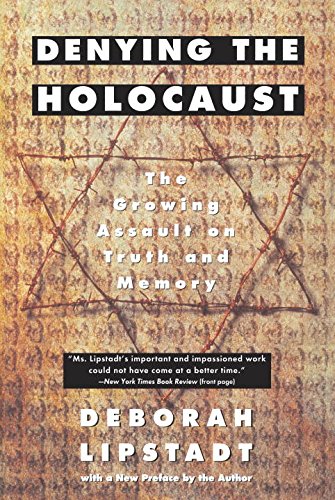
In
1993, Deborah Lipstadt, a rather ignorant and fanatic professor of
Theology and Holocaust Studies (or perhaps “Holocaust Theology”)
ferociously attacked him in her book as being a “Holocaust Denier,”
leading Irving’s timorous publisher to suddenly cancel the contract for
his major new historical volume. This development eventually sparked a
rancorous lawsuit in 1998, which resulted in a celebrated 2000 libel
trial held in British Court.
That
legal battle was certainly a David-and-Goliath affair, with wealthy
Jewish movie producers and corporate executives providing a huge
war-chest of $13 million to Lipstadt’s side, allowing her to fund a
veritable army of 40 researchers and legal experts, captained by one of
Britain’s most successful Jewish divorce lawyers. By contrast, Irving,
being an impecunious historian, was forced to defend himself without
benefit of legal counsel.
In
real life unlike in fable, the Goliaths of this world are almost
invariably triumphant, and this case was no exception, with Irving being
driven into personal bankruptcy, resulting in the loss of his fine
central London home. But seen from the longer perspective of history, I
think the victory of his tormenters was a remarkably Pyrrhic one.

Although
the target of their unleashed hatred was Irving’s alleged “Holocaust
denial,” as near as I can tell, that particular topic was almost
entirely absent from all of Irving’s dozens of books, and exactly that
very silence was what had provoked their spittle-flecked outrage.
Therefore, lacking such a clear target, their lavishly-funded corps of
researchers and fact-checkers instead spent a year or more apparently
performing a line-by-line and footnote-by-footnote review of everything
Irving had ever published, seeking to locate every single historical
error that could possibly cast him in a bad professional light. With
almost limitless money and manpower, they even utilized the process of
legal discovery to subpoena and read the thousands of pages in his bound
personal diaries and correspondence, thereby hoping to find some
evidence of his “wicked thoughts.” Denial, a 2016 Hollywood
film co-written by Lipstadt, may provide a reasonable outline of the
sequence of events as seen from her perspective.

Yet
despite such massive financial and human resources, they apparently
came up almost entirely empty, at least if Lipstadt’s triumphalist 2005
book History on Trial may be credited. Across four decades of
research and writing, which had produced numerous controversial
historical claims of the most astonishing nature, they only managed to
find a couple of dozen rather minor alleged errors of fact or
interpretation, most of these ambiguous or disputed. And the worst they
discovered after reading every page of the many linear meters of
Irving’s personal diaries was that he had once composed a short
“racially insensitive” ditty for his infant daughter, a trivial item
which they naturally then trumpeted as proof that he was a “racist.”
Thus, they seemingly admitted that Irving’s enormous corpus of
historical texts was perhaps 99.9% accurate.
I
think this silence of “the dog that didn’t bark” echoes with thunderclap
volume. I’m not aware of any other academic scholar in the entire
history of the world who has had all his decades of lifetime work
subjected to such painstakingly exhaustive hostile scrutiny. And since
Irving apparently passed that test with such flying colors, I think we
can regard almost every astonishing claim in all of his books—as
recapitulated in his videos—as absolutely accurate.
Aside
from this important historical conclusion, I believe that the most
recent coda to Irving’s tribulations tells us quite a lot about the true
nature of “Western liberal democracy” so lavishly celebrated by our
media pundits, and endlessly contrasted with the “totalitarian” or
“authoritarian” characteristics of its ideological rivals, past and
present.
In
2005, Irving took a quick visit to Austria, having been invited to speak
before a group of Viennese university students. Shortly after his
arrival, he was arrested at gunpoint by the local Political Police on
charges connected with some historical remarks he had made 16 years
earlier on a previous visit to that country, although those had
apparently been considered innocuous at the time. Initially, his arrest
was kept secret and he was held completely incommunicado; for his
family back in Britain, he seemed to have disappeared off the face of
the earth, and they feared him dead. More than six weeks were to pass
before he was allowed to communicate with either his wife or a lawyer,
though he managed to provide word of his situation earlier through an
intermediary.
And
at the age of 67 he was eventually brought to trial in a foreign
courtroom under very difficult circumstances and given a three-year
prison sentence. An interview he gave to the BBC about his legal
predicament resulted in possible additional charges, potentially
carrying a further twenty-year sentence, which probably would have
ensured that he died behind bars. Only the extremely good fortune of a
successful appeal, partly on technical grounds, allowed him to depart
the prison grounds after spending more than 400 days under
incarceration, almost entirely in solitary confinement, and he escaped
back to Britain.
His
sudden, unexpected disappearance had inflicted huge financial hardships
upon his family, and they lost their home, with most of his personal
possessions being sold or destroyed, including the enormous historical
archives he had spent a lifetime accumulating. He later recounted this
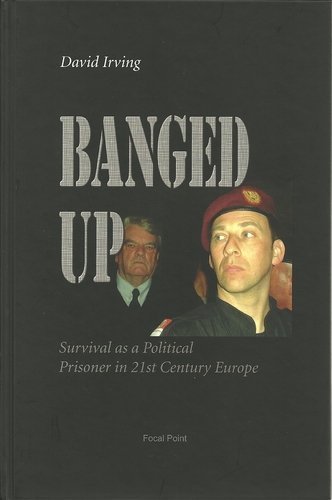
gripping story in Banged Up, a slim book published in 2008, as well as in a video interview available on YouTube.
Perhaps I am demonstrating my ignorance, but I am not aware of any similar case of a leading international scholar who suffered such a dire fate for quietly stating his historical opinions, even during in darkest days of Stalinist Russia or any of the other totalitarian regimes of the twentieth century. Although this astonishing situation taking place in a West European democracy of the “Free World” did receive considerable media exposure within Europe, coverage in our own country was so minimal that I doubt that today even one well-educated American in twenty is even aware it ever happened.
Perhaps I am demonstrating my ignorance, but I am not aware of any similar case of a leading international scholar who suffered such a dire fate for quietly stating his historical opinions, even during in darkest days of Stalinist Russia or any of the other totalitarian regimes of the twentieth century. Although this astonishing situation taking place in a West European democracy of the “Free World” did receive considerable media exposure within Europe, coverage in our own country was so minimal that I doubt that today even one well-educated American in twenty is even aware it ever happened.
One reason that most of us still believe that the West remains a free society is that Our American Pravda works so hard to conceal the important exceptions.


No comments:
Post a Comment