A Beginner’s Guide to the Ketogenic Diet: An Effective Way of Optimizing Your Health from Dr. Mercola
A Beginner’s Guide to the Ketogenic Diet: An Effective Way of Optimizing Your Health
Story at-a-glance
This
guide will tell you everything you need to know about a ketogenic diet –
how you can apply it to your lifestyle and what positives you can reap
from it
Before
coming up with an actual ketogenic diet food list, it’s important to
take a look at what you’re eating first and take out anything that’s
unhealthy
Many Americans suffer from various
chronic diseases such as diabetes and obesity, and the main culprit is
usually the food they eat. The standard American diet contains excessive
amounts of protein and carbohydrates, neither of which is good for your
health because it eventually causes you to develop insulin and leptin
resistance. As a result, you gain excess weight, develop inflammation
and become prone to cellular damage.
To avoid this problem, significant changes in your diet are
necessary, and the best way is inducing your body into a state of
nutritional ketosis, a condition where your body burns fat as its
primary fuel instead of sugar. In order to reach nutritional ketosis,
you must follow a ketogenic diet. But what exactly is a ketogenic diet?
This guide will tell you everything you need to know about a
ketogenic diet – how you can apply it to your lifestyle and what
positives you can reap from it.
The Various Benefits of the Ketogenic Diet
A ketogenic diet is a dietary approach that focuses on minimal
carbohydrates, moderate amounts of protein and high healthy fat
consumption — the three keys to achieving nutritional ketosis. In fact,
it’s what I recommend for most people who would like to optimize their
health.
There are many reasons why you should try a ketogenic diet. It can be
very beneficial for people suffering from chronic conditions, or for
people who would simply like to be healthier than their current state.
You’ll be excited to know that a ketogenic diet can help with the
following:
• Weight loss
If you’re trying to lose weight, then a ketogenic diet is one of the
best ways to do it, because it helps access your body fat so that it can
be shed. Obese people in particular can benefit from this method. In
one study, obese test subjects were given a low-carb ketogenic diet and a
low-fat diet. After 24 weeks, researchers noted that the low-carb group
lost more weight (9.4 kilograms) compared to the low-fat group (4.8
kilograms).1
Even my own body was able to feel the benefits of following a
ketogenic diet. I was able to drop my weight from 180 to 164 pounds,
despite eating 2,500 to 3,000 calories per day. Since then, I have
increased my consumption to 3,500 to 4,000 calories just to maintain my
ideal weight. • Anti-inflammatory
The human body can use sugar
and fat as fuel sources. However, the latter is preferred because it is
a cleaner, healthier fuel, as it releases far fewer reactive oxygen
species (ROS) and secondary free radicals. By eliminating sugar from
your daily food consumption, you’re decreasing your risk of developing
chronic inflammation throughout your body.
• Lowering risk of cancer
One exciting discovery about the ketogenic diet is how it can help
prevent cancer. Dominic D’Agostino, Ph.D., an assistant professor at the
University of South Florida, recently made headway on how the ketogenic
diet can help impact this dreaded disease.
D’Agostino explains that all of your cells (including cancer cells)
use glucose as fuel. However, cancer cells do not have metabolic
flexibility and cannot adapt to using ketones as energy, which your
regular cells can. Once your body enters a state of nutritional ketosis,
the cancer cells starve to death. • Increasing muscle mass
Jeff Volek, Ph.D, is a registered dietitian specializing on how a
high-fat, low-carb diet can affect health and athletic performance. In
one of his books, he states that ketones have a similar structure to
branched-chain amino acids that can be useful for building muscle mass.
Ketones spare these amino acids, leaving higher levels of them around,
which can help promote muscle mass. • Reducing Appetite
Constant hunger can cause you to consume more calories than you can
burn, which can eventually lead to weight gain. A ketogenic diet can
help you avoid this problem because reducing carbohydrate consumption
can reduce hunger symptoms. In one study, participants who were given a
low-carbohydrate had reduced appetites, helping them lose weight easier.2 • Lowering Insulin Levels
When you consume carbs, they are broken down into sugars in your
body. In turn, this causes your blood sugar levels to rise and leads to a
spike in your insulin. Over time, you may develop insulin resistance,
which can progress to type 2 diabetes.
By altering your diet to a ketogenic approach, you can reduce your
risk of developing type 2 diabetes. In a study published in Nutrition
& Metabolism, researchers noted that diabetics who ate
low-carbohydrate ketogenic diets were able to significantly reduce their
dependency on diabetes medication, and may even reverse it eventually.3
Different Types of Ketogenic Diets You Can Try
There are several variations of the ketogenic diet based on specific needs:4
• Standard Ketogenic Diet (SKD)
SKD is the type I typically recommend for most people, because it is
very effective. It focuses on high consumption of healthy fats (70
percent of your diet), moderate protein (25 percent) and very little
carbohydrates (5 percent).5
Keep in mind that there’s no set limit to the fat, because energy
requirements vary from person to person, depending on their daily
physical activities.
However, majority of your calories still need to come from fats, and
you still need to limit your consumption of carbohydrates and protein
for it to become a standard ketogenic diet.6 • Targeted Ketogenic Diet (TKD)
TKD is generally geared towards fitness enthusiasts. In this
approach, you eat the entirety of your allocated carbs for the day in
one meal, 30 to 60 minutes before exercise. The idea here is to use the
energy provided by the carbs effectively before it disrupts ketosis.7
If you’re following this approach, I recommend that you eat carbs
that are easily digestible with a high glycemic index to avoid upsetting
your stomach. Then, when you’re done exercising, increase your intake
of protein to help with muscle recovery, then continue consuming your
fats afterwards`.8 • Cyclic Ketogenic Diet (CKD)
Whereas TKD is focused on fitness enthusiasts, CKD is focused more on
athletes and bodybuilders. In CKD, you cycle between a normal ketogenic
diet, followed by a set number of days of high carb consumption, also
known as “carb-loading.”9
The idea here is to take advantage of the carbohydrates to replenish
the glycogen lost from your muscles during athletic activity or working
out.10
If you’re a high-level athlete or bodybuilder, CKD may be a viable
method for you. It usually consists of five days of SKD, followed by two
days of carb-loading. During the ketogenic cycle, carb consumption is
around 50 grams, but when you get to the carb-loading cycle, the amount
jumps to 450 to 600 grams. Again, this method isn’t recommended for most
people who do not have a high rate of physical activity.11 • High-Protein Ketogenic Diet
This method is a variant of the SKD. In a high-protein diet, you
increase the ratio of protein consumption to 10 percent and reduce your
healthy fat consumption by 10 percent. In a study involving obese men
that tried this method, researchers noted that it helped reduce their
hunger and lowered their food intake significantly, resulting in weight
loss.12 If you're overweight or obese, this may help you at first, then you can transition to SKD after you normalize your weight. • Restricted Ketogenic Diet
As mentioned earlier, a ketogenic diet can be an effective weapon
against cancer. To do this, you need to be on a restricted ketogenic
diet. By restricting your carbohydrate and calorie intake, your body
loses glycogen and starts producing ketones that your healthy cells can
use as energy. Because cancer cells cannot use these ketones, they
starve to death.13
A 2010 study helps back up this claim. A 65-year old woman who was
suffering from glioblastoma multiforme (GBM), an aggressive type of
brain cancer, was put into a restricted ketogenic diet that started with
water fasting and then proceeded to consume 600 calories a day only.
After two months, her weight decreased and the ketones in her body
elevated.
Furthermore, there was no discernable brain tumor tissue detected
using magnetic resonance (MRI) or fluorodeoxyglucose-positron emission
tomography (FDG-PET) imaging scans.14
Put Away These Foods Before Going on a Ketogenic Diet
Before coming up with an actual ketogenic diet food list, it’s
important to take a look at what you’re eating first and take out
anything that’s unhealthy. This means that you have to remove sugars,
starches, packaged and processed foods from your diet, because a
ketogenic diet focuses on eating real, whole food.
Furthermore, avoid drinking milk because it contains the carbohydrate
galactose – drinking just one glass can basically eat up your entire
carb allotment for the day. In addition, avoiding milk helps
lactose-intolerant people to implement the ketogenic diet. Many other
products should be avoided, such as hydrogenated vegetable oils (canola), soy products and sodas. They may be low on carbohydrates, but they are unhealthy and can wreak havoc on your health.
The Ideal Foods to Eat for a Ketogenic Diet
So now that you’ve taken out all the unhealthy food sources, what’s
the next step? When it comes to the core of an actual ketogenic diet,
remember that you need to consume only a moderate amount of protein, or
about one-half gram per pound of lean body mass, each day. In addition,
carbohydrates must be minimized and high-quality fats increased to serve
as your new fuel source.
To ease yourself into a ketogenic diet meal plan, I usually recommend
adding C8 medium-chain triglyceride (MCT) oil into your food. It’s
typically more expensive than other types of MCT oil,
but I prefer it more because it converts into ketones more effectively.
You can start with 1 teaspoon per day, then gradually increase your
consumption to 2 to 3 tablespoons per day.
If you stomach does not agree with MCT oil, you can try MCT powder,
which is easier on your stomach. The table below provides a good
overview of other foods rich in high-quality healthy fats:
When building your ketogenic diet meal plan, it’s important to stick to green leafy vegetables because they are rich in fiber, antioxidants and various nutrients. Your best choices include broccoli, spinach, parsley, Brussels sprouts and zucchini.
While fruits are generally healthy for you, majority of them should
be are avoided in a ketogenic diet because of their high amounts of
sugar. However, certain berries are safe to eat in moderate quantities,
such as blackberry, blueberry and cranberry, because they are rich in antioxidants that can support your health.
As for beverages, there are several you can choose from. The most
important is water, but you may also drink organic black coffee (without
any sweeteners or milk), which is rich in antioxidants. Coconut milk
can be consumed as well, as well as herbal teas because they are rich in
various antioxidants and nutrients. If you want a more extensive list,
Paleo Flourish Magazine has recommendations that encompass various food
groups.15
Ketogenic Recipes You Can Try
Order now and receive 3 limited time bonus gifts!
Oftentimes, people underestimate the potential a healthy diet can
bring to your overall well-being. In truth, the food you eat contributes
to 80 percent of your overall health, with the remaining 20 percent
dependent on various lifestyle factors.
Now that you’re aware what the ketogenic diet can be capable of, the
question now is, “How do I start making ketogenic meals in the first
place?”
In my book “Fat for Fuel,”
I sought to educate readers about the benefits of using healthy fats as
a catalyst to bring about improved mitochondrial function, thus
allowing you to achieve better health. In essence, the book answers
“why” it is important for you to consume healthy fats. However, you
still need to know “how” to prepare the right ketogenic foods in an
appetizing way.
That’s why I co-wrote the “Fat for Fuel Ketogenic Cookbook”
alongside renowned Australian celebrity chef Pete Evans. This book
combines research-backed medical advice with delicious, kitchen-tested
recipes that will help make shifting to fat-burning much easier. Whether
you’re just a budding cook or a master chef, there’s a delicious meal
waiting to be prepared that’ll take your health to the next level.
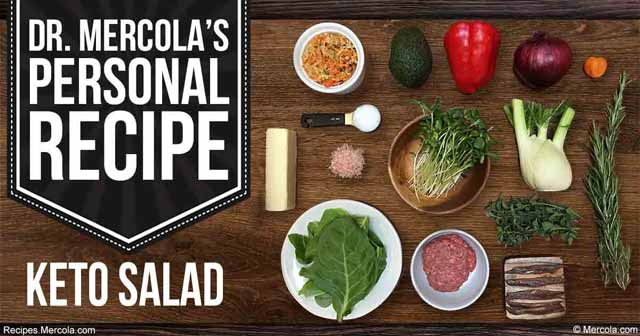
I also encourage you to try these keto-friendly recipes below, which I
use in my daily routine. They’re not included in the book, but they
serve as a good introduction to the benefits and the wonderful flavors
of the ketogenic diet.
10 to 20 of shakes ground pepper (depending on your preference)
Procedure:
Gently heat the coconut oil in a frying pan.
Add onions and ground organic lamb at very low heat for 20 to 25 minutes.
In a separate bowl, cut and mix the remaining ingredients.
After 25 minutes, add the onions to the salad and then mix it well.
Rinse salt off the anchovies and soak them for five minutes.
Split each anchovy into three pieces and add to the salad.
Add the organic lamb to the salad.
Dr. Mercola's Macadamia Nut Fudge Recipe
Ingredients:
300 grams of cocoa butter
200 grams of Dr. Mercola's coconut oil
200 grams of raw, organic-pastured butter
300 grams of macadamia nuts
8 full droppers of stevia (you can use Luo Han as a substitute)
1 teaspoon Dr. Mercola's organic vanilla extract
Procedure:
Mix the butters and oils under low heat for three to five minutes.
Once the mixture cools, add the stevia and the vanilla extract.
Pour the fudge into 8-ounce wide ball jars.
Spread the nuts evenly across all jars.
Refrigerate until the fudge reaches the desired consistency
This recipe makes eight servings.
Who Should Not Be on a Ketogenic Diet?
Based on published studies, a ketogenic diet can be beneficial for
optimizing your health. However, not everyone can follow this eating
plan due to certain factors. If you fall within any of the following
categories, I recommend that you do not push through with a ketogenic
diet for safety reasons:16, 17
Pregnant
During
pregnancy, your body undergoes many changes that require nutrients from
various sources. Therefore, severely restricting yourself from healthy
carb sources may negatively impact your baby’s health.18
Breastfeeding
Breastfeeding
women should avoid a ketogenic diet throughout the child’s
breastfeeding phase. That’s because women need oxaloacetate, a compound
essential for creating lactose for breastmilk, which is essential for
their baby’s growth.
An Athlete Who’s About to Start a New Season
Athletes
can greatly benefit from the energy produced by ketones, but it takes
around four to six weeks for your body to achieve ketosis. During this
time, your body has not yet adapted to using fat as an energy source,
which may impede your performance in upcoming athletic events.
If you wish to take advantage of the ketogenic diet, give your body time to adapt by planning ahead during the off-season.
Had a Gallbladder Removed
Your
gallbladder collects and concentrates bile, allowing your digestive
tract to absorb dietary fat properly. Without it, dietary fat won’t be
absorbed as much, which can lead to nutrient deficiencies, since a
ketogenic diet largely relies on fat for nutrients. The solution is
quite simple. Just be sure to consume two supplements with every meal
that you have fat. Ox bile and lipase. The ox bile will help emulsify
the fats so you can absorb them and replace the bile that is normally
secreted by your gallbladder. The lipase is an enzyme that will help
digest the fat.
Has a History of Kidney Stones
If
you have developed kidney stones before, a ketogenic diet may increase
your chances of getting them again. That’s because ketones are naturally
acidic, which increases the production of uric acid and the formation
of stones.
On the other hand, kidney stones may be prevented while
on a ketogenic diet if you increase your consumption of potassium from
leafy greens and other high-fat foods such as avocado. Staying hydrated
throughout the day also helps lower your risk of developing stones.
Your Body Is Still Growing
In
one study, epileptic children experienced a reduction in symptoms and
improved cognitive performance when a ketogenic diet was introduced.19
However, this may have a negative effect on the growth of their bodies
in the long run, according to a study published in the journal
Developmental Medicine & Child Neurology.20
Researchers
believe that a ketogenic diet reduces the production of insulin-like
growth factor 1 (IGFT-1), a hormone essential in the development of the
bones and the muscles of kids and teenagers. If your child absolutely
needs to be on a ketogenic diet, consult with a doctor first to discuss
any potential growth issues.
Naturally Thin
Naturally
thin people with a body mass index (BMI) of 20 or less should avoid a
ketogenic diet because it may induce further weight loss, which can be
detrimental to your overall health.
Have Rare Metabolic Disorders
Disorders
such as Gaucher’s, Tay-Sachs, Niemann-Pick and Fabry’s disease can
interfere with fat metabolism, thus affecting energy production.
If
you have any of the aforementioned disorders, a ketogenic diet is not
recommended as it relies largely on fat for energy production.21
Have Anorexia
Anorexics
may suffer from rapid starvation if they follow a ketogenic diet,
because they already limit their calorie consumption and have an extreme
fear of eating fat, which a ketogenic diet has lots of.
If they
embark on a ketogenic eating plan, they may also suffer from low energy,
because a ketogenic diet relies on dietary fat as the main source of
fuel. However, their overall wellbeing may benefit from ketones through
careful medical and psychiatric supervision.
Pancreatic Insufficiency
Pancreatic
insufficiency is a condition where your pancreas does not produce
enough enzymes to help break down and absorb nutrients in your digestive
tract.
If you have an enzyme deficiency, I suggest having it
treated first before embarking on a ketogenic diet, because your
digestive system will have a hard time absorbing dietary fats.
The Side Effects of a Ketogenic Diet
Starting a ketogenic diet can help optimize your health tremendously
in many ways. But like any major dietary changes, it can have several
undesirable (but not alarming) side effects, such as:
Bad Breath: Once you start on a
ketogenic diet, you may notice that your breath will have an undesirable
odor due to the increased acetone levels in your body.
Acetone is a ketone produced during ketosis, which is expelled in your urine and partly your breath.
On a positive note, detecting acetone in your breath is a good indicator that your ketogenic diet is working.22 You can brush your teeth and/or rinse your mouth with coconut oil to help remove the bad breath.
Short-Term Fatigue: You may begin
to feel fatigue at the start of a ketogenic diet. It's actually one of
the main reasons why many people choose not to continue with this
approach long before they can enjoy the benefits.23
The reason why you get tired at the start is your body is adapting from using carbohydrates for energy to healthy fats.
The transition doesn't happen overnight, and it may take
you anywhere between seven to 30 days before your body achieves full
ketosis.24
Frequent Urination: During the
first few days of implementing a ketogenic diet, you may notice that
you're using the bathroom more often. That's because your body is
dumping the glycogen in your liver and muscles as urine.
Furthermore, as the insulin level in your blood begins to drop, excess sodium is expelled in the form of urine as well.25
Digestive Problems: A huge shift into any dieting method can increase your risk of digestive problems, and the ketogenic diet is no exception.
Constipation is commonly reported among those who are
starting out on a ketogenic diet, but it may disappear in a few weeks
once your body gets used to the healthier food you're eating.26
Sugar Cravings: You may develop
intense sugar cravings as your body switches from sugar to fat for fuel.
However, I encourage you not to give in to temptation.
You can practice various relaxation method such as the Emotional Freedom Techniques or yoga to take your mind away from sugary foods.27
Hair Loss: You may notice that more strands of hair getting stuck on your brush during the first few days of your ketogenic diet.
Don't worry because this is not a big cause of concern,
since hair loss can result from any major dietary changes in general. It
will stop once your body achieves ketosis.28
Going into nutritional ketosis by following a ketogenic diet is one
of the most radical but highly beneficial lifestyle changes you can make
to improve your health. As with most dietary changes, always remember
to listen to your body. If you feel any side effects other than the ones
listed above, then necessary adjustments may be needed to your food
intake.
Frequently Asked Questions About the Ketogenic Diet
Q: How do I go into nutritional ketosis? A: To enter into a state of nutritional ketosis,
take a look at what you're currently eating and remove any unhealthy
items such as sugary drinks and processed foods. The next step is to
consume whole, organic foods that are high in healthy fats, has moderate
protein and only minimal carbohydrates.
Q: How long does it take to get into ketosis? A: Each person reacts differently to a ketogenic
diet. You may experience a few side effects in the first seven to 30
days, such as constipation, fatigue and urination. But once your body
normalizes, you will start feeling the benefits.
Q: How many carbs can I consume to be in a state of ketosis? A: It's generally recommended that only 5 percent
of your daily diet is allocated to carbohydrates because if you consume
more than that, your body gets thrown off ketosis. However, this is only
for SKD, or the standard ketogenic diet. If you're an athlete or a
bodybuilder, you can consume more carbs without affecting ketosis by
following a targeted ketogenic diet (TKD) or a cyclic ketogenic diet
(CKD).
Q: How long does it take before ketosis shows results? A: The results of ketosis can be felt as early as
the first week when your body begins to dump water and carbohydrates,
but the weight loss will only be minor.29 As time goes on, your body will begin to consistently shed excess fat, provided you stick to your ketogenic program.30
Fat for Fuel: A Radical Approach to Achieving a Healthier You
If you’ve been experiencing weight problems or dealing with other
health issues for a long time and you’re struggling to become healthier,
you’ve come to the right place. In my new book, "Fat for Fuel: A
Revolutionary Diet to Combat Cancer, Boost Brain Power, and Increase
Your Energy," I will show you many helpful strategies that can boost
your health, such as:
• Shifting your body from burning sugar to fat for energy • Controlling your weight by changing what and when to eat • Eliminating sugar cravings • Optimizing your mitochondrial health • Starving cancer cells
And a whole lot more!
I encourage you to order my new book and experience positive changes in your body that will last a lifetime.




No comments:
Post a Comment