Top Vitamin and Mineral Deficiencies — Are You at Risk? by Dr. Mercola
Top Vitamin and Mineral Deficiencies — Are You at Risk?
November 16, 2016|102,711views
By Dr. Mercola
Eating a balanced whole-food diet, such as described in my nutrition plan,
is a foundational requirement for optimal nutrition. It can be quite
difficult to get sufficient amounts of vitamins and minerals from your
diet if you do not eat real food.
Unfortunately, even if you do eat well, how and where your food was
grown can also influence your nutritional intake. Soil quality, for
example, can significantly influence the levels of certain nutrients in
your food, even if you eat organic.
Your age and certain health conditions (digestive issues and others)
can also impact your body's ability to absorb and metabolize nutrients,
potentially raising your risk for deficiencies, as can diets that
restrict certain foods, such as strict vegan diets.
Below, I will review some of the most common vitamin and mineral deficiencies,1
and how to address them. Eating real food is usually your best bet,
but sometimes supplementation may be advisable, especially if you're
already experiencing signs of deficiency.
6 Most Common Vitamin and Mineral Deficiencies
Studies from both the U.S.2,3,4,5,6 and the U.K.7
suggest a majority of people fail to get certain key vitamins and
minerals from food alone. Topping this list are vitamins D, E, A, C,
magnesium and calcium.
However, in my experience, the following nutrient deficiencies tend to have the most important impact on your health.
For even more in-depth information about the benefits of each of
these vitamins and minerals, and how to optimize your levels, please
see the corresponding hyperlinks provided.
Oily fish; nuts, especially cashews
and Brazil nuts; seeds; legumes; brown rice; raw cacao; avocados;
seaweed and dark leafy greens like spinach and Swiss chard
Beans such as white beans and lima
beans; deep greens such as spinach and broccoli; sweet potatoes;
fruits such as cantaloupe, oranges, red grapefruit, plums and
bananas; avocados and nuts and seeds
Looking at this chart, it's easy to see where the majority of
problems stem from: a lack of oily fish, nuts, seeds, fermented foods
and fresh vegetables in the diet.
This chart also hints at important interactions between different
nutrients. Vitamins, A, D, K2, magnesium and calcium, for example, work
in tandem with each other. If one is lacking, it will affect one or
more of the others.
The Importance of Marine-Based Omega-3 Fats
Low concentrations of the animal-based omega-3 fats EPA and DHA8
are associated with an increased risk of death from all causes, and
omega-3 deficiency has been revealed as the sixth biggest killer of
Americans.
When your diet is lacking in these anti-inflammatory omega-3s, you
set the stage for health problems such as cardiovascular disease,
cancer, depression, Alzheimer's, rheumatoid arthritis and diabetes, just to name a few.
Along with probiotics, B vitamins, magnesium, vitamin D and zinc,
omega-3 fats are also among the most common vitamin and mineral
deficiencies associated with attention deficit disorder (ADD) and
attention deficit/hyperactivity disorder (ADHD).9
Telltale signs of omega-3 deficiency include dry, flaky skin, "chicken
skin" on the back of your arms, dandruff or dry hair, soft brittle
nails, fatigue, menstrual cramps and poor attention span.
Sardines and anchovies are one of the most concentrated sources of omega-3 fats,10 with one serving containing more than 50 percent of your recommended daily value.
They also contain other nutrients that many are deficient in, such as
vitamin B12, calcium and choline. It's best to purchase them in water,
not in olive oil, as nutritionally inferior versions of olive oil are
used in canned fish.
If you decide to take omega-3s in supplement form, I believe krill oil
is superior to fish oil. The omega-3 in krill is attached to
phospholipids that increase its absorption, which means you need less
of it.
Nutrient Deficiencies Are Common Even Among Those Taking Supplements
Even WITH supplementation, intakes for certain nutrients fall short
of the estimated requirements, and excessive intake of any given
nutrient is extremely rare. As noted by the authors of one 2014 study:11
"Only 0 percent, 8 percent, and 33 percent of the population had
total usual intakes of potassium, choline and vitamin K above the
adequate intake when food and MVMM [multivitamin/mineral supplements]
use was considered.
The percentage of the population with total intakes greater than
the tolerable upper intake level (UL) was very low for all nutrients;
excess intakes of zinc were the highest (3.5 percent) across the
population of all of the nutrients assessed …"
"On January 6, 2016, the U.S. Departments of Health and Human
Services and of Agriculture released the 2015 [to] 2020 Dietary
Guidelines for Americans …
Consistent with the above findings, the Guidelines identified
potassium, dietary fiber, choline, magnesium, calcium and vitamins A, D,
E and C as nutrients 'consumed by many individuals in amounts below
the Estimated Average Requirement or Adequate Intake levels.'
And while the Guidelines state as a goal that people should 'meet
nutritional needs primarily through foods,' they also recognize that
dietary supplements are 'useful in providing one or more nutrients that
otherwise may be consumed in less than recommended amounts …'"
Optimizing Your Vitamin D Can Go a Long Way Toward Improving Health
Vitamin D was one of the nutrients most people failed to get
sufficient amounts of, even when taking vitamin supplements. One reason
for this is probably because vitamin D is best obtained from sensible
sun exposure, not pills or fortified foods.
This is how your body was designed to produce it, and oral
supplementation appears to have certain drawbacks. That said, vitamin
D-rich foods and D3 supplements may be necessary if you cannot get
adequate sun exposure year-round.
Avoiding processed foods is another important consideration, as they
tend to be loaded with the herbicide glyphosate (used on most
conventional and genetically engineered food crops), and glyphosate has been shown to interfere with enzymes responsible for activating vitamin D in your liver and kidneys.
A growing body of evidence shows that vitamin D plays a crucial role in
maintaining optimal health. There are about 30,000 genes in your body
and vitamin D affects nearly 3,000 of them, as well as vitamin D
receptors located throughout your body.
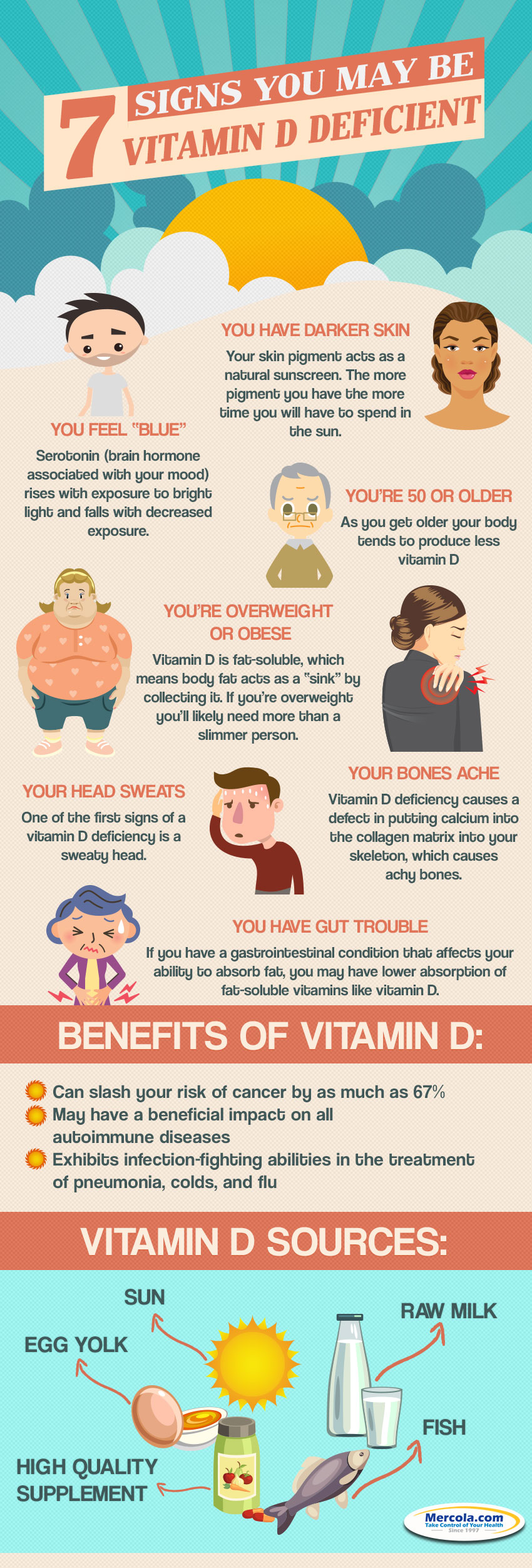
Signs indicating you may have a vitamin D deficiency include being
over the age of 50, having darker skin, obesity, achy bones, feeling
blue, head sweating and poor immune function.
Your best bet is to get your vitamin D level tested
twice a year. Based on the evaluation of healthy populations that get
plenty of natural sun exposure, the optimal range for general health
appears to be somewhere between 50 and 70 nanograms per milliliter
(ng/ml).
The Importance of Magnesium
Magnesium is the fourth most abundant mineral in your body, and
researchers have detected more than 3,750 magnesium-binding sites on
human proteins13
reflecting how important this mineral is for optimal biological
functioning. The fact that magnesium is the third most common
deficiency hints at the potential that magnesium deficiency might be
involved in any health problem you may be experiencing.
Without sufficient amounts of magnesium your body simply cannot
function at its best. Insufficient cellular magnesium levels set the
stage for deterioration of proper metabolic function that can lead to
more significant health problems. For example, magnesium plays an
important role in:
Your body's detoxification processes
Preventing headaches
Managing cardiovascular health
Reducing insulin resistance14,15,16 and metabolic syndrome17
if you're at high risk. The mechanism by which magnesium controls
glucose and insulin homeostasis appears to involve two genes
responsible for magnesium homeostasis.18
Magnesium is also required to activate tyrosine kinase, an enzyme that
functions as an "on" or "off" switch in many cellular functions and is
required for the proper function of your insulin receptors
Are You Getting Enough Magnesium?
Experts estimate up to 80 percent of us are deficient in magnesium.
Since there's no easily available commercial lab test that will give
you an accurate reading of your magnesium status, the best way to
evaluate your status is by tracking your signs and symptoms. In her
book, "The Magnesium Miracle," Dr. Carolyn Dean lists 100 factors that will help you decide whether or not you might be deficient.
You can also find a check list to go through every few weeks in her blog post, "Gauging Magnesium Deficiency Symptoms."19
This will help you gauge how much magnesium you need in order to
resolve your deficiency symptoms, including headaches, muscle spasms
and fatigue.20
Besides eating magnesium-rich foods (see chart above) and/or taking a
magnesium supplement (my favorite is magnesium threonate), you can also
improve your magnesium status by taking regular Epsom salt baths or
foot baths, which allow the magnesium to be absorbed into your body
through your skin. Magnesium oil (from magnesium chloride) can also be
used for topical application and absorption.
Mind Your Sodium to Potassium Balance
Sodium and potassium are two other key nutrients that need to be in
balance for optimal health. It's particularly important for heart
health. In addition to getting too little potassium in their diet, most
people also get too much sodium. If you eat mostly processed foods,
you're virtually guaranteed to end up with this imbalance.
According to the American Heart Association (AHA), an excess of sodium
in your body may cause you to retain water, putting an extra burden on
your heart, blood vessels and kidneys. Past recommendations have
assumed that in some people this may lead to high blood pressure.21 But, sodium is just one-half of the ratio needed to keep your body healthy. The second half of the equation is potassium.
The protective effects of potassium are associated with the actions of
nitric oxide release, which increases the relaxation of your arterial
system and maintains blood pressure.22
The separate roles of sodium and potassium, and their relationship to
heart health, have been studied over the years. Researchers have also
evaluated the relationship between a combination of sodium and
potassium and heart health. One recent study showed the
sodium-to-potassium ratio was more strongly associated with blood
pressure maintenance than were either sodium or potassium individually.23
Other studies have also suggested that the ratio of sodium to potassium
is one of the most important risk factors for managing normal
cardiovascular function.24,25,26 Women who eat a higher amount of potassium-rich foods are able to better manage their normal cardiovascular function.27
Data from over 12,000 individuals participating in the 3rd National
Health and Nutrition Examination also showed that higher sodium was
associated with increased health risks, while a higher potassium level
was also associated with increased risks.28
Potassium-Rich Foods Low in Sodium
The best way to balance your sodium and potassium ratio is to increase
your intake of foods rich in potassium, while maintaining a moderate
amount of sodium intake. Whole foods naturally high in potassium and
low in sodium include:29,30
White beans
Spinach
Sweet potatoes
Broccoli
Cantaloupe
Cherry tomatoes
Blackberries
Oranges
Red grapefruit
Plums
Prunes
Raisins
Bananas
Artichokes
Lima beans
Acorn squash
Nuts and seeds
Apricots
Avocado
Garlic
Bee pollen
Vitamin E for Brain Health
Vitamin E is particularly important for brain health, so the fact
that an estimated 81 percent of 2- to 8-year-olds, 98 percent of
teenagers and 95 percent of adults are at risk for deficiency is
disconcerting to say the least.31
Recent animal research warns that vitamin E deficiency may actually
affect the brain, and studies have also found it may help delay the loss
of cognitive function.32
Vitamin E also helps protect against free radical damage and the
effects of aging. The term "vitamin E" refers to a family of at least
eight fat-soluble antioxidant compounds, divided into two main
categories: tocopherols (which are considered the "true" vitamin E) and
tocotrienols, each of which has subfamilies of four different forms.
Your best source of intake is vitamin E-rich foods.
When opting for a supplement, chose a full-spectrum vitamin E (meaning
the broader family of mixed natural tocopherols and tocotrienols).
Avoid the synthetic form. You can tell what you're buying by carefully
reading the label. Natural vitamin E is always listed as the "d-" form
(d-alpha-tocopherol, d-beta-tocopherol, etc.), while synthetic vitamin E
is listed as "dl-" forms.
Vitamins A and D Work in Tandem
An estimated 57 percent of teens and 51 percent of American adults are
at risk for insufficiency or deficiency of vitamin A, an essential
fat-soluble vitamin important for maintaining healthy skin, teeth,
bones, cell membranes, vision and healthy immune function.
Vitamins A and D work in tandem, and there's evidence suggesting that
without vitamin D, vitamin A can be ineffective or even toxic. On the
other hand, if you're deficient in vitamin A, vitamin D cannot function
properly either, so a balance of these two vitamins is essential.
Unfortunately, we do not yet know the optimal ratios between these two
vitamins. Moreover, both vitamin A and vitamin D production is tightly
controlled in your body, and taking either of them in supplemental form
ends up bypassing important controls that keep you from experiencing
potential toxic effects. For these two reasons, it's best to get
vitamins A and D from food and sun exposure, rather than relying on
supplements.
The best source of vitamin A that your body can actually use are animal
products such as grass-fed meat and poultry, liver, fish and raw
organic dairy products like butter. These foods contain retinol,
preformed vitamin A that your body can easily use.33
It can be very difficult to get sufficient amounts of vitamin A from
beta-carotene (pre-vitamin A, found in plant foods like fruits and
vegetables) alone.
Calcium Must Be Balanced With Vitamin D, Magnesium and K2
Calcium is one of several nutrients required for strong, healthy
bones. However, it's important to not overdo it on calcium supplements,
as it needs to be balanced with vitamins D, K2 and magnesium. Excessive amounts of calcium can end up causing more harm than good.
Too much calcium and not enough magnesium typically causes muscle
spasms, and in extreme cases can lead to a heart attack and sudden
death.
Too much calcium and not enough vitamin K2 will promote hardening
of the arteries and softening of your bones. The reason for these
effects is because the biological role of vitamin K2 is to remove
calcium from areas where it shouldn't be (such as in your arteries and
soft tissues), and shuttle it into the appropriate areas (such as your
bones and teeth).
Too much vitamin D and not enough vitamin K2 is what produces the
symptoms of vitamin D toxicity, which includes inappropriate
calcification of your arteries.
Ideal Sources of Vitamin K2, Silica and Calcium
One of the best ways to achieve a healthy balance between vitamin D,
magnesium, K2 and calcium is to get plenty of sensible sun exposure and
eat a diet rich in fresh whole foods. Good sources of calcium are raw
milk from pasture-raised cows, leafy green vegetables and the pith of
citrus fruits, carob and wheatgrass.
You also need sources of silica, which some researchers say is actually
enzymatically "transmuted" by your body into the kind of calcium your
bones can use. Good sources of silica are cucumbers, bell peppers,
tomatoes and a number of herbs, including horsetail, nettles, oat
straw, alfalfa and raw cacao, which is also extremely rich in highly
bioavailable magnesium.
Vitamin K2 is only present in fermented foods, such as natto (a
fermented soy product), fermented vegetables like sauerkraut, certain
cheeses, raw butter and kefir made from raw milk. If you decide to use a
supplement, menaquinone-7 (MK-7) is the kind of vitamin K2 you want to
look for, as this form is extracted from real food.34
Tips to Supercharge Your Diet With Nutrients
As much as possible, I recommend getting the nutrients your body needs
from whole foods. As shown above, many of the most common nutrient
deficiencies can be traced back to a rather limited range of foods,
specifically:
Fatty fish
Nuts and seeds
Fruits and vegetables
Trading processed foods for real, whole foods, with a focus on these
three categories, can go a long way toward correcting an array of
nutritional imbalances and/or insufficiencies. Following are a few
additional tips that can help boost your intake of the wide variety of
nutrients your body needs:
Homemade Bone Broth: Bone broth contains high amounts of calcium, magnesium and other nutrients.
Sprouts: Sprouts
can contain up to 100 times more enzymes than raw fruits and
vegetables, allowing your body to extract more vitamins, minerals,
amino acids and essential fats from the foods you eat.
Juicing:
Juicing not only helps you to consume more nutrient-rich veggies; it
also helps you absorb the nutrients they contain. Juicing will help to
"pre-digest" the veggies for you, so you will receive most of the
nutrition, rather than having it go down the toilet.
Fermented Foods:
Fermented foods support the beneficial bacteria in your gut, which
helps with mineral absorption and plays a role in producing nutrients
such as B vitamins and vitamin K2, the latter of which is important for
the proper functioning of other nutrients, such as calcium and vitamin
D.
Spread the Word to
Friends And Family
By Sharing this Article.

 Email
Email

No comments:
Post a Comment