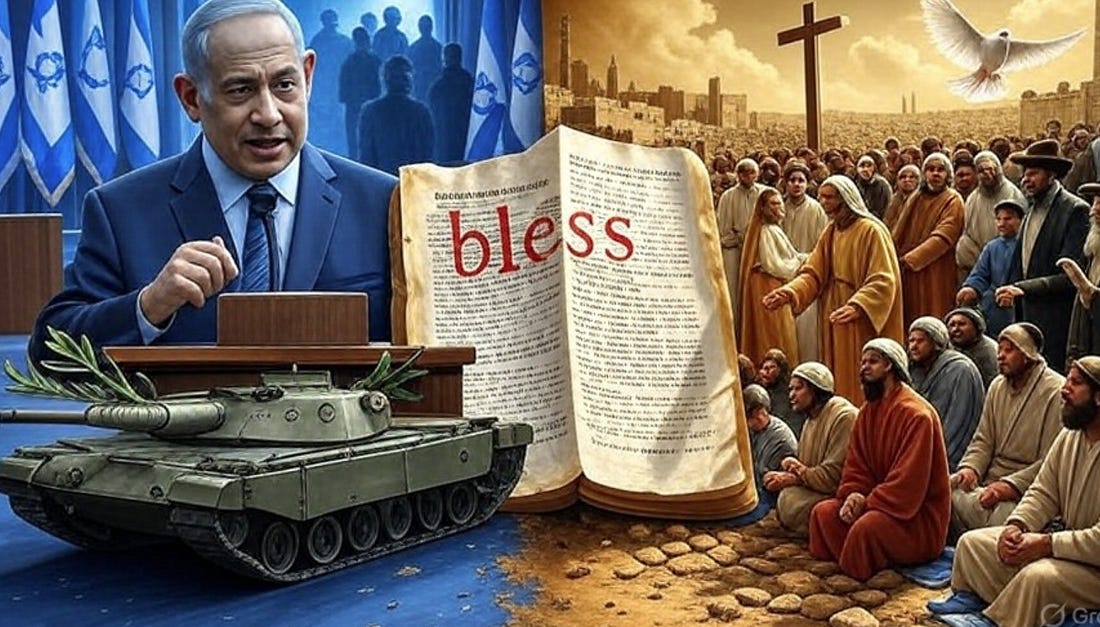
During a recent interview with Tucker Carlson, Senator Ted Cruz invoked Genesis 12:3—"I will bless those who bless you, and curse those who curse you"—to justify unconditional U.S. support for Israel. But when pressed, Cruz couldn’t even name the verse’s origin until Carlson supplied it. The phrase "those who bless Israel will be blessed" originates from Genesis 12:3, where God promises to bless Abraham (and by extension, his “seed” ) and to curse those who curse them.  Cruz then stated that this means that we are commanded to support the nation of Israel, but then Tucker asked a very good question: “Is the current nation of Israel run by Benjamin Netanyahu the same nation that God was talking about in Genesis?” Cruz replied: “YES” … but is it? We’ll talk about that in a moment… This exchange exposes a dangerous blind spot in modern Christianity: countless believers unquestioningly endorse the modern state of Israel based on a fundamental misreading of Scripture. The reality, as we'll demonstrate, is far more complex and theologically significant. At the heart of this error lies a crucial misunderstanding about the identity of Abraham's true descendants (“seed”) and the biblical definition of "Israel." This isn't merely an academic debate—it's a critical issue with direct consequences for how Christians should view today's Middle East conflicts, particularly the escalating tensions between Israel and Iran that could draw America into another disastrous war.
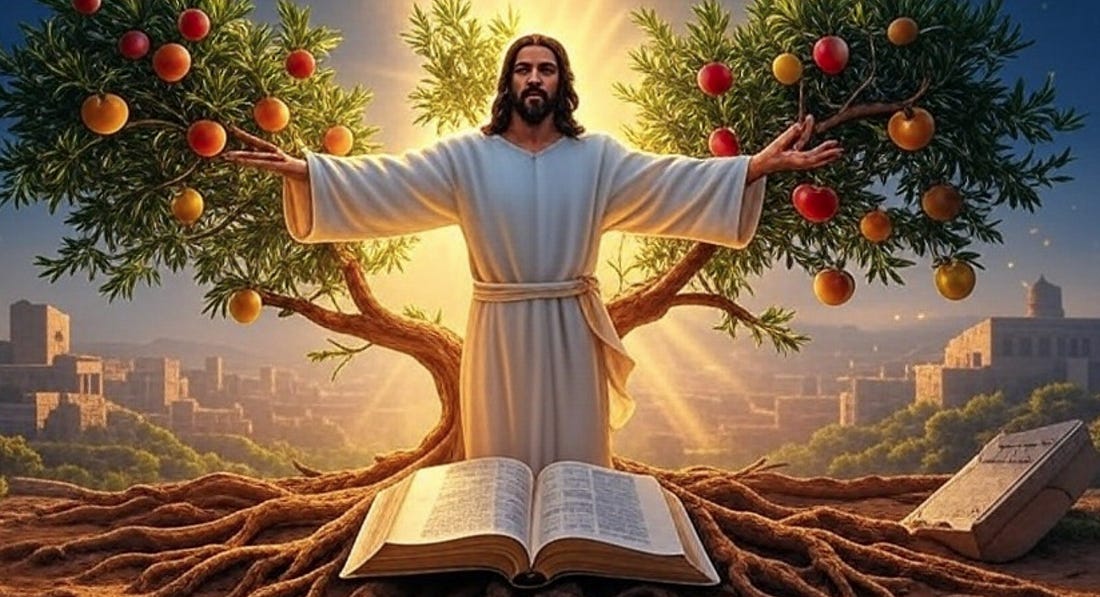
Understanding Abraham’s True "Seed"The entire debate hinges on Galatians 3:16, where Paul makes an unmistakable declaration: "The promises were spoken to Abraham and to his seed. Scripture does not say ‘and to seeds,’ meaning many people, but ‘and to your seed,’ meaning one person, who is Christ." This single verse demolishes the argument that God’s promises automatically apply to ethnic Jews or the modern state of Israel. Scripture reveals four distinct meanings of "Abraham’s seed," each with different implications: ∙ First, Abraham’s natural seed includes all his physical descendants—Ishmael and Isaac, Jacob and Esau, Jews and Arabs alike. Yet God made clear that mere biological descent doesn’t guarantee inheritance of the covenant (Genesis 17:19-21; Romans 9:7). ∙ Second, his special natural seed refers specifically to Jacob’s descendants—the nation of Israel. While this group received unique privileges (Romans 9:4-5), even they weren’t guaranteed spiritual blessings without faith (Jeremiah 4:4). ∙ Third, Abraham’s spiritual seed encompasses all true believers in Christ, whether Jew or Gentile. As Paul explains, "If you belong to Christ, then you are Abraham’s seed, and heirs according to the promise" (Galatians 3:29). ∙ Finally, and most importantly, the singular Seed is Christ Himself (Galatians 3:16). Every spiritual blessing flows through Him alone. The bottom line is that Jesus is Abraham's ultimate "Seed” (Galatians 3:16), and all who have faith in Him—Jew or Gentile—are the true heirs of the promise (Galatians 3:29).
So … What About Modern Israel?Romans 9:6-8 delivers a bombshell: "Not all who are descended from Israel are Israel. Nor because they are Abraham’s descendants are they all his children...it is not the children by physical descent who are God’s children, but it is the children of the promise who are regarded as Abraham’s offspring." The Bible uses the term "Israel" in several distinct ways. First and foremost, it originated as the new name given to Jacob after his divine encounter where he wrestled with God (Genesis 32:28). This personal name, meaning "he who struggles with God," marked a transformational moment in Jacob's life. Over time, "Israel" expanded to describe the entire ethnic nation descended from Jacob's twelve sons (Exodus 1:1-7). This physical, genealogical Israel comprised God's chosen people under the Mosaic Law, also known as the Old Covenant. However, Scripture makes clear that merely being born into this bloodline didn't guarantee spiritual standing, as many ethnic Israelites proved unfaithful (Romans 9:6). Most significantly, the New Testament reveals a third meaning: Israel as a spiritual people of faith. The apostle Paul explains that "not all who are descended from Israel belong to Israel" (Romans 9:6), distinguishing between physical descent and genuine covenant relationship. This spiritual Israel includes both Jewish and Gentile believers united through faith in Christ, who are grafted into Abraham's promise (Galatians 3:29; Romans 11:17). Thus, the biblical concept of Israel evolves from an individual to a nation, and ultimately to a multi-ethnic community of faith.
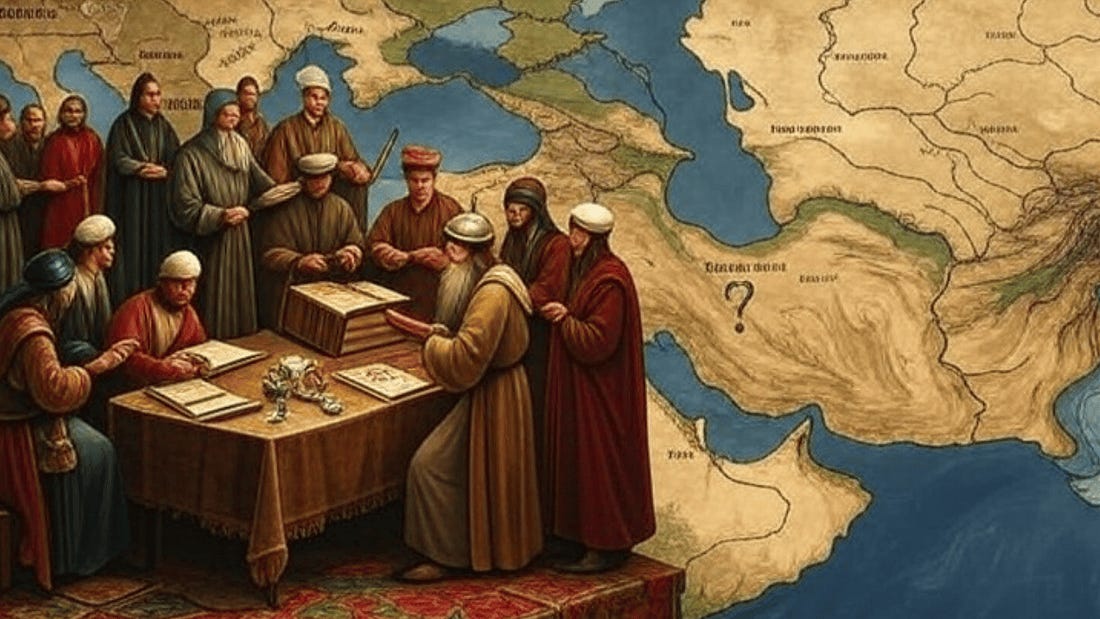
This means:∙ The modern state of Israel (established in 1948) is a geopolitical entity, not the biblical Israel of Scripture. While it includes Jewish people, its government is secular, its policies often ungodly, and most citizens reject Jesus as Messiah (John 5:43). ∙ Jesus Himself warned that physical descent from Abraham means nothing without repentance (Matthew 3:9). The destruction of Jerusalem in AD 70 marked God’s judgment on unbelieving Israel (Luke 19:41-44), while the gospel went out to all nations. For Christians today, this understanding should shape how we view current events in the Middle East. The modern state of Israel holds historical and political significance, but it is not the "Israel of God" (Galatians 6:16). That title belongs solely to those—from every nation—who are redeemed by Christ. The Khazar Theory: A Historical WildcardMainstream narratives claim modern Jews descend directly from ancient Israelites. But compelling evidence suggests many Ashkenazi Jews actually originated from the Khazar Empire—a Turkic kingdom that converted to Judaism en masse between the 7th-10th centuries.
Located in the Caucasus and southern Russia, the Khazars were a multi-ethnic mix of Turkic, Caucasian and Uralic peoples with no ancestral connection to the biblical lands of Israel. When their empire collapsed, these converts migrated westward into Eastern Europe, where they formed the foundation of what would become Ashkenazi Jewish communities. If true, this means: Millions of Jews today may have no genetic link to Abraham, only a religious one through conversion. The Zionist claim of "returning to our ancestral homeland" becomes problematic when many "returnees" actually hail from Eastern Europe, not the ancient Near East. Genetic studies showing significant European and Central Asian ancestry among Ashkenazim lend credence to this hypothesis. This doesn't invalidate Jewish religious or cultural identity, but it does challenge simplistic claims of unbroken genealogical continuity with biblical Israel. The Khazar theory has been suppressed because it undermines both Zionist ideology and traditional Jewish historiography. Yet, the question remains: If genetic and historical evidence suggest a more complex ancestry, why is the discussion so heavily policed? One thing is certain: The story of the Jewish people is far more intricate than the simplified version we’ve been told. And in an age of genetic testing and historical revisionism, the truth may yet come to light.
Does "Bless Israel" Mean Backing Netanyahu’s Government?The promise God made to Abraham in Genesis 12:3—"I will bless those who bless you, and curse those who curse you"—was never intended as a blank check for unconditional support of any political entity or national government. Its fulfillment is found in Christ, the ultimate heir of Abraham’s covenant (Galatians 3:16), and extends to all who belong to Him by faith, whether Jew or Gentile. To apply this promise mechanically to the modern state of Israel ignores Scripture’s clear teaching that God’s blessings flow through Jesus, not national identity. Behind the official narrative of Israel’s founding in 1948 lies a darker, seldom-discussed truth: the pivotal role of the Rothschild dynasty. For over a century, this powerful banking family funneled vast fortunes into land purchases, political lobbying, and covert diplomacy to reshape Palestine into a Jewish state. Baron Edmond de Rothschild, the so-called "father of modern Israel," bankrolled early Zionist settlements in the late 1800s, while later generations leveraged their financial empire to pressure world leaders into recognizing Israel’s sovereignty.
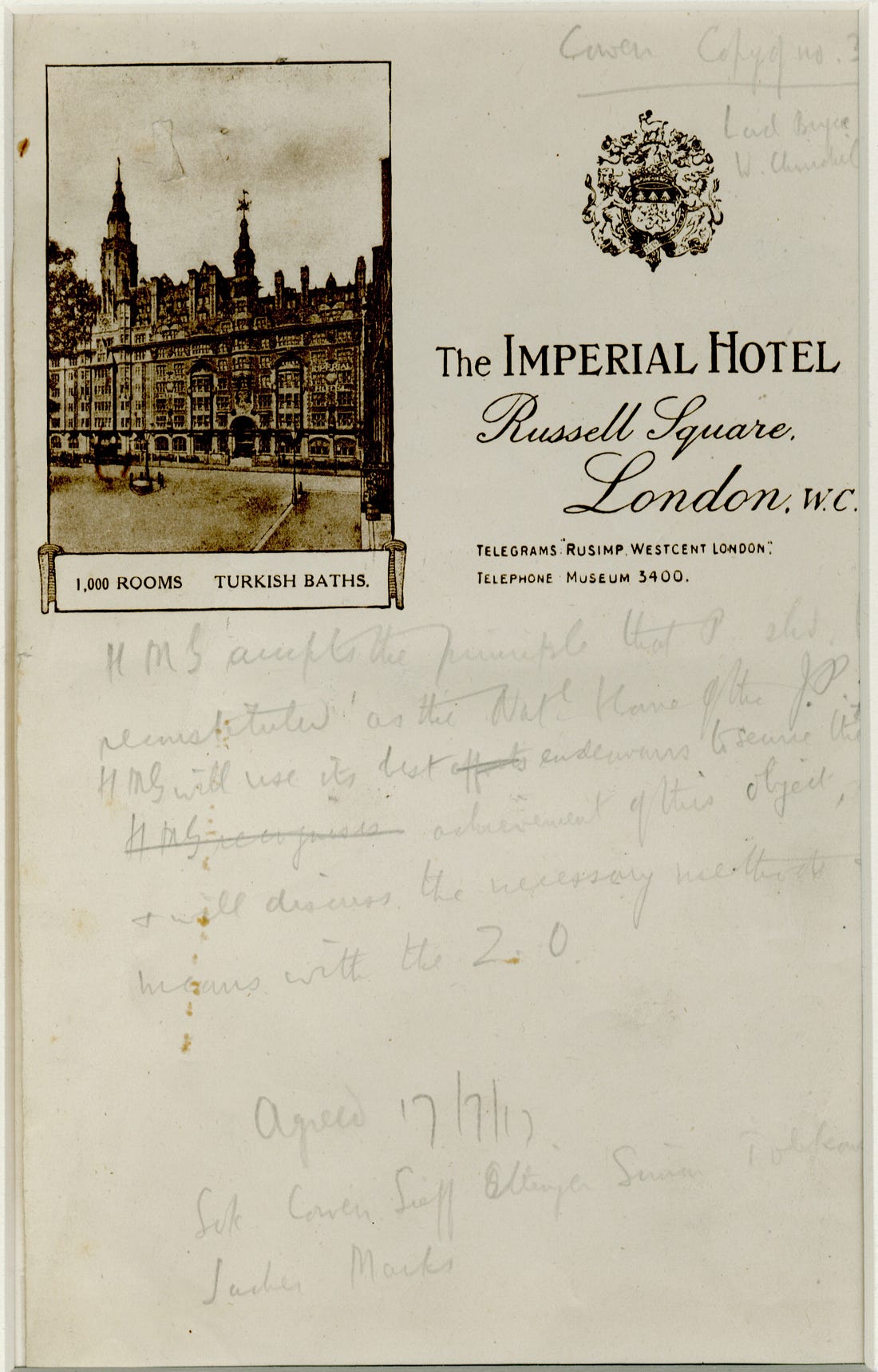
The 1917 Balfour Declaration—Britain’s fateful pledge to establish a Jewish homeland—was allegedly secured through Rothschild influence, with Lord Walter Rothschild personally receiving the historic letter. When the UN voted to partition Palestine in 1947, Rothschild-connected financiers and politicians ensured the outcome favored Zionist ambitions. It’s quite possible that Israel’s birth was never about biblical prophecy, but about creating a geopolitical stronghold for elite interests—a Rothschild-controlled nation at the heart of the Middle East, serving as both a financial hub and a wedge to destabilize the region. It wouldn’t be the first time the Rothschild family had done something like this. Just search for the “1814-1815 Congress of Vienna” and you’ll see another instance of the Rotschild dynasty doing something similar.
Regardless of Rothschild's involvement, the modern nation of Israel, established in 1948, is a secular political state, not the biblical kingdom of God. Its government operates apart from divine law, and the majority of its citizens reject Jesus as Messiah (John 5:43). If blessing ethnic Jews alone guaranteed divine favor, then historical figures like Hitler—who employed Jewish scientists—would qualify for God’s blessing, an obviously absurd conclusion. The New Testament redefines true Israel as those who follow Christ (Galatians 3:29), whether Jewish or Gentile, dismantling any notion that biological descent secures covenant standing (Romans 2:28-29). Jesus Himself warned that physical descent from Abraham means nothing without faith (Matthew 3:9; John 8:39). The destruction of Jerusalem in AD 70 marked the end of national Israel’s unique role in redemptive history, and the gospel was then sent to all nations. Peter declares that the Church—composed of believers from every tribe and tongue—is now God’s holy nation (1 Peter 2:9-10). This means Christians should prioritize supporting the Gospel over political alliances, recognizing that God’s promises are fulfilled in Christ’s Kingdom, not in earthly states. True biblical blessing comes not from endorsing governments but from faithfulness to Jesus and His global Church.
The Transfer of the KingdomOne of the most decisive statements Jesus made about Israel’s spiritual condition is found in Matthew 21:43: "Therefore I tell you, the kingdom of God will be taken away from you and given to a people producing its fruits." Jesus' declaration marked a pivotal shift in God's redemptive plan. By stating the kingdom would be taken from Israel's religious leaders and given to "a people producing its fruits," He announced the end of national Israel's exclusive covenant status. This judgment was confirmed through Israel's rejection of the Messiah (culminating in His crucifixion) and the subsequent destruction of Jerusalem in AD 70. The physical nation that had enjoyed unique privileges under the Old Covenant forfeited its position through unbelief, demonstrating that biological descent from Abraham never guaranteed spiritual inheritance. The "nation" that would inherit God's kingdom is none other than the Church - a spiritual people composed of both Jewish and Gentile believers united by faith in Christ. Peter deliberately applies Israel's covenant titles to this new community, calling believers "a chosen generation, a royal priesthood, a holy nation" (1 Peter 2:9). While a remnant of ethnic Israel was preserved through faith (Romans 11:5), the majority were hardened in unbelief. Significantly, even Jewish believers only entered this new covenant community through faith, not ethnic privilege, just as Gentile believers were grafted in as wild branches (Romans 11:17-24).
This radical redefinition has crucial implications for how Christians view modern Israel. The current political state, established in 1948, holds no special spiritual status before God apart from faith in Christ. True Israel today is the global Church - the "Israel of God" (Galatians 6:16) - transcending all ethnic and national boundaries. Jesus came not to restore earthly Israel's dominance but to establish a spiritual kingdom encompassing redeemed people from every nation (Revelation 5:9). As Paul declared: "For he is not a Jew who is one outwardly… but he is a Jew who is one inwardly" (Romans 2:28-29). This is the transfer of the Kingdom—from a physical nation to a people of faith. God’s covenant promises were never about ethnicity, politics, or bloodline—they were always about Christ. While national Israel had a temporary role in redemptive history, the ultimate "Seed" of Abraham is Jesus alone (Galatians 3:16), and all who trust in Him—whether Jew or Gentile—become the true heirs of God’s blessing (Galatians 3:29). This means:∙ No nation today—including modern Israel—holds special spiritual status apart from faith in Christ. ∙ The Church, composed of believers from all nations, is now the continuation of God’s covenant people (1 Peter 2:9). ∙ Supporting the Gospel, not geopolitical alliances, is how we truly "bless Israel" in God’s eyes.
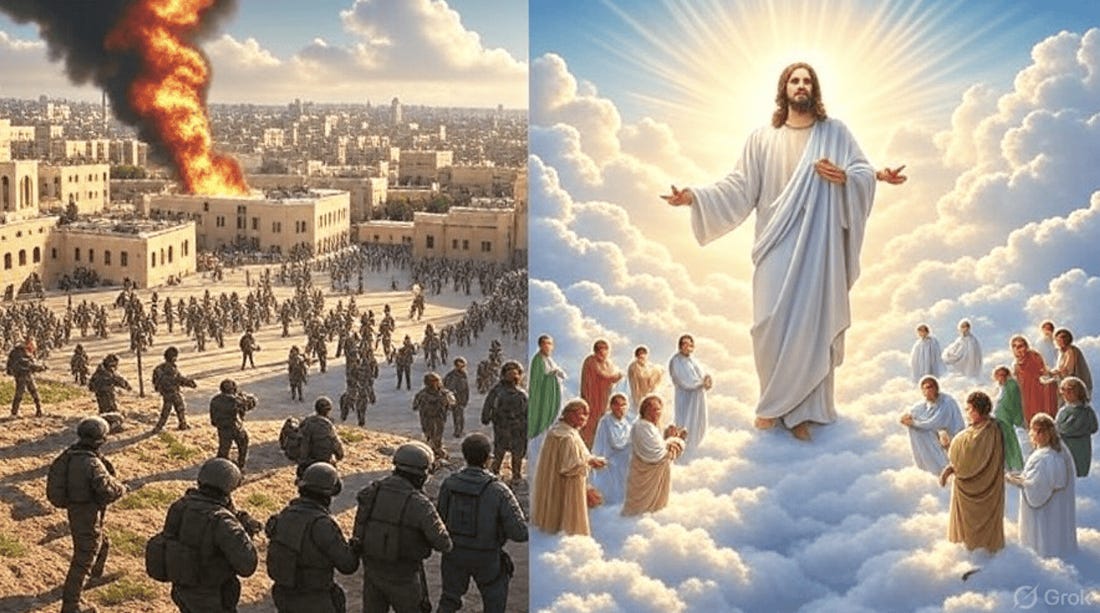
As missiles fly between Israel and Iran, and world leaders rush to take sides, Christians face a moment of urgent spiritual clarity. The Bible commands us to "pray for the peace of Jerusalem" (Psalm 122:6)—not because modern Jerusalem holds divine favor, but because its people need Christ, just like people everywhere need Christ. The heavenly Jerusalem, not the war-torn earthly city, is our true focus (Galatians 4:26; Hebrews 12:22). Yet tragically, many believers have traded the Gospel for geopolitics, cheering for nations rather than pleading for souls. This is a dangerous delusion. Christian allegiance belongs to Christ’s Kingdom, not earthly nations. The promises stand firm—but they are inherited only through faith in Jesus, not through birthright or political posturing.
“I am with you always, even unto the end of the world.” (Matthew 28:20)
You're currently a free subscriber to The Truth About Cancer. For the full experience, upgrade your subscription.
|










No comments:
Post a Comment