Public Health
Text size:


Leaky Vaccines: More Than a Farmer’s Nightmare?
Published October 29, 2015 | Medicine, Public Health
 Story Highlights
- “Leaky” or imperfect vaccines may protect the vaccinated from showing signs of disease while allowing the infectious microbe to evolve into a more virulent strain.
- The phenomenon has, thus far, only recognized as being a problem in farm animals, particularly in chickens.
- Researchers warn that caution must be exercised before introducing potentially leaky vaccines against such diseases as ebola, HIV and malaria.
Does that send shivers down your spine? Or perhaps you are just shaking your head at the arrogant comment by a scientist casually dismissing the consequences of widespread use of a vaccine that will “drive the evolution of more dangerous malarial parasites.”
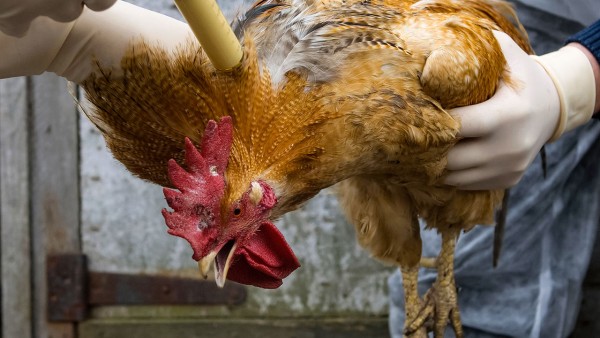
For now, the concept of “leaky,” or imperfect vaccines, is only acknowledged to be a problem in farm animals. Read’s study, published in PLOS Biology, evaluated the vaccine used against Marek’s disease, a viral, herpes-like illness encountered in chickens.
Historically, it was a “mildly paralytic disease” and was rarely fatal. Since the 1950s, the virus itself has become increasingly much more lethal and easily transmittable, able to spread rapidly through a flock of chickens and cause lesions, one-sided paralysis and death after about two months.
The vaccine that has been used to prevent Marek’s disease protects the vaccinated hen from developing symptoms and transfers short-term protection to her chicks, but it does not prevent infection and shedding of the wild-type virus. Therefore, vaccinated hens can expose unvaccinated poultry to the disease, which has become more virulent of late.
No one has proven that widespread use of the vaccine in chickens has caused the virus to evolve into a more serious, rapidly fatal form of the disease. However, researchers do know that the vaccine has allowed for the spread of a more lethal strain of Marek’s disease among chickens.
Read explains that Marek’s commonly takes about ten days to spread from one chicken to the next. If more pathogenic mutations of the virus occur, they tend to kill the affected chicks very quickly, generally before they have been able to transmit the disease to others in the flock. Thus, a naturally occurring “hot” strain of the virus normally dies out in a flock within a very short period of time because the infected chicks quickly die and interrupt transmission of the more toxic mutated strain of the virus to other chickens.
However, a vaccinated “host” chicken exposed to the more toxic strain of the virus does not show signs of infection and sickness but, instead, walks around and appears healthy. All the while the infected but healthy looking chicken is shedding the more lethal strain of the virus in its body dander and can infect unvaccinated birds it comes in contact with in the vicinity.2
Interestingly, infected chicks whose mothers had been vaccinated were also able to survive long enough to shed and transmit the more virulent virus strain, while infected chicks of unvaccinated hens died quickly before they could transmit the lethal infection to others. The researchers concluded, “Our data show that anti-disease vaccines that do not prevent transmission can create conditions that promote the emergence of pathogen strains that cause more severe disease in unvaccinated hosts.”3
Marek’s Disease only affects chickens. However, applying the principles outlined in the Marek vaccine trial to other potentially leaky vaccines given to animals and humans brings up troubling questions. A leaky Avian flu vaccine, for example, could support evolution of the virus into a more virulent form of the bird flu capable of infecting not only other avian species such a wild ducks and geese, but perhaps humans as well. And, as Read points out, “It’s just not possible to predict if a virus will get more or less nasty when it jumps species.”4
Could Leaky Vaccines Affect Humans?
Public health authorities stress that most of the vaccines used for people are so-called “perfect” vaccines. They are not contending that human vaccines are without fault and never fail to provide protection against disease. Instead, public health officials are implying that most human vaccines “perfectly mimic” the natural immunity that occurs following exposure to the actual disease5 and interrupt transmission of disease to vaccinated (and unvaccinated) people (although there is substantial evidence that naturally acquired immunity and artificial, vaccine acquired immunity are not identical).Despite such claims, however, there is well known potential for vaccine strain virus infection, shedding and transmission among humans. This not only occurs, but has been shown to be responsible for disease transmission in multiple instances, particularly with live attenuated vaccines. A good example is live oral polio vaccine that can cause vaccine strain polio paralysis in a vaccinated person or a person who comes in contact with the body fluids of a recently vaccinated person shedding vaccine strain poliovirus. A special report published by the National Vaccine Information Center in 2014, The Emerging Risks of Live Virus and Virus Vectored Vaccines: Vaccine Strain Virus Infection, Shedding and Transmission, states:
Although public health officials maintain that live attenuated virus vaccines rarely cause complications in the vaccinated person and that vaccine strain viral shedding rarely causes disease in close contacts of the recently vaccinated, it is important to be aware that vaccine strain live virus infection can sometimes cause serious complications in vaccinated persons and vaccine strain live viruses can be shed and transmitted to others with serious or even fatal consequences.6Add the leaky-vaccine scenario to that basic characteristic of live, attenuated vaccine strain virus shedding and transmission, and the potential for disaster is monumental. The Marek’s Disease researchers are sounding a note of warning, urging caution as the pharmaceutical industry moves forward to develop vaccines using highly lethal viruses such as ebola, malaria and HIV.
Early vaccines against such pathogens may well turn out to be leaky but, because these diseases are so infectious and dangerous in their present form, vaccination is likely to be promoted as “better than nothing.” If the leaky-vaccine scenario prevails, the possible consequences are unthinkable.
References:

No comments:
Post a Comment