Rothschild and the campaign against raw milk
In April 1946, Nathaniel Mayer Victor Rothschild rose in the House of Lords on a matter of great import. There may have been many other priorities after the Second World War, but for Victor Rothschild, prevention of disease by pasteurisation of milk was paramount (his only other address in the chamber was on enabling Jewish settlers in the British mandate of Palestine).
A member of the banking dynasty, Victor Rothschild had little interest in international finance. He was a valued asset of the British intelligence services in the war, but his passion was zoology. To urge prohibition of raw milk, Rothschild explained the difference between cleanliness and safety: -
Though milk is one of nature’s best foodstuffs, it is by no means a perfect one, and no one can live exclusively on milk without additional minerals and vitamins. Consequently the fact that a certain amount of these substances is removed by heat treatment is of much less significance than the opponents of heat treatment would have us believe. The opponents of pasteurization—and many people who have fallen victims to their propaganda—sometimes say that pasteurization will remove the incentive to clean milk. Such criticisms display a lack of understanding of the difference between clean and safe milk, and also impute a somewhat alarming degree of ignorance to the Government in imagining that if compulsory pasteurization were introduced, the Government would remove the existing regulations about the cleanliness of milk. The regulations about the cleanliness of milk are directed towards preventing milk being contaminated with dust, blood, water, cow dung, and milk-souring bacteria, all of which at one time were an almost natural constituent of milk in this country. Heat treatment, on the other hand, is intended to destroy disease-producing germs. Though it may render milk safe for human consumption, heat treatment cannot render dirty milk clean. Both clean milk and heat treated milk are desirable for different reasons.
To impress peers, Rothschild told them that a number of persons double to the occupancy of the red benches died every year from tuberculosis from dairy milk. The enforced pasteurisation was to apply gradually across the country, beginning with urban areas (there would be more resistance in the shires).
Immediately following Rothschild was Lord De la Warr, from Bexhill in Sussex, who offered his full support. Unlike his predecessors, the ninth earl was a socialist. However, the proposed law was not passed by the government, and several of my friends take deliveries of raw milk, from Hook’s Farm near Hailsham.
Prohibition of raw milk had begun in the USA earlier in the twentieth century, Chicago enforcing pasteurisation in 1908. John D Rockefeller was a keen exponent. The only part of the UK to ban raw milk is Scotland, since 1983.
Is raw milk really a hazard? Diseases associated with milk arose with the industrial revolution, but the problems were caused by insanitary conditions rather than the product. Poorly kept milk, like the water supply, was prone to contamination. Most of the epidemic killers of Victorian time, such as cholera, were attributable to human shortcomings rather than natural sources.
Tuberculosis was a deadly disease in the nineteenth to early twentieth centuries, leading to provision of sanitoria in the countryside for isolation and the healthful effect of fresh-air, but hundreds of thousands died of the lingering, progressive lesions. By the 1930s tuberculosis was treatable but it was already of sharply declining incidence. As with many other infectious illnesses, the claimed cure came after the preventive impact of social and environmental improvements (for example, poliomyelitis was becoming rare before the vaccine was introduced).
The Food Standards Agency, however, considers raw milk as an unregulated and potentially dangerous product. It is now, according to farmer David Benypon in mid-Wales, persecuting those who produce and sell it.
Pasteurisation is preferred by supermarkets, just as keg beer was better for the profits of big brewers, to the detriment of real ale. Increasingly agriculture is coming under major corporate ownership, pursuing the agenda of global technocrats. The British government is forcing small family farms out of business.
The appetite for raw milk, however, is growing. As Benyon argued, small farms can only survive by operating outside the mainstream, selling food directly to consumers. Hook’s Farm demonstrates this trend, but for how long can such independence last? The powers-that-be do not want the masses eating fresh, healthy food - they want to replace organic produce to synthetic foodstuffs (while the elite will continue to enjoy beef and natural corn and wheat).
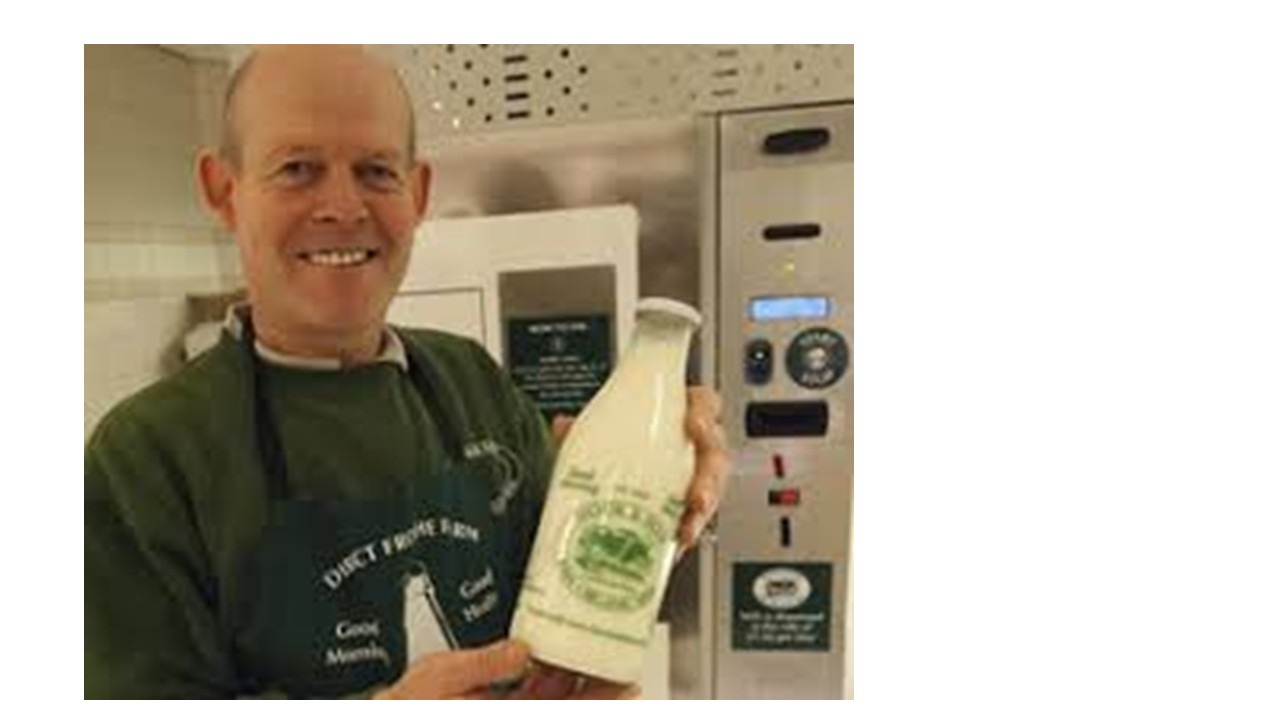
Benyon was arrested recently for his trenchant criticisms of the FSA. He asserts that raw milk, far from pathogenic, is really a force for immunity: bovine colostrum is a highly beneficial bacterial ingredient of milk (destroyed by pasteurisation) , and much better than antibiotics. You can see why the authorities want the likes of him silenced.
But what better a role model for drinking raw milk could there be than Erling Haaland, the athletic Norwegian giant whose goals brought the Premier League championship to Manchester City? Reporting on this fastidious anomaly, the BBC ensured that the message from ‘what the experts say’ was safety first. Haaland obviously knows something that the ‘experts’ don’t.
We are what we eat and drink.

No comments:
Post a Comment