Your metabolic health has a significant impact on COVID-19 severity, and at least 9 in 10 Americans are metabolically unhealthy
One of the
classic changes associated with insulin resistance, obesity and
metabolic syndrome is overactivation of the innate immune system, with
decreasing activity in the adaptive immune system
When it comes
to healthy aging, it's not your biological age that matters but, rather,
your immune and metabolic age, both of which are malleable and can be
improved through simple lifestyle changes
Research shows
that when blood sugar is well-controlled and there's less glycemic
variability, people do better when contracting COVID-19. When they have
high levels of glycemic variability, which is indicative of insulin
resistance, they fare much worse
Return guest Dr. Paul Saladino is a
board-certified psychiatrist and also board certified in nutrition. He
wrote “The Carnivore Code,” which just came out in an updated second
edition. In this interview, he discusses the impact metabolic health has
on COVID-19 outcomes.
He’s done a magnificent job explaining the science that supports the
natural lifestyle strategies that optimize our immune systems to defeat
not only COVID-19, but also most other infectious agents.
“The psychiatry was a jump-off point for thinking about how immune function and metabolic health affects mental health,” he says.
“I quickly realized that everything in the body was connected and I
couldn't just focus on the brain without focusing on the rest of the
body, and that has led us to where we are today.
I think that as we are faced with coronavirus, it's a reminder of
the metabolic health and how critical that is. I think so much of the
media focus right now is on the next drug or the coming vaccine … but
all of those strategies kind of miss the point. [They’re] just
Band-Aids …
No drug is going to protect us from the next infection and the
next infection. And one of the things that we're going to talk about
today, which is so eerie, yet revealing, is all of this data suggesting
that coronavirus susceptibility is intimately connected with metabolic
health.”
Immunometabolism Is an Important Field of Medicine
We've long known that metabolic health is crucial for robust immune
function. Saladino believes immunometabolism — the connections between
metabolism, metabolic health and the immune system — is easily one of
the most important, if not the most important, field in emerging
medicine.
Saladino reviews NHANES data1
from 2009 to 2016, which reveal 87.8% of Americans are metabolically
unhealthy, based on five parameters. That data is over four years old
now, so the figure is clearly greater than 90% of the population today.
That means virtually everyone is at risk for Type 2 diabetes and all the chronic diseases associated with insulin resistance, which run the gamut from cancer to Alzheimer’s.
“[NHANES] use criteria that we use to define metabolic syndrome,” Saladino explains.
“They use a waist circumference of less than 102 or 88 centimeters for
men and women respectively, a fasting glucose of less than 100
milligrams per deciliter, hemoglobin A1c of less than 5.7, a systolic
blood pressure less than 120, a diastolic blood pressure less than 80,
and triglycerides less than 150, in addition to an HDL of greater than
40 for men and 50 for women, as criteria for metabolic health.
What they found — and this is really the point that is so
striking — is that only 12.2% of people met that criteria. That means
87.8% of people are metabolically unhealthy or have at least one of
these metrics that suggests that they may have some degree of metabolic
unhealth.”
Similarly, data from the U.S. Centers for Disease Control and
Prevention shows that as of 2016, 39.8% of adults over the age of 20
were obese. When you include those who are overweight, that percentage
skyrockets to 71%, and excess weight typically correlates with metabolic
dysfunction and impaired health.
“Now, it's not so much an indictment on our population; it's an
indication, it's a real call-to-arms to say, ‘This is what we should be
talking about,’ and it's a real jumping-off point for discussions about
how metabolic unhealth has repeatedly been connected with worse
outcomes, [be it] COVID-19, MERS or seasonal flu. It's a huge piece of
it, and I haven't really seen much media coverage of this at all.”
Insulin Resistance Is a Modern Plague
Indeed, while the media reports that the comorbidities include
obesity, diabetes, age and being of color, they don't discuss the
underlying problems, which are vitamin D deficiency and insulin resistance. As noted by Saladino:
“Insulin resistance underlies many of those comorbidities, and
I'll show data to suggest that as we age, more of the population becomes
insulin-resistant, probably because we become a little less resilient
to nutrient deficiency and we become a little more sensitive to the
lifestyle factors that make us insulin resistant in the first place.
With aging, we see a direct correlation with insulin resistance.
But the immune compromise, the insulin resistance that comes with aging,
is not inevitable. It's an assumption, because 88% of the population
are metabolically unhealthy.
The narrative here is very important because if we can escape the
immunologic sort of dysfunction and insulin resistance that so often
accompanies aging, then we can totally change our lifestyle.”
Metabolic Age Is More Important Than Biological Age
Saladino discusses the results of a Nature Medicine study2 published in 2019, which looked at immune age and metabolic age using high-dimensional longitudinal monitoring:
“You can look at multiple measures of immunologic aging by
looking at different varying proportions of immune cell subsets. This is
all very esoteric and it looks complex, but the takeaway is that immune
aging is associated with relative changes in different types of immune
system response.
What's very interesting is we see the same types of immune system
response changes mirrored in people who have more severe coronavirus
outcomes … One of the classic changes associated with insulin
resistance, obesity and metabolic syndrome — these are all synonyms — is
overactivation of the innate immune system, with decreasing activity in
the adaptive immune system.
Characterized another way, we can look at the cytokines
associated with different T-helper subsets. What we generally see … is
that certain cytokines for T-helper 2 tend to predominate over T-helper
1, and you get changes in the way the innate and adaptive immune systems
are responding to invaders. And that's what we see in people as they
age.
That's associated with activation of different inflammasomes,
like the NLRP3 inflammasome, which is associated with that innate immune
system. The innate immune system is always activated; it's dendritic
cells, macrophages, natural killer cells, neutrophils.
The adaptive immune system is T cells and B cells. So basically,
what we see in immunologic compromise, what we see in insulin
resistance, is that the innate immune system gets overactivated at the
expense of the adaptive immune system.
You might say, ‘Oh, that's good. One part of the immune system is
more activated.’ But what you have happening is that the adaptive
immune system isn't able to be activated properly, and the resolution of
the inflammation doesn't happen in the way it should.”
So, the overarching principle is that it's not your biological age
that matters so much, but rather it’s your immune and metabolic age. The
good news is those are more malleable than we are led to believe. From
that perspective, we can address COVID-19 in completely different ways.
“It's a lot of fear-based messaging, saying, ‘Here's a new spike
of the virus.’ ‘It's popping up here, it's popping up there.’ But
nobody's really talking about what you can do to change your
susceptibility to this virus,” Saladino says.
“What I want to empower people to understand is that this
immunologic tolerance, this insulin resistance paradigm, has not been
discussed at all despite the fact that there are tons of evidence that
it's really, really important.”
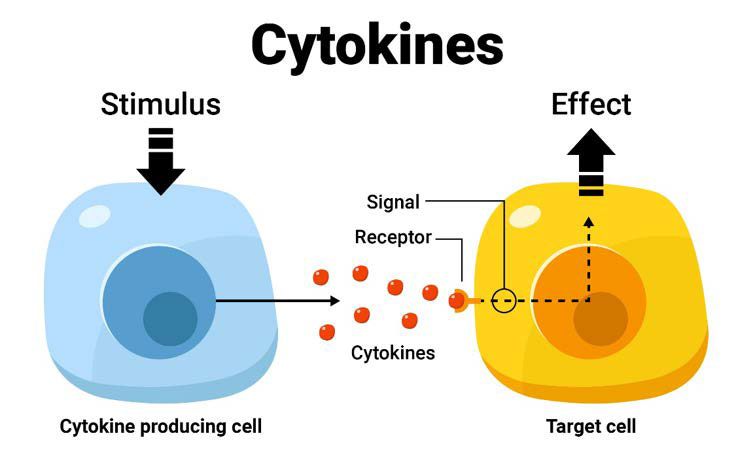
Cytokines
Cytokines are small proteins secreted by cells in your innate and
adaptive immune systems. They serve to regulate diverse functions in
your immune response. Cytokines are released by cells into your
circulation or directly into your tissues.
The cytokines locate target immune cells and interact with receptors
on the target immune cells by binding to them. The interaction triggers
or stimulates specific responses by the target cells.
In response to bacterial and viral infections such as COVID-19, your
innate immune system generates both proinflammatory and
anti-inflammatory cytokines.3
The inflammatory response plays a crucial role in the clinical
manifestations of COVID-19. SARS-CoV-2 triggers an immune response
against the virus, which, if uncontrolled, may result in lung damage,
functional impairment, and reduced lung capacity.4,5,6,7
The SARS-CoV-2 viral infection-related inflammation and the
subsequent cytokine storm in severe cases plays a crucial role in
patient survival.8
The extensive and uncontrolled release of proinflammatory cytokines is
termed the cytokine storm. Clinically, the cytokine storm commonly
presents as systemic inflammation and multiple organ failure.9
Immunologic Tolerance Rises as Insulin Resistance Falls
One scientific article10
that speaks to this is “Association of Blood Glucose Control and
Outcomes in Patients With COVID-19 and Pre-Existing Type 2 Diabetes,”
published in Cell Metabolism, June 2, 2020.
What it found was that when blood sugar is well-controlled and
there's less glycemic variability, people do better when contracting
COVID-19. When they have high levels of glycemic variability, which is
indicative of insulin resistance, they fare much worse.
“So there's really no question at this point that glycemic
variability, overall metabolic status, overall metabolic health are
critical,” Saladino says. The common mistake here is that you don’t want
to get that control back using drugs. Your best bet is to get it back
using natural lifestyle strategies.
Another paper11
that demonstrates the impact of insulin resistance on COVID-19 was
published in Cardiovascular Diabetology, May 11, 2020. It found you can
use the triglyceride to glucose index (TyG index) as a gauge to predict
the severity and mortality of COVID-19.
“Imagine that. There's an association of the insulin resistance
marker, the TyG index — this is fasting triglycerides, fasting glucose —
with the severity and mortality of COVID-19.
This should be, in my opinion, mainstream news headlines, and the
headlines should be, ‘You can be stronger against coronavirus. You can
have a stronger immune system. You can decrease your risk of having a
severe coronavirus outcome.’ But instead it's mostly fear, it's ‘Hide in
your homes. What's the next drug that's going to save us?’ …
Cardiovascular health is immune health. That is immunometabolism.
What you do to improve your heart health is also what you do to
improve your immune health, is also what you do to improve your brain
health, is also how you decrease your risk of Alzheimer's, is also how
you decrease your risk of seasonal flu and every other single infectious
illness that you will all encounter for the rest of your life. It's one
thing; not 60 different drugs … which is why the [conventional]
paradigm doesn't work.”
Low LDL Associated With Greater COVID-19 Severity
Interestingly, Saladino cites research showing that low levels of LDL
cholesterol are associated with greater COVID-19 severity. LDL and
total cholesterol levels were significantly lower in COVID-19 patients
as compared to healthy subjects. “To me, this is a really interesting
[finding] in two ways,” Saladino says, adding:
“In ‘The Carnivore Code,’ I challenged the LDL-centric hypothesis
of cardiovascular disease and I share a lot of data about how important
LDL actually is in the immune system. I think that's exactly what we're
seeing in this study.
When your body is doing an immunologic thing, when your body is
fighting a pathogen, it totally makes sense that the LDL would be a part
of that, in either LDLs consumed, or those who have lower LDL are more
susceptible to infection.
This is something we see over and over, and there are even
genetic syndromes of very low LDL, specifically one called
Smith-Lemli-Opitz syndrome involving a genetic polymorphism in an enzyme
that makes cholesterol.
People with that syndrome have very bad infections and they can
be rescued by giving them egg yolks. So these people are given
cholesterol in the form of egg yolks, or they're given supplemental
cholesterol, and they do much better.
It's pretty clear that cholesterol, which is packaged into this
LDL lipoprotein particle, is intimately involved in the immune response.
And so, in someone who is metabolically healthy, a higher LDL above 100
or 150, or even 200 mg/dL might not be the horrible thing that we've
all been taught it is, especially if the HDL, the triglycerides, the
triglyceride to glucose index, that glycemic variability, are all
pointing toward metabolic health …
It's about context. This LDL is a valuable immunologic particle
and we can't just get myopic, looking at LDL. We have to think about it
in terms of all these other measures.”
Top Strategies to Improve Your Metabolic Health
Considering the fact that your metabolic health determines your
COVID-19 risk, it would be a sound idea to implement strategies that
will improve your metabolic flexibility and insulin sensitivity.
Saladino’s top recommendations for achieving that include:
1. Eliminate processed carbohydrates, sugars, grains and vegetable oils —
“I think that from a food perspective, those are the key evils that are
really wreaking havoc on our metabolism,” he says. The worst culprit of
them all is probably vegetable oils. “Polyunsaturated vegetable oils
are highly oxidizable and very metabolically damaging. So, start with
them,” Saladino says.
For more information about this, see “New Study Tells Why Chicken Is Killing You and Saturated Fat Is Your Friend,”
which features Saladino’s interview with science journalist and author,
Nina Teicholz. Saladino also reviews the mechanisms by which vegetable
oils wreck health in greater detail in this interview, so be sure to
listen to it in its entirety, or read through the transcript. 2. Eat animal foods — As noted in the paper,12
“Immune Function and Micronutrient Requirements Change Over the Life
Course,” published in the journal Nutrients, nutrient deficiencies that
can compromise immune function include vitamins, A, C, D, E, B2, B6,
B12, folate, iron, selenium and zinc.
These vitamins are primarily found in animal foods, which is why
shunning animal foods tends to lead to nutrient deficiencies. Even
folate is found in organ meats in highly bioavailable form. “If you want
to have a robust immune system, you want to be metabolically healthy.
You don't want to be insulin-resistant and you need to have nutrient
adequacy in your diets,” Saladino says.
“How do you get nutrient adequacy? You get these micronutrients from
bioavailable sources in organ meats and in the muscle meat of animals.”
If you cannot stomach the idea of organ meats, consider using a
desiccated organs supplement, such as those Saladino sells.13 3. Time-restricted eating —
Compressing the window of time in which you eat down to six to eight
hours a day, eating your last meal at least three hours before bedtime,
is another very powerful strategy to improve your insulin sensitivity.
Eating a Varied, Real Food Diet Is Key
In short, eating real food, in a time-restricted window, is your
surest bet to beat insulin resistance. Also remember to give some
consideration to your macronutrient ratios.
As explained by Saladino, while a low-fat, high-carb diet may reduce
your insulin resistance, you’re at high risk for nutrient deficiencies
in the long term, as so many of the most bioavailable vitamins and
minerals are found in animal-based fats.
“I think the sweet spot is eating an animal-based diet. Not
exclusively animals for all people, but realizing that animal foods have
been incorrectly vilified. They're an integral part of the human diet,
including organ meats.
Also include some of the healthiest carbohydrates, the
nonprocessed carbohydrates, into your diet occasionally, and don’t go
either low-carb, high-fat all the time or low-fat, high-carb all the
time. Having a mix, but having a robust amount of protein throughout … I
think that's a sweet spot for most people.”
Low Glutathione May Increase COVID-19 Severity
Saladino also cites a recent hypothesis highlighting the potential role of glutathione in COVID-19. The paper,14
“Endogenous Deficiency of Glutathione as the Most Likely Cause of
Serious Manifestations of Death From Novel Coronavirus Infection
(COVID-19): A Hypotheses Based on Literature Data and Own Observations,”
is written by a Russian medical doctor and Ph.D.
What he found was that the reactive-oxygen-species-to-glutathione
ratio was able to predict the severity of COVID-19 and the patient’s
outcome. When the patient had a low ROS-to-glutathione ratio, the
patient had a very mild case. The fever disappeared on the fourth day
without any treatment whatsoever.
When the ROS-to-glutathione ratio was high, the patient developed air
hunger on the fourth day, experienced significant fever, hoarseness,
myalgia and fatigue persisting for 13 days. A patient with even higher
ROS and lower reduced glutathione had critical disease requiring
hospitalization for COVID-19-related pneumonia. According to the author:15
“Based on an exhaustive literature analysis and own observations,
I proposed a hypothesis that glutathione deficiency is exactly the most
plausible explanation for serious manifestation and death in COVID-19
infected patients.
The major risk factors established for severe COVID-19 infection
and relative glutathione deficiency found in COVID-19 infected patients
with moderate-to-severe illness have converged me to two very important
conclusions:
(1) oxidative stress contributes to hyper-inflammation of the
lung leading to adverse disease outcomes such as acute respiratory
distress syndrome, multiorgan failure and death;
(2) poor antioxidant defense due to endogenous glutathione
deficiency as a result of decreased biosynthesis and/or increased
depletion of GSH is the most probable cause of increased oxidative
damage of the lung, regardless which of the factors aging, chronic
disease comorbidity, smoking or some others were responsible for this
deficit.
The hypothesis provides novel insights into the etiology and
mechanisms responsible for serious manifestations of COVID-19 infection
and justifies promising opportunities for effective treatment and
prevention of the illness through glutathione recovering with
N-acetylcysteine and reduced glutathione.”
Glutathione, Zinc and Selenium
As noted by Saladino, these findings also tie into the issue of zinc
and its importance for proper immune function, as zinc helps mitigate
the oxidative stress reaction. The question is, why do these people have
such low glutathione in the first place?
Saladino believes it’s probably due to underlying nutritional deficiencies such as glycine deficiency, or oxidative stress caused by smoking, heavy metal toxicity, EMF exposure, eating lots of processed vegetable oils or insulin resistance. Any of these could cause low glutathione.
To improve your glutathione, you need zinc, and zinc in combination
with hydroxychloroquine (a zinc ionophore or zinc transporter) has been
shown effective in the treatment of COVID-19. N-acetyl cysteine (NAC),
meanwhile, is a precursor of glutathione, and may protect against
coagulation problems associated with COVID-19, as it counteracts
hypercoagulation and breaks down blood clots.
Selenium is also important, as some of the enzymes involved in
glutathione production are selenium-dependent. Saladino cites research
showing an association between regional selenium status and the severity
of COVID-19 outcome cases in China. The lower the amount of selenium in
the hair, the lower the cure rate was.
“Why is this? It's probably because glutathione peroxidase and
thioredoxin reductase are selenium- dependent enzymes, and these enzymes
are intimately connected by controlling this antioxidant redox system,” Saladino explains.
“So, what we're seeing is this huge immunologic injury, this
imbalance of the innate and adaptive immune system, we're seeing insulin
resistance, and we're seeing diffused oxidative damage, and all that
stuff can probably be controlled with lifestyle. That's the huge
takeaway.”
One of the best ways to increase glutathione, though, is molecular
hydrogen. It is my absolute favorite as it does so selectively and will
not increase glutathione unnecessarily if you don’t need it. You can
view Tyler LeBaron’s excellent lecture on the details of how it does
this in “How Molecular Hydrogen Can Help Your Immune System.”
More Information
We cover a lot of ground in this interview, far more than has been
summarized here, so for more details, be sure to listen to the
interview. Saladino is a wellspring of well-researched information. We
also review:
The use of quercetin in lieu of hydroxychloroquine, either of which needs to be taken with zinc, at the first signs of symptoms.
The hazards of oxalates, found in many plant foods and the benefits of a carnivore diet.
Links between COVID-19 and pulmonary vasculitis — A new hypothesis
suggests SARS-CoV-2 attacks the endothelial cells that line the blood
vessels surrounding the lungs' air sacs, or alveoli, causing fluid
leakage and blood clots. According to Saladino, low glutathione may be
at play here as well.
How you can improve your insulin sensitivity in as little as nine days by eliminating all fructose.
To learn more, be sure to visit his website, CarnivoreMD.com, and pick up a copy of “The Carnivore Code,” now in its updated second edition. He also has a great podcast called “Fundamental Health.” On the social media platforms, you can find him by searching for @carnivoreMD.
“If those who are susceptible to COVID-19 due to insulin
resistance and diabetes are able to use this as a wake-up call and
change their metabolic health, they will change the quality of life for
the entire time that they're living,” Saladino says.
“My dad is a perfect example of this. He’s 70 years old, a
retired internist, and I'm going to get him a continuous glucose
monitor. He's not as metabolically healthy as he should be, but I'm
encouraging him to improve his metabolic health.
And the beauty of that might just be that if coronavirus is the
impetus, if coronavirus is the trigger that he needs to change his
metabolic health — to use a continuous glucose monitor, to show himself
his glycemic variability and understand how much risk that puts him at,
or just to give him an indication that he's a little insulin-resistant
because he's eating bread or vegetable oil, or not getting enough
nutrients.
If he makes the change, he's decreasing his risk of coronavirus,
but he's also decreasing his risk of seasonal flu, diabetic
complications, coronary artery disease, hypertension and stroke. I mean,
the list goes on and on. That's what you and I are about, and that's
what I think it's all focused on.”


No comments:
Post a Comment