After Fukushima, battling Tepco and leukemia Welder felt he had a duty to help at the No. 1 plant after 3/11. Now, in court, he is taking on the utility he says betrayed him by Rob Gilhooly from Japan Times
'Expendable': Masaru Ikeda, a
former worker at the Fukushima No. 1 nuclear plant, is suing Tepco for
failing to take adequate precautions against radiation exposure.
Following his second stint at the stricken plant, Ikeda was diagnosed
with leukemia, which labor authorities have said is linked to the
radiation he was exposed to at the plant. | ROB GILHOOLY
Eight-year-old Kenji hands his mother a tissue, which
she uses to dry her eyes beneath thick-rimmed spectacles, her free hand
giving her son’s closely cropped jet-black hair a gentle stroke. Michiko
Ikeda has cried before, deeply, achingly, she admits, during a darker
time when she faced the very real prospect of having to raise Kenji and
his two siblings alone.
Then, Masaru, her husband of 15 years, had been diagnosed
with leukemia following stints working at the stricken Fukushima No. 1
nuclear power plant and the neighboring Fukushima No. 2 facility,
starting in the fall of 2011.
“Even when he first said it was leukemia I thought it must
be a mistake,” Michiko says as the afternoon sun streams through the
window of the front room of her home in western Japan. “When the
hospital confirmed it, my mind went blank. I couldn’t stop crying,
wherever I went. The only image I had in my head was that my husband was
going to die.”
The road to Fukushima for Masaru Ikeda began to unfold the
day after the March 2011 disasters, when images from the
tsunami-devastated Tohoku coast flooded the TV and internet. Among them
was footage of bodies being laid out in a makeshift morgue, the feet and
legs sticking out from beneath mud-encrusted blankets clearly belonging
to children.
“It was overwhelming and I couldn’t help wondering how I’d
feel if it was my kids lying there,” says Masaru, 42, who, after 10
months of cancer treatment, was discharged from his hospital cleanroom,
the cancer having been found to be one step short of incurable. “I knew I
had to to do something to help.”
Shortly after, his boss at the construction company where he
worked told him about a Fukushima contractor who was looking for labor
to assist with the ongoing battle to bring the devastated nuclear
facility under control. Even though he had never set foot in a nuclear
power plant before, Ikeda’s 15 years of experience as a welder would be
invaluable.
“He asked if any of us were prepared to go up there, but
nobody wanted to take the risk,” he says, adding that he, too, had
initially hesitated. “I talked with colleagues and they said, ‘The
workers at “1F” are like kamikaze pilots.’ … I still wanted to go, not
for the sake of the country, but for the people of Tohoku.”
His family and friends objected vehemently. His father told him bluntly that if he went, he’d end up getting leukemia.
“He didn’t say ‘cancer,’ or another illness, but ‘leukemia,’
possibly because of what happened after Hiroshima,” Ikeda says,
referring to the leukemia that was the earliest delayed effect of
radiation exposure seen among A-bomb survivors. “I told him there was no
way that would happen.” Ikeda’s work at the plant was as varied as
it was hazardous. At one point he helped construct a facility to dispose
of workers’ TyVek suits, the ubiquitous white hooded jumpsuits that
after exposure to radiation were discarded onto mountainous piles inside
the plant’s evacuation zone.
Later he was involved in the construction of a temporary
elevator at shattered reactor 3 and a 50-meter-tall heavy-duty steel
structure to surround reactor 4 and support a huge overhead crane that
was needed to remove the smoldering fuel assemblies in the fuel pool.
These had been exposed to the elements following an explosion that blew
away the reactor roof and the original crane.
“I was shocked when I first got there and saw the sheer
volume of abandoned equipment and vehicles — including fire department
and military trucks that had become irreversibly contaminated.”
He was also surprised by the makeup of the on-site workers —
a curious mixture of day laborers and the homeless — not to mention the
pitiful shortage of suitable clothing and masks to protect them from
radiation, he says.
“Later, when a lot of fuss was made about radioactivity,
that kind of gear and PDMs (pocket dosimeters, which monitor radiation)
became more commonplace, but before that it was basically regular work
clothes and surgical masks,” he says. “During work at reactor 4 the
levels were so high we were supposed to wear lead vests, but there were
not enough to go round so some of us had to do without.”
Nonetheless, the high radiation levels meant that work close
to the reactors rarely lasted more than an hour per day and on occasion
was terminated after just 10 minutes. In late 2013, Ikeda returned home for rest
and recuperation following a dispute with a subcontracting firm that was
refusing to honor the daily ¥6,000 hazard allowance promised to workers
— considerably less than the ¥19,000 pledged by Tokyo Electric Power
Co. (Tepco) president Naomi Hirose a month earlier.
It was about this time that he started to feel unwell. He
couldn’t shake off a dry cough and found himself tiring far more easily
than usual. Twice he scraped the side of his car without even realizing
it.
In early 2014 a local doctor diagnosed him with a cold,
making the news of a far more life-threatening illness during a
company-sanctioned periodic health check a week later all the harder to
swallow.
Results from a subsequent spinal tap revealed that 80
percent of the white blood cells in his bone marrow were abnormal. The
doctor told him if he had waited a couple more weeks, treatment would
not have been an option.
Nevertheless, it was still touch and go, and fearing he
might not have much longer to live, Ikeda ignored the doctor’s
recommendation for immediate hospitalization, instead returning home to
spend time with his children, who were then only 5, 7 and 9.
“It was only after I saw them through the glass of the
cleanroom for the first time that I realized what a painful ordeal I had
put them through,” says Ikeda. “I don’t regret going to Fukushima … but
I do regret the distress I caused my family.”
Despite his father’s pre-Fukushima dispatch prophecy, Ikeda
had yet to contemplate the possibility that his illness may be tied to
the plant. The seed of that idea was planted by a surprising source — an
official at Kajima Corp., a company he praises despite it being
implicated in a kickback scandal that led some workers who had received
little or no hazard compensation to take legal action.
For the time being, however, he felt fortunate and relieved.
The health and labor ministry had recognized the illness as
workplace-related, though it stopped short of stating it was directly
tied to the 19.8 millisieverts of radioactivity he had been exposed to
while working at nuclear plants.
Under health ministry guidelines, workers who are exposed to
5 mSv of radiation in a year can apply for compensation insurance
payments. Ikeda did so successfully, meaning the government would help
cover Ikeda’s medical costs and loss of income.
Shortly after, he was contacted by a friend still employed
at the plant, who told him of a memo attached to a worker survey
undertaken by plant operator Tepco.
“The memo told workers not to worry about the decision to
recognize the connection between my leukemia and radiation — that it was
bogus,” Ikeda recalls. “It was as though Tepco was trying to erase the
recognition of my work-related illness, which by law was its
responsibility.”
Until then Ikeda insists he had “no intention” of suing Tepco, but its attitude made him “feel sick to the bone.”
“I started to wonder what kind of people they are,” says
Ikeda, who since his transfusions has suffered various ailments linked
to the peripheral blood stem cell transplant he received for his acute
myeloid leukemia (AML). “This is a company that for months denied the
reactor meltdowns, and that caused the explosions by refusing to inject
seawater (to cool the reactors) on the grounds it would render the
reactors unusable. Then they turn a blind eye to a worker who helped
clean up their mess. To them I was just another expendable laborer.” Heavy price: Masaru Ikeda looks through his bag of copious prescription medication. | ROB GILHOOLYIncensed, Ikeda started legal proceedings
against Tokyo Electric Power Co. Holdings Inc., accusing the
now-nationalized utility of failing to take adequate precautions against
radiation exposure. His first hearing, where he filed for ¥59 million
damages against both Tepco and Kyushu Electric Power Co., at whose
Genkai plant he had also worked, commenced at the Tokyo District Court
on Feb. 2.
A Tepco spokesperson denied the claims, saying the utility
has endeavored “to manage all radiation exposure of workers,” adding
there has been “no medical connection found (between radiation exposure
and leukemia) … even from third-party or any other medical experts.”
A health ministry official stopped short of corroborating
that view, saying it had awarded Ikeda compensation even though the
“causal link between his exposure to radiation and his illness is
unclear.”
Researchers worldwide are divided about the relation between
radiation and leukemia and, indeed, some other cancers. Imperial
College London cancer expert Geraldine Thomas, who is openly
pro-nuclear, says there is in fact a connection, though leukemia and
other cancers can also result from several factors.
“AML … does have an association with radiation exposure.
However, it also has an association with smoking, exposure to benzene
(one of the contaminants in cigarette smoke), etc.,” says Thomas, who
runs the Chernobyl Tissue Bank, which analyzes samples of tissue from
people exposed to radiation after the Chernobyl nuclear disaster. “The
problem with … these cases is that it is easy to blame radiation
exposure, but almost impossible to prove or disprove, as there are no
biomarkers that can be used to distinguish between different
etiologies.”
The total dose Ikeda received was “very low,” Thomas adds,
leading her to suspect that exposure to cigarette smoke is more likely
to be a higher risk factor. Ikeda says he only started smoking after a
doctor had recommended it to counter the stress resulting from the
sometimes debilitating side-effects of his treatment.
While scientists such as Thomas show caution in their
assessment of low exposure doses, Hisako Sakiyama, a medical doctor and
former senior researcher at Japan’s National Institute of Radiological
Sciences, is among those who insist that even lower doses can cause
irreparable DNA damage known as “double strand breaks.” Such doses are
therefore “capable of inducing cancer,” she says, “because the energy of
radiation is stronger than that of the chemical bonds of DNA.”
Thomas counters that this alone is not enough to prove
nuclear plants are the root of the problem because “double strand breaks
are not uniquely caused by radiation.”
Ikeda’s lawyer, Yuichi Kaido, concedes that it’s
scientifically problematic to prove his client’s leukemia is tied to
radiation, even though Ikeda’s illness has been officially declared as
being linked to his work.
“More importantly, he has been exposed to a level of
radiation clearly exceeding the standard set by the government, and
incidences of leukemia (among the general public) are extremely low,” he
says, referring to the leukemia incidence rate in Japan of 6.3 per
100,000 people, or 1.4 percent of 805,236 cancers diagnosed in 2010. “In
this case, I think it has been proven that the probable cause
(radiation) is clearly far beyond the 51 percent probability normally
required in these kinds of civil cases.”
To assess Ikeda’s case, painstaking investigations into his
medical and employment background were undertaken. Ikeda himself said he
had often noticed what he believes were public security officials in
black vehicles who he alleges would park near his home and tail him
wherever he went, presumably checking on his lifestyle habits and the
types of people with whom he kept company.
The outcome of the official investigation was that no other
factors, such as viruses or other illnesses, could have caused his
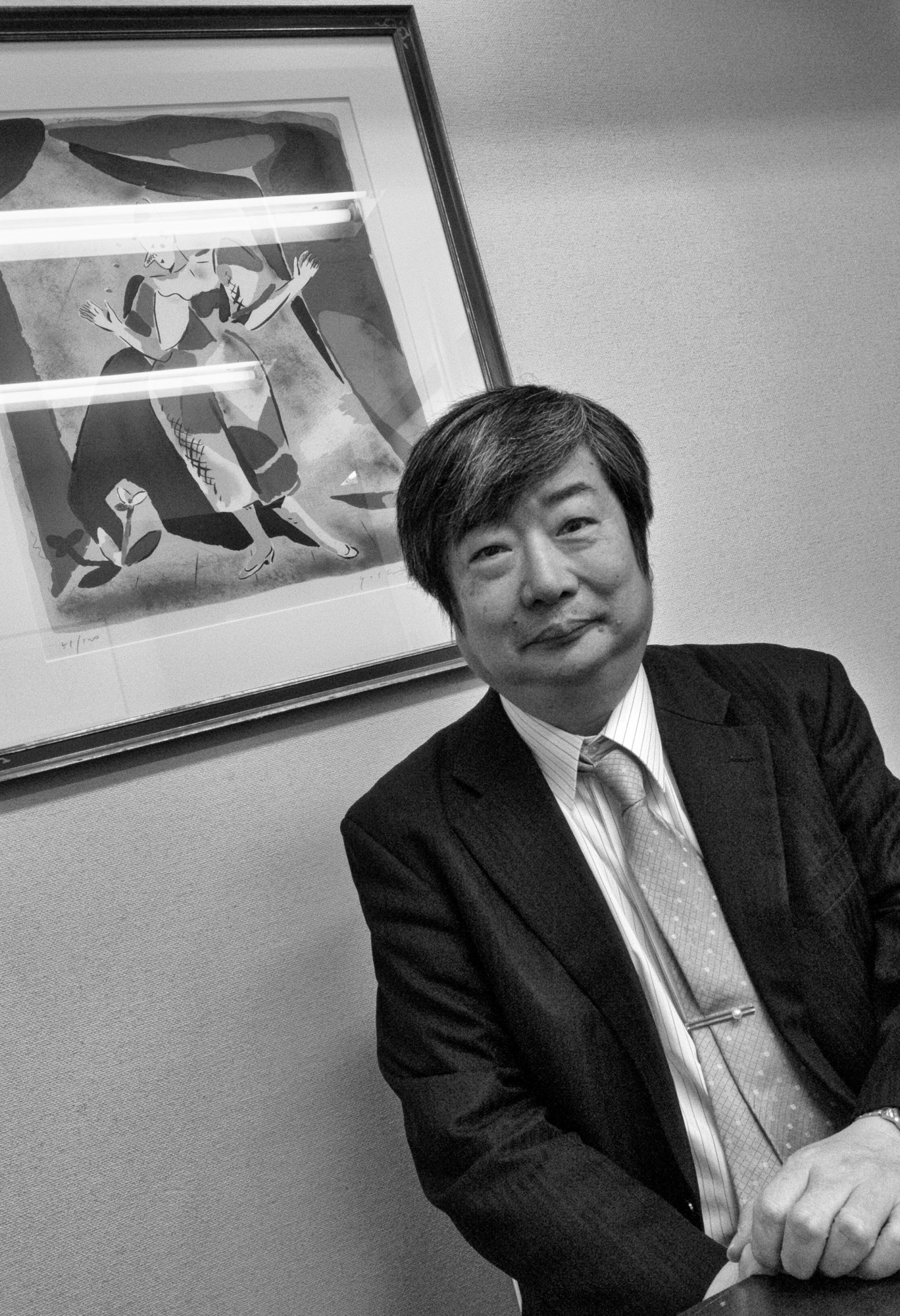
leukemia, according to Kaido. In his corner: Lawyer Yuichi Kaido is cautiously confident
about Ikeda’s chances in court against Tepco. ‘It has been proven that
the probable cause (radiation) is clearly far beyond the 51 percent
probability normally required in these kinds of civil cases,’ he says. |
ROB GILHOOLYUntil now, there have been only two other
known lawsuits like Ikeda’s. One of those — involving plumber Mitsuaki
Nagao, who had been diagnosed with a type of bone marrow cancer after
being exposed to 70 mSv of radiation at nuclear power plants including
Fukushima No. 1 — was rejected by the Tokyo High Court in 2009, by which
time Nagao had died. Kaido says that ruling could prove to be a “huge
hindrance” in gaining justice for the likes of Ikeda.
“The big difference between then and now is the massive
accident at Fukushima, where it is unthinkable that no health hazard
resulted,” Kaido says, adding that in a wider social context, it is
unconscionable that the utility that caused such environmental
destruction and has since paid trillions of yen already in compensation
to atone for the disaster, should fail to recompense a man who fell sick
after helping Tepco overcome the dire situation at Fukushima No. 1.
“Some people in Fukushima who were unable to return to their
homes (because of high radiation levels) were paid hundreds of billions
of yen, while my client hasn’t received a penny. That’s preposterous.
Tepco has washed its hands of its social responsibility.”
Although initially reluctant to take action, Ikeda hopes
that his legal suit will encourage others to come forward, even though
since 1976, when the compensation regulations were introduced, only 13
workers have been officially recognized as having suffered illnesses
related to workplace radiation exposure. Ikeda became No. 14, and the
first since the meltdowns in Fukushima (see table).
“I have heard that there are probably many more, but you
never hear about them because settlements are reached” to keep them
hushed up, says Ikeda, adding that accusations on various internet
forums that people like him are nothing more than greedy opportunists
had distressed him greatly. “I wouldn’t have taken this action if Tepco
had shown some degree of remorse.”
Ikeda’s wife, Michiko, who works in an elderly care
facility, says the most difficult time for her was during those long
months of treatment, when her husband shed all his hair and over 20 kg
in weight. He began to look pale and gaunt and didn’t have the energy to
talk for more than five minutes when she visited, even though she
remembers him chatting at length with a fellow cancer patient in the
cleanroom — a patient who died three days later.
She also remembers the various memory-making trips, to
Hokkaido and Okinawa, among others — trips they hoped would remain with
their children throughout their lives. Just in case.
“Nobody can say when (the leukemia) will return, and while I
worry about that, there’s nothing I can do,” she says. “That’s fate. I
still can’t help wishing he had never gone (to Fukushima), but also feel
bitter that Tepco didn’t try to prevent this from happening.”
The family asked that their real names
and location not be used. This article is based on a chapter from Rob
Gilhooly’s book “Yoshida’s Dilemma: One Man’s Struggle to Avert Nuclear
Catastrophe: Fukushima — March 2011,” published last month by Inknbeans
Press (www.yoshidas-dilemma.com).
Nuclear plant workers’ illnesses officially recognized by
the health ministry as being workplace-related (between 1976 and June
2014 — a total of 13 workers): Leukemia
(recognized limit: over 5 millisieverts/year)
Accumulated doses (mSv) of workers in six cases:
1) 129.8
2) 74.9
3) 72.1
4) 50.0
5) 40.0
6) 5.2 Malignant lymphoma
(recognized limit: over 25 mSv)
1) 175.2
2) 173.6
3) 138.5
4) 99.8
5) 78.9 Multiple myeloma
(recognized limit: over 50 mSv)
1) 70.0
2) 65.0




No comments:
Post a Comment