By Dr. Mercola
Omega-3 fats — specifically EPA and DHA — are essential to your overall health, including your heart health.
A recent analysis of 19 studies confirms that regular consumption of
fish and other omega-3 rich foods, including certain plant-based
sources, may lower your risk of a fatal heart attack (myocardial
infarction) by about 10 percent.1,2,3
This effect held true even after accounting for confounding factors like age, sex, ethnicity, diabetes and use of aspirin or cholesterol-lowering drugs.
According to senior study author Dr. Dariush Mozaffarian, "Our results
lend support to the importance of fish and omega-3 consumption as part
of a healthy diet." Other studies have found even more significant
effects.
One large Italian trial found that heart attack survivors who took 1
gram of omega-3 fat each day for three years had a 50 percent reduced
chance of sudden cardiac death.4
Health Benefits of Omega-3 Fat
Omega-3 fats benefit your cardiovascular health
in several ways. In addition to lowering your blood pressure and
triglyceride concentrations and improving endothelial function (a major
factor in promoting the growth of new blood vessels), research has
demonstrated omega-3s are:
Antiarrhythmic: counteracting or preventing cardiac arrhythmia
Antithrombotic: tending to prevent thrombosis (a blood clot within a blood vessel)
Antiatherosclerotic: preventing fatty deposits and fibrosis of the inner layer of your arteries from forming
Reduced risk of autoimmune disorders, such as lupus and nephropathy
Not All Omega-3s Are Made the Same
It's crucial to understand that not all omega-3 fats are created equal.
There are two areas of confusion about omega-3s that I will attempt to
clarify here:
Marine animal- versus plant-based omega-3 (docosahexaenoic acid
(DHA) and eicosapentaenoic acid (EPA) versus alpha-linolenic acid (ALA))
The difference between fish- and krill-based omega-3 (triglyceride-bound omega-3s versus phospholipid-bound omega-3s)
For starters, omega-3 fats can be obtained from both marine animal
and plant sources, but contrary to popular belief, they are simply NOT
interchangeable.
In recent years, a "myth" of sorts has sprung up, where people who avoid
animal foods believe they can simply consume plant-based omega-3 ALA to
meet their needs. But this isn't true and the science doesn't support
this assertion.
Omega-3s EPA/DHA are essential polyunsaturated fats your body needs for a
variety of functions, including digestion, muscle activity, blood
clotting, visual acuity, memory and learning, and basic cell division
and function of cell receptors.
Omega-3s EPA/DHA are considered "essential" fats as your body cannot
make them and, hence, you must get them from your diet. Omega-3 ALA on
the other hand is quite ubiquitous in the diet and therefore there is no
real need to supplement.
Plant-based omega-3 has 18 carbons whereas marine-based omega-3s have
between 20 and 22. They all have their first double-bond in the third
position — hence the name "omega-3." However, as you will see below, the
difference in the length of the carbon chain makes a significant
difference.
This is where the distinction between long-chain and short-chain
omega-3s comes from. EPA and DHA are long-chain fatty acids and ALA is a
short-chain fatty acid.
Although your body can convert some of the ALA found in plants to the
DHA found in marine oils, it is very rare for it to be more than 5
percent and typically found to be 1 to 3 percent, or even less. This is
an insufficient amount to have any significant benefit.
Animal- Versus Plant-Based Omega-3
Here's a rundown of the core differences between marine-animal and plant-based omega-3s:15,16,17,18,19
Marine animal-based omega-3
• Sources: Fatty fish (such as salmon, anchovies, sardines and herring), fish and krill oils.
• Primary omega-3 content:
DHA: a long-chain polyunsaturated fatty acid (PUFA) consisting of 22
carbons, and EPA: a long-chain polyunsaturated fatty acid consisting of
20 carbons. • Long-chain fatty acids EPA and DHA are more readily available to your body. • Your body also seems to have a
significant capacity to synthesize another omega-3 fat, docosapentaenoic
acid (DPA), most likely by elongating EPA.
• Biological effects:
DHA and EPA are structural elements with many biological effects, most
notably anti-inflammatory activity and communication within the cell and
between cells.
More than 90 percent of the omega-3 fat found in brain tissue is
DHA; as much as 30 percent of the fatty mass of the prefrontal cortex is
DHA and the development of a normal brain in a fetus is absolutely
dependent on the availability of DHA.
All other omega-3 fats are found only in trace amounts, including ALA, regardless of how much ALA you consume.20
Plant-based omega-3
• Sources: Certain plants, such as flaxseed, flaxseed oil, chia seeds, nuts (especially walnuts) and leafy greens. • Primary omega-3 content:
ALA is a short-chain fatty acid consisting of 18 carbons; it's
conversion to long-chain fatty acids is very poor, around 1 to 3
percent. • ALA is a precursor to EPA and DHA.
However, enzymes are required to elongate and de-saturate the shorter 18
carbon ALA into long-chained omega-3. In most people, this doesn't
work very well and hence the conversion rate is very small.
Typically, less than 1 percent of ALA is converted to EPA/DHA. Some
studies have found the conversion rate to be as low as 0.1 to 0.5
percent.21 Your conversion is also dependent on having adequate levels of other vitamins and minerals.
So, while a tiny amount of the ALA you consume can be converted by
your body into long-chain omega-3, it's a highly inefficient strategy
and nowhere near as helpful as supplying EPA/DHA directly from marine
sources. • Biological effects: Source of energy (fat).
Key Difference: ALA Is a Source of Energy Whereas EPA and DHA Are Structural Elements
According to Nils Hoem, Ph.D., a leading scientist in omega-3
phospholipids whom I recently interviewed, when you look at the uptake
and distribution of EPA and DHA you see something rather strange.
After eating a meal of salmon or taking a krill or fish oil, the fatty
acid level in your plasma (blood) will remain elevated for more than
three days afterward. "Your body works on its distribution,
redistribution and re-redistribution for three days. That's hardly
consistent with being "just food," he says.
On the other hand, the short-chain omega-3s (ALA) are rapidly absorbed,
peaking a couple of hours after ingestion. Within 10 hours, they're
gone. This suggests your body is using them very differently.
According to Hoem, the short-chain fatty acids are simply food — they're a source of energy — while the long-chain fatty acids, those with 20 and more carbons, especially EPA and DHA, are structural elements.
So EPA and DHA are not just "food;" they're elements that actually make
up your cells, and those are two completely different functions. To
learn more about this, please keep your eye out for Hoem's interview,
which is scheduled to run shortly.
EPA and DHA are extensively distributed throughout your body, including
your heart and brain. In fact, research shows there are specific
transporters in your blood-brain barrier, the placenta (in pregnant
women), and likely also in your liver, which transport these molecules
in a very precise way into the cell membranes where they belong.
The Difference Between Fish- and Krill-Based Omega-3
Total Video Length: 05:40
The next area of confusion relates to the different types of
marine-based omega-3. Fish and krill are two sources that provide both
EPA and DHA. However, there are important differences between these two
marine sources of omega-3s. One of the most important differences
between fish and krill oil is the fact that krill oil is bound to
phospholipids.
Fatty acids are water insoluble, so they cannot be transported directly
in their free form in your blood — they require "packaging" into
lipoprotein vehicles. Most fatty acids are typically bound to esters,
which do not travel efficiently in your bloodstream. The phospholipids
in krill oil seem to be partially different in this regard.
Fish oil is bound to triglycerides and methyl esters
Krill oil is bound to triglycerides and phospholipids
Phospholipids are also one of the principal compounds in high-density
lipoproteins (HDL), which you want more of, and by allowing your cells
to maintain structural integrity, phospholipids help your cells function
properly. (You can learn more about this in the video above.)
There's also a synthetic form of marine omega-3, which is bound to ethyl
esters. This is simply a fatty acid that has been sliced off from its
triglyceride source and then ethylated with ethanol. Pharmaceutical
omega-3 supplements are typically made this way, and research shows
ethyl esters, unless taken in conjunction with a meal, may simply pass
through your body without being absorbed whatsoever.
Other Advantages of Krill Oil Over Fish Oil
Research also shows krill oil has a number of other advantages over fish oil, including the following:
Higher potency
Studies have shown that krill oil is more potent than fish oil. This
means you need far less of it than fish oil, as confirmed by a 2011
study published in the journal Lipids.22
Researchers gave subjects less than 63 percent as much krill-based
EPA/DHA as the fish oil group, yet both groups showed equivalent blood
levels — meaning the krill was more potent.
Contains phosphatidylcholine
When you consume fish oil, your liver has to attach it to
phosphatidylcholine in order for it to be utilized by your body. Krill
oil already contains phosphatidylcholine, which is another reason for
its more efficient cellular uptake. Phosphatidylcholine is composed
partly of choline, the precursor for the vital neurotransmitter
acetylcholine, which sends nerve signals to your brain, and for
trimethylglycine, which protects your liver.
Choline is important to brain development, learning and memory. In fact,
choline plays a vital role in fetal and infant brain development, so it
is particularly important if you are pregnant or nursing.
Resists oxidation
Fish oil is quite prone to oxidation, and oxidation leads to the
formation of free radicals. Consuming free radicals further increases
your need for antioxidants. Fish oil is very low in antioxidants whereas
krill oil contains astaxanthin — probably the most potent antioxidant in nature — which is why krill oil is so stable and resistant to oxidation.
Contaminant-free
Fish are very prone to mercury and other heavy metal contamination,
courtesy of widespread water pollution. Antarctic krill is not prone to
this contamination. Not only are they fished from cleaner waters, but
since krill is at the bottom of the food chain, it feeds on
phytoplankton and not other contaminated fish.
Although processed fish oil can be purified, it requires extensive
additional damaging processing to do so, unlike krill, which is not
contaminated from the start and requires no additional processing to
achieve high purity levels.
Environmentally sustainable
Krill is far more sustainable than fish because it's the largest marine
biomass in the world, making krill fishing one of the most sustainable
practices on the planet. Krill fishing is also carefully regulated, and
only less than 1 percent of the total krill biomass in the areas where
the fishery is allowed (designated as "Area 48" in the Southern Ocean)
is caught each year.
The krill population is monitored by the Commission for the Conservation
of Antarctic Marine Living Resources (CCAMLR). The Marine Stewardship
Council (MSC) certifies that krill fishing is carried out in compliance
with strict sustainability criteria to avoid overfishing. For more
information, please read my 2009 article that goes into the sustainability aspects of krill harvesting in greater depth.
Superior metabolic influence
Researchers have found that krill oil is vastly superior to fish oil
when it comes to having a beneficial influence on your genetic
expression and metabolism. Genes have "switches" that can be flipped on
and off, which control virtually every biochemical process in your body,
and nutrients like omega-3 fats control those switches.
Fatty acids help to direct metabolic processes such as glucose
production, lipid synthesis, cellular energy, oxidation and dozens of
others. We now know that various types and sources of omega-3 fat affect
liver tissue differently, which is what a 2011 study23 in Frontiers in Genetics was designed to examine.
It compared the livers of mice fed krill oil to those fed fish oil by
looking at the gene expression triggered by each. Although both fish oil
and krill oil contain omega-3s, they differ greatly in how they affect
the genes controlling your metabolism. Krill oil:
Enhances glucose metabolism in your liver, whereas fish oil does not
Promotes lipid metabolism; fish oil does not
Helps regulate the mitochondrial respiratory chain; fish oil does not
Decreases cholesterol synthesis, whereas fish oil increases it
So krill will help lower your triglyceride and cholesterol levels and
increase your energy production, whereas fish oil does neither. Last
year, an Italian study24,25
confirmed that krill oil helps improve lipid and glucose metabolism and
mitochondrial function, which may help protect against hepatic
steatosis (fatty liver disease) caused by an unhealthy diet (such as
diets high in unhealthy fats).
By stimulating certain mitochondrial metabolic pathways, including fatty
acid oxidation, respiratory chain complexes and the Krebs cycle, krill
oil helps restore healthy mitochondrial energy metabolism.
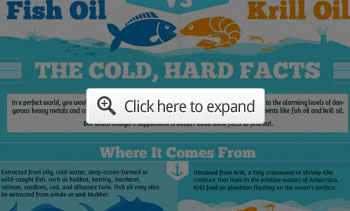
Embed this infographic on your website:
Click on the code area and press CTRL + C (for Windows) / CMD + C (for Macintosh) to copy the code
Butter Is Not Linked to Heart Disease
Besides omega-3 fats, you might have heard some of the good news about
saturated animal fats like butter and lard being far healthier than
previously believed. Recent research has again acquitted butter, finding
it does NOT increase your risk for heart disease.26 As reported by STAT:27
"Researchers combined the data from nine studies looking at the
relationship of butter consumption with various health outcomes. They
found that eating butter didn't significantly change people's incidence
of cardiovascular disease, coronary heart disease or stroke.
The study did find a small link between butter and overall
mortality — each daily tablespoon of butter was linked to a 1 percent
increase in mortality risk. On the other hand, the same amount of butter
was associated with a 4 percent lower risk of diabetes."
Butter, as you probably know, has long been demonized for being high in
saturated fat. But as butter consumption declined, being replaced
instead by processed vegetable oils that were thought to be healthier
for the heart, heart disease rates actually increased.
Today, we recognize that trans fats are far more harmful to your heart
than saturated animal fats ever were, and butter is again gaining favor.
An interesting article in The Atlantic28
dating back to 2012 describes the history behind the misguided advice
to avoid saturated fats, and "how Procter & Gamble convinced people
to forgo butter and lard for cheap, factory-made oils loaded with trans
fat."
Citizen Petition to Lift Interstate Ban on Raw Butter
In related news, the Farm-to-Consumer Defense Fund and Organic Pastures
Dairy Company have organized a citizen's petition to lift the interstate
ban on raw butter. According to the Food and Drug Administration (FDA),
it has the authority to ban sale of raw butter under its power to
regulate communicable disease — a claim Pete Kennedy, attorney for
Farm-to-Consumer Defense Fund, says is "not only ridiculous but illegal
as well." As noted in a recent article announcing the petition:29
"FDA's assertion of this power in banning raw butter is dubious for
two reasons: first, the ban violates the Federal Food and Drug Cosmetic
Act (FFDCA); and second, FDA is trying to prohibit a food in interstate
commerce that has little or no record of making anyone sick.
FDA's butter ban is illegal according to a statute in the FFDCA that
governs standards of identity for food. Standards of identity are
requirements prescribing what a food product must contain to be marketed
under a certain name in interstate commerce.
For instance, the standard of identity for milk in final package
form requires that it be pasteurized or ultrapasteurized and that it
contain not less than 8 ¼ percent non-fat milk solids and not less than 3
¼ percent milkfat. FDA's long-held position is that the pasteurization
requirement can be part of the standard of identity. Standards of
identity are intended to promote honesty and fair dealing for the
benefit of consumers.
Congress has given FDA power to issue regulations establishing
standard of identity requirements for most foods, but there are
exceptions and one of those is butter.
The FFDCA specifically prohibits FDA from establishing a standard of
identity for butter; Congress has passed a law defining butter that
serves as a standard of identity for the product. That definition does
not require butter to be pasteurized. The petition asks FDA to obey the
law and abide by the statutory standard of identity for butter."
To help, I encourage you to make a donation to the Farm-to-Consumer
Defense Fund. If you're not already a member, you may also consider
becoming one.
Spread the Word to
Friends And Family
By Sharing this Article.



 Email
Email

No comments:
Post a Comment