BREAKING: Peer-Reviewed Reanalysis of the Henry Ford Birth Cohort Study Finds Vaccinated Children Sicker Across All 22 Chronic Disease Categories


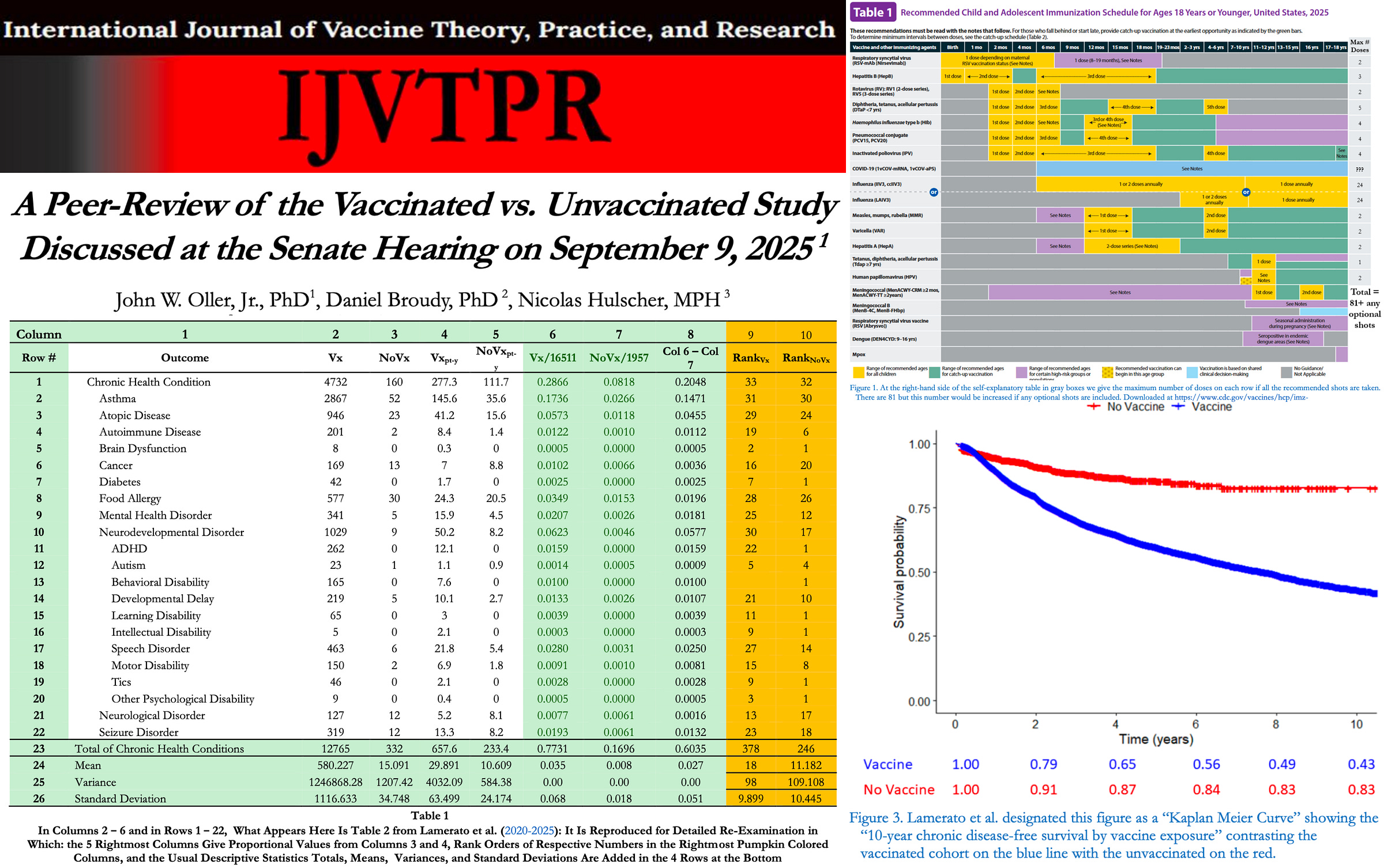
Our newly published, peer-reviewed critique and independent reanalysis of the Henry Ford vaccinated–unvaccinated birth cohort study (Lamerato et al.) — revealed at the U.S. Senate Hearing on September 9, 2025 — shows that the original authors failed to analyze or disclose the dramatic proportional differences present in their own data.
Authored by John W. Oller, Jr., PhD; Daniel Broudy, PhD; and Nicolas Hulscher, MPH, this peer-review and reanalysis provides the first accurate proportional interpretation of the dataset.
The Lamerato et al. study of a total population of 18,468 individuals between birth and 18 years of age during the years from 2000 to 2016 — of which the 16,511 in the vaccinated cohort received a median of 18 vaccines, whereas the 1,957 in the unvaccinated cohort received none at all — probably represents the most comprehensive real-world comparison of vaccinated versus unvaccinated children ever conducted within a self-contained whole population in a full-service integrated health system in the US.
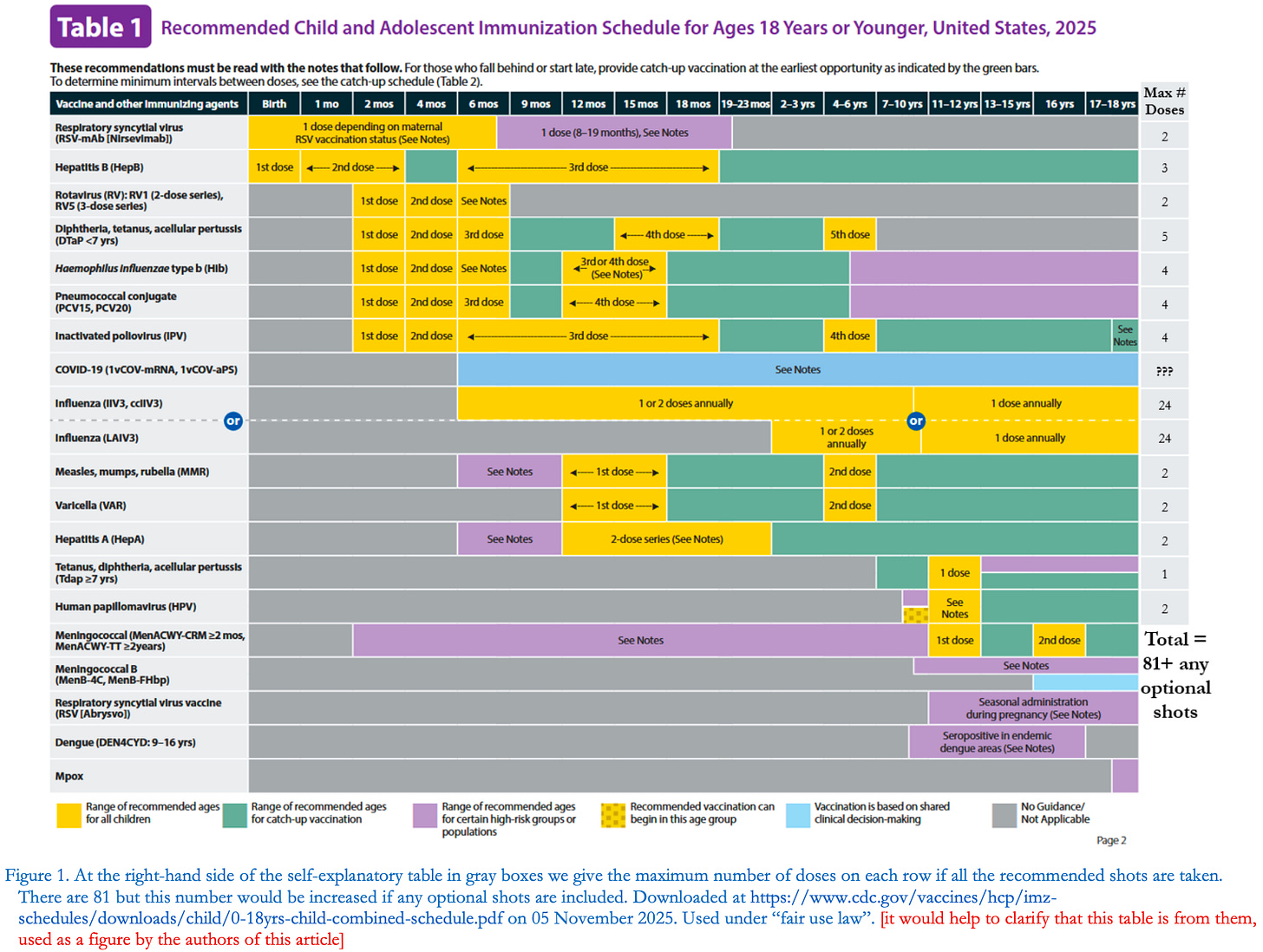
For context, we calculated that the current CDC childhood immunization schedule now contains at least 81 doses of vaccines by age 18 — more than four times higher than the median exposure in the Henry Ford cohort. This means that the dramatic disparities we uncovered in this dataset emerge even at a fraction of the full CDC schedule.
.
Click here for an enlarged view

.
We initiated this reanalysis because the study used statistical approaches that masked large disparities, particularly in outcomes where the unvaccinated group had zero or near-zero cases.
Instead of examining actual proportional incidence, Lamerato et al. relied on odds-ratio modeling and a “strict definition” of cases that created the false appearance of equivalence. Our peer-review demonstrates that these choices systematically minimized the large, consistent contrasts present in the raw numbers — contrasts so large that the authors themselves, had they simply reported them, would have been compelled to acknowledge dramatically worse outcomes in the vaccinated cohort.
Once the data are viewed through the proper lens — proportions per cohort, the same approach the original table already implies — the picture changes entirely.
Our reanalysis shows that vaccinated children were sicker in all 22 chronic disease categories listed — a pattern reinforced by two of the most striking findings in the dataset: a 549% higher rate of autism-associated neurodevelopmental conditions and a 54% elevation in childhood cancer in the vaccinated cohort. These signals emerge only when the data are analyzed proportionally, without the statistical distortions used in the original report.
.
Click here for an enlarged view

.
Every One of the 22 Chronic Conditions Was Higher in Vaccinated Children
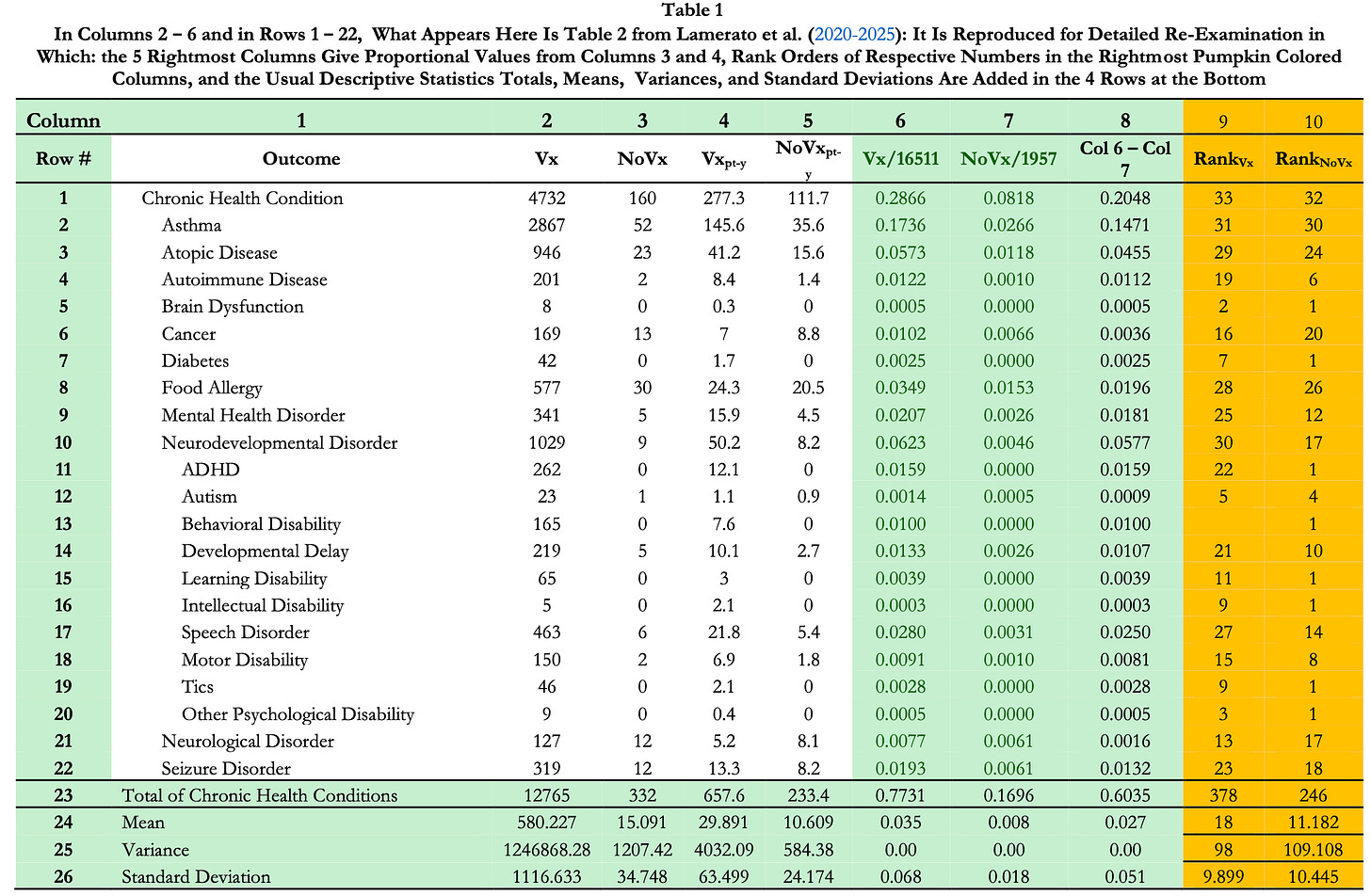
Our reanalysis of Lamerato et al. Table 2 found that all 22 chronic disease categories appeared at higher proportional rates in vaccinated children, with many conditions elevated 10× to 20×.
.
.
1. Chronic health condition (any)
0.2866 vs 0.0818 → 3.50× higher (+250%)
2. Asthma
0.1736 vs 0.0266 → 6.53× higher (+553%)
3. Atopic disease
0.0573 vs 0.0118 → 4.86× higher (+386%)
4. Autoimmune disease
0.0122 vs 0.0010 → 12.2× higher (+1,120%)
5. Brain dysfunction
0.0005 vs 0.0000 → Present only in vaccinated
6. Cancer
0.0102 vs 0.0066 → 1.54× higher (+54%)
7. Diabetes
0.0025 vs 0.0000 → Present only in vaccinated
8. Food allergy
0.0349 vs 0.0153 → 2.28× higher (+128%)
9. Mental health disorder
0.0207 vs 0.0026 → 7.96× higher (+696%)
10. Neurodevelopmental disorder (umbrella)
0.0623 vs 0.0046 → 13.54× higher (+1,254%)
11. ADHD
0.0159 vs 0.0000 → Present only in vaccinated
12. Autism
0.0014 vs 0.0005 → 2.8× higher (+180%)
13. Behavioral disability
0.0100 vs 0.0000 → Present only in vaccinated
14. Developmental delay
0.0133 vs 0.0026 → 5.12× higher (+412%)
15. Learning disability
0.0039 vs 0.0000 → Present only in vaccinated
16. Intellectual disability
0.0003 vs 0.0000 → Present only in vaccinated
17. Speech disorder
0.0280 vs 0.0031 → 9.03× higher (+803%)
18. Motor disability
0.0091 vs 0.0010 → 9.1× higher (+810%)
19. Tics
0.0028 vs 0.0000 → Present only in vaccinated
20. Other psychological disability
0.0005 vs 0.0000 → Present only in vaccinated
21. Neurological disorder
0.0077 vs 0.0061 → 1.26× higher (+26%)
22. Seizure disorder
0.0193 vs 0.0061 → 3.16× higher (+216%)
All 22 conditions were higher in vaccinated children — with increases ranging from +26% to over +1,200%, and multiple disorders appearing only in the vaccinated group.
549% Higher Odds of Autism-Associated Neurodevelopmental Conditions
Our reanalysis shows that the conditions which collectively form the clinical profile associated with autism spectrum disorder — including autism itself, ADHD, developmental delay, speech disorder, learning disability, neurological impairment, and related diagnoses — occurred at 5.49-fold (549%) higher odds in vaccinated children compared with those who received no vaccines.
Crucially, we performed this grouped analysis because many of the individual neurodevelopmental diagnoses had zero or near-zero cases in the unvaccinated cohort. This made standard odds-ratio modeling mathematically incapable of detecting differences (a well-known “zero-cell” problem).
By combining these clinically linked conditions into a unified ASD-associated category — a method consistent with developmental-neurology practice — we recovered the true proportional signal that the original analysis obscured.
This represents one of the most powerful autism-related population signals ever documented in a major U.S. healthcare system.
Childhood Cancer Higher in Vaccinated Children
Although the original authors stated that vaccination was not associated with an increased risk of cancer — reporting an IRR of 0.79 (95% CI 0.45–1.39) and concluding “no association” — this interpretation conflicts with their own raw data.
Our proportional reanalysis shows:
- Vaccinated cancer rate: 1.02%
- Unvaccinated cancer rate: 0.66%
- Relative increase: +54%
This means childhood cancer occurred notably more often in the vaccinated cohort — something that the original paper did not address, despite the proportional difference being visible directly in Table 2 of their own results.
The discrepancy arises because the authors relied on a statistical model and incidence-rate denominators poorly suited to detecting differences in rare outcomes, especially when follow-up time differs substantially between groups. These modeling choices obscured a meaningful proportional disparity apparent in the raw numbers.
.
.
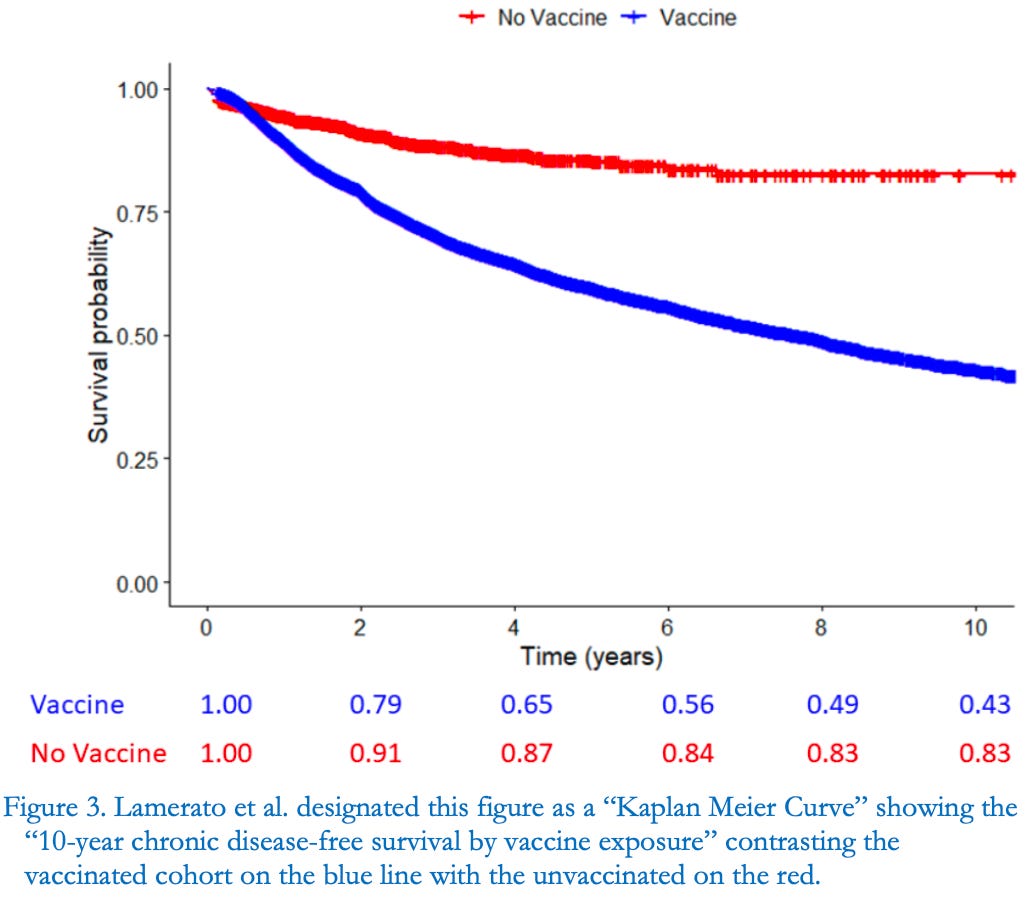
The Kaplan–Meier analysis reported by Lamerato et al. shows:
- Only 43% of vaccinated children remained free of chronic illness by age 10
- 83% of unvaccinated children remained healthy
Meaning:
- 57% of vaccinated children developed at least one chronic disease.
- Only 17% of unvaccinated children developed at least one chronic disease.
Conclusions
Once properly analyzed, the Henry Ford dataset shows:
- All 22 chronic disease categories were more common in vaccinated children
- Childhood cancer occurred at 54% higher rates in vaccinated children
- Autism-associated neurodevelopmental conditions were 549% higher in the vaccinated cohort
This is one of the clearest population-level datasets ever produced demonstrating that the CDC’s childhood vaccine schedule is a MAJOR driver of chronic disease, neurodevelopmental injury, and early-life morbidity.
Our peer-review and reanalysis overturn the constrained narrative presented in the original report — and expose what the data truly show.
Read our full paper here: A Peer-Review of the Vaccinated vs. Unvaccinated Study Discussed at the Senate Hearing on September 9, 2025
*
Click the share button below to email/forward this article. Follow us on Instagram and X and subscribe to our Telegram Channel. Feel free to repost Global Research articles with proper attribution.
Nicolas Hulscher, MPH, Epidemiologist and Foundation Administrator, McCullough Foundation
Featured image source
Global Research is a reader-funded media. We do not accept any funding from corporations or governments. Help us stay afloat. Click the image below to make a one-time or recurring donation.

Disclaimer: The contents of this article are of sole responsibility of the author(s). The Centre for Research on Globalization will not be responsible for any inaccurate or incorrect statement in this article. The Centre of Research on Globalization grants permission to cross-post Global Research articles on community internet sites as long the source and copyright are acknowledged together with a hyperlink to the original Global Research article. For publication of Global Research articles in print or other forms including commercial internet sites, contact: publications@globalresearch.ca
www.globalresearch.ca contains copyrighted material the use of which has not always been specifically authorized by the copyright owner. We are making such material available to our readers under the provisions of "fair use" in an effort to advance a better understanding of political, economic and social issues. The material on this site is distributed without profit to those who have expressed a prior interest in receiving it for research and educational purposes. If you wish to use copyrighted material for purposes other than "fair use" you must request permission from the copyright owner.
For media inquiries: publications@globalresearch.ca
No comments:
Post a Comment