Story at a Glance: •Academic success is primarily based on one’s ability to memorize material. Unfortunately, the educational system rarely teaches students how to do that. •Effective learning requires actively rather than passively engaging with the required material and being conscious of what is going on inside your body and mind so that you can determine which approaches are correct for you. •Many of the same factors that determine overall health and neurological health (e.g., a healthy sleep cycle and adequate circulation throughout the body) also directly influence your capacity to study and memorize. •This article will review some of the key points we’ve found are the most critical for effective memorization. As we all sit down for a Thanksgiving dinner with our friends and family, we are encouraged to focus upon what we are truly grateful for and what’s really important in life. To this end, I frequently think of this quote (which I have seen more variations of than I can count):
Note: this cuts across all income brackets. For example, a few colleagues have recently consulted me on cases where wealthy patients had spent millions on treatments for complex disorders that did not significantly improved because their medical team was not able (or financially incentivized) to address the root causes of their illness—which always amazes me to watch unfold as the solutions we use for those types of “incurable” illnesses are often quite simple, but despite their results, rarely tried due to the unshakeable faith our society has in the supremacy of conventional medicine. Since we live in a marketing-based-economy, our focus is primed to be on the things we can’t have, and as a result, many people spend their entire lives chasing things like credentials, material possessions, social status or being “right” on the political issue the media currently has primed them to fixate on—all of which rarely brings happiness and contentment to people. Conversely, again and again, I see that when people’s basic health is threatened (e.g., from a COVID vaccine disability or at the end of life), their perception flips, the things they chased become immaterial, and all they really care about are things they previously took for granted such as exercising in nature or being able to enjoy simple things in life with those they care about. For
this reason, I feel Thanksgiving is an excellent time to reflect on the
things that really matter in life, and especially when being around
people you haven’t seen for a while, that the reason people crave human
interaction is because when you are directly with someone, much more is
exchanged than just mental ideas, and it’s that connection which goes
beyond words which brings some of the deepest meaning to the human
experience. In turn, I feel much of where I got to in life was recognizing at a young age real friendships were invaluable (due to observing all the issues that emerged at all ages when that was not presented) and eventually having a supportive group of people about me who genuinely cared about each other’s well-being, authentic communication and pushing those around them to grow. Likewise, I feel many of the things that happened for me in life were entirely due to luck (e.g., the string of unlikely events that came together to make this newsletter possible still astonishes me), which is why I’ve always been oriented to the viewpoint I have a spiritual obligation to reciprocate those blessings by helping others. In my case, one of the key things that made everything possible for me was the ability to rapidly memorize and retain information (e.g., this allowed me to spend much of my medical education learning things outside the curriculum rather than simply always cramming what was taught, and to be able to go through vast bodies of literature over the years then recall the pertinent pieces of information for the articles here). Much of that capacity was entirely luck (e.g., I accidentally discovered a remarkably effective memorization technique in middle school and felt compelled to adopt a variety of health practices which I later discovered were pivotal for preserving cognition and memorization). Note: one of the most common questions I’ve received about DMSO is how the odor from it can be reduced (e.g., this can be quite challenging at gatherings like Thanksgiving). Because of this, I’ve compiled the solutions individuals and researchers over the decades have found helped the most here. Social SortingThe primary mechanism our society uses to determine one’s eventual wealth and place in the social hierarchy is their academic performance. However, many simply don’t succeed in it despite putting immense effort in as students are typically told what to do (e.g., copy the teacher) rather than being shown how to do it or being given the space to discover their own learning process. Sadly, since government educational subsidies are based on how many students attend an institution, schools are not incentivized to produce. Note: a recent study found that throughout history, whenever there are periods of internal conflict, states have introduced education reform that is designed to indoctrinate citizens to accept the status quo. In turn, schooling more and more has shifted to creating subservience and conformity rather than creating a generation of creative critical thinkers who can solve the issues our country faces and innovate solutions that advance us into the future. This in turn, is both highly unfair to those who are put through the academic grinder (but not inherently suited for success within it) and an immense waste of national resources. For example, as the years go by, we keep spending more money on research and education:
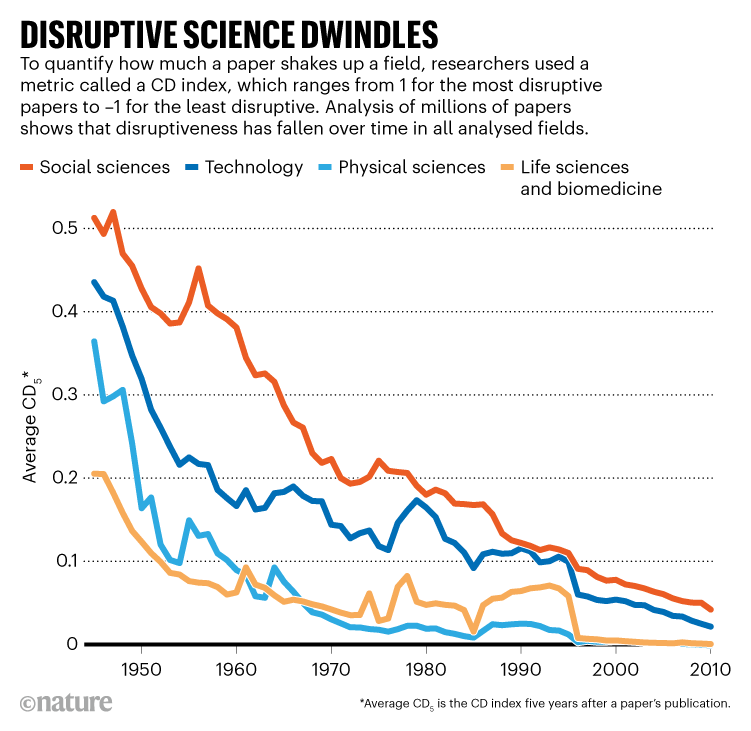
Yet simultaneously, primary educational outcomes (e.g., literacy) keep worsening, less qualified people exist to fill our most critical institutions and valuable scientific innovations keep becoming rarer:
Effective StudyingThe primary metric determining success in education is how effectively one can memorize testable material. As such, a lot of education is compelling students to “spend more time studying” and dole out a myriad of punishments for those students who did not study enough. This in turn, touches upon one of my favorite phrases: “Work smart, not harder.” Three crucial things allowed me to do that in school: •Because
I recognized the value of natural health at a very young age, I avoided
most of the things within our society which impair the sleep cycle or
cognitive function (e.g., alcohol and neurotoxic pharmaceuticals). Understanding vs. MemorizingIn most cases, the best way to memorize a topic is to both understand it and to know the justification for why it was taught to you in the first place. This is because people typically recall information by having it connect to something else they know, so understanding a subject is often the fastest way to ensure those connections form. However, in most cases neither (especially the latter) happens. For example, when interviewing medical students, we’ve found it quite rare for the interviewee to answer why they were taught a specific piece of information (even within the area of focus they highlighted in their personal statement). “When a light is turned on with a switch, most people don’t want to understand everything that allows that to happen; they just want to know that turning a switch turns the light on.” This lack of conceptual understanding is particularly common in medical education, where students are bombarded with a firehose of information they are expected to somehow memorize so there’s very little time to fully understand much of the material. Worse still, the hierarchal nature of medical education actively disincentivizes doing anything besides trusting the information being taught (as questioning any medical dogma can lead to harsh sanctions for the student). I’ve long suspected this is by design as it both prevents students from ever exploring the glaring contradictions in what they are being taught and simultaneously creates an immense psychological investment in the value of their education—which makes them quite reluctant to question if parts of it are wrong. In my eyes, both of these are essential for the indoctrination physicians undergo, as many of the things they are taught don’t actually make sense if you really think about them—hence motivating and ensuring there’s never enough time to question the medical curriculum. Likewise, even if a student is skeptical about what’s being taught, being conscious of it often requires them to simultaneously hold two separate world views within their mind, as graduating from medical training requires each doctor to effectively present the orthodox version of medicine. Since that’s already an immense task, it’s often simply not possible to also hold another worldview in one’s mind. Note: I know people who had extensive backgrounds in natural medicine (and a great deal of clinical success with it) who then went to medical school and completely abandoned those disciplines because it was not possible for them to also have enough space in their minds to hold both perspectives simultaneously. Active and Passive MemorizationWhen I was in medical school, to make studying more “fun” I did the following: 2. I would often look for holes or fallacies in what was being taught to us. The value of the first two approaches should make sense (they fostered more connections to the memorized material and preserved my love of learning—rather than viewing the course work I faced as something to be afraid of). However, of these, I learned the most from constantly changing how I studied. Originally, my desire to do this arose because I knew that each subsequent examination would be more challenging than the previous and I wanted to be prepared for the harder tests. However, before long, I realized it was quite interesting to observe how I learned and continually experiment with it (making the studying process more fun to go through). In turn, I gradually gained many insights about the process for both myself and others. These included: •Many aspects of your environment (e.g., the lighting or how coherent or incoherent the music you listen to is) can significantly impact your ability to process and retain information. •Different people learn differently, so there is no one size fits all approach. For example, some people are visually oriented, some are primarily auditory, and some are kinesthetic. Each group typically learns best through that specific channel (e.g., listening to numerous lectures versus looking at the material and then drawing it out, etc.). •Similarly, many different study aids exist that work only for some people but not others (e.g., many of my classmates prioritized using flashcards, but I never found them helpful for me). Unfortunately, people tend to assert what works for them is also the best for everyone else, and one of the most common mistakes I see students make is being compelled by their peers to utilize a studying approach which is not actually the best for them. •While
studying, if you make an effort to stay consciously aware of what is
occurring inside you, you are much more likely to discern your effective
learning method. Essentially, when you learn a concept, you can either
be disconnected from it or acutely aware of what aspects of it you are
unclear of and struggle to recall. With that awareness, you can then
actively focus on addressing those weak links in your understanding and
recall of the concept (e.g., I found that I would sometimes have
difficulty consistently remembering which thing something paired with,
so I actively created my own mnemonics for topics where I saw those
recall issues arose). •Similarly, being cognizant of what is going on in your body is extremely important. For example, many find that if they maintain some sort of connection to their body as they study (e.g., through a relaxed breathing exercise), their cognitive stamina and ability to retain information increases. •Likewise,
if your brain or your nervous system becomes overloaded, you will
retain significantly more if you take a break (e.g., move around,
exercise, do yoga, or take a nap) than you will if you just keep
studying. Sadly, many students when they are overloaded, instead use
medications like Adderall to keep going, which beyond being harmful to
the brain, are less effective than simply giving the brain the breaks it
needs. •What
you eat can significantly affect your ability to have a clear mind and
study in an effective manner. In turn, a constant source of frustration
for me has been finding medical students will typically eat lots of junk
food while cramming for an exam (making their studying process far less
efficient). Likewise, healthy eating makes students much more able to
effectively recall information when they are being tested on it for
exams. As a learner, it is extremely important to assess if the foods
you eat make your cognition clearer or if they dampen it (which sadly is
the case for many of the addictive processed foods). •The
specific position you study in can make a significant impact on how you
learn. For instance, the default position most people study in is
sitting up. Still, beyond putting significant strain on the body, it can gradually tighten the muscles in the neck,
creating both headaches and fluid congestion from the brain (which
often sneak up on a student as they aren’t cognizant of their body and
hence do not pick up on the early signs of strain before they turn into
something more severe that prevents studying). While opinions vary (as
everyone is different), I believe the two best positions to study in are
either squatting, or standing (especially if you can do so at a
treadmill desk). The key theme behind each of these points is that if you make the effort to actively engage in the studying process (rather than just passively trying to absorb the information being fed to you) and continually question what actually works and what does not work for you, you will be able to retain much more when you study (and have it be a much more enjoyable process). Fluid CirculationThere is a strong case that impaired circulation is a root cause of chronic illness (e.g., one of the most common mechanisms of harm from vaccines is that they cause microstrokes which are easily detectable with the appropriate neurological examination). While the harm from poor circulation can be overt (e.g., significant swelling and skin changes in the legs), typically it is subtle and goes unrecognized. For example, a significant contributor to dementia is poor blood flow to the brain and poor lymphatic drainage from the brain—best demonstrated by how frequently the COVID-19 vaccines cause cognitive impairment or accelerated dementia. In turn, we’ve found some of the most effective treatments for cognitive impairment or dementia are simply to safeguard the brain’s blood flow (e.g., by restoring the blood’s ability to flow freely). Similarly, impaired fluid circulation is extremely detrimental to mental health (e.g., one survey found the COVID vaccines caused 26.4% of recipients with a pre-existing anxiety or depression disorder to experience an exacerbation of the disorder). Likewise, physical activity (one of the most effective ways to move fluids within the body) has also been shown to be 50% more effective than medications or cognitive behavioral therapy for reducing mild-to-moderate symptoms of depression, psychological stress, and anxiety. Note: fluid congestion in the head is often accompanied by cloudy thinking or an inability to continuously stay focused. Because of this, being able to be aware of when fluid congestion is happening (particularly in the head) and then doing something to address that stagnation (e.g., taking a break, moving around, changing your studying position, exercising, taking a hot bath) is immensely helpful for supporting learning (and avoiding burnout). Note: DMSO is quite helpful for improving fluid circulation in the brain, and research has shown that it counteracts both the adverse effects of strokes and prevents cognitive decline (discussed here). While we typically use intravenous DMSO to protect cognitive function later in life, it can also be very helpful after periods of prolonged mental exertion (e.g., for medical students or after you have to spend too much time writing) as it both restores depleted cognitive function and prevents the long term cognitive impairment that can result from overstraining the central nervous system. SleepMany studies have shown that sleep is critically important for both brain health and the long term retention of memory. This should make sense as we’ve all had days of waking up with insufficient sleep where our minds were much less clear. Sadly despite sleep being critically important for learning (and many other critical things like preventing dementia), very little focus is given to it in the educational process. As a result, few students know that drinking alcohol (or taking a sleeping pill) is highly disruptive to the sleep cycle, and as a result, students across America, to relax from the stress of studying academically impair themselves by engaging in those activities. Likewise, basic practices of sleep hygiene (e.g., getting to bed at a regular hour, avoiding coffee later in the day, or not being exposed to blue light from screens at night) are almost never mentioned to them. Disregarding the importance of sleep is particularly tragic for doctors in training, as during their medical residencies, they are often forced to work 24-30 hour shifts, under the belief they “need more time to be trained sufficiently” despite the fact sleep deprivation impairs learning and significantly increases (sometimes fatal) medical errors. Note: a more detailed summary of the critical importance of restorative sleep and the simple approaches that can be taken to improve it can be found here. ConclusionOne of the major issues with how medicine is practiced is that each issue is seen as an isolated problem which requires its own pill to treat, when in reality, many ailments are simply different manifestations of how the same underlying issue expresses itself wherever the patient is the most susceptible (e.g., consider how many different side effects have been seen from the COVID vaccines or that those side effects frequently arise at sites of pre-existing weaknesses in that individual). Likewise, many of the same degenerative processes we see at the end of life simply represent the same underlying diseases (e.g., fluid congestion) in the body worsening with age. For instance, as I’ve tried to show here, beyond a clear mind being valuable for memorization and academic success, the habits that create it are also what stave off cognitive impairment, and eventually dementia—conditions which despite decades of research (that trillions have been spent on) conventional medicine still cannot offer a solution to (even though natural approach have already been scientifically proven to treat Alzheimer’s disease). Fortunately, attitudes towards health and disease are gradually shifting, and there now seems to be widespread public support for moving beyond the (patentable) disease focused model of medicine which the pharmaceutical industry has relied upon for decades. I am thus very hopeful our society will begin looking at the root causes of illness and gradually discover that many previously insurmountable conditions are in fact quite treatable and deeply grateful for all that each of you has done to bring us to this moment and your incredible support of this publication which has made much of what I’ve been able to do possible. Author’s note: This is an abridged version of a longer article that discusses many other approaches to enhance learning and retention along with ways natural therapies can be used to mitigate test-taking anxiety (or fatigue during examinations). That article and its additional references can be read here. To learn how other readers have benefitted from this publication and the community it has created, their feedback can be viewed here. Additionally, an index of all the articles published in the Forgotten Side of Medicine can be viewed here. Finally, information on how to reduce DMSO’s odor is detailed in this article. You're currently a free subscriber to The Forgotten Side of Medicine. For the full experience, upgrade your subscription.
|






No comments:
Post a Comment