BREAKING: “U.S. Has Approved This Escalation”. Kiev Regime Attacks Civilians Within Russian Territory. Russia Downs U.S. Tactical Missile System (ATACMS). Act of Sabotage of Trump’s Peace Plan?


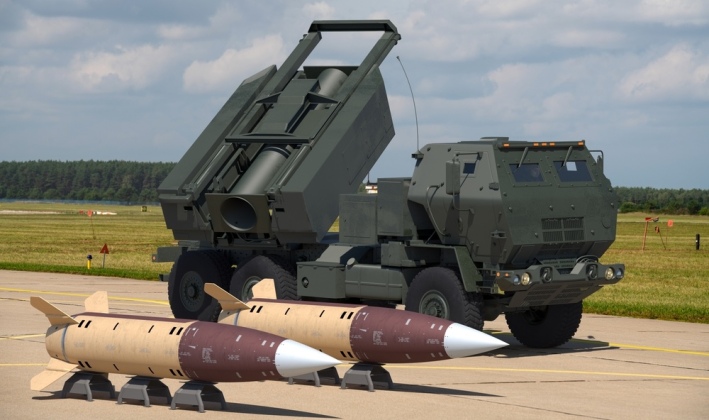
In the afternoon of November 18, 2025 the Kiev regime and Ukraine’s Armed forces (controlled by two neo-Nazi parties) once again escalated the NATO-orchestrated Ukrainian conflict by firing the US-made MGM-140 ATACMS missiles at undisputed Russian territory (specifically Voronezh).
With a maximum range of 300 km, the ATACMS (Army Tactical Missile System) is a serious threat to any undefended Russian settlement. At least four missiles were launched from the Kharkov oblast (region), targeting civilian infrastructure in the adjacent Voronezh oblast, prompting a swift Russian defensive response and retaliatory precision strikes.
The incident underscores the intensifying role of US/NATO weapon systems in the Kiev regime’s attacks on Russia proper.
The involvement of Western ISR (intelligence, surveillance, reconnaissance) assets is virtually guaranteed, as the Kiev regime lacks such capabilities. The attacks came at a time when its frontlines are collapsing, prompting desperate measures, such as “PR victories” and terrorist/sabotage attacks.
The sequence began at approximately 14:31 Moscow time (11:31 UTC) on November 18, when the Kiev regime forces fired four ATACMS missiles from a position near Volosskaya Balakleya in the Kharkov oblast, approximately 50 km southeast of the city of Chuguyev.
This launch site, later identified by Russian ISR, used two US-made which are compatible with ATACMS munitions.
“U.S. Has Approved This Escalation”

According to the U.S. based Military Watch Magazine: November 19, 2025
“The Ukrainian Armed Forces have reported the first launch of an MGM-140 Army Tactical Missile System (ATACMS) ballistic missile strike into internationally recognised Russian territory, with the system’s reliance on Western advisors and satellite guidance indicating that the United States has approved this escalation of the country’s attacks. Commenting on the attack, the Ukrainian Armed Forces General Staff pledged: “The use of long-range strike capabilities, including systems such as ATACMS, will continue.”
Unconfirmed reports indicate that the target may have been the Pogonovo training area in the Voronezh region, although Russian sources reported that the missiles were launched against civilian targets.
Although the ATACMS has been used to significant effect multiple times in the past, it has been restricted to targets in disputed territories claimed by both Russia and Ukraine in the Donbas regions and on the Crimean Peninsula.
The US/NATO missiles were directed at non-military targets in the Voronezh oblast, including the regional geriatric center and an orphanage, signaling an intent to terrorize civilian populations rather than disrupt military operations.
The Map below indicates the Voronezh target within Russia’s territory as well as the Ukraine-Russia border.
The distance between the Russia-Ukraine border and Voronezh is of the order of 70 km.
Act of War against the Russian Federation, Under International Law?
This is not the first time that the Kiev regime (with the support of US/NATO) has targeted urban areas in Russian territory (eg. Kursk and Belgorod).
 What is distinct in this attack is the deliberate targeting of civilians in the city of Voronezh which has a population of more than one million people.
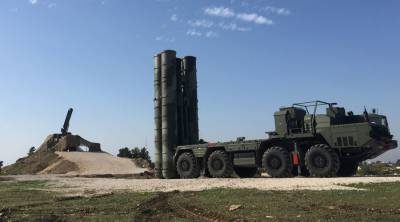
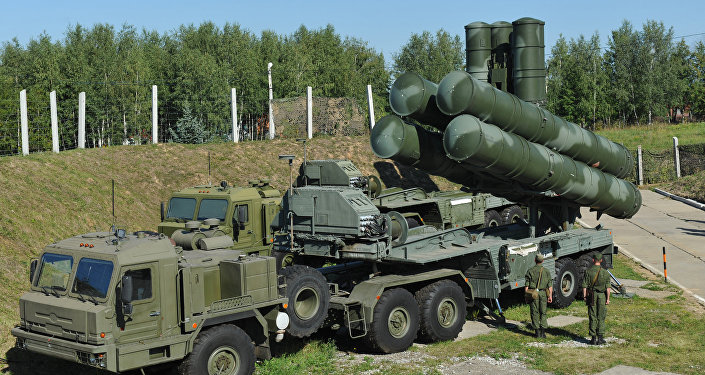
Without Russia’s S-400 Missile Defense System coupled with its advanced air force interception technologies, civilian deaths would have been exceedingly high.
An Act of War “includes any military incursion, no matter how temporary”
Similarly, the bombardment of another state’s territory by land, sea, or air forces constitutes a clear act of war.

Source: Google Map

City of Voronezh
According to the Russian Ministry of Defense, the strikes were part of a broader strategy to divert Moscow’s attention and resources away from frontline advances in the Donbass, where the Russian military continues to move forward and recapture key territories.
The importance of these areas is confirmed even by the Western media which keeps trying to present them as “diminished in strategic value” (a standard operating procedure used as a coping mechanism).
Attempts to diminish the importance of Moscow’s effective counter-attacks, don’t really change anything in practice, as the situation on the ground keeps deteriorating for the Kiezv regime. This is no different from the claims that its air and missile defenses “intercept” more missiles and drones than the Russian military actually fires. In stark contrast, when the Kremlin says it intercepted something, it rarely does so without providing undeniable evidence.
Namely, as Russian air and missile defenses reacted almost instantaneously, they shot down all four ATACMS missiles.
Mere minutes after the launch, the S-400 long-range SAM (surface-to-air missile) and the “Pantsir” hybrid air defense systems detected and engaged the incoming US/NATO threats.
Renowned for its unprecedented 600-km detection radius and 400-km range hypersonic interceptors, the S-400 tracked ATACMS (flying at speeds up to Mach 3) and promptly neutralized them, saving countless lives.
All four missiles were successfully eliminated before reaching the airspace of any major city.
Eyewitness accounts and publicly available footage captured four distinct plumes of smoke rising over Voronezh, visible from ground level and corroborating the interception timeline. Debris was scattered across the area, causing minor structural damage but no human casualties. Falling shrapnel punctured the roofs of the Voronezh Regional Geriatric Center, a nearby orphanage and a single private residence.
This outcome highlighted ATACMS’s vulnerability to modern systems. Despite its advanced features designed to evade air and missile defenses, the missile’s predictable trajectory allowed Russian radars to calculate the exact flight path and counter it more effectively. Russian ISR assets then pinpointed the exact launch coordinates in the Kharkov oblast, with space-based assets, high-altitude reconnaissance drones and electronic warfare units providing real-time data on the MLRS’s position, also revealing the presence of ammunition stockpiles and up to 10 personnel. In a calibrated (no pun intended) retaliatory move, Russian forces deployed a 9K720M “Iskander-M” system that fired one of its 9M723 hypersonic missiles.
Launched from approximately 200 km away and reaching its target in less than a minute, the unrivaled weapon slammed into the launch site with a high-explosive warhead. The strike obliterated at least two M270 launchers, their accompanying ammunition trailers and an estimated 10 servicemen (presumably Ukrainians, although the presence of NATO personnel is also highly likely). The Russian Ministry of Defense released comprehensive visual evidence to substantiate these claims. At 09:47 Moscow time, official photos were disseminated showing wreckages of the downed ATACMS missiles: twisted metal fragments riddled with shrapnel holes from S-400 and “Pantsir” interceptors, including tail sections marked with American serial numbers.
These images provided definite proof of these interceptions, precluding potential Western denials. Footage from the Voronezh oblast depicted the interception sequence: the missiles’ vapor trails arcing toward the city, followed by bright flashes and smoke clouds from the defensive engagements. Additional footage from the subsequent “Iskander-M” precision strike showed the initial impact plume, a massive fireball from detonating ATACMS stockpiles and lingering smoke over the cratered launch site. The response serves both as a warning and deterrent: by publicizing the launcher’s destruction, Russia signaled its ability to track and neutralize Western-supplied assets, thus discouraging further strikes.
Casualty figures from the “Iskander-M” hit are yet to be acknowledged by the Kiev regime, but local sources report “logistical disruptions” in the Kharkov oblast (unsurprisingly, without providing specifics or any additional information). Comically enough, NATO, which sponsored the attack, “expressed concern over escalation risks”. In reality, it was mainly concerned that one of its most potent missile systems not only failed, but was also destroyed mere hours after the unsuccessful launch. The destruction of four ATACMS demonstrated Moscow’s air and missile defense prowess, while the near-instantaneous retribution will likely temper ambitions of further ATACMS, M270 and HIMARS deliveries by the US.
Russia’s Retaliation
.
In other words, the Kremlin launched a Retaliatory Strike “Iskander-M Targets Ukrainian MLRS on November 19 following the intercepted attack on Voronezh. “Russian forces identified the launch site of the missiles near the settlement of Volosskaya Balakleya in the Kharkov region”.
“The strike reportedly destroyed two US-made MLRS launchers, along with their ammunition and up to ten personnel. The Iskander-M is a highly accurate, mobile missile system known for its ability to overcome various defense systems. Its use in this instance signals a clear message of escalation from Moscow.” (Archyde)
“War and Peace”. Trump’s 28 Point Peace Plan
Are there divisions within the U.S administration, not to mention America’s so-called European Allies?
The timing of this operation officially supported by Washington was carried out on November 18, 2025 two days prior to the formal announcement by Trump of a detailed 28 point Peace Plan (November 20, 2025)
Was this an intent to sabotage Trump’s Peace Plan? Trigger an Act of War against the Russian Federation as a means to undermine the Peace Project.
“US President Donald Trump says he is giving Ukraine [Zelensky] until next Thursday [November 27, 2025] to accept a peace plan the US drafted with Russia.
The White House has reportedly threatened to withdraw American support for Ukraine if the deadline is not met.
The 28-point plan is closely aligned with Russian demands.
It calls for Ukraine to give up territory to Russia, shrink its own military, and drop its plans to join NATO – concessions military analysts say would make Ukraine more vulnerable to any future attack.”
Transcript (Excerpts and Quotations)
President Zelensky
“The pressure on Ukraine is among the heaviest it has ever been. Ukraine may soon face a very difficult choice. Either the loss of dignity or the risk of losing a key partner, either a complex set of 28 points or an extremely difficult winter, the hardest one yet, followed by further risks. A life without freedom, without dignity, without justice. It’s almost 4 years since Russia launched its full-scale invasion”.
Ukraine’s EU-NATO Allies
Ukraine’s European allies were quick to reiterate their support for President Zelensky.
“The EU is providing military support to Ukraine to help to defend itself and we will continue to do so.”
President Vladimir Putin
In Moscow, Russian President Vladimir Putin gave his cautious backing to the plan, but said that further discussion was needed. He added that both Ukraine and Europe needed to understand what would happen if Kiev refused.
“I believe the text can be used as the basis for a final peace settlement, but it has not been discussed with us in detail, and I can guess why. The US government has so far failed to secure Ukraine’s consent. Ukraine is against it.
If Kiev does not want to discuss President Trump’s proposals and refuses to do so, then both they and the European war mongers must understand that the events that took Kubansk will inevitably be repeated in other key areas on the front”
The 28 Points Peace Plan. Informative Video, Biased? Produced prior to the attack on Voronezh.
28 Points of Pain: The Plethora of Problems with the U.S./Russia Peace Plan
No comments:
Post a Comment