Building Coalitions and Overcoming DivisionMAHA Updates and How Each of Us Can Make America Healthy Again
During my life, I’ve been involved with numerous marginalized groups opposed to something horrific being done by the establishment (including many that had nothing to do with medicine). Throughout that, I’ve seen those groups (many of which I deeply believed in) fragment and fracture again and again. As such, I’ve put a lot of thought into why this always happens and have become much more selective about confronting these conflicts since it’s rarely productive to engage with them. One of the few things that still gets to me is when I see people I know are remarkably dedicated to a cause (and frequently made significant sacrifices for it) be torn apart by the people they’re trying to help. This is in part because I feel it’s unjust, but more because I know so many instances of idealistic leaders who genuinely wanted to do the right thing, but gradually had their hearts close down (hence becoming like typical politicians) because of all attacks they’d received over the years. As such, while there have been a lot of people I’ve wanted to defend due to the vitriol they’ve received, the only people I’ve directly spoken up for were Calley Means and Robert Malone. Note: years ago, I knew someone who worked in Libya’s government for decades with Gaddafi (a highly eccentric dictator who was known for diverting Libya’s oil wealth to its people and creating one of the highest standards of living in the region until NATO took him out in 2011). One of the things he shared with me was that in his younger years, Gaddafi was very idealistic and eager to do all he could for Libya, but after surviving numerous failed assassination attempts, gradually became much more bitter and closed down. Recently, an unexpected announcement shook the MAHA community—Trump’s November Surgeon General nominee Nesheiwat (whom MAHA briefly protested for a few days due to her past COVID vaccine promotion and then forgot about) was replaced with Casey Means. After hearing about this, my first thought was a huge sigh of a relief which was immediately followed by “oh dear, this going this is going to stir up a lot of drama.” Note: everyone I’ve spoken to who’s directly connected to the HHS wants Casey Means as the Surgeon General (due to her ability to communicate to the public and her genuine interest in MAHA) and feels that she is the best candidate they have that can pass a Senate confirmation. The Origins of EvilOne of the main debates throughout human history has been where evil comes from and if humans are intrinsically good or evil. My own conclusions from decades of considering this are as follows: •Many of the detestable things I see play out on the national stage I’ve seen very similar variants of occur in many smaller groups I’ve belonged to. •Most of the horrific things we see happen have occurred throughout history in many different societies, suggesting evil is an intrinsic aspect of humanity. •While many things we are seeing now are appalling, the degree of cruelty and depravity we are witnessing now is much less than it was earlier in recorded history. However, while this general evolution of human consciousness and regard for ethics is profound, it is counterbalanced by the fact modern technology has made it possible for small numbers of people to commit cruelty and destruction on a scale that never before was possible. •Many of the worst things people do are not due to malevolence but rather strong emotions, egos never wanting to be wrong and deeply ingrained fixations. •In many cases, you can link a horrific action someone does to an unresolved trauma in the past (or in some cases a neurological injury such as those caused by the DPT vaccine). In many others, you can see how media propaganda or spiritual forces (both on an individual or societal level) can precipitate evil in those who are unbalanced enough to be susceptible to these subtle influences. •In
many cases, people are not fully conscious of their actions, and due to
outside influences or retained patterning, will frequently force
themselves to say or do things they are internally conflicted about. •Some of the worst things which have happened throughout history were well-intended but ended up being catastrophic because their advocates could not see the full picture (e.g., why the action was a bad idea) and refused to change course once their peers or real-world results showed them they were causing more harm than good. •Generally speaking, most people want to do the right thing and help others, but due either to their circumstances or the difficulty of doing the right thing, most won’t. Likewise, the majority of people I observe do “evil” things I do not deem to be evil people who wish to harm others. •In most cases, evil follows a slippery slope, so once people acclimatize themselves to doing something wrong (e.g., for the “greater good” or to protect a “vital” institution), their resistance to doing it again gradually each time they repeat the act. •It is very easy to design social systems which uses some combination of the previous to force well-intentioned people to do bad things and many institutions do just that. •A small portion of the population does not have this resistance to hurting others, commonly characterized with labels such as “sociopaths” or “psychopaths” which for context are defined as:
Note: psychopathy often goes hand in hand with narcissism and Machiavellianism. •While some people take joy in hurting others (e.g., sadists) I find most of these monsters don’t wish to hurt others, they just have no concerns if others need to suffer for them to get want, hence making apathy far more destructive than malice. •One of the major flaws in government is that its structure is extremely vulnerable to psychopathic individuals grabbing the reins of power and then forcing everyone else to go along with their prerogatives. Because of this, I believe the best form of government humanity has developed is one of checks and balances where those individuals are continually forced to compete with each other for power (hence preventing any one of them from going to far off the deep end). Note: the major problem with a bureaucracy full of robust checks and balances designed to impede government abuse, is that it also often prevents anything from getting done (which in turn begets corruption as that is often the only way to move things through the bureaucracy). Black Pills“Taking The Red Pill” is a cultural idiom from the Matrix where the main character was given the choice to fully awaken to the nightmare around him everyone had lied about or lull himself back into a complacent reality which ignored all of it. Once people become aware of the scale of problems around them, it frequently leads to a sense of despair, and in time, this hopeless realization began being referred to as “being black-pilled.” One
of the recurring themes in any alternative movement is there will be a
black-pilled subset of the group which shoots down any proposal to make
things better under the logic such as “it’s futile to ever make things
better so if you try to, you’re just getting scammed,” “all the things
being proposed are actually distractions to keep us from fixing the real
problem,” or “the person proposing this terrible proposal is actually
an enemy trying to sabotage the movement.” In
turn, while initially I was immensely intrigued by understanding the
full scale of how twisted the world was, as time went on, I got more and
more frustrated by people who only wanted to complain about things but
never fix them, so like many others I know who wanted to make things
better eventually parted ways with many of those overly black-pilled
groups. Likewise, over the years, I’ve known many black-pilled people
who’ve complained about everything in the world for decades as their
personal life, in tandem, fell apart (despite the issues in it being
easily addressable). •Gives you a way to feel in control of your environment (by declaring it’s hopeless to do anything) and superior to others (by knowing a secret truth they don’t know). Likewise, I believe this validation explains why individuals who believe in a black-pill (or outlandish interpretation of existing data) will be so aggressive in trying to get others to submit to adopting their perspective. •Emotional and mental patterns are self-sustaining and much more comfortable to repeat than repattern. As such, black-pills have a strong subconscious appeals to individuals with pre-existing trauma or longstanding marginalization (hence causing them to accumulate in marginalized groups). •Since
they rely upon speculative inferences (e.g., that someone we’ve trusted
is actually our secret enemy), black-pills are essentially impossible
to disprove, and as such, always provide an endless stream of
attention-grabbing content for those who need it even if they’ve
repeatedly made false allegations in the past. For all of these reasons, I try to avoid diving into most black-pills, and when I catch myself starting to, I take a step back and inevitably find that tendency is simply an expression of my own current frustration with the world. As such, I instead try to focus on (truthful) things that give people hope and actionable steps to make things better. Note: people will often be the meanest to those they are the closest to, as it’s a safe space for them to displace their unresolved frustrations without fear of being retaliated against for their hostile behavior (and likewise they can expect to be listened to). In parallel, I find something similar often occurs to leaders in groups. WedgingOne of the most reliable methods to handicap an opposing side is to split it into two (or more) factions and have those factions fight against each other over the split rather than having everyone focus on the bigger issue they all share. This tactic has been used again and again throughout history (e.g., a strong case can be made that much of the white-black animosity in America originated from a 1676 rebellion where both poor white indentured servants [essentially slaves] and black slaves united against the colonial elite, after which the plantation owners passed a variety of laws to create divisions against whites and blacks so they would never join together again to rebel). A variety of terms exist for this process, and in the last few years, many have noted that this splintering has plagued the medical freedom movement. Robert Malone for example recently wrote a detailed piece on it (using the terminology Balkanization in reference to the perpetual armed conflict which followed splitting up the Balkan peninsula into smaller rival states).  In politics, wedge issues are contentious one which divide a political base (e.g., transgenderism on the left), and then much like a wedge against wood, will split the base along its fault lines into rival factions once enough force is applied to the wedge. In turn, one of the recurring themes I’ve run into ever since this newsletter started getting traction was people demanding I take sides on a highly divisive issue, either of which would divide and alienate many of the people here. Note:
a common “double” wedge, is that salacious gossip about someone which
sows doubt about someone will first be seeded throughout a group and
then once it’s entrenched, be followed by attempts to force everyone to
pick a side on that person. What’s fascinating to me is how many
different scales I’ve seen this same dynamic play out on (e.g., I knew
two people in a small group I belonged to who were friends, then had a
falling out, after which the psychologically imbalanced one spent months
doing this in an increasingly extreme fashion to the other person
[e.g., they repeatedly tried to drag me into it] before moving onto
something else). From engaging with the people who tried to tried to “wedge” me, I’ve noticed three common subsets of them: 1. There were those who seemed to be acting in good faith, but had a force and rigidity to their mind akin to the edge of a blunt axe (hence why I prefer the term “wedging”). 2. A portion of the people were engaging in bad faith and seemed to be primarily motivated to tear people down (e.g., to build themselves up or attract monetizable followers to their brand). 3. A portion seemed to be bots that were there to split people apart. Note: black-pilled people and people who try to wedge groups tend be a very vocal minority. As such, they create the impression far more feel that way than actually do (which, in turn, leads to content producers feeling pressured to appease that audience and hence creates a self-reinforcing cycle of negativity you often see in the alternative genre). Mental RigidityIn my eyes, one of the most important skills for both being successful in life and helping the world is mental flexibility, as regardless of how much work goes into cultivating a perspective, it will inevitably be incorrect for specific situations, at which point it can either adapt, or (if it’s too rigid) try to double down with force to allow it to break through a specific situation. Unfortunately for many reasons (e.g., the educational system encouraging linear thinking, traumatic patterning which creates preset emotional reactions, longstanding fixations, the human ego not wanting to be wrong, or the need to maintain an air of authority and infallibility), mental rigidity is quite common and frequently quite challenging to deal with. Note: while it is possible to force a rigid mind to accede to a competing perspective, this is immensely time consuming and hence not worth it most of the time. Instead, some approach must be taken to avoid pressing against the sharp edge of their mind (e.g., coming at the topic from a different direction, gently leading them to arrive at the key point, or planting seeds so a new idea can sprout later). In most cases, the “trick” is to figure out where their mind has become stuck, and then avoid directly confronting it. Controlling NatureOne of the most common human responses to encountering an unwanted situation is to try and overpower it so that it is forced to conform to their wishes. The problem with this is that people: •Always overestimate their power to control things. For example, what I just described highlights why the forceful therapies widely used throughout conventional medicine can rarely cure chronic illnesses (rather they temporarily alleviate symptoms) and simultaneously often create side effects much worse than the original disease. Likewise, many of the people who continually try to wedge everyone into supporting their highly polarized positions adopt a mentality akin to cancer doctors trying to kill every singe trace of the tumor, despite this being a complete exercise in futility (as people will always hold different opinions on key issues). Worse still, much in the same way chemotherapy damages the immune system (which allows the cancer to rapidly return later on) forcefully trying to pressure everyone to think in one way destroys the ability of the group to collectively develop resistance to dangerous ideas (particularly since many of the critical thinkers simply leave). GriftingOne of the most common slanders used to dismiss anyone who questions the system is that they are a “grifter” who is only saying the misleading things they are to exploit people (as doing so “thinks past the sale” and cements the premise that the idea being promoted is wrong). Since “grifting” is poorly defined (e.g., everyone to some extent does things for their own benefit), I’ve thought it over and gradually concluded: •If someone produces a service people need (especially one that is not already offered) and the price is reflective of the cost (plus a reasonable profit margin), that is not grifting (and is often essential as otherwise the services simply would not be offered). •In medicine, it is more ethical to refer patients to other providers who offer an expensive treatment you recommend (e.g., a joint surgery or expensive integrative therapy like plasmapheresis), as without that buffer, healthcare providers will frequently recommend things patients do not need because of the profit incentive. However, in some cases, it is ethical to do (e.g., the service is otherwise not available and reasonably priced). •The largest grifts we encounter (e.g., exploitative practices throughout healthcare) typically aren’t labeled as grifts (and when recognized are typically referred to as “scams”—which remove the individual participants from culpability). •One
of the most clear tells of a grift is if there are certain places the
person refuses to go regardless of how much you push them to. For
example, when Joe Rogan challenged Peter Hotez to debate RFK Jr. (and
over 2 million dollars was pledged to charity in return for him doing
it), Hotez refused as being publicly exposed by RFK would have destroyed
his grift (taking over a hundred million dollars
in research grants to produce things like a “charitable” parasite
vaccine for the poor that is unnecessary and decades later has still not
come to fruition). Likewise, those currently targeting Casey Means have
refused to ever target Senator Cassidy (the key politician blocking
MAHA’s actions on vaccines) or propose an alternative candidate who
could be confirmed in the Senate as this negates most of the arguments
raised against Casey. •The
nature of our economy frequently requires people to exaggerate the
value of their product to succeed in the marketplace (as if they do not,
someone else who does will capture the market). Since most medical
products have shortcomings, “grifting” is an inescapable part of
healthcare. As such, I feel immensely fortunate to have gradually been
exposed to therapies which have a very risk-benefit ratio, but even with
that, I still always hesitate to promote anything as I know there are
people who it will not help. Overton WindowsThe
Overton Window describes what the currently acceptable range of
discourse is (be it in individual interactions or on a societal level).
From observing or getting to know many prominent voices in the
alternative scene, I’ve noticed that all of those who I felt were the
most impactful were the ones who were very conscious of their Overton
Window and constantly played at the edges of it to continually expand
it. What
I find fascinating with the Overton Window is how dynamic it is (e.g.,
consider how much is now permissible to say about the COVID vaccines
compared to since 2021). Likewise, depending on your audience, it
greatly changes. For example: Conversely, since individuals who are mindful of their Overton Windows do not say everything, this naturally invites suspicion (e.g., many people have attacked me for not covering topics I don’t feel it’s the right time for and what I’ve received is a fraction of the pushback many of the more public personas have received). In turn, seeing this dynamic repeatedly play out has always gotten to me as I know many of the accused, rather than trying to sabotage their movement are doing all that they can to get their message out even if they have to hold back much of what they really want to say. At the same time, I’ve also seen many cases where the truth is held back for malevolent reasons, and unfortunately it can be quite difficult to tell the two apart. Purity SpiralsOnce a wedge (or wedges) have established themselves in a group, their proponents will become more and more emboldened with casting their members as “good” or “bad” and require members of the group to take increasingly extreme positions to avoid being “bad” (e.g., zealously supporting gender reassignment surgeries in thirteen-year-olds). In many cases throughout history, this had spiraled into cult-like behavior which has included mass-executions to ensure one conforms to the purity of the group. Some of the key characteristics of purity spirals include: •Everyone trying to outbid each other by taking even more extreme positions. •Extreme disdain for anyone outside the group (known as othering). •A variety of increasingly malicious language being directed at anyone perceived to be an enemy (e.g., all the accusatory synonyms for racist or sexist left-wing academics have come up with), and synonyms for being a traitor to the group (e.g., “controlled opposition” or “limited hangout”). Additionally, while writing this article, I spoke to many individuals with first-hand knowledge about what was happening with Casey Means and surgeon general nomination. One, Jeffrey Tucker (who founded The Brownstone Institute to give a voice to people being cancelled during COVID) presciently shared with me:
A few days later, internet personalities who’ve long been vocally opposed to MAHA (e.g., Laura Loomer) began “helping MAHA” by vocally promoting the critiques of Casey Means. Following this, major newspapers which relentlessly propped up the COVID cartel did so as well (e.g., The New York Times recently cited their longstanding partisan adversary Loomer as “a voice of reason” on Casey Means—which given their animosity illustrates the immense control the pharmaceutical industry has over the media). Who Can You Trust?Bad actors (e.g., from the government or pharmaceutical industry) who intentionally seek to disrupt the health freedom movement do exist. However, my own experience has been most of the damaging things I’ve seen within our movement were either done on behalf the someone’s own self-interest (e.g., to promote their business or eliminate competition) or were simply a product of their personality (e.g., extreme mental rigidity). Conversely, in each case where I’ve gotten to know someone that’s been widely accused of being a “traitor,” I’ve found give or take all the assumptions made about them (e.g., the thoughts going through their head) were incorrect and the individual was acting in good faith (albeit with their own personality quirks). Likewise, I have never come across an “undercover agent” who would invest a lot of time being on good behavior to earn this community’s trust and then suddenly pivot to a saboteur—the bad apples have been noticeable from the start. Since COVID, one of the biggest challenges people have had to confront is knowing who to trust. Over the years, from getting to know both the good and bad in people and how they correlate with their subtle non-verbal behaviors, I’ve concluded that: 1. There are a small subset of psychopaths who are very good at subtly manipulating people around them to get what they want (e.g., I’ve had bad experiences and painful lessons from men doing this to me and a major reason why I spoke out after a confrontational December interview with Calley Means was because I saw the same things being done to him). 2.
Past actions are the best predictor of future behavior, so if someone
repeatedly makes extreme accusations they can’t substantiate, they will
likely to continue to do so. 3. How someone uses their platform is the most reliable indicator of their true intentions. As such, the people I chose to trust and connect with (regardless of the salacious rumors around them) were the ones who used their platform in a manner mirroring what I would done in their shoes if my goal was to help to help a lot of people. This includes: •Avoiding divisive and polarizing messaging to promote themselves. •Being responsible and strategic with their use of Overton Windows. •Not asserting more than can reasonably be claimed from the available information. •Shining the light on critical stories no one is talking about or helping people who need help and would otherwise be forgotten. •Using their platform to build up other people they felt were genuine and had an important message to convey. In my case, the reason I have the voice I do was because Steve Kirsch, and then Robert Malone, Pierre Kory and Joseph Mercola each felt it would benefit the movement if I got a boost so enough people saw my writing for it to have a chance of going viral. Likewise, many others I’ve spoken to got to where they are now, because one of more of those people (e.g., Malone) did the same for them. In turn, I’ve tried to do the same for others (e.g., I’ve repeatedly supported the Vigilant Fox because he’s sincere and has a talent for reaching people—to the point he’s now on his way to a billion views per month) and also have tried to encourage and support authors I know can contribute vital information to join Substack. In contrast, people with less pure intentions typically hoard their platforms and do not want to share them unless they are paid to do so. Note: one of the major points of confusion with Calley and Casey Means is how they rapidly became so popular as it did not seem “natural'“ (since many promoting similar messages for years never got major traction). I believe that due to their work (e.g., having a functional medicine focused startup and a book) putting them on the map, Tucker Carlson wanting to promote the MAHA message, and either Tucker or his team realizing they were excellent communicators, all of which resulted in Tucker giving them a supportive interview. After that interview, I was bit surprised at how many people reached out to tell me I “needed to see it,” and realized that they’d done an excellent job at persuasively conveying an existing message to the general public and would likely red-pill a lot of people who previously could not hear it. Shortly afterwards Joe Rogan (who also uses his platform to promote important messages such as MAHA) did the same as Tucker and that was enough to push the Means into rapidly becoming an established MAHA voice. Since that time, Calley Means has given some of the most scathing (and persuasive) commentary against the pharmaceutical industry I’ve seen in mainstream venues (e.g., as a keynote speaker at this and this recent industry conference). United We Stand, Divided We FallWhenever societies become more polarized, they fracture and their basic functionality is lost. A key reason for this is because when you filter through all the polarization, you will typically find most people deeply agree on their core values (which society needs to run smoothly), but once division on wedge issues outshines that common ground, a sane and coherent focus gets lost (which I would argue is a major reason why more and more of our wealth gets concentrated with the upper class despite opposing that being a unifying issue for most of the population). As such, it’s critically important to be able to tolerate differences of opinion so groups of people can work together on their shared goals (e.g., Making America Healthy Again) rather than allowing a highly contentious issues to overtake the primary focus of a group (e.g., after October 7th split opinions on Israel’s war against Hamas took over the dialog in MAHA, fractured it and made MAHA much less able to focus on the key goals it’s supporters all shared). Note: in most cases, it is nearly impossible for any type of people supported initiative to be enacted unless a broad coalition (composed on people with differing political stances) is behind it. In looking at this dynamic, I feel many of the themes I’ve highlighted throughout this article (e.g., mental rigidity) also underlie the difficulties certain people have towards tolerating anyone harboring conflicting ideas (particularly as their own ideas become more fanatical). At
the same time, humans do have an innate intelligence which prevents
them from being sucked into nonsensical or dysfunctional ideas.
Unfortunately, as people lose their purpose and connection to the
external world, or to their own hearts and bodies, this capacity is
lost, and they instead become “stuck in their heads” and attach immense
value to relatively inconsequential ideas (in a manner somewhat
analogous to how certain people will habitually create drama so that
they can feel alive). As a result, beyond getting excessively fixated on
things, a purely intellectual disagreement can be elevated to a matter
of “life and death” and as a result, certain people will frequently go
to war over ideas others would largely forget about a few minutes later. Banning The COVID VaccinesOne of the current wedge issues in MAHA has been why the COVID vaccines are not already outlawed. This frustration is understandable as that was a key issue which brought people to MAHA (and what’s motivated me to spend thousands of hours on Substack over the last year), so it’s hence made many adopt a fairly rigid stance towards their continued use under the Trump administration, particularly in children. Since my goal from the start was to get them off the market and have the technology be banned, I’ve spent a lot of time looking at all the different processes at work, discussed strategies with many who are trying to get them off the market, and trying to see what I could possibly to to help make this happen. For example, since I knew RFK’s nomination was an existential threat to the pharmaceutical industry but critical for our goals, I spent months trying to find a way to head off the bipartisan Public Relations Campaign against his confirmation and then deployed it between day one and two of his confirmation hearing. This worked (e.g., it got 33 million views, was copied by many other influencers, reshaped the hearings and possibly caused pivotal Senators to vote for RFK). In
all of this, I feel many still do not appreciate how entrenched the
pharmaceutical industry is in government or just how unprecedented RFK’s
position is as there has never been an FDA chief, let alone a Health
Secretary who wanted to fix things and had anywhere as much latitude as
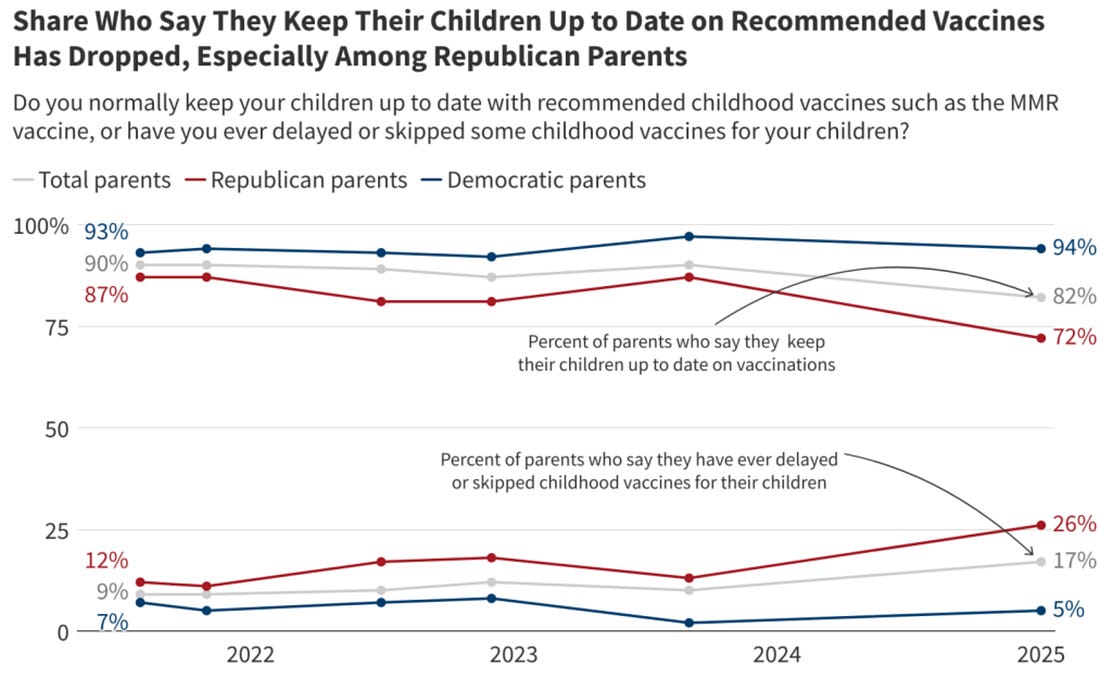
RFK. Much of this is due to the political sway MAHA has (e.g., as Politico admits MAHA won 2024, and Trump’s advisors know delivering results for the Coalition for it will be necessary to win 2026). However, despite this support, what we want RFK to do is still not viable as so many other forces are working against him. For example, recently I discussed how Republican Senator Cassidy forced RFK to agree to a variety of highly unusual (vaccine protecting) provisions and H.H.S. appointee oversight in return for his tie-breaking vote to confirm RFK. Similarly, while much of MAHA want to ban a myriad of vaccines, as this January survey shows, the majority of the public still supports the CDC schedule (which includes the COVID vaccines):
As such, it’s not presently politically viable to ban them, and due to Cassidy’s position, nearly impossible to get anyone appointed who strays from the Overton window and espouses that view. Because of this, a lot of work has been going on behind the scenes to rescind the COVID vaccines and build the momentum (through key victories that appeal to the broader MAHA coalition like securing cleaner food) so that more controversial ones can be implemented as well. In turn, the approach that’s been taken has been to create an honest conversation about vaccine data (e.g., show to the world vaccines are not “100% safe and effective”) and make gold standard science on vaccines become available (which essentially has never existed for vaccines). Unlike bans, this is politically viable (as it’s very hard for a vaccine zealot to challenge that position) and something that will sway many of those who still unquestioningly support vaccination as the evidence against them is so bad, no reasonable person would take many of them if they were allowed to see the actual data (hence why it’s never made available to the public). Furthermore,
I believe this is also the best way to approach the situation, as were
we to simply force everyone to stop using vaccines it would: In parallel, all the activists I’ve spoken to are trying to support this effort by compiling data objectively showing the harms of the vaccination so that grassroots support for re-evaluating their use can continue to grow (e.g., I just spent a month compiling over 200 years of published evidence that vaccines cause severe neurological injuries and Raphael Lancaster recently finished a paper methodologically debunking the widely cited claim the COVID vaccines saved millions of lives). Likewise, four years of work has gone into producing an excellent documentary that reveals the immense suffering many of those injured by the COVID vaccines experienced and the callous regulatory failure that facilitated all of it. Today, it was released and I strongly encourage each of you to watch it so you can understand why we’ve all been working so hard to stop these shots and to share it so that others understand too. 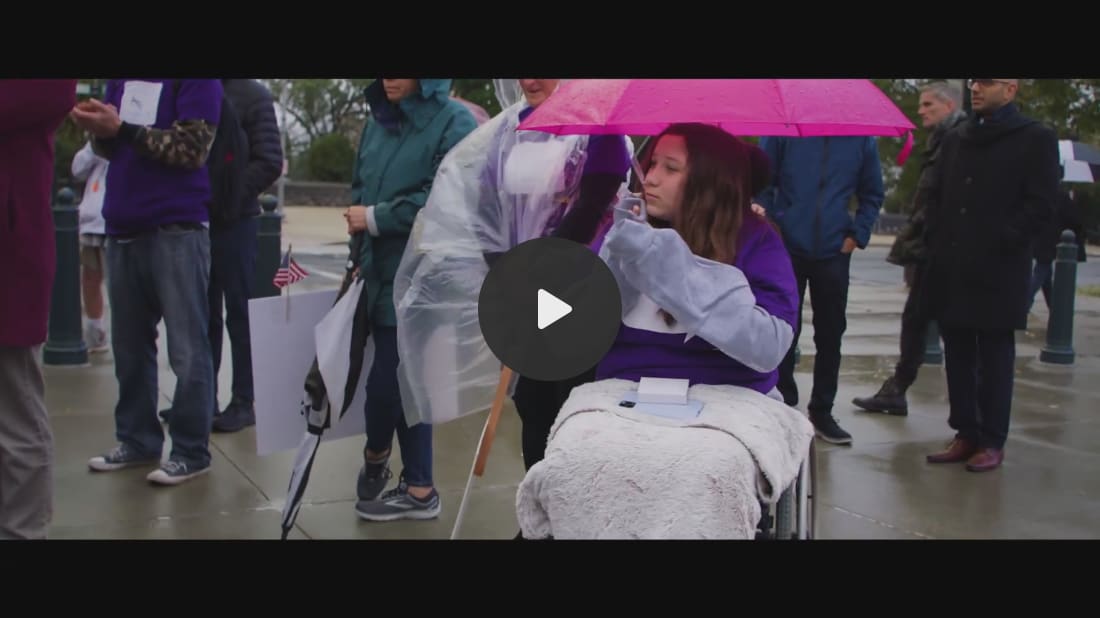 Note: for those who do not have time to watch the full movie, two months ago I previously reviewed it in this article as part of a project to help promote the movie so it could begin to gain momentum. This worked and I am deeply grateful to each of you who attended its premiere (allowing it to have a sold out showing and win an award at the film festival) as that has allowed it to make it possible to have the impact it’s having now. All of this work has been vital in expanding the Overton Window, and now is dovetailing with numerous announcements that the COVID vaccine is on its way out. For example, the FDA Chief Martin A Makary recently announced there is no data to support giving the newest booster to children so the FDA can’t continue rubber stamping it, while the WSJ just shared the CDC soon will no longer be recommending it to pregnant women and children. ConclusionWhen it began to look like RFK might become the H.H.S. Secretary, I thought through a list of every sequential policy I would try to implement if I was in his shoes. Thus far, my list is not drastically different from what his team is doing, and even more remarkably, much of it is actually being implemented (whereas previously I would have considered it to be impossible). Some of these include: •Ending bioweapons research (which I previously called for as it provides no value to society but routinely creates distastrous lab leaks). In
turn, I am very hopeful RFK will begin addressing other critical
issues, particularly finding a way to reduce drug company medical
journal sponsorship (as this results in research that threatens the
industry not being published) and ending direct to consumer
pharmaceutical advertisements (which are banned in every nation except
New Zealand and America). At the same time, many of these policies require report at a state level to be implemented (e.g., a major reason why RFK Jr. has been able to enact national regulations on processed foods is because individual states have begun banning additives and hence making it impossible for the industry to handle a patchwork of different state food safety standards). Fortunately, there are now many state level MAHA initiatives being pushed along (which can be found here), including The Make Texas Healthy Again law that we can be directly involved in passing. Because of the forces we are against, despite the unprecedented presidential support RFK has, much of what RFK’s team and MAHA is trying to do cannot occur unless there is widespread public support behind it. That, I would argue is why the attempts to stop us are increasing, the standard tactics of division are being rolled out against the MAHA coalition and why we must focus on what we share in common rather than our points of disagreement. In this moment, our focus must be on what we can each do to make things better, and I sincerely thank each of you for helping to make this brighter future possible. To learn how other readers have benefitted from this publication and the community it has created, their feedback can be viewed here. Additionally, an index of all the articles published in the Forgotten Side of Medicine can be viewed here. You're currently a free subscriber to The Forgotten Side of Medicine. For the full experience, upgrade your subscription.
|





No comments:
Post a Comment