One Label Under Blackmail: The Early Intersections of Diddy and the Epstein Network
One Label Under Blackmail: The Early Intersections of Diddy and the Epstein Network
In Part I of this series on the overlap between the worlds of Sean
“Diddy” Combs and Jeffrey Epstein, we examine Combs’ early years, his
mentors and the industry figures who ensured their, as well as Combs’
own, commercial success. Ties to organized crime and intelligence are
readily apparent and point toward a truly sinister reason behind this
network’s patronage of Combs and his close associates, like Andre
Harrell and Russell Simmons.
Beginning in late 2023, a series of startling and unsettling
allegations against Sean Combs –– a record executive and rapper known
over the years by stage names like “Puff Daddy,” “P. Diddy” and
presently “Diddy” –– have emerged. As the allegations and lawsuits
facing Combs have snowballed, so, too, has public interest in the case.
The sheer amount of accusations suggests that Combs, in addition to
being very sexually and physically violent, filmed many assault
encounters and orgies that occurred at his now notorious “Freak Off”
parties, sometimes with hidden or security cameras. He also now stands accused of “operating an empire of sexual crimes,” with federal agents having alleged
that several of Combs’ victims were of “barely legal” or “barely
illegal” age at the time of their abuse. Combs’ apparent documentation
of these events strongly suggests that he was interested in keeping
these records for more than his perverse enjoyment, as either a form of a
protection or as a means to control those who appeared in these films,
i.e. blackmail.
As a result, speculation has grown about who is allegedly on the
“list” of people filmed by Combs in this way, prompting comparisons to
the alleged “list” of sex trafficker, pedophile and intelligence asset
Jeffrey Epstein. The comparisons between Epstein and Combs have only
grown, with even the homeland security agents who raided Combs’ Miami
home suggesting that Combs was “as bad as Epstein.”
However, as has long been a theme of Unlimited Hangout’s Epstein-related reporting, including the book One Nation Under Blackmail,
the Jeffrey Epstein case has been poorly explored by the federal
government, mainstream media outlets, and even many independent media
outlets. A deeper examination of the Epstein case makes it clear that
Epstein was not the sole mastermind or sole beneficiary of the sex
trafficking and blackmail operation in which he engaged. Instead,
Epstein served as an operator for a larger, monied network of oligarchs
with extensive organized crime connections in addition to significant
affiliations with intelligence agencies. He was also more than a sex
trafficker for this group, having aided this network extensively in arms
trafficking, money laundering and other crimes (many financial) that
fall outside of the focus on his sex-related offenses.
It should come as no surprise upon closer examination of Sean Combs
that, like Epstein, he was operating on behalf of a larger network that
he did not ultimately control. Instead, it arguably controlled him. As
this three-part series from Unlimited Hangout will endeavor to
show, Combs was acting on behalf of an oligarch network that directly
overlaps with that of Epstein. However, Combs used to influence a
different industry and a different community for the benefit of these
intelligence and organized crime-connected oligarchs.
In Part I of this series, we will examine the often overlooked early
years of Combs and his entrance into the music industry. While Combs’
own rise (from birth to the founding of Bad Boy Records in 1993) is
certainly chronicled, a major focus of this piece is on the mentors and
figures who facilitated his rise into the upper echelons of hip hop
celebrity, especially Andre Harrell and Clive Davis, as well as other
figures who had a significant influence on Combs’ early career into the
music industry, like Russell Simmons. Not only did these figures bring
Combs into the music industry, they also stand accused of initiating
Combs into the types of activities he is now in prison for, awaiting
trial.
Also explored in this piece are the corporations behind the success
of Combs’ mentors and later Combs himself, namely the Music Corporation
of America (MCA) and Arista Records. When taken together with other
claims from the period, namely about efforts to manipulate hip hop for
the benefit of the private prison industry in the early to mid-1990s, it
appears that this network’s interest in Combs, as well as his mentors,
was part of something much larger that sought to target not just the hip
hop industry itself, but the African-American community at large.
Subsequent installments of this series will examine Combs’ activities
–– in music, in retail and beyond –– and how the same network detailed
in Part I also enabled those activities, which notably parallel Combs’
deeper descent into acts of sexual violence and abuse. Another
installment will examine how one close associate of Combs also connects
very directly with the sex trafficking activities of Jeffrey Epstein,
indicating that the overlap between the two cases is more significant
than previous reporting and the current cases against Combs have
suggested.
Sean Combs was born in Harlem, NY on November 4, 1969 to a
schoolteacher and ex-model named Janice Combs (née Smalls) and Melvin
Earl Combs, an Air Force serviceman and sometimes associate of American Gangster heroin kingpin Frank Lucas.
Melvin Combs helped make ends meet by running a number of legal and
less-than-legal operations; including a cab and limousine chauffeuring
company, multiple bars Combs owned, and a portion of Harlem drug
traffic.i A toddler-aged Combs tagged along with Melvin on visits to Lucas’ home, even playing with his daughter. According to an interview prior to his death, the aged gangster alleged that Combs didn’t share his toys.
A Bad Boy from Birth
“I learned early in life that there’s only two ways out of that [lifestyle]: dead or in jail,” explained
Combs in 2013, speaking of his father’s lifestyle. “It made me work
even harder… I have his hustler’s mentality.” According to
contemporaries, Melvin was an immaculate dresser. While less flashy than
Lucas, who once attracted the attention of the feds by sitting ringside
at a Muhammad Ali –Joe Frazier bout in a $100,000 fur coat, Melvin
still pulled out enough stops to be granted the street nickname “Pretty
Melvin.”
When Sean Combs was 3 years old, Melvin Combs was gunned down while
sitting in a loitering car near Central Park West. Per Susan Traugh, Melvin was shot in the head,
likely at point blank range considering he was seated in his
Mercedes-Benz—this manner of a hit is consistent with an enforcer
killing.ii According to an interview conducted by author Zack
O’Malley-Greenburg, someone in Melvin Combs’ circle believed he was
about to inform on a sensitive business deal to law enforcement and that
this is what precipitated his murder.iii From this, former
associates and law enforcement have speculated that Melvin Combs was a
federal informant. If allegations from incarcerated contemporaneous
label heads like Suge Knight and former bodyguards are to believed, Sean
Combs may have done the same, allegedly informing for the FBI over the course of his career.
A recent article
from journalist Legs McNeil lays out the Lucas-Combs criminal
enterprise in greater detail than previously reported. It also shows
that Melvin Combs, in addition to his dealings with Lucas, had an
arguably deeper affiliation with the Gambino crime family near the end
of his life. The Gambinos may have even put out his hit. McNeil writes:
Melvin Combs, a small-time hustler, was introduced to selling heroin
when Lucas fronted him several kilos from his Golden Triangle
connection. He joined the crew of Willie Abraham, the 42-year-old owner
of the Harlem Gold Lounge and a convicted heroin dealer who’d already
spent five years in jail. Unlike Lucas, Abraham was getting his heroin
from the Mafia—specifically, the Gambino crime family.
In 1971, Melvin was arrested for possession of heroin and $45,000 in
cash. When Abraham’s heroin‐cutting mill was raided later that year, and
Abraham was charged with participating in an extensive conspiracy to
distribute $5 million a year in heroin at the wholesale level in Harlem,
the Bronx, and Westchester County, Melvin was suspected by Alphonse
“Funzi” Sisca, head of the Gambinos’ New Jersey crew, of being a rat.
McNeil also noted that “The New York Times reported that the
prosecutor in the Abraham case told the judge that law enforcement
believed Melvin’s murder ‘might ultimately be traced to members of the
heroin‐distributing conspiracy.’” A newspaper clipping from the Saturday, February 24th, 1973 edition of the New York Daily News
reveals that the Gambino-backed Willie Abraham crew had plenty or
reason to suspect Combs of informing or at least blamed him for the
arrests. The article notes that their relationship to Combs appears to
have led directly to Abraham and his collaborators’ convictionson
conspiracy charges, including Gambino man Alphonso Sisca of New Jersey:
Willie Abraham […] was found guilty in Manhattan Federal Court
yesterday of being a kingpin narcotics wholesaler whose ring flooded the
metropolitan area with more than 1,000 pounds of drugs in 2 1/2 years.
A task force of federal, state and local cops smashed the ring in a
series of raids in December 1971 as the result of information obtained
through the court approved wiretaps on another big time narcotics
dealer’s phone. The dealer, Melvin Combs, 31, of 1853 Central Ave.,
Yonkers, was found shot to death in January 1972 on Manhattan’s West
Side.
This evidence of a reported “wiretap” supports the claim that Abraham
and his Gambino Family backers had Combs murdered because they blamed
him for the arrests, regardless of whether Combs had actually been an
informant. Throughout this article, connections to the Gambino crime
family, as well as the Genovese crime family, are a recurring theme.
NY Daily News
article “Find an Average Joe Guilty As Dope King” That Details the
Supposed “Wiretap” on Combs’ Phone that Led to the Abraham-Gambino Drug
Bust – Source
In the earliest years of his life, Sean Combs lived in Esplanade Gardens.
His mother Janice recognized the performative, attention-hungry
character her son possessed early on. This led to Combs’ first
advertising gig at the age of 2, when he starred in a Baskin-Robbins TV
commercial. Later, Combs modeled alongside The Wiz actress Stephanie Mills in Essence magazine.
Following in his mother’s footsteps, these early modeling jobs presaged
Combs’ lifelong relationship with the modeling industry, which in
comparable fashion to Jeffrey Epstein, would eventually become the
hunting grounds which Combs would scour for victims for his orgiastic
sexual blackmail parties and pathological predation.iv
During his middle school years, Combs’ mother Janice relocated the
family to Westchester, a middle-class suburb of Mount Vernon. Combs
enrolled in the prestigious Mount Saint Michael Academy (MSMA), a
Catholic school located in the Bronx, where his popularity eventually
soared due to his exploits on the varsity football team, which won a
division title during his time there. Combs’ hopes of receiving a
scholarship to play D1 in college came crashing down when he broke his
leg during his senior year. Yet, it was already too late for his
confidence. He was reportedly given the nickname “Puffy” due to the way
he strutted around with his chest puffed out.v
Throughout his middle and high school years, Combs also exhibited an
entrepreneurial streak, reportedly selling T-shirts and ties at Macy’s
while working multiple newspaper routes simultaneously. This early
relationship with Macy’s prefigures both his later merchandising deals with the department store, which saw his fragrance line Sean John stock the shelves nationwide, and the recent lawsuit
filed by a John Doe from Ohio who alleges that Combs “orally raped” him
in the stockroom of the flagship Macy’s in New York in 2008. His
accuser alleges that Macy’s even endeavored to cover up the crime in
order to preserve their lucrative business relationship. While
speculative, there is a possibility that this may have even been the
same Macy’s that had employed Combs as a minor.
A yearbook photo of Combs (left) with friends at MSMA – Source
Notably, while Combs attended the all-boys Mount Saint Michael’s
Academy, a major sex abuse case involving minor victims that led to the
indictments of two faculty members was brewing at the institution.
Marist Brother Timothy Brady –– the principal of MSMA for the entirety
of Combs’ high school career — was arrested, charged, and sentenced to prison
in 1988 for the abuse of three minor boys at the Catholic Academy in
the Bronx over the course of 1987, Combs’ senior year. Following the
‘86/’87 academic year, Br. Brady was quietly removed from his position
and shipped off to a Marist retreat in Arizona. Despite his crimes,
Brady was reinstated as a hockey moderator at a separate Marist Brothers
institution in the 1990s, once again providing him access to minors,
and was listed on the Marist Brothers website until 2010. For some
inexplicable reason, the court records pertaining to Brady’s conviction and incarceration remain sealed.
Accusations of sexual impropriety appear to have been a constant in
MSMA’s history. In 2011, a former assistant principal received a
sweetheart no-jail sentence after pleading guilty to possession of child porn
on an electronic device at the school. From 2009 to 2012, a lawsuit
filed by Brian Elliott sought monetary damages for the routine abuse and
rape he alleges he suffered at the hands of an MSMA employee named Br.
Galligan between the ages of 8 and 13 over the years of 1977 through
1983. The case wound its way through various Delaware, New York, and appellate courts.
If factual, Elliott’s victimization by Galligan would have ended around
the time of Combs’ freshman year in high school, meaning Elliott and
Combs were close in age.
More recently, multiple cases seeking redress of child sexual abuse
suffered at the hands of the MSMA faculty have been filed pursuant to
New York’s Child Victims Act and the “look-back window” that has enabled
past victims previously barred from filing complaints by the statute of
limitations to now pursue them. These include a torts CVA complaint
filed on behalf of a John Doe suing the Academy & the Marist
Brothers of the Schools for having enabled his abuse at the hands of
Principal Brady, who allegedly fondled the plaintiff in the nurse’s
office in 1985 when Doe was 16. It appears this unnamed potential victim
would have been in the same class as Combs. Quoting from the complaint,
“Upon information and belief, at all relevant times, Defendants knew
that priests and brothers of the Catholic Church and within the Marist
Brothers, under their supervision and control, were grooming and
sexually molesting children with whom the priests and brothers would
have contact in their ministry and pastoral functions.”
Another lawsuit accusing the Marist Brothers of protecting a pedophile faculty member named Brother Lee advanced
in the Supreme Court of Bronx County in 2023, surviving multiple
motions for dismissal & summary judgment, seemingly indicating that
multiple members of the school’s faculty –– including its principal ––
were perpetrating sex crimes against minors during Combs’ high school
career. And once again, the complainant alleges that he was abused by
Brother Lee between the years of 1984 and 1985, when he was 15-16 years
of age, conclusively indicating that he also would have been in Combs’
class of 1987. Taking all of this information into account, it appears
that sexual abuse was endemic and widespread at MSMA during Combs’ time
there. While impossible to confirm, there is a possibility that Combs
was groomed or among the victims or else somehow connected to these
aforementioned cases. Certainly, those type of experiences early in life
are statistically associated with a person offending in similar ways
later in life.
Principal Brady’s Yearbook Photo – Mount Saint Michael’s Academy, 1987 – Source
Also, as an aside, the FBI and DA’s office appear to have used the fraught climate at MSMA to initiate a COINTELPRO-inspired smear and lawfare campaign against Fr. Bernard Lynch, the first gay married priest and Fordham-trained Irish psychotherapist, who inspired a “witch-hunt”
organized by the Vatican, archdiocese, and the FBI in retaliation to
his outspoken advocacy for gay rights. More specifically, Lynch had founded Dignity NY, the first gay ministry in New York City in 1982, bringing him to the attention of Mayor Ed Koch, who drafted him onto his AIDS Task Force.vi
While attending Mount St. Michael’s, a teenage Combs began
frequenting several New York nightclubs, which reportedly led to his
first encounter with the music industry and famous musicians like
Michael Jackson. As detailed in an interview,
given in 1994 shortly after launching Bad Boy Records, Combs seemingly
claimed he was cast as a background dancer in one of Jackson’s videos as
a teen:
“Around the age of 16 or 17, I started dancing, going to the various
clubs, and that was during the time when somebody—(if) a big artist like
Diana Ross, Fine Young Cannibals, or even Michael Jackson had a
video—the directors would come into the clubs and see all the kids that
were dancing and pick various dancers to be in the videos. So I got
picked to be in some of those videos, and, um, as I was dancing in
videos and stuff like that, I would see the behind the scenes. I was
about to go to college at Howard University and I didn’t know what I
wanted to do. So I saw the people behind the scenes, and I was like,
‘that’s maybe something I wanted to do’, so I started like asking
questions and getting information on the music industry…”
Following his graduation from Mount St. Michael Academy, Combs
enrolled at the prestigious Howard University in Washington, DC to study
business in 1987. He promptly set about further inflating his street
cred as he expanded his horizons into a new popularity-maximizing
enterprise –– party planning and promotion.
His parties were described by classmates as offering a
“once-in-a-lifetime type of vibe” and Combs spared no expense in
spreading the word, driving around campus in his convertible to pass out
fliers for events. Author Susan Traugh wrote that some of Combs’
collegiate parties attracted thousands of guests.
Combs
poses at Howard University in 2023 after making a $1 million donation
the school, announced during the university’s homecoming – Source
Comb’s entrance onto the hip hop scene began during his freshman year
when Combs scored a side-gig as rapper-beatboxer Doug E. Fresh’s valet,
where he “shuttl[ed] Fresh’s clothes to and from the dry cleaner in his
Volkswagen Rabbit convertible.”vii All the while, Combs
organized parties in and around the Beltway as well as back home in New
York City on the weekends. He was also a background dancer in one of
Fresh’s music videos around this time.
While at Howard, the darker, predatory side of Combs’ reputation also
began to take shape, with accusations of belligerence, sexual
harassment, and domestic violence following in his wake. Contemporaneous
accounts provided by sources to Rolling Stone
tell of Combs beating a girlfriend with his belt in full view of the
public on the Howard quad. Another time, he tapped on the glass window
of an English class in session to try and coax a woman into skipping. On
another occasion, he non-consensually caressed a woman’s back and asked
her if he could introduce her to “one of his friends.”
By age 20, Combs had begun focusing more of his attention on his
nascent internship and career at Uptown Records, a job he had first
secured in 1990 via his Mount Vernon neighbor, the rapper Heavy D.
Combs’ initiative soon saw him become former Def Jam recordman Andre
Harrell’s intern. He commuted from Howard to NYC via Amtrak in the
mornings, stowing away in the bathroom to avoid paying fare. He also
shadowed party promoter Jessica Rosenblum during the planning stages for
Heavy D’s platinum-album celebration. Rosenblum “obliged his requests
to take him to all the ‘freaky’ nightspots on the Lower East Side.”viii
Rosenblum takes credit for having introduced Combs to some of the
biggest names among NY scenesters and club kids — as well as updating
his eyewear fashion. Rosenblum graduated from her hip hop party promoter
career to become
a NYC interior designer wedded to Steve Young, head of global
litigation for one of the Big 4 Accounting firms, Ernst & Young.
In the late 1980s, while still a student at Howard, Combs learned
that Uptown Records’ A&R (artists and repertoire) executive had
vacated the company. Combs took his boss Andre Harrell out to lunch to
press for the job and, after a successful schmooze, soon transformed
himself into one of the youngest talent scouts in the industry.ix Combs later told Rolling Stone
that, after joining Uptown, “Andre became like my big brother. He
bought a mansion, gave me a room [. . .] Not a mansion, a big house. It
was a mansion to me, though, and he had gave [sic] me a room in the
house.”
Uptown’s Secret to Success: Andre Harrell & MCA
Prior to his mentorship of Sean Combs, Uptown’s Andre Harrell first broke into the nascent hip hop industry
by way of his rap duo Dr. Jekyll & Mr. Hyde, which he and a friend
had formed in high school. Harrell withdrew from Lehman College in 1983
to focus on his career as an account executive selling airtime for New York all-news AM station WINS.
WINS was previously owned by radio pioneer J. Elroy McCaw, an ex-OSS
agent and member of the Advisory Council to the US National Security
Council.x McCaw hired trailblazing disc jockey Allan Freed to
man the mic at the station, a deal that was brokered by record
executive Morris Levy.xi
Per Potash, a US Assistant Attorney later claimed that Levy’s jazz
label Roulette Records, boosted by his relationship with WINS’ Freed ––
the most popular DJ in the country in the 1950s and 1960s –– was a “way
station for heroin trafficking.” Levy and Roulette were also linked to organized crime, specifically the Genovese crime family. Levy was notably the main financier behind
the first hip hop record label, Sugar Hill. The zenith of Freed’s
celebrity was exemplified by Paramount Pictures hiring him at a rate of
$29,000 per day to make a teen movie in 1957. Shortly thereafter, Freed
was targeted by a smear campaign, resulting in him being unceremoniously
and inexplicably fired by McCaw in 1958. Freed was singled out by Orrin
Hatch’s Congressional committee during the first “payola” scandal
involving the bribing of radio stations in return for singles plays. As a
result, Freed became the face of the scandal, his career in shambles.
As Potash writes regarding Freed’s downfall, “Morris Levy, the source of
much of the payola bribe money, was never called to testify.”xii
Months after joining WINS, Harrell’s job prospects experienced a
dramatic upswing when he met Russell Simmons, co-founder of the Def Jam
record label, who would later become very close to Sean Combs. Simmons
soon offered Harrell a job with Def Jam. Within two short years (a rapid
ascent mirroring Combs’ own), Harrell worked his way up to VP and
general manager of the label. Def Jam’s early success was due in part to
its 1984 distribution deal
with CBS and its subsidiary Columbia Records. At the time, the label
was run by Walter Yetnikoff, a close associate and friend of Clive Davis
–– the man who would later become Sean Combs’ second mentor after
Harrell that is a later focus of this piece. Appointed by Paley,
Yetnikoff is heavily implicated in the Payola scandals of the 1980s that
involved the “independent promotion” syndicate known as The Network,
for which CBS Records was one of the biggest clients.xiii
Yetnikoff went to some ends to protect the established payola system,
firing his deputy president Dick Asher in 1983 and, per UPI, even quashing an investigation by the Recording Industry Association of America.
By 1986, CBS Records had come under the control of Laurence Tisch, the
billionaire head of Loews Corporation and a founding member of the
Leslie Wexner and Charles Bronfman-brokered “Mega Group.”
Harrell’s success in management, contrary to music-making, seemed to
have clarified things for Harrell, as his short-lived stint as a Profile
Records artist came to a close when his high school rap duo with Alonzo
Brown split up in 1986. That same year, Harrell struck out on his own
to create Uptown.
From left to right: Lyor Cohen, Andre Harrell, Percy Sutton and Jam Master Jay at the Apollo Theater, 1986 – Source
However, before leaving Def Jam, Harrell was responsible
for Def Jam’s hiring of Israeli-American Lyor “Little Lansky” Cohen,
who would later force out Def Jam co-founder Rick Rubin in order to
co-run the label with Simmons. Years later, upon leaving Def Jam, Cohen
would team up with the family who had taken control of Def Jam in the
1990s, the Bronfmans, to become the top executive at Warner Music, an
event that will be revisited in Part II of this series.
Not unlike Def Jam, Uptown’s early success (and the furtherance of Harrell’s career in the industry) was due to its distribution deal
with a major entertainment conglomerate. In Uptown’s case, the company
in question was the Music Corporation of American (MCA), an
entertainment giant that dominated the American music and movie industry
for many decades. Uptown’s early distribution deal with MCA began in
1987 and soon expanded into a formal partnership with the company a year later in 1988. Their ties grew even deeper in 1992, when MCA offered Uptown a $50 million deal whereby Uptown expanded into film and television.
In a Vanity Fair obituary for Andre Harrell,
screenwriter and journalist Barry Michael Cooper describes an anecdote
involving Harrell and a bust-up at the MCA Records Conference in Midtown
Manhattan that demonstrates how Harrell employed street enforcers and
drug dealers at Uptown, and that they even procured him a gun for
protection:
There was a rumor going around the streets of New York that Teddy’s
manager, former drug dealer and karate enthusiast Gene Griffin, had
smacked Andre in the conference of MCA Records in Midtown Manhattan.
Journalist and author Nelson George, gave me Andre’s
telephone number, so I could confirm the story. I called Andre and
identified myself, and asked him about the confrontation with Griffin. I
also asked him about the story of two of his Uptown Record
executives—Jimmy “Luv” Jenkins and George Harrell (no relation), two of
the most respected street dudes from the Highbridge neighborhood of the
Bronx, and 116th Street in Harlem, respectively—giving him a .45
automatic to keep for protection. Andre tried to place the gun in the
back of his waistband. However, the .45 slipped through and down his
pants, and landed on the floor of the elevator. Andre, Jimmy, and George
jumped back, but the gun didn’t discharge. Andre didn’t respond for
almost a minute, and then said to me, “Who are you supposed to be? Ed
Bradley? Things happen.” We cracked up laughing, and became fast friends
after that.
In addition to MCA being critical to Harrell’s career and MCA’s
success, Uptown’s relationship with MCA also appears to align with one
of Combs’ earliest known sex crimes. For instance, one of the earliest
allegations against Combs asserts that Combs sexually assaulted a victim
after an MCA event in New York in 1990 or 1991, a time when Combs was still an Uptown employee.
As Strictly Business scriptwriter Nelson George intimated in
a Substack post eulogizing his friend Andre Harrell, Harrell was a
known “party animal” who frequently threw house parties in the “work
space/social club/temporary housing” that served as the nascent Uptown
Records’ offices. In fact, one of these parties in 1990 served as the
source of inspiration for Strictly Business, the film that
George co-wrote with Pam Gibson and which Andre Harrell executive
produced for Island World Pictures (a company then affiliated with
Polygram, which took a significant stake
in Def Jam in 1992). It was Harrell’s role in the film that reportedly
led MCA to enter into its $50 million multimedia deal with Uptown in
1992 that saw Harrell’s company expand into film. Strictly Business concerns
a young mail room clerk setting up a black middle manager at a real
estate firm with a club chick played by the emerging starlet Halle
Berry. Bobby the mail clerk is a party boy with aspirations of
graduating from the trainee broker program, and so he agrees to help
Waymon navigate seducing the attractive woman in return for his
higher-up’s sponsorship of his candidacy. While the plot may seem like
normal rom-com fare and relatively benign, when viewed within the
context of the kinds of sexual quid pro quos that occur within the music
industry and Harrell’s close ties to figures like Combs, Simmons, and
their broader social networks, it starts to take on a distinctly
different slant. Speaking of sexual quid pro quos in the music industry
and questionable label romances, Andre Harrell left an indelible
influence on Combs’ love life. He hired Uptown R&B singer Al B. Sure’s model girlfriend Kim Porter
to work as a receptionist at the label. Combs’ was immediately smitten
with her, loving what he couldn’t have. They would go on to have an
on-and-off again relationship spanning the years from 1994 to 2018, the
time of her mysterious death after contracting a virulent case of lobar
pneumonia. We will return to Porter and Combs’ ties to the modeling
industry in Part III of this series.
Andre Harrell (right) parties in St. Barthes with the mother of Diddy’s children, model Kim Porter (second from left) – Source
Andre Harrell was also a consultant for the film New Jack City. New Jack City’s screenwriter
Barry Michael Cooper recalls how he and producer George Jackson called
his close friend Andre Harrell into Robert De Niro’s Tribeca Productions
compound to watch the dailies from New Jack City a week before production wrapped. Cooper and Jackson wanted to gauge Andre Harrell’s reaction to New Jack City’s narrative and the depictions of street life as it related to the crack epidemic. Per Cooper’s retelling, apparently Harrell raved and affectionately called the film “The Black Godfather.”
New Jack City’s narrative revolves around a Harlem gang
called the Cash Money Brothers who ascend to the top of the drug-dealing
food chain in the borough once crack cocaine is introduced to the
streets. The film featured gangster rap mainstay Ice-T in a prominent
role and christened the careers of Wesley Snipes and Chris Rock, seeing a
healthy return of nearly $50 million on a budget of $8 million.
The controversial film was developed by Warner Brothers, which was
then run by Steve Ross. Ross was able to build up his business empire,
Kinney National Company (which later became Warner), largely through his association with New York crime lords Manny Kimmel and Abner “Longy” Zwillman.
Zwillman was a close associate of Meyer Lansky and Sam Bronfman. Ross,
as a Warner executive, later frequented Robert Maxwell’s yacht in the
late 1980s, a time when Maxwell was deeply associated with a litany of
organized crime figures across the globe. In addition, top Warner
executives close to Ross personally were convicted for their roles in a mob-tied racketeering scheme that was also allegedly involved Ross, though he somehow evaded charges.
Considering his informal consultation on the film and the fact that
Harrell had underwritten “new jack swing” — Uptown’s claim to fame and
the genre from which the film took its name, which fused streetwise hip
hop beats and melodic R&B for the first time — Harrell’s influence
over the New Jack City production is clear. This is an
important point, as it relates to mob-linked entertainment companies (in
this case Warner Brothers) financing the glorification of drug dealing
around 1991, a topic that we will return to in much greater detail near
the end of this piece.
MCA: Mob Corporation of America
While MCA undoubtedly dominated much of American entertainment for
decades, it was also deeply connected to organized crime and political
power. In terms of MCA’s political power, this arguably peaked under the
Reagan administration, which boasted extremely close ties to the
company. MCA even played a role in covert operations that brought
together organized crime interests and intelligence agencies during this
period.
The most iconic executive in MCA’s history, Lew Wasserman, joined the company in 1936. By that point, Wasserman had established
longstanding, close ties to Jewish mobster and Meyer Lansky-associate
Moe Dalitz, having allegedly initiated those ties by having first served
as the publicist for the Dalitz-controlled Mayfair Casino. However,
some sources contend that Wasserman had joined Dalitz’s Mayfield Road
Gang before working at the Mayfair. Wasserman later married the daughter
of Dalitz’s long-time lawyer Henry Beckerman, who he had first met
through his work at the casino.
Wasserman and MCA were also the forces chiefly responsible for the
political career of former president Ronald Reagan. Reagan, previously
an actor before becoming a politician, had been represented by MCA since
1940. Soon after, he became Wasserman’s first “million dollar client.”
Wasserman later engineered Reagan’s campaign to lead the Screen Actors
Guild, where Reagan made significant policy changes designed to give MCA
an edge over other entertainment companies. Wasserman and other top MCA
executives, such as Taft Schreiber and Jules Stein, played an intimate
role in Reagan’s successful gubernatorial bid, as well as financing his
later campaign for president of the United States. When Reagan was
president, his Attorney General Edwin Meese notably quashed what had
been an ongoing investigation into MCA’s organized crime ties. Meese
later resigned following his involvement in the Bronx-based Wedtech
scandal (see end note vi).
MCA’s Lew Wasserman (left) speaks with Nancy and Ronald Reagan at the White House in April 1988 – Source
That probe was initiated when evidence was found that MCA was engaged
in business relations with the Gambino crime family. More specifically,
MCA had hired
a high-ranking Gambino associate, Salvatore Pisello, as an official
representative of the company, even though Pisello had no experience in
the music or movie business. At the time Pisello was doing business with MCA, he was also simultaneously a partner of
Morris Levy, the Genovese family-linked record executive behind
Roulette Records who financed the early hip hop label Sugar Hill. Levy’s
connection to Andre Harrell’s early employer WINS was noted earlier in
this article.
MCA kept Pisello around even though they lost money
on every deal where Pisello had represented them and continued to work
with him after his mob ties became publicly known. This was done at the
behest of Wasserman, then chairman of the board of MCA, and Sidney
Sheinberg, then president of MCA Inc., despite protests from
other board members. One of the main MCA executives that had been
closely involved with the company’s Pisello dealings, Irving Azoff, was
subsequently promoted to become head of MCA’s Music Entertainment
Division, the division that –– shortly thereafter –– entered into a
distribution agreement with Andre Harrell’s Uptown Records. Azoff has long publicly praised Harrell and later eulogized him at his 2020 funeral. Irving Azoff was also Combs’ neighbor
in the exclusive Beverly Hills enclave known as “Billionaires’ Row” up
until Combs put the $60 million estate on the market in September 2024,
not long after DHS raided the property.
The shuttered federal investigation into MCA also turned up evidence
that the company was tied to the Genovese crime family. As noted
earlier, the Genovese crime family had also been linked to Morris Levy (Levy was also involved with some of Pisello’s dealings with MCA). In addition, during this same period, the mob-style murder
of retail billionaire Leslie Wexner’s then-tax attorney, Arthur
Shapiro, led Columbus police investigators to link both Shapiro’s death
and Wexner himself to Genovese criminal interests. Shortly after
Shapiro’s death, Jeffrey Epstein entered into Wexner’s inner circle, “tasked with getting [Wexner’s] finances in order.”
MCA also has connections to a significant, yet largely forgotten
scandal of the 1980s involving many of the same players from the
Iran-Contra network, as well as figures like Robert Maxwell. The
scandal, known as the PROMIS software scandal,
saw operatives tied to US and Israeli intelligence team up with
organized crime elements to both steal and then repurpose PROMIS –– a
then-revolutionary software product for data management –– as a back-door surveillance system
that was marketed to other intelligence agencies, sensitive government
research laboratories, and a litany of banks around the globe. One of
MCA’s top executives, Eugene Gianquinto, who then led MCA’s Home
Entertainment Division, was intimately involved in major aspects of the
scandal and its illegal activities. Gianquinto later took credit for the
closure of the Department of Justice’s investigation into MCA’s mob
ties.
More specifically, MCA and Gianquinto were connected
to the elements of the PROMIS scandal based within the mob-linked joint
venture between the Cabazon Indian Reservation and the Wackenhut
Corporation to develop weapon systems –– some of which were intended for
the CIA-backed Nicaraguan Contras. Journalist Danny Casolaro, who died
in connection with his efforts to expose the network ultimately behind
the PROMIS scandal, had stated before his death that he was writing
about a network he called “the Octopus,” which –– oddly enough –– was a longstanding nickname for MCA.
Between 1994 and 1995, MCA was acquired by the Bronfman family company, Seagrams. A few years later, the Bronfmans also took control of Def Jam. The Bronfmans, like MCA itself, have an extensive history of organized crime connections,
which date back to the mob-brokered bootlegging of American Prohibition
in the 1920s. Wasserman, a long-time associate of Edgar Bronfman Sr.,
got a Seagrams board seat out of the deal and became chairman emeritus
of the company. Edgar Bronfman Jr. quickly brought on Hollywood powerbroker Michael Ovitz,
who later became president of Disney and a Jeffrey Epstein associate.
Bronfman Jr. is also listed in Epstein’s black book and his father’s
alleged ties to Epstein’s Bear Stearns career likely played
a role in Epstein’s ouster from the bank in 1981. Ovitz, at the time he
teamed up with Bronfman Jr., was close to Herbert Allen of Allen &
Co, a company with ties to organized crime
as well as the aforementioned PROMIS scandal. The Bronfmans,
particularly Edgar Bronfman Jr., will feature prominently in Part II of
this series, with Bronfman negotiating major deals with Combs in the
early 2000s.
In 1991, Edgar Jr.’s uncle, Charles Bronfman, teamed up with Leslie Wexner (then already very intimately tied to Epstein) in 1991 to create the “Study Group” or “Mega Group,” an
ostensibly philanthropic organization that was chiefly focused on
ethno-philanthropy and philanthropy directed at promoting Zionism and
financing aspects of the state of Israel. Yet, this particular group
brought together some of the most prominent corporate billionaires in
the United States, the majority of whom share ties to organized crime.
Wexner, as previously mentioned was tied to Genovese crime interests by
Columbus police, while the Bronfmans’ own history with organized crime,
specifically the Lansky-co-founded National Crime Syndicate, have been extensively documented. Other early members include other organized crime-linked families like the Crowns of Chicago (via Lester Crown) and Laurence Tisch, owner of CBS including its many influential record labels.
The Tisch family, mentioned throughout this article, has ties to
organized crime as well. For instance, Laurence Tisch engaged in a suspicious sale of his shares in the struggling Franklin National Bank to Michele Sindona, the Italian mafia-linked businessman who played a major role in Operation Gladio,
which brought together the CIA, Italian Mafia and the Vatican. Sindona
was also a member of the infamous Italian freemasonic lodge P2.
In addition, the Tisch family company, Loews, did extensive business
with Resorts International. For instance, Loews was the long-time
operator of Resorts International-owned hotel Paradise Island Hotel and Villas in the Bahamas. Senate testimony later linked
Paradise Island specifically to Meyer Lansky. Resorts International
itself deserves an important mention as well, given that it started as
Mary Carter Paint Company, a CIA front company
founded by the Dulles brothers with extensive ties to Meyer Lansky and
his associates, that focused on developing businesses in the Bahamas.
After the death of the company’s long-time, mob-linked head James Crosby
in 1986, Donald Trump took over the company, only to lose control of it
two years later.
Another member of this exclusive club, the “Mega Group,” was director Steven Spielberg.
A protégé of Lew Wasserman and Sidney Sheinberg, Spielberg would later
play an unusual role in king-making the future film career of director
Brett Ratner, an associate of Russell Simmons, Andre Harrell, and Sean
Combs who boasts of his childhood ties to Meyer Lansky and to the
alleged heir to Lansky’s criminal enterprises, Al Malnik. Ratner’s
significance is a focus of a later section of this piece.
A History of Violence
After becoming the A&R man at Harrell’s Uptown, Combs dropped out of Howard to pursue his dream. He then truly made a name for himself with his handling of the nascent careers of newcomers Mary J. Blige and Jodeci.
His reworking of their sounds and re-styling of their images led to
both debut records going multi-platinum. Combs’ success at Uptown,
however, was marred by his role in planning events and parties that
turned violent. In addition, more recent accusations of sexual violence,
the filming of rapes and other crimes are alleged to have taken place
during Combs’ later years at Uptown, making violence a noticeable and
early theme in Combs’ early music industry career.
In December 1991, the tragedy of the Community College of New York
celebrity basketball game stampede, which Combs had helped plan, forced
him and his mother to lay low, leading to them hiding out in a Manhattan
hotel to avoid scrutiny amid rumors of possible criminal charges for
Combs. The stampede ultimately left 9 dead. Combs had promoted
this game as a charity event intended to raise funds for AIDS relief
over the radio and through informal channels. The massive crowd, which
had gathered to watch Heavy D (one of Uptown’s main artists) and LL Cool
J (one of Def Jam’s first big acts) shoot hoops, ended up breaking into
a fatal stampede.
A 1992 New York Daily News article on the fall-out after the deadly stampede, with a focus on Sean Combs specifically – Source
A report commissioned by
the New York Mayor’s office condemned “almost all of the individuals
involved in the event[, who] demonstrated a lack of responsibility” as
well as NYPD officers in the scene, who were accused of “serious lapses
in judgment.” The report blamed Combs in particular “for allowing two
inexperienced subordinates to handle a potentially perilous event and
for deceiving ticket buyers about [the event’s] charitable intent.”
“City College is something I deal with every day of my life,” Combs
later said
in 1998. “But the things that I deal with can in no way measure up to
the pain that the families deal with. I just pray for the families and
pray for the children who lost their lives every day.”
During this period, when Combs was still at Uptown, his penchant for
throwing wild, and allegedly violent, parties continued. However, it
soon merged with new scenes, particularly those of the music industry
and the New York club scene. In his memoir Notorious C.O.P., the former head of the NYPD Rap Intelligence Unit Derrick Parker (a COINTELPRO legacy program that grew directly out of interagency cooperation & the BOSS unitxiv) writes of his first introduction to Combs:
“Even before the CCNY disaster, well before he was a tabloid fixture,
I became aware of Puffy [i.e. Sean Combs]. He was hard to miss as he
gallivanted around early ’90s hip-hop clubs and up the ladder of the
music industry, right from the bottom rung. At the time, Puffy was
little known outside music biz circles: he wasn’t even a performer yet,
but a rising A&R executive at Uptown Records who threw crazy,
notoriously raucous parties at a midtown club called Red Zone. I knew
about Puffy even then because I’d always kept one foot in the music
world. I’d been promoting parties and hitting the clubs, as well as
performing and recording demos as an R&B singer.”xv
Red Zone was a short-lived Midtown club ensconced in a former ABC filming studio at 440 West 54th Street. “Club Kids” like Michael Alig, RuPaul, and others in the late 1980s and early 1990s were known to frequent the establishment.
Studio
54 co-owner Steve Rubell, right, and his attorney Roy Cohn, left, talk
to reporters outside US District Court in Manhattan, Friday, Nov. 2,
1979, after Rubell and his partner, Ian Schrager, pleaded guilty to tax
evasion charges – Source
Brahms and Addison were ultimately pressured into pleading guilty.
Brahms was sentenced to 3 years in prison in NYC. Maurice Brahms’ final
club was the aforementioned Red Zone, where Combs hosted his Uptown
Record-era mixers. Given Combs’ association with these elements of the
New York nightclub scene, the more recent revelation of Combs’ later
bisexual “Freak Off” orgies becomes far less shocking.
While throwing “scary” parties at venues with suspect owners, Combs
is now alleged to have begun engaging in acts of sexual violence while
at Uptown. Recent lawsuits additionally assert that other figures (and
companies) tied to Uptown were directly related to those crimes.
On November 23, 2023, just before the expiration of the NY State
Adult Survivor’s Act (which created a window free of the statute of
limitations during so that adult victims could pursue justice against
their abusers), attorneys representing Liza Gardner filed a lawsuit
alleging that, in 1990/1991, Combs and singer Aaron Hall took turns
raping her and a friend after an MCA Records event in their corporate
offices. The victim was allegedly only 16 years old at the time, while
Combs was still working as a talent director at Uptown. Aaron Hall, like
Combs, had significant ties to the Bronx, having grown up there, and
was a member of the Uptown Records-signed band Guy with Teddy Riley,
thus considered one of the architects of “new jack swing.” Further
illustrating the ties between New Jack City and Uptown Records, Guy had a cameo as themselves in the film.
Per the lawsuit, the alleged assault began one night when Combs and
Hall were flirtatious and handsy with the reported victims at an MCA
Records event. After the fete, the pair invited the two girls back to
Hall’s apartment, where the men plied them with drinks and drugs before
taking turns having sex with both friends. The lawsuit also alleges that
Combs visited the home in which she and her friend were staying a few
days after the incident. The visit allegedly turned violent, with Combs choking out Jane Doe,
physically threatening her so as to impress upon her what might happen
if she or her friend chose not to stay silent regarding their
experience. It’s been speculated following the announcement of Gardner’s
complaint that the lyrics to Aaron Hall’s song “Don’t Be Afraid”, released by MCA as one of the singles for the official soundtrack of Juice, may obliquely refer to the rape of Gardner. It was recently reported in the press that Aaron Hall is suddenly missing.
According to Gardner and her attorney Tyrone Blackburn, they have
exhausted all options as far as reaching Hall at his past known
addresses, and will now have to resort to serving him summons via
publication in newspapers of note.
New evidence further suggests a culture of crime at Uptown and the
label’s apparent enabling of Gardner’s mistreatment. Gardner recently
amended her complaint after a sworn statement by the other woman who was
reportedly raped at Hall’s New Jersey apartment (also a minor at the
time) was entered. The unnamed woman claimed that DeVanté Swing, a
member of the Uptown act Jodeci (whose career Combs was then managing)
not only voyeuristically looked on as Gardner was raped by Combs, but
that the two girls had been lured from North Carolina and were staying
with Swing at his residence in NJ, which was allegedly “subsidized” by
Uptown Records at the time. Swing was subsequently added to the lawsuit
as a co-defendant. Furthermore, Swing’s alleged voyeurism of Gardner’s
rape at the hands of Combs is in keeping with an abiding pattern of
Combs’ sexual violence. Namely that, time and again, affiliates either
watch his crimes, participate in them directly, or else view video
footage of them after the fact.
In Gardner’s filing, both MCA Records and Geffen Records are also named as co-defendants.
David Geffen’s label had just been sold to MCA the same year that the
assaults allegedly took place. Both Geffen and the now defunct MCA are
owned by Universal Music Group (UMG) today, the major label crafted by
the Bronfman family that is now overseen by Lucian Grainge, a former MCA
and CBS Records executive. Both Lucian Grainge and UMG were initially named as co-defendants in Rodney Jones’ lawsuit against Sean Combs for enabling his sex trafficking activities.
Also in November 2023, Joi Dickerson-Neal filed the second of three sexual assault lawsuits that targeted Combs in the span of that week.
Dickerson-Neal had graced a music video opposite Combs in 1990.
Dickerson-Neal has stated that her proximity to Combs in the video
spurred a warning from Sister Soulja, who had told the young woman to
keep her distance from Combs. Dickerson-Neal claims that she surrendered
to Combs’ constant advances in 1991, reluctantly agreeing to a dinner date.
She insisted, however, that they meet at Wells Restaurant in Harlem,
her place of employment at the time, due to concerns about Combs, hoping
that the presence of coworkers would help her feel more secure.
In the filing,
Dickerson-Neal contends that Combs spiked her beverage while she’d
excused herself to the restroom. When they left the premises, she claims
he forced her to take a hit from a blunt, and that the combined impacts
of the drugging left her legs feeling “rubbery.” She alleges that Combs
then drove her to a nearby “studio”
(most likely affiliated with either Uptown/MCA) and then raped her at a
residence in the neighborhood seemingly owned by an acquaintance of
both individuals, during which he filmed her violation. Following these
traumatic events, Jodeci singer DeVanté Swing allegedly revealed to the
victim that Combs had filmed her rape
and was playing the footage for everyone at the “studio” like some kind
of perverse trophy. If true, this would mean that myriad Uptown
employees saw this video. This is one of the earliest allegations that
involves Combs and the non-consensual films of sexual assault and rape
crimes. It also alludes to the possible collection of sexual blackmail
compiled by Combs –– a pattern that would repeat in subsequent
allegations in the lead up to his 2024 incarceration.
Clive Davis: The Hidden Power Behind Combs’ Bad Boy Records
Eventually, Andre Harrell felt Combs was getting too “cocky” in his position at Uptown and fired him
in 1993. Nevertheless, the two remained friends, with Harrell becoming
the godfather to Combs’ son Justin, who was born later that same year.
Combs, shortly after leaving Uptown, created Bad Boy Records with Kirk
Burrowes in 1993. Combs’ new label quickly entered into a distribution
deal with Arista Records worth $15 million. Davis says he met Combs when
Combs was 23 years old and that, soon after meeting, Davis “helped introduce [Combs] to the right music executives who could assist him in ushering in ‘the forthcoming Hip Hop revolution.'”
Bad Boy Records’ prolonged success was ensured by its early deal with Arista (which later expanded into a joint venture)
as well as the man who would become Combs’ second record mentor in the
music industry, Arista’s founder and president Clive Davis. Davis’
Arista was originally founded as part of Columbia Pictures’ music label
portfolio. At the time Arista entered into its joint venture with Combs’
Bad Boys, the label had been sold by Columbia Pictures to BMG, a German
media company. However, Davis controlled Arista as if it were his own
personal fiefdom until 2000, when he left the label due to BMG’s age
restriction policy for executives. Bad Boy Records ended
what had then become a joint venture with Arista a few years after
Davis’ departure. Shortly thereafter, Bad Boy attached itself to
Bronfman-controlled interests in the music industry, which will be
revisited in Part II of this series.
Clive Davis grew up in Crown Heights,
the son of a middle-class Jewish electrician and salesman. He excelled
at Erasmus Hall High School and was a member of the New York City branch
of the National Honor Society dubbed Arista, which would later serve as
inspiration for the name of his label at Columbia Pictures. His early
academic success earned Davis a full scholarship to New York University.
He then attended Harvard Law School, from which he graduated in 1956.
Two years following his graduation, Davis joined “…the large,
white-shoe firm, Rosenman, Colin, Kaye, Petschek, and Freund. Sam
Rosenman was counsel to Franklin Roosevelt and Harry Truman; Ralph
Colin’s clients included William Paley and CBS.”xvi Other notable clients of Rosenman & Colin LLP include two offshore banks
owned by Bruce Rappaport that had served as “repositories of illicit
funds from several illegal operations,” specifically related to drug
trafficking. Rappaport, as noted in One Nation Under Blackmail,
boasted close ties to the CIA, particularly via his close friend
William Casey, as well as to Israeli intelligence and organized crime.
Rappaport was particularly affiliated with organized crime networks that
included Semion Mogilevich, an Eastern European mob boss who became a
close business associate of Robert Maxwell in the late 1980s.
Clive Davis’ storied career in the music industry began via his
earlier career at Rosenman & Colin. While working at the firm (which
–– as previously noted –– counted CBS as a client), Davis was hired to
become assistant counsel of the CBS subsidiary, Columbia Records. He
became the label’s general counsel a year later. Davis had been hired by
Harvey Schein, a former colleague of Davis’ at Rosenman & Colin.
Schien was a protégé of William Paley, the long-time head of CBS and “father of modern broadcasting.” Paley, the son of Ukrainian Jewish immigrants, had worked
building up CBS into the main network of radio and main record label in
the United States, having a profound effect on mass media and the
shaping of Americans’ musical tastes and political perceptions. During
World War II, Paley served in
the Office of War Information, becoming Chief of Radio of the U.S.
military’s Psychological Warfare Division. Paley developed a very close
relationship with scions of the Rockefeller dynasty, David and Nelson,
as well as others close
to the Rockefellers, like former Secretary of State Henry Kissinger.
David Rockefeller and Kissinger both later eulogized Paley at his
funeral in 1990, with Kissinger also serving as the chairman of Paley’s foundation.
In the mid-1980s, Paley personally ensured that Laurence Tisch would
take over CBS (including its record labels). As noted earlier in this
piece, Tisch, in 1991, served as a founding member of the so-called
“Mega Group” alongside Leslie Wexner, Charles and Edgar Bronfman and Lew
Wasserman protégé Steven Spielberg, among others.
Clive Davis’ infamous and undeniably “revolutionary” tenure as
President of CBS Records (1967-1973) is most aptly characterized by the
transition from the jazz, folk, and pop ethos of the 1950s to the
industry-wide embrace of rock in the 1970s. Somewhat akin to the careers
of Andre Harrell or Combs, he was a relatively young label executive
well-placed to take advantage of shifting cultural trends, effectively
making his name synonymous with an emergent genre for a time.
In Davis’s self-hagiographizing, he had an epiphany at the 1967
Monterey Pop Festival and became determined to pivot to rock music. “I
sensed change. I don’t know, even now, how I knew”.xvii Of
course, this was an exaggeration, as rock had already been dominating
the singles charts for more than a decade. Davis’ legacy in this period
as it relates to rock music was essentially ensured after he poached an
assembly of Monterey acts from their minor labels along with those who
were still languishing in obscurity.xviii During his tenure
at Columbia Records, Davis managed and/or signed Bob Dylan, Janis
Joplin, The Electric Flag, Santana, Bruce Springsteen, Billy Joel,
Chicago, Loggins & Messina, Aerosmith, Earth Wind & Fire, and
the Grateful Dead.
While Davis had been successful at CBS, he left the company under a
cloud of scandal. Davis became a focus of an investigation led by the US
Attorney’s Office in Newark, a probe that would later become known as
Project Sound. As part of the investigation, “allegations began to
surface in the press that CBS Records had bribed black radio stations
and done business with an organized crime figure.” The scandal
ultimately led to Clive Davis’ decision to make a deal in 1971 with two
record producers tied to Motown Records, Kenny Gamble and Leon Huff.xix
Davis had sought out Gamble and Huff due to a desire to “conquer the
R&B charts.” As part of the negotiations, Davis allowed Gamble’s and
Huff’s company to promote the music that, per the deal, was produced
and distributed by CBS.
Perhaps unknown to Davis at the time, Gamble’s and Huff’s company and its promotional efforts engaged in the practice of payola,
the illegal practice whereby firms pay radio stations to play singles
without disclosing that payments were made. CBS was implicated in the
arrangement through David Wynshaw, Clive Davis’ closest aide at CBS.xx Press reports soon stated that
CBS music subsidiaries were being investigated for bribing radio
stations, not just with money, but also drugs and sex, in order “to
increase use of its products on black-oriented radio stations.”
CBS, in connection with the Project Sound probe, uncovered that Davis
had left a “trail of phony invoices” totaling at least $94,000 over six
years that were meant to cover up Davis’ use of funds for personal
parties and renovations to his properties.xxi Davis was ultimately fired by CBS as a result.
The connective tissue between CBS and this drug bust soon became
apparent. A woman, recently fired from CBS for being “doped up” at work,
had been indicted after working for a food stand that doubled as a
front for the heroin ring in question. Patsy Falcone, aka Pasquale
Falconio, an associate of the Genovese crime family, had also been
indicted. Investigators found that Falcone also had a tie to CBS by way
of his “friendship” with Davis’ protege David Wynshaw as well as via
Frank Campana, a former CBS A&R man with whom Falcone had started a
management company. Falcone and Campana’s company managed several acts
signed to CBS. Investigators later stated that Davis’ name had been mentioned by Falcone in bugged telephone conversations and that evidence found on Falcone had listed Wynshaw as a “source for prostitutes.”
Documents incriminating Wynshaw were reportedly found on Falcone at
the time of his arrest. It was later reported that, “with the help of
Dave Wynshaw, Falcone bilked CBS Records. The two men set up sham
companies in… New Jersey… CBS unwittingly paid more than $75,000 to
these nonexistent operations.”xxii Wynshaw figured
prominently into Davis’ downfall as it was Wynshaw who had both helped
facilitate the money funneled to Falcone and who had written up false
invoices that obscured the payments that Davis had used for personal
enrichment. It was also believed that Wynshaw’s role involved laundering
money that was used for “off-the-record” items, like procuring drugs and prostitutes for CBS parties, conferences, & artists, leading him to be colloquially known as “Clive’s pimp” at the label.
As a Rolling Stone article
from the period speculated based on industry rumors at the time, Davis’
unceremonious firing by CBS over personal enrichment and embezzlement
of funds (of $94,000, then deemed paltry by industry insiders) may have
been a strategic attempt to get ahead of the larger “Drugola” scandal
and the possibility that federal investigators might pursue charges
against Davis, his trusted aide Wynshaw, and others at the company.
Despite the scandal, Davis quickly found his way back into the
industry. A little over a year after having been fired from
CBS/Columbia, in the summer of 1974, Davis was hired as a consultant for
Bell Records, “a barely profitable subsidiary of Columbia Pictures (no
corporate relation to CBS).” According to a 1977 New York Times article,
“Davis’s consulting took the form of letting go most of [Bell’s]
performers and the executives who had signed them, retaining only a
handful as the basis for a renamed company, Arista, with himself in the
president’s chair.”
Clive Davis signs a young Whitney Houston to Arista Records – Source
Arista’s formation and success relied heavily
on Alan Hirschfield, a major entertainment executive who had recently
become CEO of Columbia Pictures. Hirschfield was instrumental in
bringing Davis on as a consultant for Bell and who supported Davis’ formation of Arista. Davis, as well as Hirschfield’s family, have framed Hirschfield as having essentially co-founded the label with Davis.
Hirschfield had found himself serving in the top post in Columbia
Pictures thanks to the same connection that saw him become at top
executive at other entertainment conglomerates, like Fox and Warner
Brothers. That connection
was to Allen & Company, as Hirschfield’s father Norman was a close
friend and associate of Charles and Herbert Allen, the founders of the
company. Norman Hirschfield also worked for Allen & Co.,
particularly in its natural gas division and also in scouting other
“business opportunities” for the firm. Later, in the 1970s and 1980s,
when Allen & Co. took a stake in a major entertainment firm,
Columbia included, they ensured their interests were represented through
the installation of Norman’s son, Alan Hirschfield, in a top executive
post.
Charles and Herbert Allen and their firm Allen & Co. have
documented ties to intelligence-linked figures and scandals, as well as
organized crime. As noted in One Nation Under Blackmail,
the Allen brothers had significant organized crime connections,
particularly via companies based in the Bahamas that were run and
developed by close associates of Jewish mobster and co-founder of the
National Crime Syndicate, Meyer Lansky. In addition, Allen & Co. was
a client of the CIA-linked David Baird Foundation and Charles and Allen
and David Baird had several dealings with an associate of mob boss Moe
Dalitz and Alexander Guterma, who was a key part of the United Dye
scandal that had also ensnared figures like Roy Cohn. Allen & Co.
also financed Earl Brian’s efforts to buy out Inslaw Inc. as part of the
PROMIS scandal (discussed in greater detail shortly) and had other
close business ties to Brian, including being significant shareholders
in Brian’s company Hadron.
The Allen brothers also had significant ties to Leslie Wexner’s mentors,
Max Fisher and Alfred Taubman. Taubman had been close to the Allens
since the 1950s. For Fisher, the connection was forged at the time he
was heading up United Brands, the CIA-linked company that Fisher took over the same year that its former top executive, Eli Black, suspiciously fell to his death from the 44th
floor of the Pan Am building in Manhattan. Black was the father of Leon
Black, the Drexel Burnham Lambert executive who would later found
Apollo Global Management and become a very close and now notorious
associate of Jeffrey Epstein. While still at United Brands, Fisher
joined Taubman and the Allen brothers in a joint venture that culminated
in the takeover of the Irvine Ranch in California.
The overlap doesn’t end there. Columbia Pictures’ Alan Hirschfield was a close associate of lawyer Allen Tessler and served alongside Tessler as a top executive at Data Broadcasting Corporation. Tessler was the family lawyer for the organized crime-linked Gouletas family and their real estate empire. Tessler also later joined the board of Leslie Wexner’s The Limited in 1987. Evangeline Gouletas shared an office space
with Epstein during this time, which also coincides with the
development of the close-knit relationship between Wexner and Epstein.
Another key client
of Tessler’s was the aforementioned Earl Brian, who had close ties to
Allen & Co. and was one of the masterminds of the PROMIS scandal
that involved MCA, organized crime, US intelligence and Israeli
intelligence (with Robert Maxwell facilitating aspects of the scheme on
behalf of Israel). Tessler’s law firm, Shea & Gould,
also represented organized crime clients like Carmine de Sapio, a close
friend of Roy Cohn’s, and also had significant connections to William
Casey, Reagan’s CIA director. Tessler, who was chairman of Wexner’s The
Limited’s Finance Committee by 1990, came into direct contact with
Epstein some time around this period as well. Tessler appears in
Epstein’s infamous “black book” with two addresses and four different
phone numbers listed. Among the numbers listed is Tessler’s line at Data
Broadcasting, where he and Hirschfield worked side-by-side. The company
had been acquired by Earl Brian’s firm Infotechnology in 1987.
In other words, Clive Davis’ ascent to become a major music executive
was aided largely by figures tied to same clandestine network composed
of intelligence-linked and organized crime elements that also forms the
basis for the network that would also later figure prominently in the
rise of Jeffrey Epstein. This is also evident in Davis’ close friendship
with the family of the Mega Group’s Laurence Tisch, particularly his nephew Jonathan who took over the family business Loews Corp in 1989. This connection later led Davis to donate several million to the Tisch School of the Arts at NYU, producing the Clive Davis Institute of Recorded Music
under the Tisch School umbrella. It is also notable that the “drugola”
scandal linked to Davis had ties specifically to the Genovese crime
family, an organized crime network also linked to MCA, Morris Levy, Roy
Cohn and Leslie Wexner, as noted earlier in this piece.
Mentors in Crime
After the scandal around Combs began to break, Clive Davis, as well
as Andre Harrell of Uptown and Russell Simmons of Def Jam/Rush
Management, have been accused of propelling Combs into the patterns of
criminal behavior for which he is now infamous. For instance, one-time
rival (and former friend of Combs) Suge Knight has claimed
that Davis, Harrell and Simmons used “alcohol, drugs” – specifically
cocaine – to “compromise” Combs’ “manhood.” This is particularly
significant in the case of Davis’ ties to the “Drugola” scandal, which
involved using sex, drugs and bribes to specifically target
“black-oriented radio stations” and music. Claims similar to those made
by Knight have since been echoed by Combs’ former bodyguard Gene Deal.
It is worth noting here that Davis’ protégé L.A. Reid, who took over Arista Records from Davis, has also been accused
of sexual misconduct and assault. Reid, alongside Combs, were both
instrumental in the success of recording artists Justin Bieber and
Usher. Knight has argued
that Davis, Simmons and Harrell first “compromised” Combs and then
Combs went on to use alcohol, drugs, and gay sex to “control” younger
artists like Usher and Bieber. Notably, Combs’ entry into the world of
Andre Harell, Simmons and, shortly thereafter, Clive Davis, coincides
with the development of his obsessive drive to record everything,
presumably for blackmail-related purposes. For instance, music video
director Cole Bennett asserted that Combs told him that he’d begun recording “footage of everything” in 1992 and even advised Bennett to do the same.
In addition, Kirk Burrowes, the co-founder of Bad Boy Records with
Combs, has claimed that Combs sought to compromise him using this same
method. Burrowes has filed a lawsuit
against Combs, claiming Combs subjected him to “repeated sexual
harassment, physical aggression and forced compliance with degrading
sexual acts” throughout the 1990s. Burrowes claims that Combs targeted
him with “unwanted sexual advances” including acts of “nudity, sexual
overtones, voyeurism and acts of exhibitionism,” some of which allegedly
took place during business meetings, and that this was part of a larger
“campaign of control.” The outcome of this campaign, per Burrowes, was
the use of “physical violence, blackmail, career sabotage and financial
extortion” to force Burrowes out of his 25% stake in Bad Boy Records.
Though Davis was a key part of the early creation and formation of Bad
Boy Records, he is not named in Burrowes’ suit.
However, Combs may have been “controlled” in a similar way by Davis, per some sources. Suge Knight, for instance, has alleged
that he was told by the former head of Interscope Records, Jimmy
Iovine, that Combs had regularly engaged in sexual acts with Davis,
suggesting that his relationship with Davis and Davis’ early, crucial
involvement with Bad Boy were built on the back of sexual favors. This
is certainly possible given the well-known mechanism within the
entertainment industry of sexual favors as a way to secure lucrative
roles and deals –– e.g. the Harvey Weinstein scandal. In addition, Davis
notably came out
publicly as bisexual in a memoir published when he was 80 years old,
where he writes that he began to openly engage in sex with the same
gender in the 1980s. Combs’ alleged bisexuality has been a major topic
of discussion in relation to the scandal leading up to his arrest last
year. Knight has also claimed
that Russell Simmons and Andre Harrell had also engaged in similar
behavior with each other. Notably, the network behind Clive Davis, which
overlaps with that behind Epstein, also involved similar “sugar
daddy”-style relationships. These include rumors that Epstein and his
long-time benefactor Leslie Wexner were intimate, e.g. former State of
Ohio Inspector General David Sturtz telling journalist Bob Fitrakis that Epstein was Wexner’s “boyfriend.”
The Rat Pack
Given that Russell Simmons is one of the men alleged to have mentored
Combs in this type of criminal behavior, it is worth taking a look also
at some of the recent allegations that have been made against Simmons
and some of his associates, who – like Simmons – also boasted close ties
to Combs.
From left: Andre Harrell, Sean Combs, Russell Simmons – Source
Beginning in 2017, Russell Simmons was hit with a slew of rape and
sexual harassment lawsuits and accusations. One of Simmons’ earliest
accusers, model Keri Claussen Khalighi, alleged that Simmons raped her
in full view of the director Brett Ratner in 1991. Before the 2017 allegations, police had previously probed Simmons and Ratner for claims of jointly engaging in sexual battery back in 2001. Over a dozen womenhave since accused Simmons of sexual misconduct or crimes, while Ratner himself has been separately accused of similar crimes, including rape, by at least 10 women. Following the barrage of accusations, Simmons has laid low in Bali, Indonesia, embracing life as a “stateless” US citizen in a bid to evade the court’s jurisdiction.
As will be explained in greater detail shortly, Ratner fled to Israel
but is now planning a comeback, currying favor with the Trump family to
that effect.
Ratner is a long-time close associate of Simmons, with some reports calling Ratner a “protégé” of Simmons. Simmons is credited with helping start Ratner’s career,
as the two met while Ratner was still in film school (NYU’s Tisch
School) and Ratner began filming music videos for Simmons-managed
artists like Public Enemy soon after their meeting. Ratner also filmed a music video for Combs’ longtime associate Heavy D, who had first gotten Combs his internship at Uptown, in 1994. Getty images alone hosts hundreds of photographs of Ratner and Simmons partying together over the years.
Brett Ratner on the cover of Hollywood Reporter – Source
Ratner, like Simmons, was also a very close associate of Combs, bringing Combs as his guest to several premieres of his films. Ratner was also a frequent attendee of numerous Combs-hosted parties as well as charity fundraisers. They also arrived together at prominent award shows and Ratner also filmed music videos for Combs, such as his 2001 single “Diddy.” Combs selected Brett Ratner and Ron Burkle, among others, to be his guests of honor when he delivered a commencement address to his alma mater Howard University in 2014.
Ratner’s close association with both Simmons and Combs is notable for
a few reasons. First, there is the fact that Ratner, as previously
mentioned, was accused
by several actresses of sexual misconduct, resulting in him being
dropped from his agency and the “canceling” of his Hollywood career. In
addition, Ratner took over directing the X-Men series from Bryan Singer, with whom Ratner is reportedly close. Singer has been accused of pedophilia and sordid affiliations with the Digital Entertainment Network (DEN), which was run by pedophile Marc Collins-Rector and also involved child star turned crypto mogul Brock Piece. (For Unlimited Hangout’s past reporting on DEN and Pierce, see here)
Second, there is the man that Ratner considers his father –– Alvin Malnik. The feeling is apparently mutual, with Malnik referring to Ratner as one of his sons.
The close-knit tie is telling as Malnik has very significant organized
crime ties, particularly to Meyer Lansky. Not only that, but according
to a Forbes investigation cited by the LA Times, Malnik “invented the black art of money-laundering, taking mob money and routing it to legitimate ventures.”
In the 1960s, Miami lawyer Alvin Malnik set up the Bank of Commerce
in the Bahamas. Mob money flowed into its secret numbered accounts by
the hundreds of millions–[mob financier Meyer] Lansky money, most of
it–and then out again into Tibor Rosenbaum’s International Credit Bank
of Switzerland before returning to the United States for investment.
For those familiar with One Nation Under Blackmail,
both Lansky and Rosenbaum also had significant ties to the Israeli
intelligence apparatus, especially Rosenbaum who helped finance keys
aspects of Israeli intelligence, including via the means that Malnik
reportedly helped to develop.
In addition, Malnik’s other ties to Lansky were considerable. For
instance, Malnik had previously been banned from working in New Jersey
casinos due to state regulators confirming his ties to Lansky and Sam
Cohen, another mobster. Malnik had even been named Lansky’s “heir apparent” by Reader’s Digest upon Lansky’s 1983 death, while the Miami News noted that Lansky had wanted Malnik to take over all of his “legitimate enterprises” after this death. That article also cited
federal agents that claimed that Malnik also stood to inherit “Lansky’s
lucrative gambling, pornography, prostitution, labor racketeering and
extortion operations.” Malnik also had a close association with Joel Steinger, a notorious fraud that operated a massive Ponzi scheme targeting the elderly and terminally ill. Steinger, like Malnik, had developed close ties to Lansky personally by the 1970s and married the daughter of a Miami banker alleged to be a close Lansky associate.
In addition, Malnik was involved in strange ways with Michael Jackson
in his later years. As noted previously, billionaire Ron Burkle ––- who
also cultivated close ties to Bill Clinton and Jeffrey Epstein, along
with Combs himself –– had significant connections to Jackson during this
same period. The Malnik-Burkle-Jackson connection, as well as Burkle’s
significant ties to both Epstein and Combs, will be covered in Part II
of this series.
Ratner (left) with Michael Jackson and Sean Combs in an undated picture at Ratner’s Beverly Hills home – Source
Malnik’s own “protégé,” his adopted son Brett Ratner, claims to have
also fostered a close relationship early on with Meyer Lansky himself.
In a 2011 interview, Ratner stated the following:
“I grew up on Miami Beach. I lived on Collins Avenue at the Carriage
House on 54th Street. And two doors down was the Imperial House where
every day after school I would ride my bike and I would walk down the
street with an old man who would walk his dog. We would walk together
and everyone at the store would kiss my ass when I was with him. He
would take me to this restaurant called the Villa Capri and everybody
was always treating me so nice. I didn’t realize it until I was in line
at the supermarket with my mom and I opened up Rolling Stone and
I saw his picture on the back. It was Meyer Lansky’s obituary.
Everybody thought it was weird because he was 80 and I was 12. He was
the biggest gangster in the world and he was like my best friend as a
kid.”
While some may discount this claim as fantasy on Ratner’s part, his
close ties to Malnik –– Lanksy’s “heir” –– during the same period of his
alleged association with Lansky lends the story credence. In addition,
it is worth noting that Ratner’s “big break” that allowed him to become a
famous director came somewhat unexpectedly in his “mediocre” film
school career via Steven Spielberg.
As previously noted, Spielberg was a protégé of Wasserman and
Schienberg of MCA, a company with significant mob (and intelligence)
affiliations, while Wasserman himself was connected to Lansky’s network
via his long-time tie to Lansky associate Moe Dalitz. Spielberg is also a
reported member of the previously mentioned “Mega Group” that unites
Spielberg with organized crime-linked oligarchs like Epstein’s main
benefactor Leslie Wexner, among others.
Ratner would later follow the Lansky model of evading charges and
scrutiny for illegal activities by immigrating to Israel. After he was
accused of extreme sexual misconduct, including alongside Simmons,
Ratner fled to Israel. A week before his escape, Ratner had been Benjamin Netanyahu’s special guest,
along with former Epstein defense lawyer Alan Dershowitz, at the United
Nations. Articles on Ratner’s trip to the UN with Netanyahu noted that
Ratner is a former close business associate
of Australian media tycoon James Packer, who has been closely linked to
Netanyahu. Packer’s business venture with Ratner, RatPac Entertainment
was notably partnered for several years with Dune Entertainment, the
film business of Trump’s former Treasury Secretary Steve Mnuchin.
Mnuchin left the venture
shortly after joining the first Trump administration, which coincided
with many of the accusations against Ratner being made public, crippling
the firm’s once meteoric rise.
Packer, for his part, was a key part of the corruption trial that
continues to dog current Israeli Prime Minister Benjamin Netanyahu, but
has taken a backseat following the onset of the Israel-Gaza War in
October 2023. Packer’s ties to both Netanyahu as well as former Mossad
chief Yossi Cohen were deemed so extensive that they were considered a
“national risk” in court testimony. Packer also once threatened to “sic” Mossad operatives on
businessmen and was seeking to form a cybersecurity venture with
Mossad-linked individuals around the same time he created RatPac with
Brett Ratner. In addition, Packer was known to have partied with Jeffrey Epstein and Ghislaine Maxwell,
including on the yacht of Australian trucking magnate Lindsay Fox in
1995 when Epstein and Maxwell were the “guests of honour” on the cruise.
Furthermore, Packer has also come under scrutiny
for his ties to Stanley Ho, a casino magnate with ties to Chinese
organized crime and to the Clinton-era scandal “Chinagate,” which also
involved Epstein. As it relates to Epstein, a star in many of Ratner’s
films with close social ties
to the director, Chris Tucker, would later find himself on infamous
Epstein-brokered plane trips alongside Bill Clinton and Kevin Spacey.
Brett Ratner sits between Elon Musk and Donald Trump at Mar-a-Lago in January 2025 – Source
The Combs-Simmons-Ratner clique have a history of cultivating ties to Donald Trump. For instance, one image photographed
by Getty shows Ratner on stage with Combs at Russell Simmon’s “Art for
Life Palm Beach” event honoring Combs in 2005. The event was hosted at
Trump’s Mar-a-Lago and attended by the Trumps. The Trumps also attended
some premieres of Ratner’s films. Trump became closely associated with
Combs beginning in the 1990s. While those ties will be discussed in
detail in Part II of this series, it is worth noting that First Lady
Melania Trump has teamed up with the self-exiled Ratner, who is now directing
a documentary about her life that is due to launch on Amazon Prime
later this year. The First Lady is an executive producer of the film,
which began production shortly after her husband’s 2024 election win.
In addition, according to New York magazine, Ratner was recently seen visiting Mar-a-Lago along with the aforementioned James Packer, where they were photographed dining with Trump and Elon Musk earlier this year. A month later, it was reported
that Packer bought a Trump-owned property neighboring both Mar-a-Lago’s
private club and the Trump estate there. The property was previously
used by close Trump associates visiting Mar-a-Lago and by the Secret
Service during his first presidential term. Ratner has reportedly been involved
in “fanning” the closeness between Trump and Packer that resulted in
the property sale. Notably, Packer had previously bought a property
neighboring another state leader, Israel’s Benjamin Netanyahu, back in
2016. In addition, Ratner and the Trump family, as well as Russell
Simmons, were among the guests invited to the wedding of Al Malnik’s son, Jarod Malnik, in early 2024.
A Conspiracy Hiding in Plain Sight
Ultimately, in tracing the network in which Combs had become deeply
enmeshed by the early and mid-1990s, we are left with deep connections
to intelligence-linked elements of organized crime. This same network of
organized criminals also played a key part in enabling the activities
of sex criminal and intelligence asset Jeffrey Epstein, from at least
the 1970s onward, as detailed in the book One Nation Under Blackmail.
With such connections established, the question then becomes –– what
did this group seek in someone like Sean Combs, and more broadly, in
exerting its influence over the entertainment industry and specifically
African-American music?
While speculative, it appears that various connections leading back
to MCA and its influence can help us arrive at one unsettling
possibility. During this period, not only was MCA a dominant force in
entertainment (and early hip-hop specifically), but Laurence Tisch ––
through his 1985 takeover of CBS –– controlled another key branch of the
music industry through 1995. With the Bronfmans taking over MCA, and
later Def Jam and Warner Music (as will be noted in Part II), the
influence of the so-called “Mega Group” billionaires over the music
industry became extremely significant during the 1990s. With Combs
teaming up with Clive Davis, with significant ties to this same network,
to form his own label Bad Boy Records in 1995, this tiny group of
billionaires had the ability to shape hip-hop, the cultural engine of
the African-American community, in major ways.
The same year that the Bronfman and Tisch clans formally joined
forces with Leslie Wexner and others like MCA-linked Steven Spielberg
via the “Mega Group,” American record labels had allegedly begun to
conspire to promote crime in hip-hop lyrics with the ostensible goal of
facilitating the filling of private prisons, as those that ran the
record labels were allegedly deeply connected to private prison firms.
An account from an anonymous industry insider details how, in 1991, he was invited to a clandestine meeting where he was forced to sign a non-disclosure agreement. He recounted the events of that meeting as follows:
Quickly after the meeting began, one of my industry colleagues (who
shall remain nameless like everyone else) thanked us for attending. He
then gave the floor to a man who only introduced himself by
his first name and gave no further details about his personal
background. I think he was the owner of the residence but it was never
confirmed. He briefly praised all of us for the success we had achieved
in our industry and congratulated us for being selected as part of this
small group of “decision-makers”. At this point, I begin to feel
slightly uncomfortable at the strangeness of this gathering.
The subject quickly changed as the speaker went on to tell us that
the respective companies we represented had invested in a very
profitable industry which could become even more rewarding with our
active involvement. He explained that the companies we work for had
invested millions into the building of privately owned prisons and that
our positions of influence in the music industry would actually impact
the profitability of these investments. I remember many of us in the
group immediately looking at each other in confusion. At the time, I
didn’t know what a private prison was but I wasn’t the only one. Sure
enough, someone asked what these prisons were and what any of this had
to do with us. We were told that these prisons were built by
privately-owned companies that received funding from the government
based on the number of inmates. The more inmates, the more money the
government would pay these prisons. It was also made clear to us that
since these prisons are privately owned, as they become publicly traded,
we’d be able to buy shares.
Most of us were taken back by this. Again, a couple of people asked
what this had to do with us. At this point, my industry colleague who
had first opened the meeting took the floor again and answered our
questions. He told us that since our employers had become silent
investors in this prison business, it was now in their interest to make
sure that these prisons remained filled. Our job would be to help make
this happen by marketing music that promotes criminal behavior, rap
being the music of choice. He assured us that this would be a great
situation for us because rap music was becoming an increasingly
profitable market for our companies, and as employees, we’d also be able
to buy personal stocks in these prisons. Immediately, silence came over
the room. You could have heard a pin drop.
While efforts have been made over the years to dismiss this account
as fantasy and/or conspiracy (despite it being deemed credible and
promoted by prominent figures in hip-hop), other accounts from this
period suggests that it should not be so easily discounted. For
instance, Portia Maultsby, Professor Emerita of Folklore and
Ethnomusicology at Indiana University, has been quoted as stating that:
In the early 1990s, a former graduate student, then keyboardist for
Stevie Wonder, called me upset that some record labels were actively
recruiting Black men with criminal records to record rap. He believed
that they were encouraging criminal acts among this group.
In addition, prominent rappers
have claimed, from the 1990s onward, that the music industry is
financially entangled with the private prison industry and encourages
“criminal behavior” through hip-hop due to those entanglements.
While some outlets have noted that private prison companies and
record labels share major index managers like Vanguard among their top
shareholders, the ties between the two industries are significantly
deeper and directly involve organizations mentioned throughout this
article.
Clinton, not unlike Ronald Reagan, was very “under the thumb” of MCA’s Lew Wasserman. Wasserman began backing Clinton’s presidential campaigns in 1992, but had first met
Clinton back when he was governor of Arkansas, where his administration
notoriously enabled illicit Iran-Contra-linked activities. Lew
Wasserman would later broker the close ties between Clinton and his
grandson, Casey Wasserman (who like Clinton, was an Epstein associate). This led to the Wasserman Foundation becoming one of the main donors
to the controversial Clinton Foundation. Wasserman, as well as his
protégé Steven Spielberg, were major donors to Clinton’s 1996
re-election campaign, so much so that it earned them overnight stays
in the White House’s Lincoln bedroom. In addition, other Mega Group
figures like Edgar Bronfman were also major donors to Clinton. Bronfman and Wasserman
both received the Presidential Medal of Freedom during Clinton’s
presidencies. Notably, companies tied to Bronfman and Wasserman, i.e.
MCA/Universal, played a major role in lobbying for the passage of the
1996 Telecommunications Act, which Clinton signed into law and which
allowed extreme industry consolidation and the formation of de facto monopolies in entertainment and beyond.
Lew and Edith Wasserman with Bill Clinton in 1999 – Source
A few years earlier, in 1994, Bill Clinton had signed a controversial crime bill which enacted
several “funding incentives blamed for driving mass incarceration.”
Though mass incarceration existed before the 1994 crime bill (largely
beginning in the administration of the MCA-controlled Ronald Reagan),
that bill is blamed with exacerbating the crisis, which has
disproportionately impacted the African-American community and benefited
two companies in particular. Those two companies were the biggest
private prison companies in the United States at the time, and they
still are today. One was the Corrections Corporation of America (CCA),
now known as CoreCivic, while the other was Geo Group, formerly
Wackenhut Corrections Corporation (WCC). Notably, WCC’s IPO took place
the same year as the passage of the crime bill, 1994, which notably
coincides with the account of the 1991 clandestine meeting where it was
claimed that the private prison companies would go public once the music
industry had began to promote violence and crime in hip-hop lyrics for
the benefit of private prison companies like Wackenhut.
WCC was formed in 1984 as a subsidiary of the Wackenhut Corporation.
WCC’s parent company, Wackenhut, developed significant ties to MCA
during the 1980s. As detailed earlier, Wackenhut had entered
into a joint venture with the Cabazon Reservation to covertly develop
weapon systems for CIA-backed paramilitaries that also repurposed the
PROMIS software for espionage purposes. Top MCA executive Eugene
Gianquinto was directly involved with companies that later joined the
Cabazon-Wackenhut operation and later took credit for quashing the
federal investigation into MCA’s mob ties. In addition, Allen &
Company and Earl Brian, who were connected with the PROMIS scandal, were
also significantly tied to Alan Hirschfield, who is said to have
co-founded Arista Records with Clive Davis, which spawned Combs’ Bad Boy
Records in 1993.
Evidence of MCA’s close ties to the CIA, beyond those indicated by the PROMIS scandal, were noted by
Lew Wasserman biographer Dennis McDougal. McDougal received a response
from the CIA, in response to a FOIA request, “that seventeen separate
computer searches revealed MCA did work with the CIA. The CIA refused to
release any of its MCA documents on grounds that it might endanger
national security.” Melanie Carlson, writing for Covert Action Magazine,
also thoroughly detailed MCA’s ties to the mob, the CIA, the PROMIS
scandal and the death of journalist Danny Casolaro in a 2024
investigation.
Like MCA, Wackenhut also had ties to the CIA. Between that point and
the passage of the 1994 crime bill, figures like Frank Carlucci and
Bobby Ray Inman, both former CIA deputy directors, served on Wackenhut’s
board. Carlucci also had unusual connections
to the network around Robert Booth Nichols, the organized crime-linked
figure who had brought together Wackenhut, the Cabazon Indian
reservation and MCA as part of the PROMIS scandal. In addition, before
becoming Reagan’s CIA director William Casey, one of the October
Surprise/Iran-Contra architects, had been Wackenhut’s outside legal
counsel. In 1992, two years before the Clinton crime bill was passed, SPY Magazine reported on
extensive ties between Wackenhut and the CIA, citing CIA operatives and
former Wackenhut executives who noted that Wackenhut allowed the CIA to
use its offices as fronts for its activities. The SPY investigation
also noted how many of the figures who connected Wackenhut to the CIA
were also key cogs in the Iran-Contra affair, which is also indicated by
Wackenhut’s role in the PROMIS scandal.
This is significant as some of those same figures tied directly to
the CIA-Wackenhut connection, like Richard Secord, were also tied to
Leslie Wexner and Jeffrey Epstein’s efforts to relocate the Iran-Contra
airline of infamy, the CIA-linked Southern Air transport, to Columbus,
OH for the express benefit of Wexner and his clothing empire. After
Wexner and Epstein’s efforts were successful, the airline’s main flights
were between Columbus and Hong Kong. As noted in One Nation Under Blackmail,
that effort, which also coincides with Epstein’s most of his 17 visits
to the Clinton White House, was explicitly considered by some Ohio law
enforcement officials to be tied to clandestine and criminal activities,
most likely arms trafficking given Epstein’s background in covert arms
trafficking networks in the 1980s. In addition, Epstein’s main contact
at the White House during that time, Mark Middleton, was a central part
of the “Chinagate” scandal, one major aspect of which involved the
smuggling of cheap Chinese weapons into American urban areas after
Chinese gun imports were banned early on in the Clinton administration.
Prior to that ban, the US had been China’s top market for guns.
A significant cache of weapons being smuggled by this network into Oakland, CA was intercepted
by the FBI in what is now remembered as Operation Dragon Fire, which
was – at that point – the largest seizure of illegal automatic assault
weapons in US history. The main individuals behind the illicit gun
smuggling were tipped off and managed to flee the US prior to the FBI’s planned sting operation. However, the main company involved – China’s Norinco
– had notable ties, not just to the “Chinagate” scandal itself, but
also to Epstein’s former mentor and weapons dealer, Douglas Leese. The
company was also allegedly involved with past arms deals that had involved both Leese and Epstein. In addition, when Clinton was serving as governor of Arkansas, he had significant connections
to Iran-Contra-linked arms and drug trafficking, meaning he had a
prior, documented history of enabling illicit arms smuggling operations
while in public office and just prior to becoming US president.
At the same time that Wackenhut and CIA-connected figures were
apparently helping repurpose Iran-Contra assets for the sake of flooding
the US black market with cheap yet illicit weapons, the same network
was also littering US urban areas with drugs, specifically crack
cocaine. As reported by the late Gary Webb in his iconic Dark Alliance series (and subsequent book
of the same name), a massive drug ring in California was peddling crack
cocaine specifically to Latino and African-American urban communities
during the 1990s, with millions in profits being used to finance
CIA-backed paramilitary groups in Nicaragua. It was argued at the time
that this represented a continuation of the Iran-Contra nexus that came
under scrutiny in the 1980s and the CIA’s clandestine efforts to finance
the Nicaraguan “Contras” through illicit means. After Webb’s Dark Alliance series concluded, the outlet that had run it –– the San Jose Mercury News –– published
an editorial noting that Webb’s work “can only feed longstanding rumors
in black communities that the U.S. government ‘created’ the crack
cocaine epidemic to kill and imprison African-Americans and otherwise
wreak havoc in inner cities.”
Central to the CIA-Contra-Crack Cocaine nexus were Nicaraguan asset
and eventual DEA informant Oscar Danilo Blandón, one of the largest
importers and suppliers of cocaine at the height of the crack epidemic,
and his one-time business partner Freeway Ricky Ross, who hailed from
Compton and who grew to operate an interstate crack ring that helped
launder and finance the covert war on the Nicaraguan Sandinistas. In
1991, during one of his prison stints, Freeway Ricky Ross was cellmates with one of the other top crack dealers in Los Angeles, Michael “Harry O” Harris. As investigative researcher John Potash details in The FBI War on Tupac Shakur,
Gary Webb asserted that Ross was effectively the national point man for
the trafficking operations that were remotely manipulated by former
Vice President Bush and CIA Director William Casey in the 1980s.xxiii His eventual cellmate Harry O was one of his top understudies. Potash writes:
Other findings further support the notion that Death Row Records
dually worked as a front company for various U.S. Intelligence
operations. Pulitzer Prize-winning writer Gary Webb was the first to
link Death Row Records to the CIA from the record company’s inception.
Webb quoted the probation officer of national crack trafficker Freeway
Ricky Ross. That probation officer cited a silent partner of Death Row, a
Michael “Harry-O” Harris, as one of Ross’ two understudies.
New Yorker magazine and other media outlets described how
Vice-President George Bush helped run key components of the
CIA/Contra/Crack operations with CIA Director William Casey. Webb
detailed the CIA cocaine trafficking network that went from Nicaraguan
Contras, such as Danilo Blandón, to Freeway Ricky Ross. A CIA Inspector
General backed these findings about the CIA trafficking cocaine in 1998.
Webb claimed that Ross was their national point man, trafficking
“multimillion-dollar cocaine shipments across America.” This would have
made Michael Harris and Death Row Records important assets for the
intelligence community.
Evidence suggests that Ricky Ross worked closely with
CIA-collaborating cocaine traffickers such as Danilo Blandón and Ron
Lister in the ’80s. Also, at that time, Lister met regularly with former
CIA Covert Operations director Bill Nelson, who had worked under George
H. W. Bush at the CIA.xxiv
Harry O would have become a silent partner in Death Row Records with
Suge Knight, Dr. Dre, The D.O.C, and corrupt defense lawyer David
Kenner.xxv This is significant to this story and the Sean
“Diddy” Combs investigation at large, as not only was Death Row an
intelligence front, but it was also teeming with dirty cops and corrupt
informants who’d been assigned to moonlight as security guards at the
label for drugs/weapons dealing, informing, and COINTELPRO purposes.xxvi
This includes the intentional sabotage of the Bloods and Crips gang
truce (both gangs with which Harry O intimately collaborated in his
crack distribution efforts, as well as the Cali Cartel) and the
fabrication and exploitation of the East vs. West rap feud that would
ultimately lead to the seemingly government-sanctioned murders of both
activist rapper Tupac Shakur and Biggie Smalls, operations in which both
Sean Combs and Suge Knight seemingly played pivotal roles. In Part II
of this series, we will examine the East vs. West rap feud and the
deaths of Tupac and Biggie, as well as their relevance to the Sean Combs
story, in greater detail.
More recently, Freeway Ricky Ross — now once again free after he
successfully appealed his life imprisonment without the possibility of
parole sentence on the grounds that the three strikes law had been
misapplied — appeared on the podcast of hip hop journalist DJ Vlad and revealed
that not only had he and Death Row silent partner Harry O been
cellmates at the time that Michael Harris introduced Suge Knight to
attorney David Kenner, but that Ross was initially going to be another
“silent partner” in the label. According to Ross, this partnership only
dissolved when he was released from prison prior to Harry O and got in
contact with Suge Knight. Seemingly in order to protect his own
drug-supplying stake in the Death Row enterprise, Michael “Harry O”
Harris warned Ross off from working with Suge. Ross, in deference to
street codes, declined to go behind Harry O’s back and supply Knight.
Per Ross, back in 1991 at the time that Death Row was formed, he used to
sit in at the no-contact visit meetings between Knight, Kenner, and
Harris while he and Harris were incarcerated together. Once the label
was up and running, it quickly turned to cocaine trafficking, arguably a
branch or mutation of the same CIA-Contra-Crack Cocaine nexus for which
assets like Freeway Ricky Ross and Michael Harris had earlier been
burned and for which journalist Gary Webb was excessively attacked (and
as some believe, murdered) to cover up.
These music industry, organized crime, intelligence, and federal law
enforcement connections are also hugely significant as Death Row –– in
conjunction with Combs’ Bad Boy Records –– was one of the primary Trojan
horses by which “gangster rap” was injected into the culture, often at
the expense of more radical, activist or outright revolutionary hip hop
acts who, if they refused to cater to the whims of certain record
executives, would see their commercial prospects suffer. One of the
mechanisms for the dissemination of drug and crime glorifying culture
was the cruel and deliberate coercion and corruption of conscious
rappers (see: Potash’s FBI War regarding Suge Knight’s pushing of drugs on both Dr. Dre, who’d previously preached abstinence, and Tupac).xxvii
There is also the case of films like New Jack City, which
involved Combs’ mentor Andre Harrell and arguably romanticizes crack
dealing. The film was also made by Warner. Warner, as previously noted,
was built out of the association of its long-time head, Steve Ross, with
Meyer Lansky associates. Ross himself had become close to Robert Maxwell,
an intelligence asset tied to organized crime and a key figure in the
Epstein network as well as the PROMIS scandal, in the late 1980s and
early 1990s, a time when Maxwell was attempting to gain a foothold
in New York City. This further suggests that mob-linked or mob-adjacent
entertainment companies were working to culturally engineer
African-American culture for the benefit of CIA-linked crack dealing
and, ultimately, CIA-linked companies like Wackenhut that dominated the
private prison industry.
Given the above, all the elements of a perfect storm to perpetuate
mass incarceration of African-Americans were put into place along the
same timeline and by many of the same actors –– actors deeply tied to
the CIA and organized crime. When we add the alleged efforts to stoke
violence in hip-hop, as exemplified by Combs’ and his Bad Boy Records
after he had become enmeshed in this very network as well as his West
Coast rivals, we have yet another component that suggests this network
used its influence over the hip-hop industry to socially engineer
criminal behavior, while also ensuring that cheap, addictive drugs and
cheap guns simultaneously flooded urban African-American communities.
The MCA and CIA-connected Wackenhut would have reaped mass profits
from this apparent operation, as the number of prisoners in its private
prisons swelled. However, other major multi-national corporations who
utilized inmate labor from these prisoners benefitted as well. A litany
of American companies, like WalMart and Microsoft, are among those who
have a long history of profiting handsomely from inmate labor. Several
of these corporations include companies run by the “Mega Group”
billionaires, like Lester Crown’s General Dynamics, a major military contractor, and Leslie Wexner’s Victoria’s Secret (though the lingerie firm claimed to have ended the contract after it became public knowledge in the late 1990s).
This context certainly zooms out significantly from the specific
Combs scandal that began to unravel at the end of 2023. However, it also
helps us understand the case. Combs appears to have been brought into a
network where he was controlled through sex and drugs, and then made a
celebrity. As a celebrity, he used his own music, his record label and
his influence to control other upcoming rappers and musicians while also
helping shape the future of hip-hop toward that allegedly sought by
music industry executives and their clandestine partners in the CIA, the
mob and the private prison industry.
Combs, from the early 1990s onward, appears to have been a key
frontman for this network and its ambitions. He was likely not the sole
mastermind or beneficiary of all of the scandalous parties, sexual
violence, public promotion of violence, and alleged blackmail in which
he engaged. He was a product of a network and a system that –– in the
case of Combs –– was seeking to target and corrupt the broader
African-American community in similar ways. Ultimately, Combs, like some
other prominent entertainers, was servile to his music industry
masters. He worked within a system those masters controlled and
attempted to expand his own influence and power within that system, but
–– at the end of the day –– he was never in charge.
In the next installment of this series, we will explore Combs’
expanding influence in hip-hop and also in other industries, like
retail, again all courtesy of the very same network outlined in this
piece. While Combs publicly projected power and success, both of those
things were conditional and, like Epstein, now exposed, he is due to
take the fall in order to take the heat off of the people behind the
curtain.
References:
i. Zack O’Malley-Greenburg, 3 Kings: Diddy, Dr. Dre, Jay-Z, and Hip-Hop’s Multibillion-Dollar Rise (Little, Brown and Company, 2018), Ch. I
ii. David McGowan, Programmed to Kill: The Politics of Serial Murder (iUniverse, Inc., 2004), p. 101
iii. O’Malley-Greenburg, 3 Kings, Ch. I
iv. O’Malley-Greenburg, 3 Kings, Ch. I
v. O’Malley-Greenburg, 3 Kings, Ch. I
vi. The abuse charges against Fr. Lynch stemmed from an FBI probe
launched in July 1987 (the summer prior to Combs departing for college)
that was initiated after lay teachers at the academy complained about
Lynch’s and Brady’s behavior with students. Fr. Lynch was jointly indicted around the same time as his boss Principal Brady, but was ultimately exonerated by the Hon. Justice Burton Roberts when a letter was produced during cross-examination that showed the FBI coerced student John Schaeffer
into falsely accusing his former instructor under the false pretense
that he wouldn’t be required to testify. There were also clear
contradictions in the dates of the alleged abuse in Schaeffer’s
testimony.
Furthermore, as contended by Fr. Lynch’s defenders, the case against
him was potentially politically motivated by his activism as well as
other on-going corruption investigations in NYC including the Wedtech scandal,
which first broke in 1986 and was named after a DOD-contractor based in
the Bronx who secured governmental contracts through fraud, bribery,
and other illegal means. The numerous scandals that beset New York
municipal politics in the late 1980s led to Rudy Giuliani’s successful
prosecution of Bronx Democratic Party leader Stanley Friedman on federal corruption charges. Friedman was a law partner of Roy Cohn, a notorious mob lawyer also known for having been Donald Trump’s mentor. Friedman’s protege, Bronx borough president Stanley Simon, resigned amid pending criminal charges stemming from his involvement with Wedtech. In 1988, long serving US Rep. Mario Biaggi of the Bronx was ultimately convicted by Giuliani
on bribery, extortion, tax evasion, and obstruction charges in
connection to Wedtech, shown to have accepted bribes from the Bronx
company in return for the procurement of federal contracts. Bronx
congressman Robert Garcia also resigned after Giuliani convicted him on bribery and extortion charges related to Wedtech in 1989—the ruling was later reversed
on appeal. Note that the Wedtech and MSMA sex abuse scandals both
revolved around the Bronx and that their court proceedings overlapped.
While speculative, the FBI and DA office’s willingness to use dirty
tricks in pursuit of a conviction of Fr. Lynch may have meant to
distract from Wedtech, which was beginning to knock on the door of the
Reagan administration, posing a danger to press secretary Lyn Nofziger
and ultimately leading to AG Edwin Meese’s resignation in 1988.
vii. O’Malley-Greenburg, 3 Kings, Ch. 2
viii. O’Malley-Greenburg, 3 Kings, Ch. 2
ix. O’Malley-Greenburg, 3 Kings, Ch. 2
x. John Potash, The FBI War on Tupac Shakur: State Repression of Black Leaders From the Civil Rights Era to the 1990s (Microcosm Publishing, 2021), Ch. “CIA & Time Warner’s Grip on the Music Industry”
xi. Frederic Dannen, Hit Men: Powerbrokers and Fast Money Inside the Music Business (Vintage Books, 1990), pp. 37-8, 42-6, 53
xii. John Potash, The FBI War on Tupac Shakur, Ch. “CIA & Time Warner’s Grip on the Music Industry”
xiii. Frederic Dannen, Hit Men, pp. 26-27
xiv. John Potash, The FBI War on Tupac Shakur, Ch. “Tupac’s FBI File, Republican Attacks, Harassment Arrests, & Specious Lawsuits”
xv. Derrick Parker with Matt Diehl, Notorious C.O.P. (St. Martin’s Press, 2006), Ch. “Jacking the Rapper: The ‘Puff Daddy’ Era—Rap Legends Born into Blood”
xvi. Frederic Dannen, Hit Men, p. 67
xvii. Ibid., p. 75
xviii. Ibid. p. 75
xix. Ibid., p. 87
xx. Ibid., p. 91
xxi. Ibid., p. 86
xxii. Ibid., p. 92
xxiii. John Potash, The FBI War on Tupac Shakur, Ch. “Death Row Signs Tupac”
xxiv. Ibid.
xxv. John Potash, The FBI War on Tupac Shakur, Ch. “Death Row Police & Suge Knight Work to End Gang Truce”
C. Z. Means is a
podcaster, writer, and independent researcher presently residing
somewhere on the Eastern Seaboard. He is the host and creator of ParaPower Mapping,
a podcast on conspiracy, current event, and historical themes from a
left perspective. You can support and subscribe to his show at Patreon and follow him on X @KlonnyPin_Gosch.
Whitney Webb has been
a professional writer, researcher and journalist since 2016. She has
written for several websites and, from 2017 to 2020, was a staff writer
and senior investigative reporter for Mint Press News. She is
contributing editor of Unlimited Hangout and author of the book One Nation Under Blackmail.


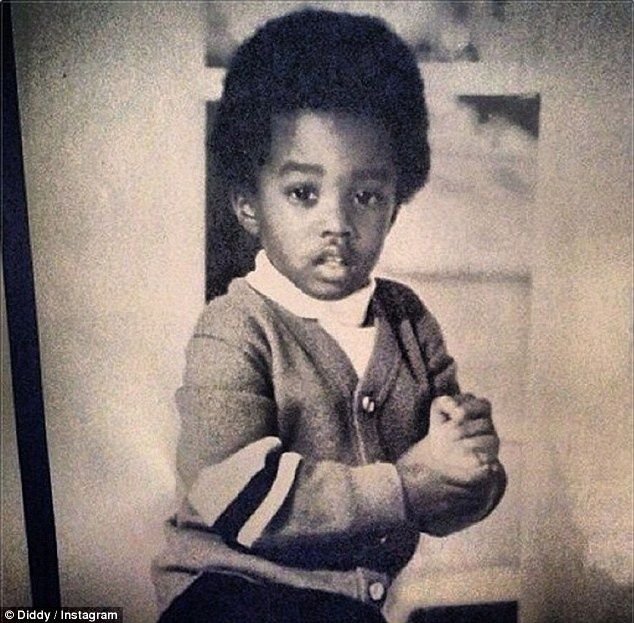


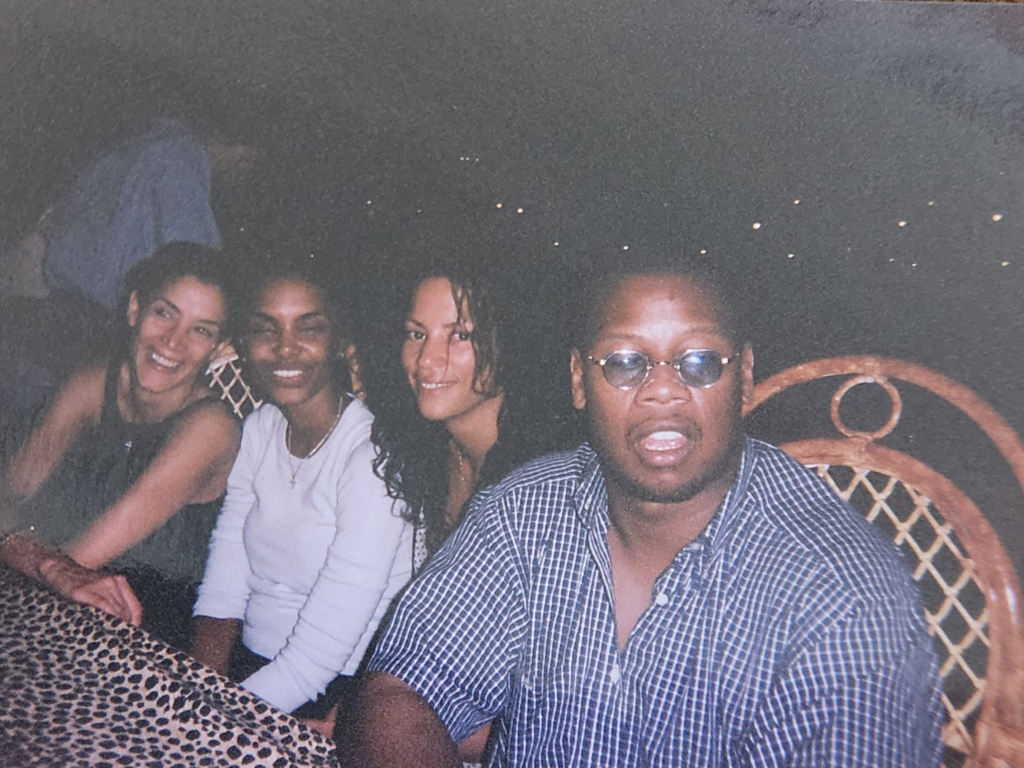


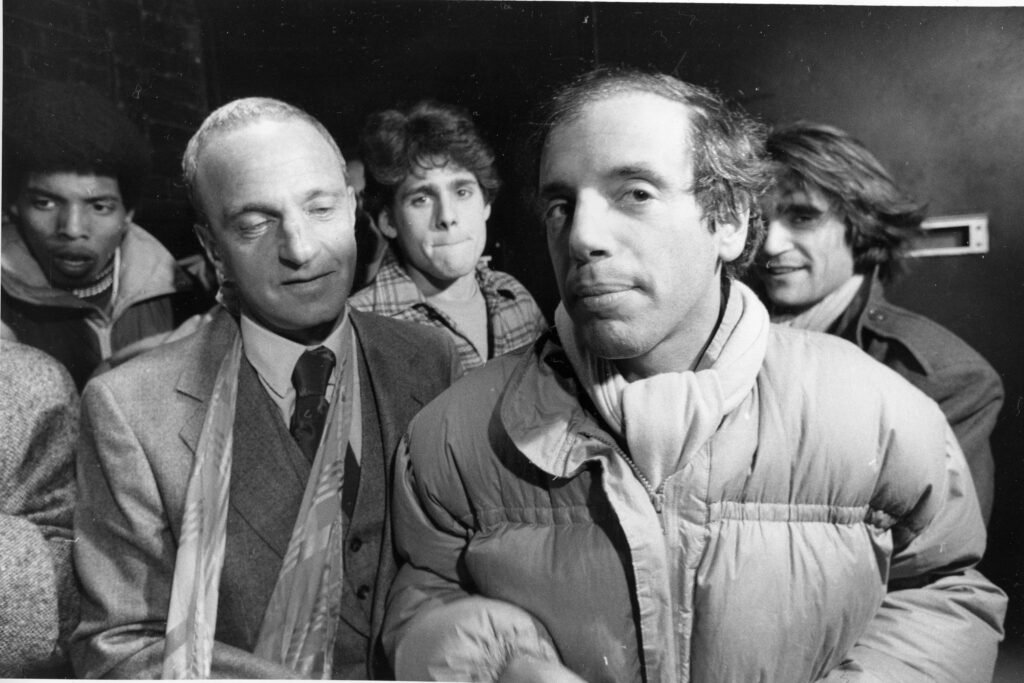




No comments:
Post a Comment