The Fed's Brilliant Plan? More Inflation and Higher Prices
September 8, 2020
Federal Reserve Chairman Jerome Powell recently announced that the Fed is abandoning “inflation targeting” where the Fed aims to maintain a price inflation rate of up to two percent. Instead, the Fed will allow inflation to remain above two percent to balance out periods of lower inflation. Powell’s announcement is not a radical shift in policy. It is an acknowledgment that the Fed is unlikely to reverse course and stop increasing the money supply anytime soon.
Following the 2008 market meltdown, the Fed embarked on an unprecedented money-creation binge. The result was historically low interest rates and an explosion of debt. Today total household debt and business debt are each over 16 trillion dollars. Of course, the biggest debtor is the federal government.
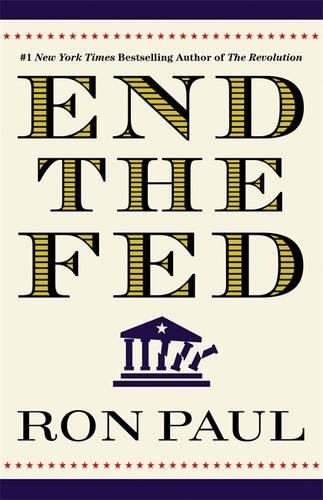 End The Fed
Best Price: $2.18
Buy New $5.68
(as of 09:55 EST - Details)
End The Fed
Best Price: $2.18
Buy New $5.68
(as of 09:55 EST - Details)
 The explosion of debt puts pressure on the Fed to keep increasing
the money supply in order to maintain low interest rates. An increase
in rates to anything close to what they would be in a free market could
make it impossible for consumers, businesses, and (especially) the
federal government to manage their debt. This would create a major
economic crisis.
The explosion of debt puts pressure on the Fed to keep increasing
the money supply in order to maintain low interest rates. An increase
in rates to anything close to what they would be in a free market could
make it impossible for consumers, businesses, and (especially) the
federal government to manage their debt. This would create a major
economic crisis.
The Fed has also dramatically expanded its balance sheet since 2008 via multiple rounds of “quantitative easing.” According to Bloomberg, the Fed is now the world’s largest investor and holds about one-third of all bonds backed by US home mortgages.
Congress has expanded the Fed’s portfolio by giving the central bank authority to make trillions of dollars of payments to business as well as to state and local governments in order to help the economy recover from the unnecessary and destructive lockdowns.
 Fed Up: An Insider&rsq...
Best Price: $2.99
Buy New $11.99
(as of 04:15 EST - Details)
Contrary to what most “mainstream” economists claim, a general
increase in prices is an effect — not a cause — of inflation. Inflation
occurs whenever the central bank creates money. Increasing the money
supply lowers interest rates, which are the price of money, distorting
the market and creating a bubble (or bubbles) that provides the illusion
of prosperity. The illusion lasts until the inevitable crash. Since the
distortions come from money creation, the system cannot be “fixed” by
just requiring the Fed to adopt a “rules-based” monetary policy.
Fed Up: An Insider&rsq...
Best Price: $2.99
Buy New $11.99
(as of 04:15 EST - Details)
Contrary to what most “mainstream” economists claim, a general
increase in prices is an effect — not a cause — of inflation. Inflation
occurs whenever the central bank creates money. Increasing the money
supply lowers interest rates, which are the price of money, distorting
the market and creating a bubble (or bubbles) that provides the illusion
of prosperity. The illusion lasts until the inevitable crash. Since the
distortions come from money creation, the system cannot be “fixed” by
just requiring the Fed to adopt a “rules-based” monetary policy.
 Once
the lockdowns end, the Fed’s actions may lead to a short-term boom.
However, the long-term effect will be even more debt, continued erosion
of the average American’s standard of living, and the collapse of the
fiat money system and the welfare-warfare state. The crisis will likely
be brought on by a rejection of the dollar’s reserve currency status.
This will be supported both by concerns about the stability of the US
economy and resentment over America’s hyper-interventionist foreign
policy.
Once
the lockdowns end, the Fed’s actions may lead to a short-term boom.
However, the long-term effect will be even more debt, continued erosion
of the average American’s standard of living, and the collapse of the
fiat money system and the welfare-warfare state. The crisis will likely
be brought on by a rejection of the dollar’s reserve currency status.
This will be supported both by concerns about the stability of the US
economy and resentment over America’s hyper-interventionist foreign
policy.
The question is not if the current system will end. The question is how it will end.
If the end comes via a meltdown, the result will likely be chaos, violence, and increased support for authoritarian movements as desperate people trade their few remaining liberties in hopes of gaining security.
However, if pro-liberty Americans are able to force Congress to begin cutting spending — starting with the money wasted on militarism — and to move toward restoring a sound and sane monetary policy that includes ending the Federal Reserve, we can minimize an economic crisis and begin restoring limited constitutional government, a free-market economy, and respect for liberty.
No comments:
Post a Comment