Here’s a list of the presidents who declared still ongoing national emergencies.
According to the Federal Register, 58 national emergencies have been declared since the National Emergency Act of 1976 was signed into law by President Gerald Ford.
And 31 have been annually renewed and are currently still in effect, as listed in the Federal Register.
Here’s a list of the presidents who declared still ongoing national emergencies.
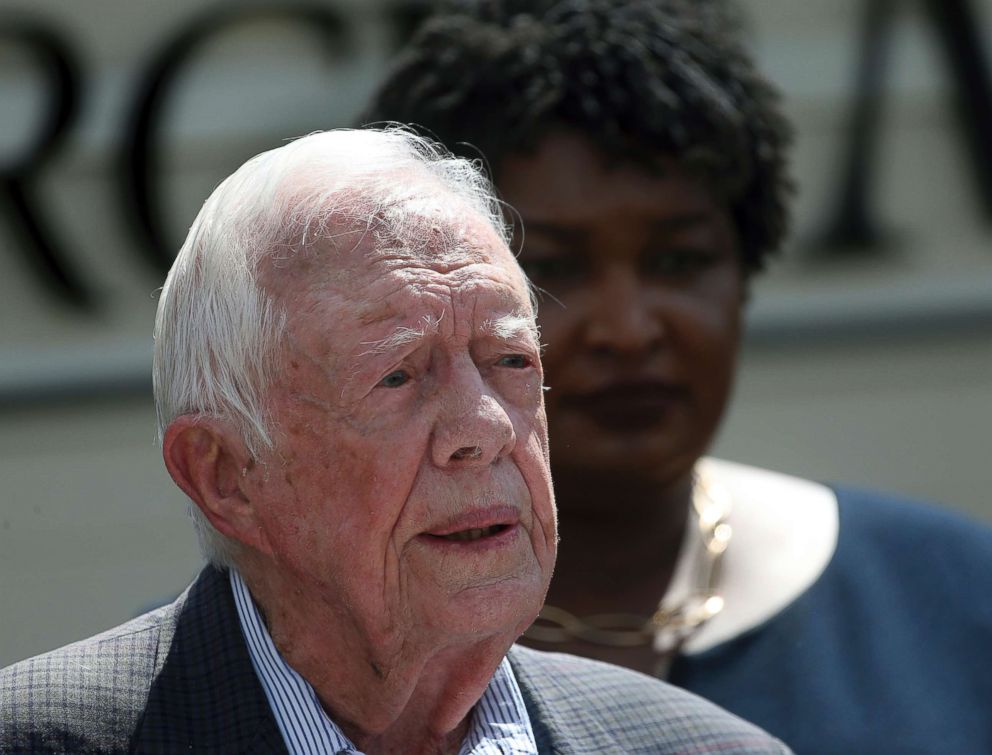
(John Bazemore/AP, FILE) Former
President Jimmy Carter speaks as Democratic gubernatorial candidate
Stacey Abrams listens on during a news conference to announce her rural
health care plan in Plains, Ga., Sept. 18, 2018.…
Nov 14, 1979: The National Emergency With Respect to Iran, in response to the Iran hostage crisis.
President Bill Clinton
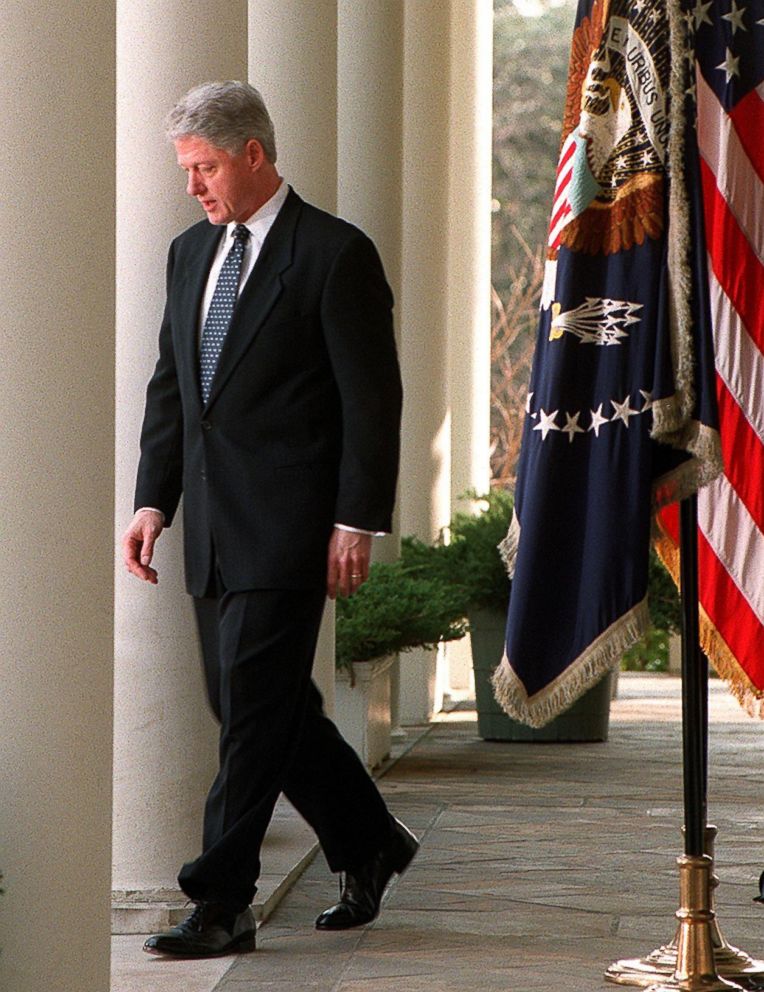
(AFP/Getty Images, FILE) President Bill Clinton walks out to make a statement to the media in the Rose Garden at the White House on Feb. 12, 1999.
Nov 14, 1994: The National Emergency With Respect to
the Proliferation of Weapons of Mass Destruction, that combined two
previous national emergencies focused on weapons of mass destruction. Jan. 2, 1995: The National Emergency With Respect to
Prohibiting Transactions with Terrorists Who Threaten to Disrupt the
Middle East Peace Process placed economic sanctions in response to the
Jerusalem bombing. March 15, 1995: The National Emergency With Respect
to Prohibiting Certain Transactions with Respect to the Development of
Iranian Petroleum Resources was an effort to prevent potential deals
between oil companies. October 21, 1995: The National Emergency With
Respect to Blocking Assets and Prohibiting Transactions with Significant
Narcotics Traffickers Centered in Colombia was declared after increased
reports of drug cartels laundering money through American companies. March 1, 1996: The National Emergency With Respect
to Regulations of the Anchorage and Movement of Vessels with Respect to
Cuba was after civilian planes were shot down near Cuba November 3, 1997: The National Emergency With
Respect to Blocking Sudanese Government Property and Prohibiting
Transactions with Sudan implemented economic and trade sanctions.
President George W. Bush
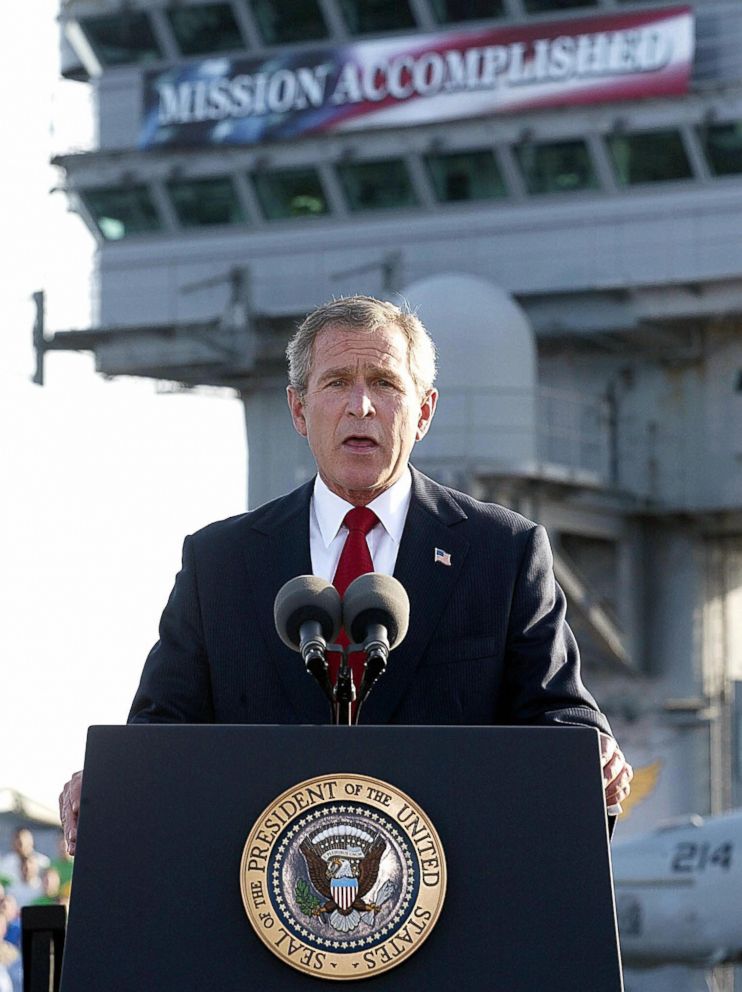
(Stephen Jaffe/AFP/Getty Images, FILE) President
George W. Bush addresses the nation aboard the nuclear aircraft carrier
USS Abraham Lincoln as it sails for Naval Air Station North Island, San
Diego, Calif.…
June 26, 2001: The
National Emergency With Respect to Blocking Property of Persons Who
Threaten International Stabilization Efforts in the Western Balkans
imposed sanctions on those aiding Albanian insurgents in Macedonia Aug 17, 2001: The National Emergency With Respect to
Export Control Regulations renewed presidential power to control
exports in a national emergency since the Export Administration Act of
1979 lapsed.
Sept 14, 2001: The National Emergency with Respect to Certain
Terrorist Attacks was in response to the terrorist attacks of 9/11 and
the continuing and immediate threat of further attacks on the United
States. Sept 23, 2001: The National Emergency With Respect
to Persons who Commit, Threaten to Commit, or Support Terrorism was in
response to the terrorist attacks of 9/11. March 6, 2003: The National Emergency With Respect
to Blocking Property of Persons Undermining Democratic Processes or
Institutions in Zimbabwe was an effort to punish associates of Robert
Mugabe. May 22, 2003: The National Emergency With Respect to
Protecting the Development Fund for Iraq and Certain Other Property in
Which Iraq has an Interest was issued following the U.S. invasion of
Iraq. May 11, 2004: The National Emergency With Respect to
Blocking Property of Certain Persons and Prohibiting the Export of
Certain Goods to Syria was in response to Syria supporting terrorist
activity in Iraq. June 16, 2006: The National Emergency With Respect
to Blocking Property of Certain Persons Undermining Democratic Processes
or Institutions in Belarus was in response to charges of fraud in the
Belarus presidential election. Oct 27, 2006: The National Emergency With Respect to
Blocking Property of Certain Persons Contributing to the Conflict in
the Democratic Republic of the Congo was in response to violence around
the Congolese presidential election runoff. Aug 1, 2007: The National Emergency With Respect to
Blocking Property of Persons Undermining the Sovereignty of Lebanon was
in response to a breakdown of the rule of law in Lebanon. June 26, 2008: The National Emergency With Respect
to Continuing Certain Restrictions with Respect to North Korea cited the
risk of proliferation of weapons-usable fissile material. President
Trump renewed this June 22, 2018 citing the “existence and risk of
proliferation of weapons-usable fissile material on the Korean Peninsula
and the actions and policies of the Government of North Korea continue
to pose an unusual and extraordinary threat.”
President Barack Obama
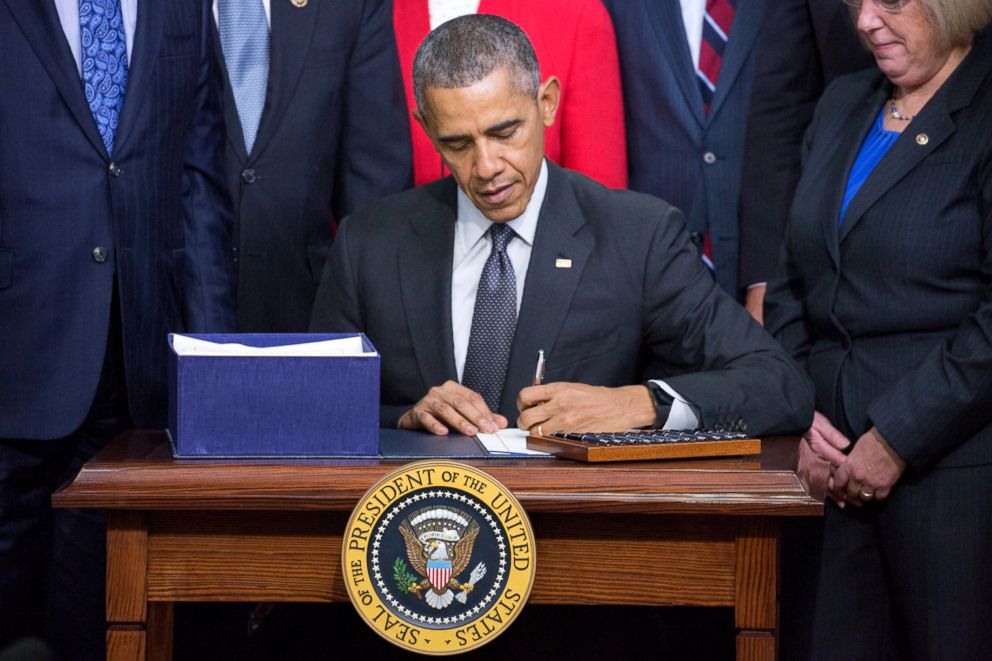
(NurPhoto via Getty Images) President Barack Obama signs the Every Student Succeeds Act, Dec. 10, 2015, in Washington, DC.
April 12, 2010: The National Emergency With Respect
to Blocking Property of Certain Persons Contributing to the Conflict in
Somalia was in respect to threats posed by Somali pirates. February 25, 2011: The National Emergency With
Respect to Blocking Property and Prohibiting Certain Transactions
Related to Libya froze the assets of Libyan leader Muammar Gaddafi. July 25, 2011: The National Emergency With Respect
to Blocking Property of Transnational Criminals was in response to the
rise in crime by specific organizations: Los Zetas (Mexico), The
Brothers’ Circle (former Soviet Union countries), the Yakuza (Japan),
and the Camorra (Italy). May 16, 2012: The National Emergency With Respect to
Blocking Property of Persons Threatening the Peace, Security, or
Stability of Yemen addressed political unrest within the Yemen
government. March 16, 2014: The National Emergency With Respect
to Blocking Property of Certain Persons Contributing to the Situation in
Ukraine was in response to the Russian invasion of Crimea. April 3, 2014: The National Emergency With Respect
to Blocking Property of Certain Persons With Respect to South Sudan was
in response to the ongoing civil war. May 12, 2014: The National Emergency With Respect to
Blocking Property of Certain Persons Contributing to the Conflict in
the Central African Republic was in response to violence towards
humanitarian aid workers. March 8, 2015: The National Emergency With Respect
to Blocking Property and Suspending Entry of Certain Persons
Contributing to the Situation in Venezuela was in response to human
rights violations. April 1, 2015: The National Emergency With Respect
to Blocking the Property of Certain Persons Engaging in Significant
Malicious Cyber-Enabled Activities was in response to Chinese cyber
attacks on the U.S. Nov 23, 2015: The National Emergency With Respect to
Blocking Property of Certain Persons Contributing to the Situation in
Burundi was declared after a failed coup.
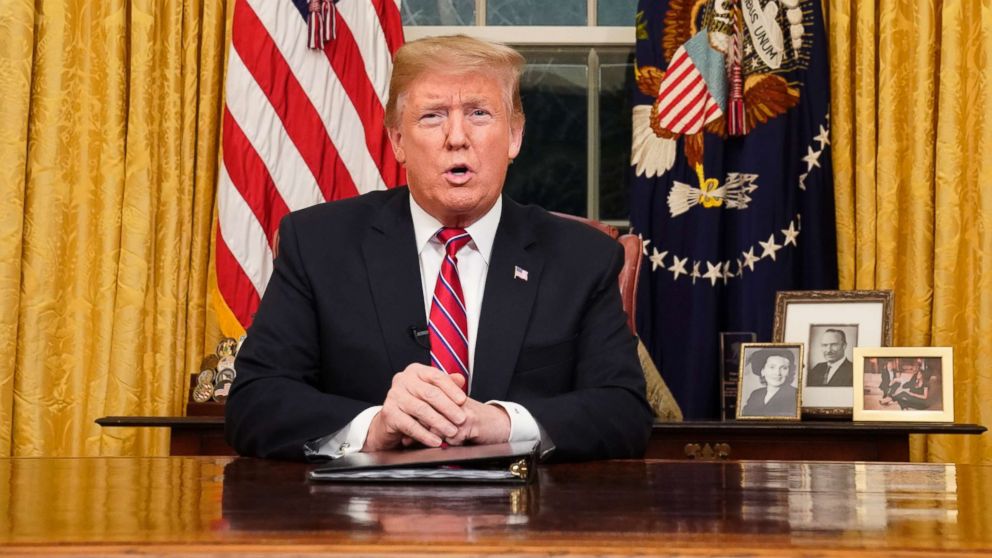
(Carlos Barria/AP) President
Donald Trump speaks from the Oval Office of the White House as he gives
a prime-time address about border security, Jan. 8, 2018, in
Washington.…
Dec 20, 2017: The
National Emergency With Respect to Blocking the Property of Persons
Involved in Serious Human Rights Abuse or Corruption imposed sanctions
on the Myanmar general for his role persecuting Rohingya Muslims. Sept 12, 2018: The National Emergency With Respect
to Imposing Certain Sanctions in the Event of Foreign Interference in a
United States Election attempted to prevent any meddling with the 2018
midterm elections amid the ongoing investigation into Russian
interference in the 2016 presidential election. Nov 27, 2018: The National Emergency With Respect to
Blocking Property of Certain Persons Contributing to the Situation in
Nicaragua was declared by President Trump in response to violence and
the Ortega regime’s “systematic dismantling and undermining of
democratic institutions and the rule of law” that constitutes an
“unusual and extraordinary threat to the national security and foreign
policy of the United States.”
No comments:
Post a Comment