This Fat Is Actually Worse Than Trans Fats from Dr. Mercola
This Fat Is Actually Worse Than Trans Fats from Dr. Mercola
October 01, 2018
Story at-a-glance
Eating too much
damaged omega-6 fat and too little animal-based omega-3 sets the stage
for diabetes, cardiovascular disease, rheumatoid arthritis, cancer,
depression, Alzheimer's and more
Research shows replacing saturated fat with omega-6 oils raises your risk of death if you have heart disease
Omega-6 fat in
and of itself is not the problem. Linoleic acid is also found in foods
such as nuts, seeds and eggs, and is important for health. The problem
is that we now eat far too much of it, and in oxidized form
Omega-6
linoleic acid reduces omega-3 in your body by competing with the omega-3
ALA for metabolism to the longer chained PUFAs, EPA and DHA
Oxidation of
LDL cholesterol is initiated by the oxidation of the linoleic acid
inside the LDL particles, and oxidized LDL is associated with the
development of atherosclerosis
By Dr. Mercola
Dietary fats can be tricky business, as they're not all the same.
While some are necessary for optimal health, others need to be balanced
and some need to be avoided altogether, and understanding which is which
is quite crucial, considering how important fats are for optimal
health.
Here, I will review some of the basics, including the importance of
balancing your omega-3 and omega-6 intake, and why replacing saturated
animal fats with omega-6-rich vegetable oils is such a bad idea.
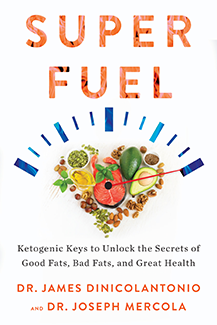
Some of this information, which will be more thoroughly covered in my upcoming book, "Superfuel," is based on research by my coauthor, James DiNicolantonio, a doctor of pharmacy and cardiovascular researcher.
For Optimal Health, Mind Your Omega-3 to Omega-6 Ratio
For years, I've stressed the importance of balancing your omega-3 to
omega-6 intake to protect your health. Eating too much damaged omega-6
fat — found in abundance in processed vegetable oils — and too little
animal-based omega-3 sets the stage for diabetes, cardiovascular
disease, rheumatoid arthritis, cancer, depression and Alzheimer's, just
to name a few.
The ideal ratio of omega-3 to omega-6 fats ranges from 1-to-1 to
1-to-5, but the typical Western diet tends to be between 1-to-20 and
1-to-50. Most people, especially Americans, are guilty of this lopsided
omega-3 to omega-6 ratio, and to correct it, you typically need to do
two things:
1. Significantly decrease intake of
damaged omega-6 by avoiding processed foods and foods cooked in
vegetable oil at high temperatures. A number of studies1,2 have found that people who regularly eat deep-fried foods have a significantly increased risk of stroke and death.
Common sources of harmful omega-6 to avoid include corn oil, canola
oil, soy oil, hydrogenated or partially hydrogenated fats, margarine and
shortening. 2. Increase your intake of animal-based
omega-3 fats. Ideal sources include small fatty fish such as sardines,
anchovies and herring, along with wild-caught Alaskan salmon, or a
supplement such as krill oil.
Replacing Saturated Fats With Vegetable Oils Harms Heart Health
Unfortunately, many health authorities have insisted omega-6-rich
vegetable oils are healthier than saturated animal fats such as butter
and lard, and this myth has been a tough one to dismantle, despite the
evidence against it.
For example, a 2013 study3
in the British Medical Journal (BMJ) found replacing saturated fat with
omega-6 oils raised the risk of death if you have heart disease. As
reported in a BMJ press release:4
"Their analysis involved 458 men aged 30 to 59 years who had
recently had a coronary event, such as a heart attack or an episode of
angina. Participants were randomly divided into two groups.
The intervention group was instructed to reduce saturated fats
(from animal fats, common margarines and shortenings) to less than 10
percent of energy intake and to increase linoleic acid (from safflower
oil and safflower oil polyunsaturated margarine) to 15 percent of energy
intake. Safflower oil is a concentrated source of omega-6 linoleic acid
and provides no omega-3 PUFAs [polyunsaturated fats]."
The control group received no specific dietary advice on fats and was
allowed to eat whatever they wanted. Both groups kept food diaries for
an average of 39 months.
It's worth noting that this study did not differentiate between types of saturated fats,
lumping together animal fats with margarines and shortening high in
saturated fat but also toxic trans fats. (The harder the margarine, the
more saturated fat it tends to contain, in some cases more than butter
or lard.) Despite this discrepancy, the results showed that:
The omega-6 linoleic acid group had a 17 percent higher risk of
dying from heart disease during the study period, compared with 11
percent among the control group
The omega-6 group also had a higher risk of all-cause mortality
Omega-6 Oils Do Not Provide Cardiovascular Benefit
The researchers also conducted a meta-analysis of linoleic acid
intervention trials, finding no evidence of cardiovascular benefit.
According to the authors, "These findings could have important
implications for worldwide dietary advice to substitute omega-6 linoleic
acid, or PUFAs in general, for saturated fats."
Jane Collis, an independent researcher not affiliated with the research also commented on the BMJ study, saying:5
"Commercial food processing destroys a significant amount of EFAs
[essential fatty acids], along with their oxygenating ability ...
Polyunsaturated oils are unstable and very quickly become rancid.
Oxidized fatty acids are dangerous to your health. Lipid
peroxidation and oxidative stress are important factors in this damage.
Further damage is also caused by heating polyunsaturated fats in cooking
(particularly frying foods).
Many omega-3 research trials did not consider the omega 3/6
essential fatty acid ratio which is vital to the eicossanoid balance.
The correct omega 3/6 ratio is fundamental to holistic health for all."
Oxidized Omega-6 Fat Is a Primary Driver of Heart Disease
Next, let's take a look at why omega-6 industrially processed
vegetable oils promote heart disease. First of all, it's important to
recognize that omega-6 fat in and of itself is not the problem. Linoleic
acid is also found in foods such as nuts, seeds and eggs, and is
important for health.
In a groundbreaking new publication entitled "Omega-6 Vegetable Oils
as a Driver of Coronary Heart Disease: The Oxidized Linoleic Acid
Hypothesis,"6 published in BMJ Open Heart by DiNicolantonio, he explains the following:
The problem is that we now eat far too much omega-6, which creates a
severe imbalance in the omega-3 to omega-6 ratio. Today, omega-6 PUFAs
make up around 8 to 10 percent of the total energy intake in the Western
world. This is largely related to the large amounts of processed foods
consumed that are loaded with these dangerous fats.
What's worse, the primary source of omega-6 is no longer eggs and
nuts but rather processed vegetable oils, and most of this linoleic acid
is oxidized from the processing.
In the early 1900s, consumption of vegetable oils skyrocketed, taking
the place of butter and lard, and so did incidence of heart disease.
Evidence implicating excessive consumption of omega-6-rich vegetable
oils as a direct cause of heart disease include but is not limited to:
The amount of linoleic acid in adipose tissue and platelets is positively associated with coronary artery disease, and studies7
measuring changes in linoleic acid concentrations in adipose tissue in
Americans show concentrations increased from 9.1 percent in 1959 to 21.5
percent in 2008. This increase also paralleled increases in the
prevalence of obesity, diabetes and asthma.
Conversely, the long-chained omega-3s docosahexaenoic acid (DHA) and
eicosapentaenoic acid (EPA) have been shown to protect against coronary
artery disease, which is why maintaining a healthy balance between
omega-3 and omega-6 is so important.
Patients with atherosclerosis have higher amounts of
linoleic acid oxidation products in their plasma, low-density
lipoprotein (LDL) and atherosclerotic plaques.
Oxidation of linoleic acid begins before any clinical signs of atherosclerosis become apparent.
When the endothelium (the interior lining of your
blood vessels) is exposed to linoleic acid, LDL transfer across the
endothelium is increased and this is an essential step in the
atherosclerotic process.
Low linoleic acid diets reduce LDL oxidation.
A meta-analysis of randomized controlled trials in
humans showed that when saturated fat and trans fat are replaced with
omega-6 PUFAs, all-cause mortality, ischemic heart disease mortality and
cardiovascular mortality increase.
Oxidation products of linoleic acid are found in infarcted tissue.
The linoleic acid metabolite 9-HODE is a strong
promoter of inflammation, and may be both a marker for and inducer of
atherosclerosis.
Omega-6 May Reduce Omega-3 in Your Body
You can obtain omega-3 fats from both plants and marine animals like
fish and krill. However, these sources provide different types of
omega-3, and they are not interchangeable. Plant-based omega-3 contains
alpha-linolenic acid (ALA), a shorter-chained omega 3 fat.
ALA is a precursor to the longer-chained omega 3 fats EPA and DHA.
However, an enzyme is required for its conversion, and in most people
this enzyme doesn't work very well. Hence the conversion rate is
exceptionally small. Typically, less than 1 percent of the ALA is
converted to EPA. Some studies have found the conversion rate to be as
0.1 to 0.5 percent.8
Your conversion is also dependent on having adequate levels of other
vitamins and minerals. So, while a tiny amount of the ALA you consume
can be converted by your body into long-chain omega-3, it's a highly
inefficient strategy and nowhere near as helpful as supplying "straight"
DHA and EPA from marine sources.
Getting back to omega-6, linoleic acid actually reduces omega-3 in
your body by competing with the ALA for metabolism to the longer chained
EPA and DHA. This information is particularly relevant for vegans and
vegetarians who often make the mistake of thinking their body will
convert plant-based ALA to EPA and DHA.
Not only is it near-impossible to get sufficient amounts of EPA and
DHA this way, but whatever minor conversion may theoretically take place
is further hindered if you're consuming excessive amounts of omega-6
from vegetable oils and processed foods.
LDL Oxidation Is Initiated by Oxidation of Linoleic Acid
Ample research suggests heart disease is caused not by elevated total
cholesterol but, rather, by oxidized LDLs. Unoxidized LDL, even when
elevated, does not contribute to atherosclerosis. But what causes LDL
oxidation?
Studies9
have shown LDL oxidation is actually triggered or initiated by the
oxidation of the linoleic acid inside the LDL particles. As noted by DiNicolantonio in "Omega-6 Vegetable Oils as a Driver of Coronary Heart Disease: The Oxidized Linoleic Acid Hypothesis:"
"Once linoleic acid becomes oxidized in LDL aldehydes and ketones
covalently bind apoB, creating LDL that is no longer recognized by the
LDL receptors in the liver but is now recognized by scavenger receptors
on macrophages leading to the classic foam cell formation and
atherosclerosis.10,11,12
Hence, the amount of linoleic acid contained in LDL can be seen
as the true 'culprit' that initiates the process of oxidized LDL
formation as it is the linoleic acid that is highly susceptible to
oxidation.
Additionally, an increase in the intake of linoleic acid intake
increases the linoleic acid content of very-low density lipoprotein
(VLDL) and high-density lipoprotein (HDL) increasing their
susceptibility to oxidize, which further increases the risk of
cardiovascular disease.13,14,15
Thus, expanding on the oxidized LDL theory of heart disease, a
more comprehensive theory, the 'oxidized linoleic acid theory of
coronary heart disease' is as follows:
Dietary linoleic acid, especially when consumed from refined
omega-6 vegetable oils, gets incorporated into all blood lipoproteins
(such as LDL, VLDL and HDL) increasing the susceptibility of all
lipoproteins to oxidize and hence increases cardiovascular risk."16
Saturated Fat Protects Against Oxidation of Cholesterol Whereas Omega-6 Promotes It
Oxidized cholesterol has also been implicated in atherosclerosis.
This hypothesis is what led to the demonization of dietary cholesterol
and saturated fat. Alas, when cholesterol is bound to saturated fat,
oxidation does not readily occur. Linoleic acid, on the other hand, does
promote oxidation of cholesterol.
In fact, plaques taken from patients with atherosclerosis have been
found to contain oxidized cholesteryl linoleate — i.e., cholesterol
esters that contain linoleic acid — and higher oxidized cholesteryl
linoleate levels also correlate with atherosclerosis severity.
In short, when cholesterol is bound to saturated fat, it is protected
from oxidation, which lowers your risk for cardiovascular disease, and
when it is bound to linoleic acid, the cholesterol is susceptible to
oxidation, thereby raising your risk. Linoleic acid also increases your
risk of heart disease by reducing high-density lipoprotein (HDL)
cholesterol.17,18 As noted by DiNicolantonio:
"Numerous lines of evidence show that the omega-6 polyunsaturated
fat linoleic acid promotes oxidative stress, oxidized LDL, chronic
low-grade inflammation, atherosclerosis, and is likely a major dietary
culprit for causing coronary heart disease, especially when consumed in
the form of industrial seed oils commonly referred to as 'vegetable
oils.'"
Understanding Dietary Fats Is Important for Optimal Health
When it comes to cooking foods with oil, one of the things to watch
for is oils that are hydrogenated or interesterified (a fat where the
triglyceride molecule is engineered to change the melting point of the
oil). Organic, grass fed butter is among the best fats to cook with. Ghee, another delicious alternative, has been used for cooking for eons and is another good choice, as is organic unrefined coconut oil. Among the worst are vegetable oils high in omega-6 linolenic acid, which include corn oils, soybean oil, safflower, cottonseed and canola oils.
As mentioned, this information is a small sampling of what will be covered in greater depth in my upcoming book, "Superfuel: Ketogenic Keys to Unlock the Secrets of Good Fats, Bad Fats, and Great Health," cowritten with James DiNicolantonio. In it, we review what you need to know about dietary fats, which are a crucial component of a healthy diet. You can preorder the book on Amazon or Barnes & Noble.
No comments:
Post a Comment