4 Reasons Why Puerto Rico's 'Bankruptcy' Process Matters to U.S. Residents by Jaime Farrant from NBC News
4 Reasons Why Puerto Rico's 'Bankruptcy' Process Matters to U.S. Residents
by Jaime Farrant /
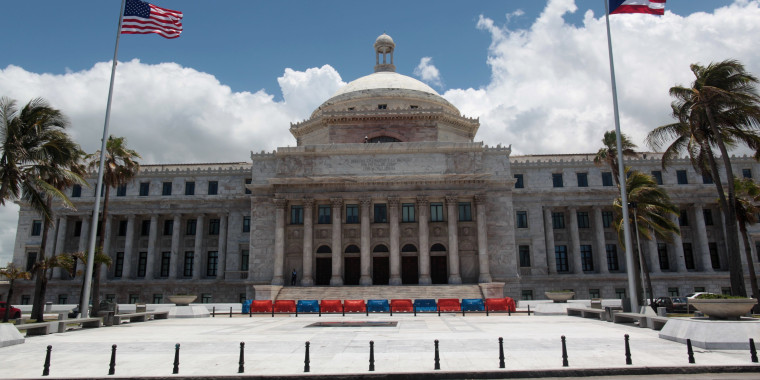
The flags of the U.S. and Puerto Rico fly outside the Capitol building in San Juan, Puerto Rico May 4, 2017.ALVIN BAEZ / Reuters
How Puerto Rico grapples with its staggering debt is in the hands of a federal judge
who will oversee a form of bankruptcy proceeding for the U.S.
territory. Puerto Rico owes more than $74 billion dollars to both island
and U.S. based creditors and over $40 billion in pension liabilities.
But
Puerto Rico's financial straits are far from limited to those living on
the island. The process will have far-reaching impacts across the
continental U.S.; here are four reasons why.
Retirees across the United States are at risk of being drastically affected
Since
Puerto Rico’s bonds have been tax exempt since 1917, U.S. investors and
mutual funds have flocked to them through the years, and are now at
risk of losing billions of dollars.
Here's
an example of how mainland U.S. residents are affected: More than 40
percent of the Rochester Maryland Municipal Bond Fund and the Rochester
Virginia Municipal Fund are invested in Puerto Rican bonds. Funds from
Oppenheimer Funds and Franklin Templeton are heavily invested in Puerto
Rico. If these funds collapse, public sector retirees and employees from
states that invested in them will suffer. It's expected that there will
be plenty of litigation among the bondholders, as each jockey for
position to collect payment.
A default would have far reaching impacts across the U.S. bond markets
Some
of the investment companies that have a significant stake in Puerto
Rico could perhaps collapse if they are not repaid, and potentially
trigger a situation like last decade’s subprime mortgage crisis.
Consequently, the companies with the highest levels of exposure to risk
are expected to litigate vigorously.
One of these companies is
Ambac Assurance, which insures up to $11 billion in Puerto Rican bonds
and owns approximately $268 million in island bonds. Ambac filed a
motion on May 17 opposing Judge Swain’s decision to consolidate for
administrative purposes the Title III requests filed by the Oversight
Board, arguing that any consolidation will reduce their chances for
recovery. On June 1st, District Judge Laura Taylor Swain granted a
motion filed by Puerto Rico’s Oversight Board and issued an order
stating that these cases would be consolidated for procedural purposes
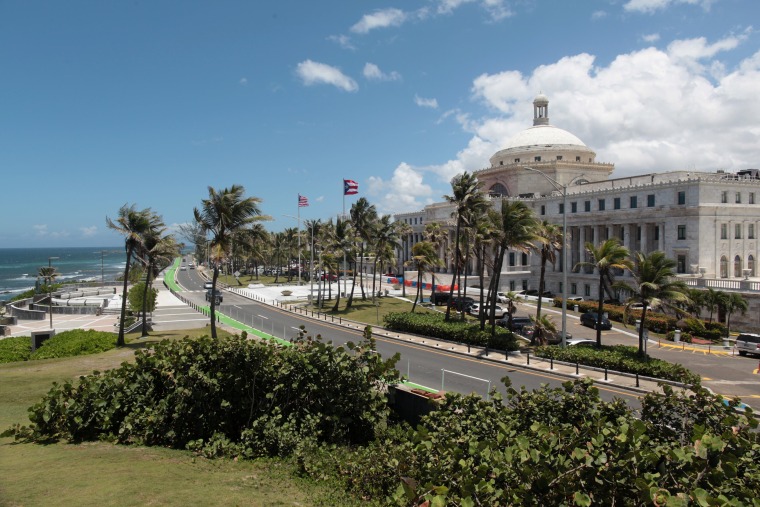
only. The Capitol building is seen in San Juan, Puerto Rico May 4, 2017.ALVIN BAEZ / Reuters
A large number of Puerto Rican residents have been moving to the U.S.
Puerto
Rico has been under an economic recession for over 10 years, which has
prompted more than 10 percent of its residents to move to the U.S. It's
expected the island’s recession will continue, given that the Board’s
fiscal plan expects to shrink the island's economy, at least for the
next 2 years. This will most likely result in more Puerto Ricans
continuing to migrate to the continental U.S.
There
are now over 1 million Puerto Ricans living in the state of Florida
alone, and it is almost certain that Florida and other states will see
many more residents from the island arriving to their jurisdictions in
search of work and a fresh start.
Court process sets precedent for other U.S. jurisdictions in financial turmoil.
The
U.S. Virgin Islands, another U.S. territory with just over 100,000
residents, is under a $2 billion debt. Consequently, they will be
watching how Puerto Rico’s court process unfolds to determine if it is
in their interests to seek Congressional protection. Furthermore, states
with high debt or pension obligations might look to Puerto Rico’s Title
III process to see if they can eventually have a similar remedy made
available to them.
How Title III Under Puerto Rico's Fiscal Control Board Works
May
17 was a historic day for both Puerto Rico and the United States, as
the U.S. District Court there held its first hearing on the island's
bankruptcy, thus officially starting the first case under the Puerto Rico Oversight, Management and Economic Stability Act, more commonly known as PROMESA, enacted by Congress in 2016.
This
law created a process combining elements of traditional Chapter 9 and
11 bankruptcies that will permit U.S. owned territories to adjust their
debts. Previously, U.S. law did not give territories the remedy used by
state municipalities such as Detroit to restructure their debts.
Puerto
Rico, an island obtained by the United States after the 1898 Spanish
American War, is the first territory to use this process, expected to
have far reaching implications not only for the island and its
inhabitants, but also across the U.S. financial markets and pension
systems.
This process is regulated in Title III of PROMESA, and
it's presided by New York district judge Laura Taylor Swain. She was
appointed to the case by Supreme Court Chief Justice John Roberts, who,
under PROMESA, is the person authorized to select the Judge.
The
Title III process differs from a traditional bankruptcy case in several
aspects. PROMESA establishes that a 7-person Oversight Board, whose
members were recommended by Congress and officially selected by
President Obama in 2016, will act as the island’s representative.
However,
this does not mean that the Board is required to act in the island’s
best interests, as PROMESA does not impose any fiduciary duties to it.
It mainly requires the Board to develop a plan that helps Puerto Rico
achieve fiscal responsibility and eventually regain access to capital
markets.
Furthermore, PROMESA gave the Board’s members immunity
for all actions they carry under the Act, and they can override Puerto
Rico’s laws and elected officials.
Under Title III, the Board will
work with Puerto Rico’s creditors to renegotiate the island’s debts.
Once this is done, they will present a Debt Adjustment Plan to the court
for approval. This Plan will be approved if it complies with the
requirements set in Section 314 of PROMESA.
One requirement of
note is the one in Section 314(b)(6), which establishes that the plan
will be approved if it “is feasible and in the best interests of
creditors, which shall require the court to consider whether available
remedies under the non-bankruptcy laws and constitution of the territory
would result in a greater recovery for the creditors than is provided
by such plan.”
This
section is likely to give Judge Taylor Swain more power over Puerto
Rico than she would have in a traditional Chapter 9 bankruptcy process,
under which a similar plan would be approved if it “is in the best
interests of creditors and is feasible”. It is unknown why this
additional requirement was added to Title III.
In order to protect
the best interests of the creditors, the Court is authorized to allow
the Oversight Board to interfere with Puerto Rico’s political or
governmental powers and alter its properties, revenues or the use of its
income producing properties.
This Section gives powers to the
Board that are unique in U.S. law, as, they appear to give it the
ability to, for example, potentially dispose of Puerto Rico’s assets and
properties and have a say in the way the island government provides
basic services to its 3.5 million residents, even though it was not
elected to do so by the Puerto Rican people. Judge Swain seemed to be
aware of this power during the hearing, when she remarked that this case
must lead to a “better future” for Puerto Rico.
Bigger than Detroit and Argentina?
Judge
Swain scheduled hearings through December. In addition, the Judge
issued an order yesterday requiring Puerto Rico to file a Creditor
Matrix by June 30, 2017, and to file a list of all its creditors by
August 30, 2017.
However,
this process is expected to last several years and become the largest
municipal bankruptcy in U.S. history, easily surpassing Detroit’s $20
billion dollar default, and perhaps come close to matching Argentina’s
historic 2001 default of over $150 billion dollars.
Who will pay
for this bankruptcy process estimated to cost tens of millions of
dollars? It will come out of Puerto Rico's pockets, in a process that
will fundamentally transform the future of the island, its obligations
towards its residents and its relationship to the United States.
In
sum, Puerto Rico finds itself in uncharted legal waters. As this case
unfolds, it will be important to see how Judge Swain and the Board
protect the island’s residents and ensure that Puerto Rico can develop a
sustainable economic plan to transform and grow its economy without
jeopardizing its residents.
Furthermore, it will be essential that
Judge Swain orders a full audit of the debt as part of this process, so
there can be a clear understanding of which individuals, elected
officials and businesses were responsible for this financial catastrophe
so they can be held accountable.
Finally,
in order to protect the best interests of both Puerto Rico’s and US
residents, it's vital that this process and the audit of the debt moves
authorities to enact legal reforms that end any unscrupulous, unethical
or illegal financial practices that led to this tragic situation.


No comments:
Post a Comment