8 Forgotten Capitals of the United States
On July 16, 1790, President George Washington signed
the Residence Act, which called for the construction of a permanent
capital city for the United States of America along the banks of the
Potomac River. When the federal government—and all 131 of its
workers—finally moved there in 1800, Washington, D.C., became the ninth
American capital since the 1776 signing of the Declaration of
Independence. Explore the eight other locales that were once the seats
of American power.
Philadelphia, Pennsylvania

Baltimore, Maryland

Lancaster, Pennsylvania
York, Pennsylvania
 Finding
a more secure position 25 miles west of Lancaster behind the
Susquehanna River, the Continental Congress convened inside the York
County Court House on September 30, 1777. During the government’s
nine-month stay in the central Pennsylvania hamlet, it approved the
Articles of Confederation, which took effect after its 1781 ratification
by the states, and signed an alliance treaty with France. After
receiving word in June 1778 that the British had evacuated Philadelphia,
the Continental Congress returned to the city and found Independence
Hall left “in a most filthy and sordid situation” according to New
Hampshire delegate Josiah Bartlett.
Finding
a more secure position 25 miles west of Lancaster behind the
Susquehanna River, the Continental Congress convened inside the York
County Court House on September 30, 1777. During the government’s
nine-month stay in the central Pennsylvania hamlet, it approved the
Articles of Confederation, which took effect after its 1781 ratification
by the states, and signed an alliance treaty with France. After
receiving word in June 1778 that the British had evacuated Philadelphia,
the Continental Congress returned to the city and found Independence
Hall left “in a most filthy and sordid situation” according to New
Hampshire delegate Josiah Bartlett.Princeton, New Jersey
 Nearly
two years after the 1781 victory at Yorktown, the American government
was once again forced to flee its regular home in Philadelphia—only this
time it wasn’t the British threatening the delegates’ safety, but
frustrated Continental Army soldiers demanding the back pay they had
been promised. “In order that further and more effectual measures may be
taken for suppressing the present revolt, and maintaining the dignity
and authority of the United States,” delegates decided in the summer of
1783 to move 40 miles northeast to the campus of the College of New
Jersey (now known as Princeton University). The Congress of
Confederation met inside Nassau Hall, the nation’s largest academic
building, which ironically had been bombarded by patriot troops during
the 1777 Battle of Princeton. During its four-month stay inside the
enormous stone building, which still stands on the Princeton campus, the
United States government received its first foreign minister, a
diplomat from the Netherlands, as well as word of the signing of the
Treaty of Paris, which formally ended the American Revolution.
Nearly
two years after the 1781 victory at Yorktown, the American government
was once again forced to flee its regular home in Philadelphia—only this
time it wasn’t the British threatening the delegates’ safety, but
frustrated Continental Army soldiers demanding the back pay they had
been promised. “In order that further and more effectual measures may be
taken for suppressing the present revolt, and maintaining the dignity
and authority of the United States,” delegates decided in the summer of
1783 to move 40 miles northeast to the campus of the College of New
Jersey (now known as Princeton University). The Congress of
Confederation met inside Nassau Hall, the nation’s largest academic
building, which ironically had been bombarded by patriot troops during
the 1777 Battle of Princeton. During its four-month stay inside the
enormous stone building, which still stands on the Princeton campus, the
United States government received its first foreign minister, a
diplomat from the Netherlands, as well as word of the signing of the
Treaty of Paris, which formally ended the American Revolution. Annapolis, Maryland
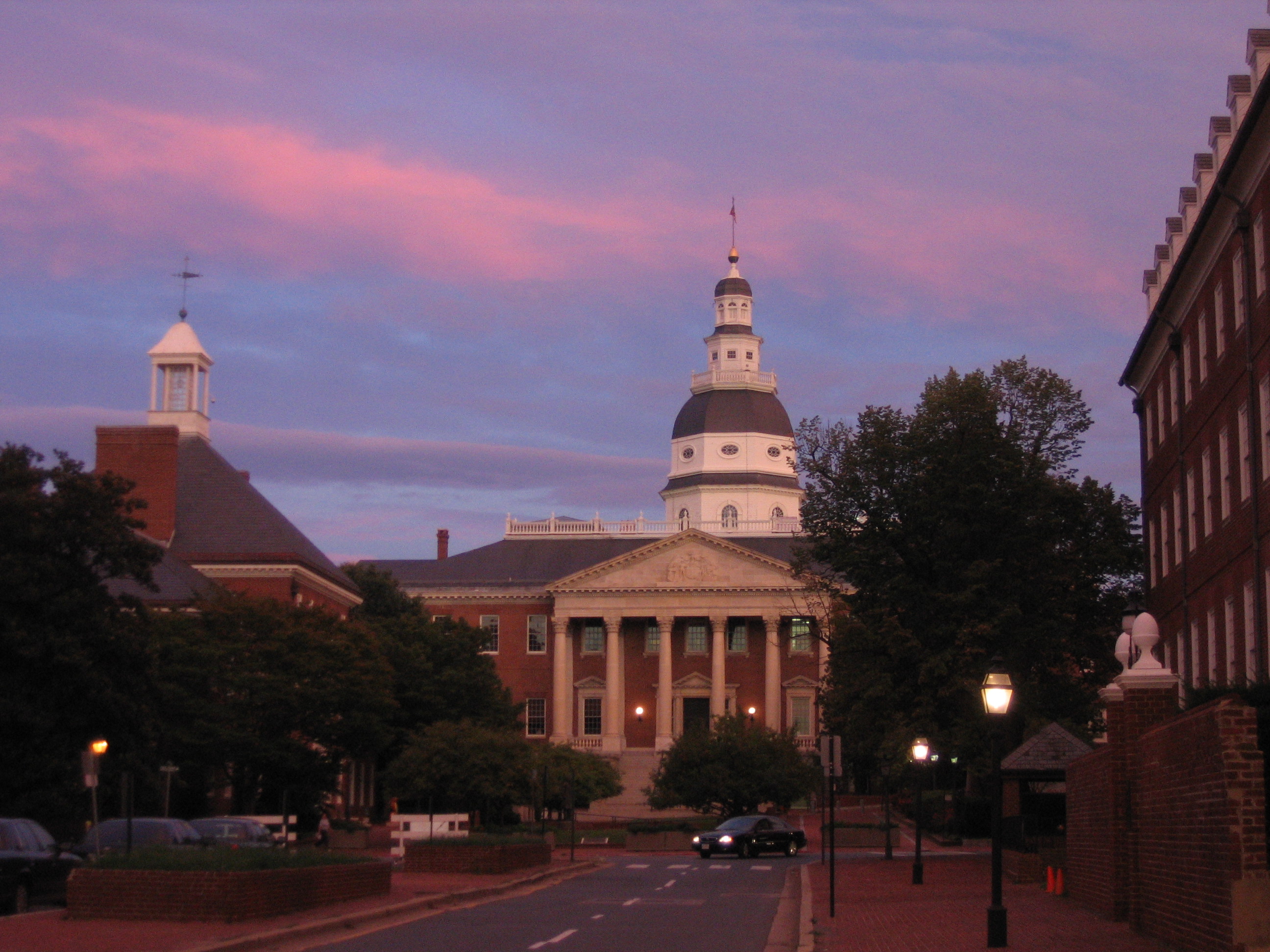 Continuing
to avoid Philadelphia, the nomadic Congress continued its travels to
the Maryland capital. Under the leaky dome of the still unfinished
Maryland State House, delegates first convened on November 26, 1783.
Inside the Senate chamber, Washington resigned as commander-in-chief of
the Continental Army on December 23, 1783, to return to Mount Vernon as a
private citizen. Congress also ratified the Treaty of Paris in
Annapolis on January 14, 1784, before leaving the Maryland capital in
August 1784. The Maryland State House remains the oldest state capitol
in continuous legislative use, and Washington’s personal copy of his
resignation speech is on display in its rotunda.
Continuing
to avoid Philadelphia, the nomadic Congress continued its travels to
the Maryland capital. Under the leaky dome of the still unfinished
Maryland State House, delegates first convened on November 26, 1783.
Inside the Senate chamber, Washington resigned as commander-in-chief of
the Continental Army on December 23, 1783, to return to Mount Vernon as a
private citizen. Congress also ratified the Treaty of Paris in
Annapolis on January 14, 1784, before leaving the Maryland capital in
August 1784. The Maryland State House remains the oldest state capitol
in continuous legislative use, and Washington’s personal copy of his
resignation speech is on display in its rotunda.Trenton, New Jersey
 The
Congress of Confederation ensured plenty of “spirited” debates by
making its next home in the French Arms Tavern, the largest building in
the future New Jersey state capital. Delegates first convened in the
three-story-high structure, leased by the New Jersey legislature, on
November 1, 1784. Beyond a farewell address by the Marquis de Lafayette,
little business of note took place before the Congress adjourned on
Christmas Eve and decided to move on to New York City. The building
returned to its use as a tavern before being razed in 1837 to make room
for a bank.
The
Congress of Confederation ensured plenty of “spirited” debates by
making its next home in the French Arms Tavern, the largest building in
the future New Jersey state capital. Delegates first convened in the
three-story-high structure, leased by the New Jersey legislature, on
November 1, 1784. Beyond a farewell address by the Marquis de Lafayette,
little business of note took place before the Congress adjourned on
Christmas Eve and decided to move on to New York City. The building
returned to its use as a tavern before being razed in 1837 to make room
for a bank. New York City

No comments:
Post a Comment